This bibliography doubles as my script for a follow-up video to "Video Essay #2: @Th3Birdman's Bigotry—Black Excellence* in Harry Potter Fandom Furthers Transphobia" (2026). Its aim is less to focus on Birdman, tokenism, the monomyth, Rainbow Capitalism, or Black Snape (which the video essay covered already), and more to analyze Harry Potter—the character and the franchise/fans/parallel stories (e.g., Tolkien's orcs from Lord of the Rings), alongside J.K. Rowling's† dubious decoration of different bigotries—as "dead on arrival" inside a larger Gothic dialectic (of the alien as something to hug, fuck and "kill"; i.e., during social and material analysis, the ensuing synthesis [and chaos] seeing ludo-Gothic BDSM [calculated risk] push stubbornly towards Communism). In doing so, "Dead on Arrival" makes one big "fuck you" to Queen TERF and her lackeys' fascist slop—a compendium, all on its own, of anticapitalist (thereby antiracist, antifascist, etc) goodies. The front half (the essay side) is complete; the second half (the bibliography side) is incomplete—will be "filled in," both as I add to it/when I read it on YouTube, and whenever wayward readers stumble across its contents, themselves (a staging point/continuum for future offensives).
Update, 4/26/2026: For a follow-up to this essay regarding Th3Birdman, refer to "Essay #10.5: Black Moderates Don't Challenge Fascism (re: Th3Birdman)" (2026). You may also leave a comment on Reddit. —Perse

(source thumbnail: "Th3Birdman's Bigotry" vis-à-vis "Exposing the Grift: Harry Potter and the Curious Case of Black Snape," 2026)
*See: "A Note About Tokenism," deeper in.
†Who also writes under a male pen name: Robert Galbraith, a famous conversion therapist (source: Emma Nolan, 2020). Rowling plays dumb, of course, but worth noting is how her bigotries appear in her Galbraith stories, which—per the Gothic tradition—focus on detectives and mysteries to solve (namely crimes). But we won't be focusing on those, save to say that Rowling is a deeply hateful person; i.e., she's a capitalist in the Gothic mode, which affects every aspect of her life and her work normalizing hatred through a centrist brand (the neoliberal MO): someone with the power of a god who chooses to keep things unequal to keep exploiting workers, namely children, using Gothic canon. Capital is a deeply unequal system, one that makes people cruel through owners (capitalists) embodying what capital/the state demand; Rowling's a bully emulating her empire's worst habits, a two-faced slaver projecting them onto her victims' kicked sandcastles (through "schools" and "houses" as state-corporate feeding grounds disguised as home, but intimating and scapegoating their own predatory [vampiric, alien] elements through fatal nostalgia/generational feeding and trauma; re: the Gothic castle, per Bakhtin, granting viewers inside/outside constant historical reminders of dynastic primacy and hereditary rites [dungeons] while also, per Hogle, mostly being fake). Capital rapes everything by design, feeding cryptonymically mid-abjection on entire worlds and peoples: the monomyth, classically incumbent on state vampirism, maintains the status quo through universal bigotry as sold to people; i.e., in ways that steal their labor/money and discourage critical thought in bad faith (a broader thesis—one to remember when camping the canon in Promethean ways, which we'll unpack). Capitalists embody that model to a fault, hoisted on their petards when death inevitably calls: "buy my shit" enriching these thieves materially in life, but turning them into hopeless addicts reliant on others (workers, who create) to merely postpone death.

Table of Contents
Note: I've expanded "Dead on Arrival" since first publishing, table of contents included; and while I've made numerous changes throughout, the clear-and-obvious addendums are in bold and color-coded. —Perse, 4/6/2026
- Concerning State Vampirism
- Disclaimers
- Changelog
- Killing Your Darlings; or, Returning to Harry Potter as Dead
- A Response from Th3Birdman, and My Words to Him
- Foreplay
- "It's Dangerous to Go Alone; Take This!"; or, Different Things to Keep in Mind
- Four Points, Foreplay
- Skull = Theft, and Camping It
- Citing My Praxis Volume
- Citing My Monster Volumes (footnotes)
- "How about side by side with a friend?": Thanking Ethel Thurston (aka Essence of Thought)
- A Note About Tokenism
- "It's Dangerous to Go Alone; Take This!"; or, Different Things to Keep in Mind
- Essay Half
- "Whether it is right or advisable": Revenge of the Snapewife
- The Worst Witch (re: the Promethean Quest/camping the canon)
- Monomyth Necropolitics*; or, It Does Not Do (to Leave a Live Dragon out of Your Calculations; feat. Donald Trump)
- Failing at YouTube (and Other Things); or, Why Bother Camping the Canon (re: Bad Empanada)
- Punching Up While "On the Hip" (re: Cryptonymy and Abjection)
- Fortune Favors the Bold; or, Naked Courage: Sharing Gothic Spaces of Play while in the Buff
- Bibliography Half
- Original Bibliography
- From Others
- From My Work
- Further Reading/Viewing (for Holistic Purposes†)
- Before We Start (re: State Vampirism and Rowling Is a Universal Bigot)
- Trans Stuff
- Other Criticisms of Harry Potter (toxic love, disabilities, and much, much more)
- Racism (and Making Snape Black)
- Geopolitics
- Bad Actors
- Bridging the Gap
- Calibrating Gothic; or, Better Starting Points for Different Representation in Gothic Media
- Learning from Others
- Original Bibliography
- In Conclusion: Changing How We See as Already Dead
- Footnotes
*From Achille Mbembe (2019): the state deciding who lives and who dies through the assignment of death warrants (tied to the profit motive, mid-abjection).
†E.g., gender/culture, race, class and war/the Gothic; re: Gothic Communism is a holistic discipline, pushing for intersectional consciousness‡ and solidarity (awareness and teamwork) under state predation, mid-abjection.
‡"A neologism I coined, one meant to combat various forms of reductionism (class, culture and race); i.e., by building on Marx' notion of class consciousness: combining class with culture and race consciousness (awareness) to raise emotional/Gothic intelligence while synthesizing praxis" (abridged, source: "Paratextual Documents").
Concerning State Vampirism

(artist: Karen B.; cited: "The World Is a Vampire")
This piece (essay or otherwise) is part of a larger series on state vampirism. As I conceive it, state vampirism = feeding through the state mid-abjection*, be it openly capitalist or Marxist-Leninist. These are largely questions of aesthetic, whose Promethean (self-destructive) function extends to other configurations "of Omelas"; e.g., Zionism. Furthermore, there's overlap between my anti-Zionist work and my work critiquing Marxist-Leninism/state vampirism alongside capital, so consider reading both.
*Which state predation and revolutionary action both rely upon to function; i.e., "on the Aegis" as something to further or reverse, mid-vampirism, through paid/unpaid labor (re: me, vis-à-vis Julia Kristeva). To that, abjection (us versus them/alienation and fetishization) is one of four main Gothic theories my book series utilizes—the other three being hauntology (retro-future), cryptonymy (show/hide) and chronotopes (time-space) alongside smaller theories; e.g., Jerrold Hogle's ghost of the counterfeit† and Barbara Creed's monstrous-feminine (Gorgons and Amazonomachia, as I study it). As a queer sex worker and academic, I dialectically-materially prioritize abjection and vampirism through unpaid labor—chiefly sex work as exploited by Cartesian dualism and its harmful, maximalist binaries under Capitalist Realism, treating nature as monstrous-feminine (re: "Nature Is Food," 2024)—but mention the other theories, too (access "Four Main Gothic Theories (the Four Gs)" in "Paratextual Documents" for their longer definitions). In essence, capital/the state rape by design, which unpaid labor prevents by breaking Capitalist Realism mid-abjection; i.e., reversing abjection during ludo-Gothic BDSM (rape play) when having the whore's revenge (which "State Vampirism" explores at length): "to break the profit [and productivity] motive by making a world for which it (and rape) are no longer possible using these methods; i.e., by using the same demonic and slutty language capital does, but at cross purposes" (source: "Rape Reprise," 2024).
†Re: "Raising Awareness" (2025), footnote 1.
Disclaimers
"Dead on Arrival" is part of my Sex Positivity book series, which continues after its June 2025 finale in small-form content; e.g., essays on and interviews with other sex workers, all of whom I credit on my Acknowledgments pages and Sex Work page. This piece doesn't focus on sex work itself, but widespread exploitation; i.e., in a shared predatory system, "whoring nature (and workers) out" in highly abject ways.

(artist, left: Bay Ryan; right: Persephone van der Waard)
For the Visually Impaired: I read this essay out loud on my YouTube channel ("Essay #10: Dead on Arrival; or, J.K. Rowling's Autopsy (and Those Who Shill Her)") and its short follow-up ("Essay #10.25: 'Don't Tag Me'; or, Th3Birdman Shows His Ass")
Disclaimer Regarding Essay Contents: All opinions are my own; i.e., as part of my research, conducted alongside my book series, Gothic Communism (2023). The material within is written/speaks about public figures and popular media for purposes of (sex) education, satire, transformation and critique, hence falls under Fair Use regarding copyright and free speech regarding defamation/obscenity laws (the Miller Test; source: Justice.gov). Click here for my entire series disclaimer. Lastly many of the links on this page lead to my age-gated 18+ website where my entire work on Gothic Communism is stored and exhibited.
CW: classical artistic nudes and bikini-style pin-ups; fascism, genocide and rape*; police brutality and carceral violence; transphobia, enbyphobia, homophobia and furryphobia (werewolves and shape shifters), fear of crossdress and BDSM, racism, shadism, fatphobia, classism, xenophobia and ethnocentrism/Anglocentrism (e.g., Brexit and anti-Scottish independence), aporophobia, Hibernophilia, animal cruelty, child labor/abuse/soldiers, pedophilia, ageism, forced transformation and torture (e.g., bury your gays/conversion therapy), sanism/ableism (mental and physical health), anti-Indigenous sentiment/appropriation, Islamophobia/Orientalism, antisemitism, whorephobia and sexism (cis misogyny or otherwise)
*Meaning (from my definition) "to disempower someone or somewhere—a person, culture, or place—in order to harm them," generally through fetishizing and alienizing acts or circumstances/socio-material conditions that target the mind, body and/or spirit) […] Rape can be of the mind, spirit, body and/or culture—the land or things tied to it during genocide, etc; it can be individual and/or on a mass scale" (source: "Psychosexual Martyrdom," 2024).
Concerning Keywords: My arguments rely on various keywords I've previously coined, which here present in bold while color-coded (usually only once, while stressing their keyword status; e.g., ludo-Gothic BDSM, Metroidvania, or the palliative Numinous, etc). While some are given here, in abridged form, "Paratextual (Gothic) Documents" (2024) provides all neologisms, in full.
Changelog
—4/17/2026: I added "Killing Your Darlings; or, Returning to Harry Potter as Dead."
—4/14/2026: Added "A Response from Th3Birdman, and My Words to Him."
—4/12/2026: Final proofread finished, including footnotes. The essay is finished, and I will be reading it next, on YouTube.
—4/11/2026: Final proofread up to "Foreplay." Various little changes throughout. Included Penelope Naomi in the bibliography.
—4/10/2026: Expanded "Foreplay" into "Four Things, Foreplay" and "Skull = Theft, and Camping It." Worked on the final proof, and various little changes, throughout.
—4/9/2026: Added the "Foreplay" section before the essay and bibliography halves. In "Foreplay," I added "'It's Dangerous to Go Alone; Take This!'; or, Different Things to Keep in Mind " (more signposts). Everything's basically done. I just have to spot-check the essay body and proofread the footnotes before I read "Dead on Arrival" on YouTube.
—4/8/2026: Expanded on "Necropolitics" a fair bit; e.g., visual elements with Lilith Mae, and citations from Volume Three; i.e., to account for Trump's latest behaviors. Also added "Citing My Praxis Volume" to the start of the document, and "Citing My Monster Volumes (footnotes)." Expanded on the footnotes a bunch, adding visual aids/exhibits; e.g., mentioning Rowling's antisemitism alongside Tolkien's (and Stalin's).
—4/7/2026: Proofreading is mostly done. Added further quotations, exhibits and footnotes.
—4/6/2026: Various changes throughout. More signposting and bibliography entries. Added "A Note About Tokenism" and "Before We Start." Also wrote a special thank you to Ethel Thurston.
—4/5/2026: The proofreading and usual addendums are largely done. Still need a bit of polish, though. As for recording the video portions, I will do so in two parts: reading the essay half like a full-fledged script, and the bibliography section aloud while watching along (and responding to) the different videos it contains. Also finished the footnotes; added different visual aids and little changes through, including expanding the bibliography and content warning.
—4/4/2026: Initial release, warts and all.
Killing Your Darlings; or, Returning to Harry Potter as Dead
This essay pulls a Gothic classic: returning to home as dead, or killing one's darlings by facing a dark side to them without rose-tinted glasses. In my case, here, that means Harry Potter as a book series; i.e., which I read as a little girl in the '90s, specifically in middle school. The paradox of exposure is the value "our first love" gives while being bad for us; e.g., a queer person's exposure to The Wizard of Oz (1939), Rocky Horror (1975) and, yes, Rowling's books (or Tolkien's, etc). The idea, here, as we proceed, is killing our darlings in ways that reverse abjection, ergo state predation and Capitalist Realism: it being canonically easier to imagine a world that doesn't exist at all versus an end to Harry Potter as yet-another-simulacrum of Plato's allegory of the cave. We return to these things as dead (comparable to Zombie Simpsons, 2012) and parody them however we wish (not sabotage but transformation, riling up our enemies who abject us through franchises they police):

(source: "Straight Dog Water; or Saving Alien: Earth (2025) from a Freudian Snob: Rob Ager Shows Full Ass, Reviewing Show He Hasn't Fully Watched," 2025)
This takes moxie. In "Dead on Arrival," I pull no punches; i.e., killing our darlings with our darlings; e.g., C.S. Lewis, whose quote about Tolkien remains germane here when using Tolkien to hoist Rowling (and Th3Birdman) on their petards. "Here are beauties which pierce like swords or burn like cold iron; here is a book that will break your heart" (source). As a little girl, I read Harry Potter to my family—specifically to my mother and grandmother in my living room (who sold these books at bookstores before the Internet as we know it existed, a cultural movement not unlike Star Wars or before that, Beatlemania). They are precious to me not unlike the One Ring except I went on to "Tom Bombadill" them—to put aside childish things, yet return to and take to task more than Bombadill himself did (causing everyone in that book a giant headache). This is not unusual, and Harry Potter is, for many (of all ages), a special point in their lives; i.e., a half-real place to Gothically revive and return to, mise-en-abyme—specifically their childhood as a moment of rebellion that goes on to later eclipse itself (comparable to Dumbledore eventually betraying Harry's trust, which we'll get into); e.g., my best friend Ginger (also trans) growing up in a Christian fundamentalist household and reading Harry Potter to be rebellious, in adulthood (doing so because these books were described to them by their parents literally as "witchcraft").
To that, the duality and turmoil of such interrogations is one that remains idiosyncratic between different readers—me reading the books when I was small, along Th3Birdman and Ginger at different points in their lives, and each of us having different responses to the literature; i.e., as outliving the legacy of the author acting the fool. In this case, Ginger and I—being trans—found it far easier to reject the series than Birdman has (or hasn't, in his case); i.e., because of what it meant/means socially and materially to us, versus Birdman continuing to punch down. In short, he was unwilling to kill his darlings—in his case, when trans genocide (and other hate campaigns) are actively ongoing and me telling it to his face (and him gaslighting me when calling him out). Gothic maturity is the ability to discuss taboo things in non-harmful, beneficial ways; i.e., Ginger and I are Gothically mature, and Birdman and Rowling's series are not. Furthermore, Ginger and I can actually have a conversation about Rowling's bullshit, whereas Birdman is standoffishly obtuse (what Ginger describes as "touching a stove" or "wrestling a pig"); i.e., there's value in friendship, specifically friendships where the interlocutors know each other well and are familiar with the arguments the other might make about this or that, including but not limited to books. Ginger is one such person—my best and closest friend who I can talk to knowing they're a good actor who understands me sometimes better than I do myself. We challenge and motivate each other to change. So if books are an extension of our lives, then Ginger has helped shape my life (and my books) in ways difficult to quantify but worth honoring. Friends (and their artefacts) shape who we are, mise-en-abyme.

(artist: Persephone van der Waard, of Ginger. Originally illustrated to celebrate their coming out as trans, but revised in a more devilish form for this book; source: "Acknowledgements," 2024)
The same goes for our enemies (who often have more in common with us than the rulers they sell out to). Birdman, by comparison, is unable to even have a conversation at all—in short, and telling me as a recipient of genocide, in so many words, that "it's all in my head." They are a false friend—the very kind of fake who is silent in times of crisis that MLK warned about; re: "we will remember not the voices of our enemies but the silence of our friends." To that, Birdman is silent where it counts and punches down loudly to defend capital (which Rowling and Harry Potter are); i.e., it is easier for him to imagine my friends and I disappearing than it is Harry Potter. Talking to him is like pulling teeth, then, and I'm the dentist. All of that being said, I am not arguing for censorship of Harry Potter. Far from it. Instead, vis-à-vis Milton's "Areopagitica" (1644), I'm arguing for a boycott of the books as to not fund Rowling's genocide. Allegory and sedition concern private consumption of things not endorsed in public. So if these books, despite having mostly outstayed their welcome—and (for me, at least) largely being relegated to positions of academic critique (owing to their cultural significance)—have special significance to you, and you want to/can enjoy them in safely private without contributing to trans hate crimes (and state violence), knock yourselves the fuck out. In other words, don't be a Nazi (or a token Nazi, in Birdman's case) and we're golden, babes.
A Response from Th3Birdman, and My Words to Him
Birdman decided to respond by calling my work bullshit, so I have some words in response:
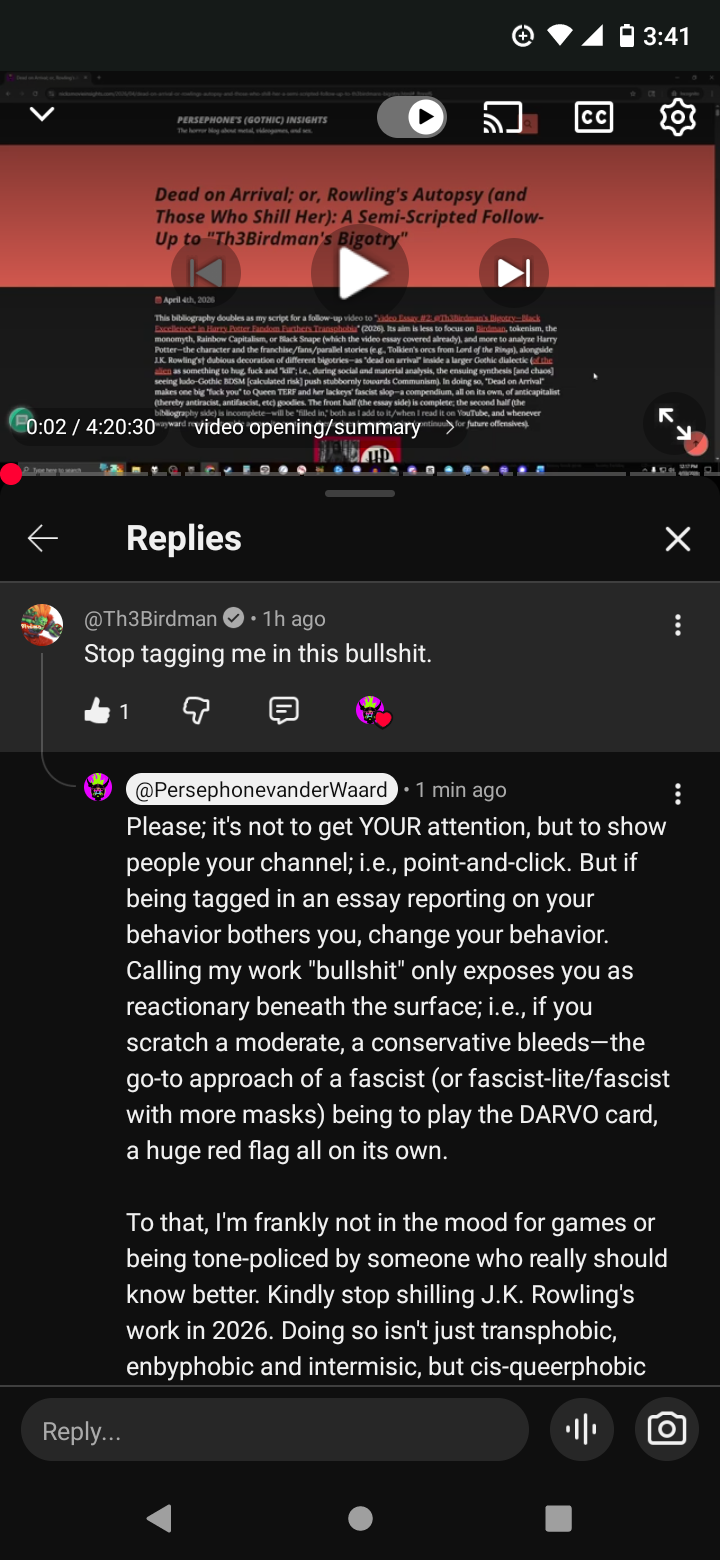
(source YouTube comments: "Essay #10: Dead on Arrival; or, J.K. Rowling's Autopsy (and Those Who Shill Her)," 2026)
My latest essay appears to have struck a nerve:
Th3Birdman: Stop tagging me in this bullshit.
Me: Please; it's not to get YOUR attention, but to show people your channel; i.e., point-and-click. But if being tagged in an essay reporting on your behavior bothers you, change your behavior. Calling my work "bullshit" only exposes you as reactionary beneath the surface; i.e., if you scratch a moderate, a conservative bleeds—the go-to approach of a fascist (or fascist-lite/fascist with more masks) being to play the DARVO card, a huge red flag all on its own.
To that, I'm frankly not in the mood for games or being tone-policed by someone who really should know better. Kindly stop shilling J.K. Rowling's work in 2026. Doing so isn't just transphobic, enbyphobic and intermisic, but cis-queerphobic (e.g., homophobic, biphobic, etc), racist, sexist, ableist, anti-Indigenous/culturally appropriative, and many, many other things, besides. In other words, stop grifting from the moderate/token side of the coin; re: calling my work "bullshit," when only one of us (not you) is actually challenging fascism: by neither shilling J.K. Rowling's book series, nor accusing critics of Rowling as "asking for their pound of flesh" (an antisemitic trope, but also anti-activist sentiment—one targeting queer people, in this case, for using the same blood-libel language that has, when used, similar deleterious effects; i.e., fascism is bad for minorities and to shill Rowling defends fascism).
While you're at it, make a video apologizing and explaining why it's wrong to shill Rowling's work in 2026 (see: above). I don't like reactionaries, but I like moderates even less because they're giant hypocrites who undermine the integrity of social justice. Back in the 1960s, MLK described this as the white moderate, but the same basic logic ties to TOKEN moderates, too; re: black excellence/Capitalism and race traitors, in your case, "getting that bag" on the backs of different minorities exploited by fascists; i.e., many trans victims aren't white, male, American, or even from the Global North.
In other words, do better.
Such dismissals are par for the course, when it comes to moderates; and in Birdman's case, illustrate a tell-tale inability to respond to valid criticism with anything other than self-righteous anger and apathy (source YouTube Community post: Persephone van der Waard, 4/14/2026).
He then responds:
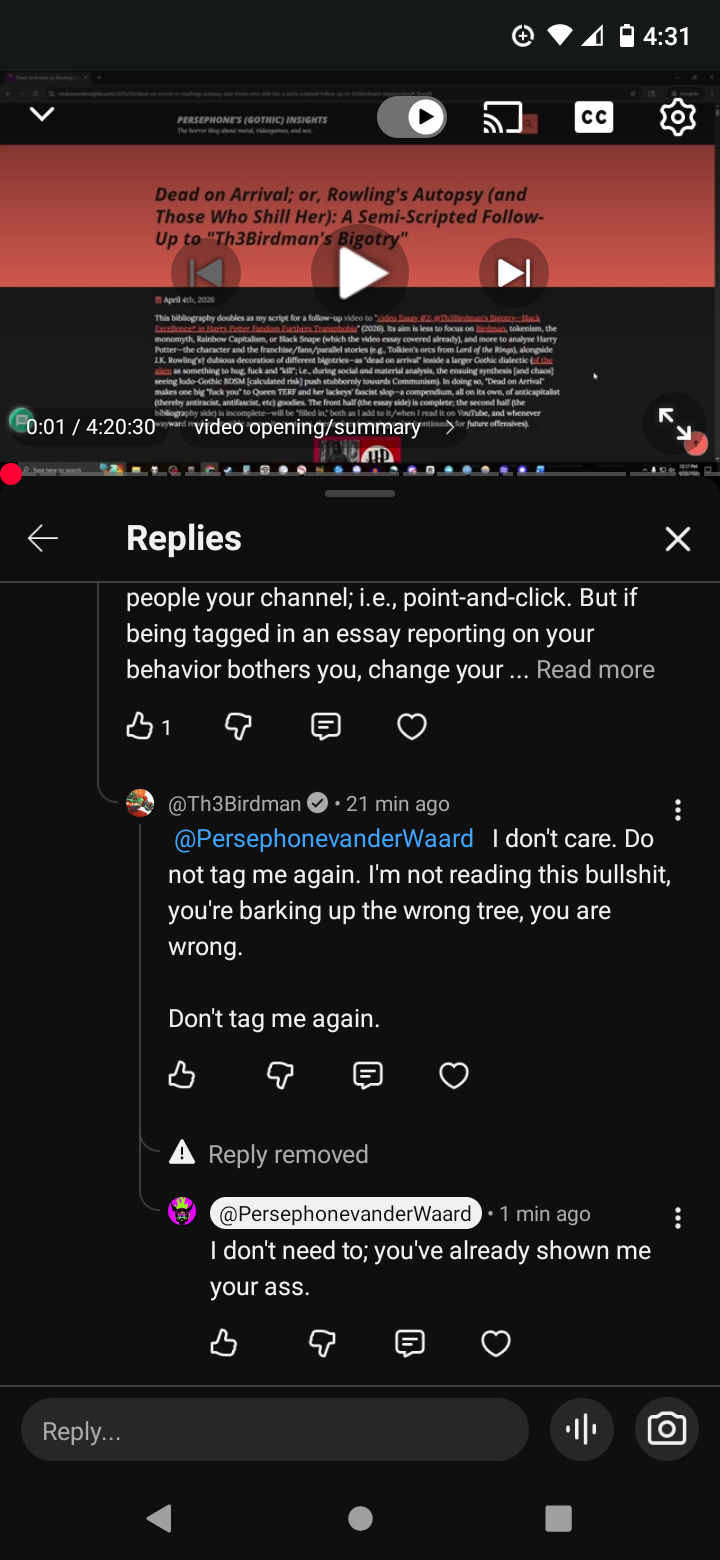
Th3BirdMan: I don't care. Do not tag me again. I'm not reading this bullshit, you're barking up the wrong tree, you are wrong.
Don't tag me again.
Me: I don't need to; you've already shown me your ass. Edit: Apparently you can't read three paragraphs, let alone a single sentence; re: "Kindly stop shilling J.K. Rowling's work in 2026." Gotta love someone who claps their hands over their ears while shouting "I'm not wrong!" during a genocide caused by the person whose work they're shilling, then making veiled threats to a recipient of said genocide: "Don't tag me again." Weird behavior, dude (source YouTube Community post: Persephone van der Waard, 4/14/2026).
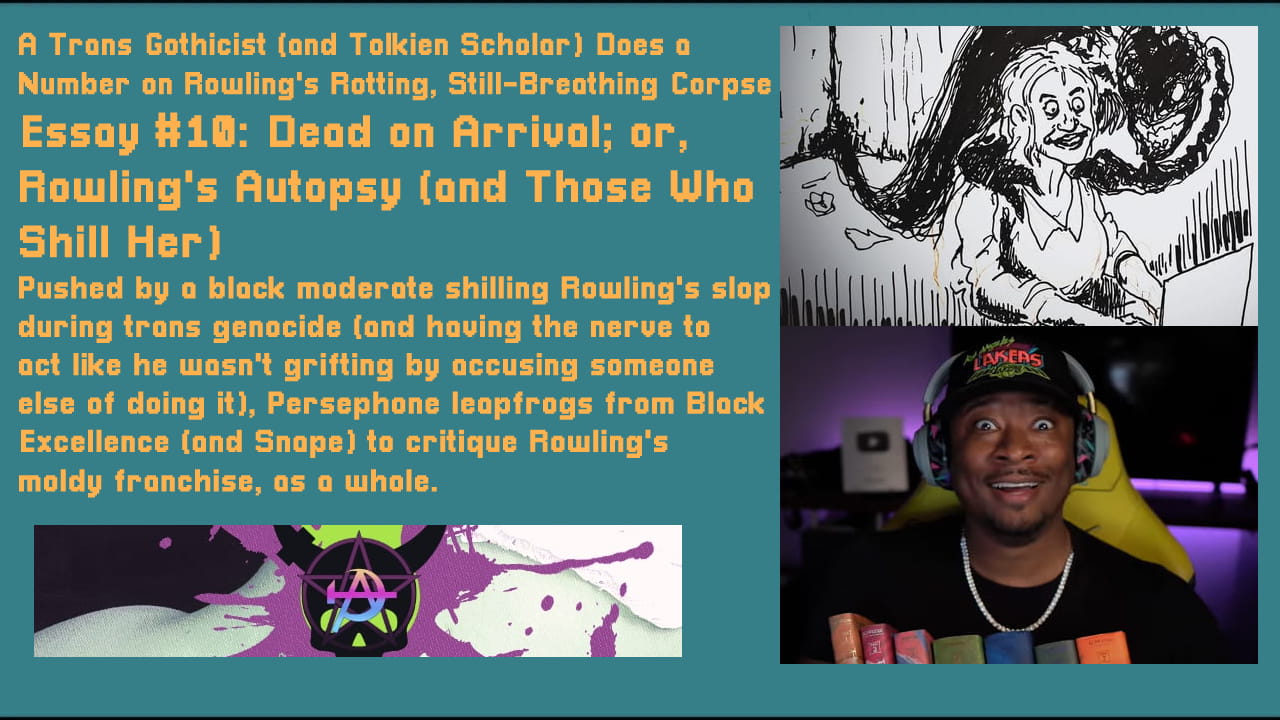
(source thumbnail: "Essay #10: Dead on Arrival," 2026)
"Such a thing had not happened since first he came to the Mountain! His rage passes description—the sort of rage that is only seen when rich folk that have more than they can enjoy suddenly lose something that they have long had but have never before used or wanted," writes Tolkien, in The Hobbit (source). He continues (through Bilbo), "Never laugh at live dragons." But we must, I argue (already having studied dragons extensively as metaphors for greed; re: "Dragon Sickness: the Problem of Greed," 2015); for not only is Th3Birdman a dragon, but a self-righteous one—i.e., Gandalf with the One Ring a threat despite appearing good:
Gandalf as Ring-Lord would have been far worse than Sauron. He would have remained "righteous," but self-righteous. He would have continued to rule and order things for "good," and the benefit of his subjects according to his wisdom (which was and would have remained great).
[The draft ends here. In the margin Tolkien wrote: "Thus while Sauron multiplied [illegible word] evil, he left 'good' clearly distinguishable from it. Gandalf would have made good detestable and seem evil"] (source: "Letter 246, from a Letter to Mrs. Eileen Elgar (drafts)" in Humphrey Carpenter's The Letters of J.R.R. Tolkien, 1981).
Dragons are dualistic symbols, of course. You must anisotropically level moderate and reactionary ones with our own analysis; i.e., lest the greed they abjectly symbolize continue infecting the land and its peoples through many different vectors (as tokens inside/outside Tolkien's world continue to do; re: my larger body of scholarship on Tolkien, including his racism).
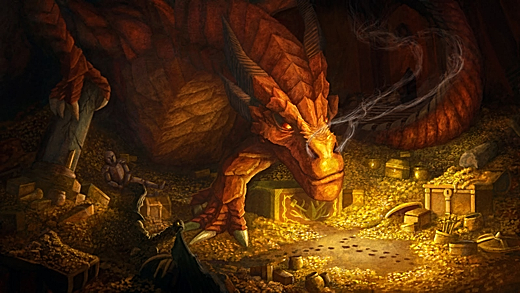
(source: Daniel Udell's "The Hobbit – Book to Film Analysis: Part 11," 2016)
I want to conclude with a lesson (and provide an Indigenous perspective to show that African Americans [male or otherwise] don't monopolize oppression): that Birdman strikes me as very close-minded, but also someone who thinks themselves wise; i.e., as having a monopoly on oppression and popular media, but remains nonetheless deaf to allegory and as thin-skinned as Rowling herself (acting like a white man, in either case). A clue to addressing that lies in Indigenous cultures; e.g., the Maori. Maori, my partner Bay explains (who is non-binary and Maori-Irish, themselves), believe in laughter and questioning traditions through tikanga and myths. To that, tikanga is "Rooted in the concept of 'tika,' which means 'right' or 'correct,' tikanga serves as a guiding framework for culturally appropriate behavior, promoting respect and understanding within social interactions. These customs are deeply connected to Māori origin stories and their relationship with the land, encompassing principles of guardianship over the Earth" (source: Josephine Campbell's "Tikanga Māori," 2024). Or as Bay taught me, assimilation is poor stewardship—offering more meat to the concept's bones than the other author does; i.e., with a more localized (and non-white) description:

tikanga covers a wide range of areas, for example values, culture, protocols, customs, ethics, etiquette, sustainability and law. It supports mana atua (spiritual), mana whenua (connection to the land), mana tupuna (ancestry), and mana tangata (people) [mana basically meaning essence or value].
We are aware that tikanga is a concept that is fluid and dynamic. We are also aware that one journal entry does not sufficiently address the true entirety of tikanga as it is an expression of a Māori world view that encompasses a way of thinking, something that can never really be communicated, only lived. / Having said this, we think it is important to discuss an approach that brings about balance in nature (and among people), in the face of environmental change and resource depletion (source: Aotea Health); or, what Tolkien would describe, as "desolation."
The point here is that much of this is rooted in debate, or the working out of unfixed things through poetry and stories—in Gothic, by facing and overcoming alienation in ways that African Americans are, themselves, not exempt from nor the sole arbiters of through pulp media (through what I reduce to gossip, monsters and camp; re: "The Basics of Oppositional Synthesis," 2024). I describe this as the Wisdom of the Ancients (from Gothic), or a cultural understanding of the imaginary past; Bay (and other Indigenous Peoples) describe it as the Wisdom of the Ancestors (re: "The Value in Showing Intersectional Solidarity When Combating Fascism," 2026). In other words, Gothic Communism is a hybridization of different cultures' understandings of the world through written and oral forms punching up.
Mythology-wise, we'll go with Māui; i.e., from a conversation Bay and I had, while discussing Birdman and how borked his behavior was (e.g., as shown in Disney's Moana—2016, below): that he got defensive because I was going after not just his childhood or any fans of the franchise, but their worldview, itself—meaning it is easier for people like Birdman to imagine the end of the world (and subjects of genocide, trans or otherwise) than any sort of end to Harry Potter (vis-à-vis Mark Fisher and Plato, "the republic for which it stands" something to defend from perceived outsiders).

(source: Fandom)
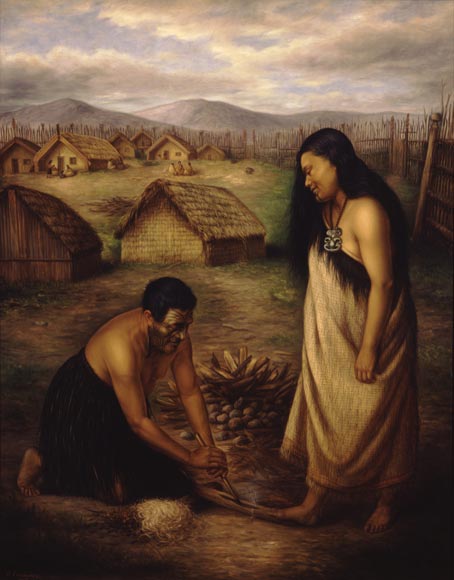
During our talk, Bay explained to me how Māui was a demi-god (source: EBSCO) with one foot in both worlds—a trickster shapeshifter (similar to Loki* or Satan) who stole fire from the gods, specifically Mahuika and to te ahi o Mahuika or "the stealing of the fire" narrative (see: Encyclopedia Mythica); i.e., similar to Prometheus from Greek myth but also, in my case, Persephone betrothed to Hades. In trying to conquer death and join the rift between Humanity and the gods (symbols of alienation, immortality and nature-as-Numinous), Maui pays the ultimate price:
*Giving him hubristic (tragic) but also trans characteristics (see: J.G. Harker's "Loki, Gender, and Sexuality in Norse Society," 2023).
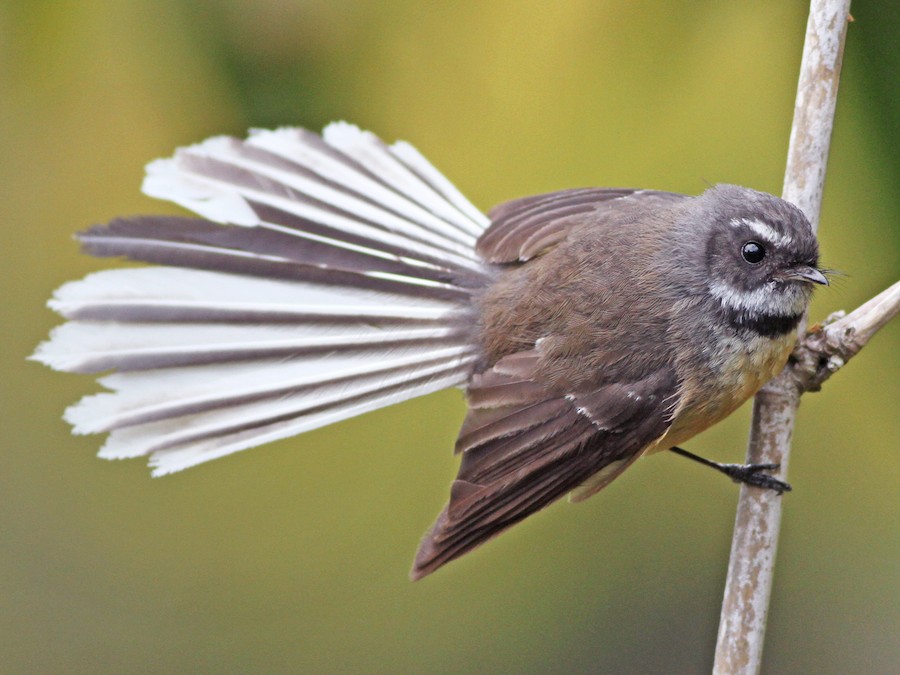
Finally, Māui decides to overcome his ancestress Hine-nui-te-pō, goddess of thunder [and the Underworld]. Full of confidence [and Faustian curiosity/a somewhat greedy thirst for knowledge centered around deception], Māui gathers a flock of island birds as companions. Together, they come to the place where Hine-nui-te-pō is sleeping. Māui plans to enter Hine-nui-te-pō, crawl through her body, and pass out through her mouth. This will kill her and ensure Māui's immortality [after seemingly disemboweling her, the Earth]. However, Māui's plan will succeed only if none of the birds laugh at him in the process [shown, below]. Unfortunately for Māui, one of the birds cannot help but laugh once Māui is inside Hine-nui-te-pō. In consequence, the old woman awakes, and "she open[s] her eyes, start[s] up, and kill[s] Maui" (Grey 57). / Māui's surprise death means that all humans have become mortal. Humans will bear children, but all will have to die eventually (source: EBSCO); i.e., Original Sin.
In this case, it's quite similar not just to the Promethean theft of the gods' "fire" and Eve from the Bible, but also the Medusa story (somewhat, though I think Hine crushes Māui's head between her thighs versus a petrifying gaze); i.e., nature is monstrous-feminine and classically female (or having female elements tied to life and death): a source of terror guarding something sacred, alien and mighty (dark, intense, etc).
(source)
Gorgons aside, such stories teach us morals about nature-as-abject; i.e., in ways we can reclaim/rejoin through the exchange of forbidden knowledge (re: the Promethean Quest and Faustian Bargain, two Gothic staples; see: "Forbidden Sight, Faust and the Promethean Quest; or, Knowledge and Power Exchange," 2025). Here, I'm applying this to dragons as things to steal "fire" from (or gold, in Tolkien's case). Thus, I remind those not above reproach how they need to be criticized like anyone; re: Birdman acting like a know-it-all, yet alienated from things that others know more about than he apparently does; e.g., me and Tolkien, but I digress (or Harry Potter for that matter). I'm also "kissed by fire," myself—a rape survivor/granddaughter to a Holocaust survivor, and a trans woman bullied by a variety of peoples tied to popular media (videogames, in my case, but also heavy metal; re: "Those Who Walk Away from Speedrunning," 2025). The point in saying so isn't to "rank rape" or indulge in "oppression Olympics" (or gatekeep franchises) but establish deeper connections to nature and ourselves through stories we critique in ways that treat people sacred (not the books, themselves); i.e., as "of nature" (what Patel and Moore describe as "thinking beings" vs "extended beings," under Cartesian dualism; see: footnote 6); e.g., connecting through/to food, sex, war, technology and, yes, death as bound up in the land and vice versa under capital (and Gothic stories). To that, Birdman doesn't want any of this because he knows I'm right and all he can do is act tough/righteous. Whatever he does, I feel vindicated; i.e., if you scratch a token, a fascist bleeds, but we'll get to that: by playing with fire, with dragons, with witches, and so on.
(artist: Gottfried Lindauer)
"Fire" in this case, is knowledge tied to creation (with Mahuika [and evocations through "fire making," above] similar to Athena, mother-goddess of wisdom; re: Creed, 1993), and not something strictly monopolized by Cartesian arbiters "playing god" for the ruling class; i.e., tikanga as practices that keep Maori alive and have through their colonization, which apply just as well to trans folk delivering a comeuppance versus those token parties who—betraying out of desperation and convenience—sell us down the river (and whose transphobia among cis BIPOC we'll explore, deeper in). Knowledge, like all power, is flexible—something to make into a weapon, if need be, and levied against prideful traitors having turned into dragons for the state: something to slay with what can't be monopolized, taking our fire away from those who abuse it (the fire from the dragon's belly): "Arrow! Black arrow! I have saved you to the last. You have never failed me and I have always recovered you. I had you from my father and he from of old. If ever you came from the forges of the true king under the Mountain, go now and speed well!" (source). Fight fire with fire, babes!

(cited: "Teaching between Media and our Bodies, and a Bit of Coaching," 2024)
Foreplay
Since polishing this document and building on it, I've decided to add a bit of "foreplay": refreshers and things to keep in mind, for deeper in, and a couple other things that don't fit into the larger essay body or bibliography but touch poetically (often in mythical language) on broader socio-material issues (racial or otherwise that other authors have also written about, below). Class war (tied to sex, gender and race) are endless; there's always another castle and battle to be fought.

(source: John the Duncan's "Universalism and the Anti-Woke," 2025; cited: "Operational Difficulties and Revolutionary Cryptonymy," 2024)
"It's Dangerous to Go Alone; Take This!"; or, Different Things to Keep in Mind
All roads lead to Rome (Oz, Hyrule, Camelot, etc; re: "Mission Statement and Remediating Modern-Day 'Rome,'" 2024), but it's dangerous to go alone. So, take this! Actually, take four (to be on the safe side).
Four Things, Foreplay
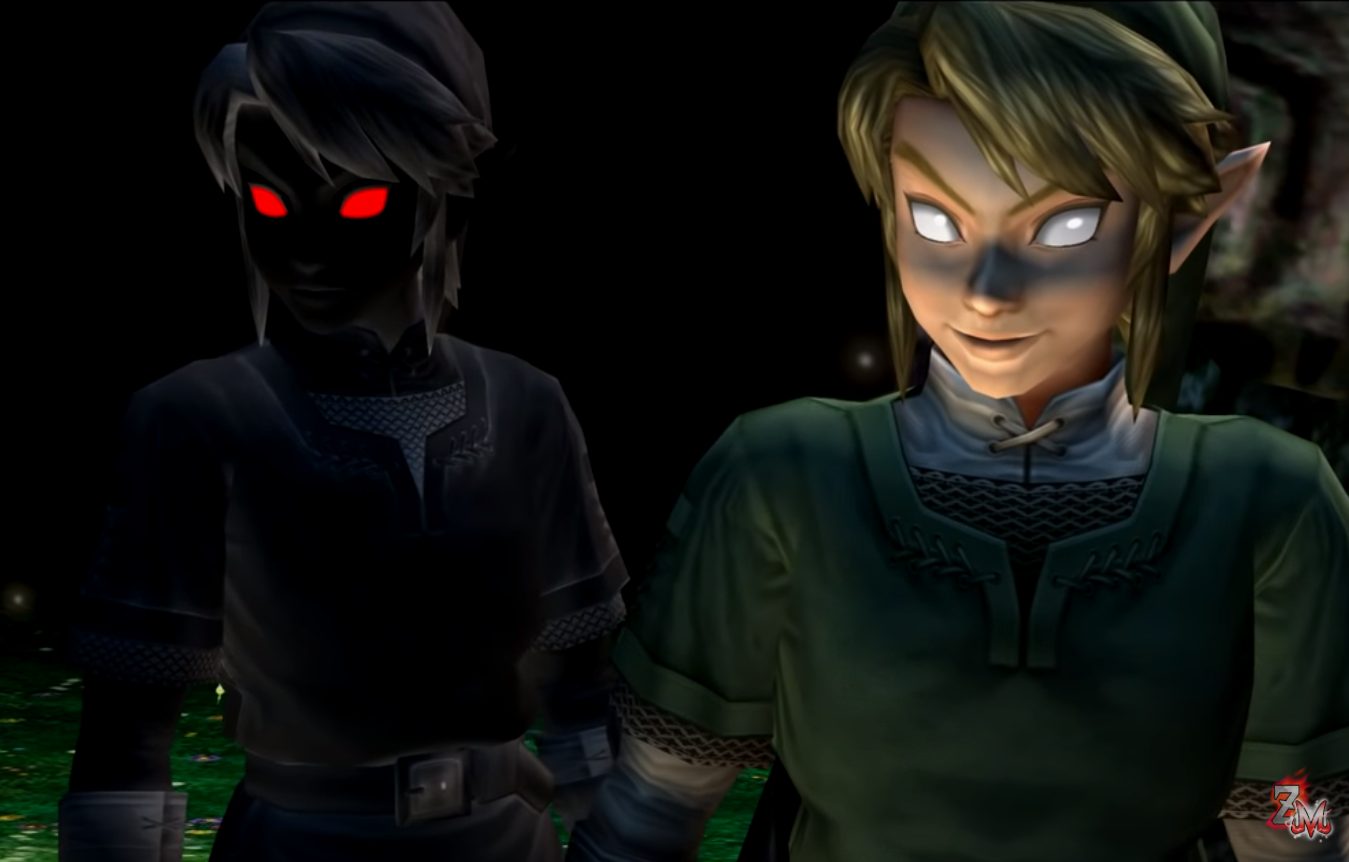
First and foremost, Rowling is a universal bigot and bigotry isn't activism, slurs or otherwise (2025). To that, she normalizes Gothic and sells it to virtually everyone (except trans people), using Gothic's usual highlighting of taboos to further abject stereotypes for profit. And while remembering how state vampirism = feeding mid-abjection (which amounts to bigotry through alienation and fetishization), also remember that: from Marx to me, capital alienates and sexualizes everything (1844 and 2023); it monopolizes violence, terror and morphological expression (monsters) through sex and force (re: Weber, Asprey and me; see: "The State: Its Key Tools" from "Paratextual Documents"); and its qualities through the state are settler-colonial, heteronormative and Cartesian (ibid.). Any excursions into Hell (the unknown/unheimlich, the home in chaos) entail such devices, our current adventure built upon/echoed by past ones stacked, mise-en-abyme (through endless dualistic concentrism), in-and-upon each other (monomyth or otherwise, per palimpsest; e.g., the Cycle of Kings, Shadow of Pygmalion and infernal concentric pattern); i.e., a Russian Doll, staring back at us, belly-of-the-beast, "on the Aegis":
(source: Percy Mohn's "Dark Link: a Character of Reflection and Triumph," 2021)
Furthermore, Rowling abuses "Gothic" to enact witch hunts through persecution language; i.e., furthering abjection while playing the victim, DARVO-and-obscurantism*. Except, Rowling (and her fans) do this with a plethora of different bigotries (-isms) married to phobias. The difference between a basic phobia and an -ism (or phobia standing in for an -ism) is that one speaks to individual intolerance, fear or repulsion (e.g., arachnophobia), and the other links to sociopolitical hatred, stereotypes and violence (e.g., TERFs and Rowling's transphobia part of fascism, as a whole). Rowling's Gothic has both in spades, a canonical Gothic cashing in on terror through moral panic. More bigotry = more profit, which Rowling assembles and presents through the Gothic's "stagey and thin" (re: Hogle, 1994) assemblage of dated clichés and dead, good-vs-evil metaphors. Harry Potter, then, is Gothic without Walpole's irony, Lewis' delight or Radcliffe's enchanting wit. Instead, it's just witches policing witches, good cop, bad cop (the Ministry of Magic and Death Eaters essentially secret-police warrior societies—their own cats-and-dogs refrain comparable to the Jedi vs the Sith from Star Wars, and wizards vs Ringwraiths from LotR, etc, maintaining order). "Wizard" synonymizes with cop, and All Cops Are Bad. In turn, any healthy relationship swaps out for something vampiric towards the state, mid-abjection: ringleader prescriptions of nuclear sex and force, addicted to give/receive violence. Harry kills the bad guy, gets the girl, and becomes a cop defending his castle, at the end (the monomyth trifecta).
*"Deny Abuser, Reverse Victim-Offender" and the theft of different language in bad faith—both common devices used by fascists (which neoliberals essentially are, though they tend to focus on a freeing on the market to allow states [and corporations; re: Mussolini, 1932] to feed as much as possible).
Second, and while keeping those things in mind (which I will remind readers about, deeper in), also remember how these essay-specific thesis statements tie to state vampirism (which appear in bold, to make them more noticeable when they appear):
- The monomyth, classically incumbent on state vampirism, maintains the status quo through universal bigotry as sold to people; i.e., in ways that steal their labor/money and discourage critical thought in bad faith.
- Capital/the state is Omelas (see: Le Guin, footnote 2a). Whatever the form, capital is dead on arrival—gentrifying and decaying on loop while supping vampirically on our blood/staking us in our sleep. This requires that workers wake up while on the slab or, worse, while ignominously holding the scalpel.
- The Promethean theft of power from the gods is a lifelong endeavor [...] Victory is raising a finger to start with, camping those hypercanonical things that enact unironically necropolitics (the deciding of who lives and dies) in monomyth language.
Third, I mention a small Radcliffean equation, several times: "skull = theft" (from "State Vampirism"), which in Gothic extends to castle, or alien castle of the skull/vampire/pirate (etc) as visible or (semi-)hidden, meaning the black/white castle in a centrist monomyth scheme, "clutching pearls" (the Romans fearing Hannibal and his barbarian guerrillas); i.e., of state vampirism alienated from death, but reliant on death-as-alien vs nature-as-alien to endlessly feed on (through necropolitics): the liminal hauntology of war/danger disco (the traveling castle symbolizing capital's boom-or-bust contradictions). Any discussion, therein, concerns the historical-material presence of theft (and generational trauma, rape or otherwise)—generally of mastery (or a master race) in a master/slave dichotomy that feeds to preserve itself at the cost of something else (and which it then tries to hide, cryptonymy-and-abjection, rebellious workers punching up from Hell to resist, woman-is-other part of nature-is-other [female or otherwise, white or otherwise, straight or otherwise, able or otherwise, etc] having the whore's revenge; e.g., voicing our concerns in highly conspicuous-yet-veiled ways, below).
(artist: Allie Reads)
Fourth, this piece—like others in this essay series—features models/sex workers (unpaid labor) from said series; i.e., having the whore's revenge; e.g., Lilith Mae and Maddie Minx, who likewise tie to other models in said series (and work I've done with them, like my interview with Allie Reads, above).
Skull = Theft, and Camping It
Gothic Communism is a holistic, poetic enterprise, which I want to unpack more before we start. Broad strokes, babes.
Here we go. Returning to point three, states feed in disguises that hide/reveal—a cryptonymy that Hogle refers to as "restress labyrinth" in the Gothic novel (1980) and whose holocausts follow that same basic refrain to Numinously camp, novels or otherwise; i.e., in pursuit of divine forces tied to things that aren't wholly visible or invisible, but darkness visible (from Milton) that workers, for/versus the state play with in cop/survivor ways; re (from the Poetry Module):
Ironic or not, castles are the most famous and camp-prone Gothic location (from Britain, anyways). It's not just castles, though, but anything capable of operating in terms of any aspect of the Western home/nuclear family unit as compromised; i.e., as alien (doubled) and fetishized, especially in medieval, dated forms reflecting on societal decay as barbaric, torturous and regressive: the ghost of the counterfeit and process of abjection (unironic xenophobia) threatening an invader demanding access from outside ("Let me in!"). According to these criteria, our "torturous" camp can manifest through any location; i.e., to inherit and reenact shelter through as disintegrating thus dysfunctional, disempowering.

(source: The Darkest Dungeon II, 2021)
Except also in turn, Gothic empowerment is rooted in "disempowerment" as something to reenact through ironic fetishes; i.e., the aesthetics of death, unequal power and alienization (which the state wants to monopolize and ultimately prevent: our reclamation of their power): rape/death fantasies and play that, when ironic, actually empower the subject by making them feel in control through calculated risk; i.e., psychosexual theatre and ludo-Gothic BDSM; re (from our teaching section): "a dark freaky church where no one gets hurt and there's lots of sex, it's the Neo-Gothic in a nutshell." Trauma manifests through the body and depictions of the body in "ancient," castle-like forms, to which "rape," "torture" and "sacrifice" are very different in quotes than without: a "prison" that sets you free, a "torture dungeon" that restores your passions and your health, a "dangerous" place (often a castle in some shape or form) fronting as Capitalism decayed that opens your mind [emphasis, me] once inside (source: "A Song Written in Decay," 2024).
To do so is to play with enormous feelings that paradoxically conceal themselves (usually in a closed space/space that feels menacing and oppressive, Sublime, Weird, Numinous, etc); i.e., "a place of concealment [or vanishing point] that stands on mere ashes of something not fully present," Hogle would write in "Restless" (source), and what Manuel Aguirre would describe as the infernal concentric pattern: "where the hero crosses a series of doors and spaces until he reaches a central chamber, there to witness the collapse of his hopes" (source: "Geometries of Terror," 2008). In Gothic (and from Medusa to us), power is mythical as something to commune/play with, accordingly. Think of it as power "in small," of capital and its decay in small/mise-en-abyme—for owners to exploit workers while reifying (and playing with) power that upholds Capitalist Realism (canon), or for workers to reify power themselves and interrogate where it is: upon their virgin/whore bodies (camp; re: "Interrogating Power through Your Own Camp" and "Back to Jadis' Dollhouse," 2024). The emblems exist for both sides, but their function isn't guaranteed or obvious—a black pearl (or vampire in their coffin) that takes as much as gives, and threatens radical transformation when certain boundaries are invariably crossed "too far" (usually death).

I digress. Skull = theft and home = vampire/alien (the uncanny parasite) superimposed over the middle class's idea of the state/nuclear home; i.e., those with impostor syndrome fearing replication and replacement (re: the ghost of the counterfeit): "their" land and homes occupied by the owner class (and their scapegoats), who call such things "danger" (the Black Veil, from Radcliffe; re: "Radcliffe's Refrain," 2025) or "prosperity" (the neoliberal MO—one where fascism and Communism share the same kayfabe stages and costumes). Either way, theft is present according to a site of rape/power imbalance and abuse—often dragons as symbols of power and witches, of persecution, which iconoclastic workers solve any confusions about; i.e., by uncovering the mystery of theft, mid-abjection (the sudden appearance of the pirate's cove, whorehouse or dragon's roost, etc, over home to highlight a secret Imperialism already there). They do so under surveillance, themselves; i.e., when playing theatrically with these devices alongside class traitors (therefore enemies); re: during ludo-Gothic BDSM to cryptonymically (and passionately) camp canon/reverse abjection and Capitalist Realism anisotropically and apotropaically in duality (the Promethean Quest, or half-real quest for power/theft of power from the past: the Wisdom of the Ancients, or cultural understanding [and application] of the imaginary past alongside real life).
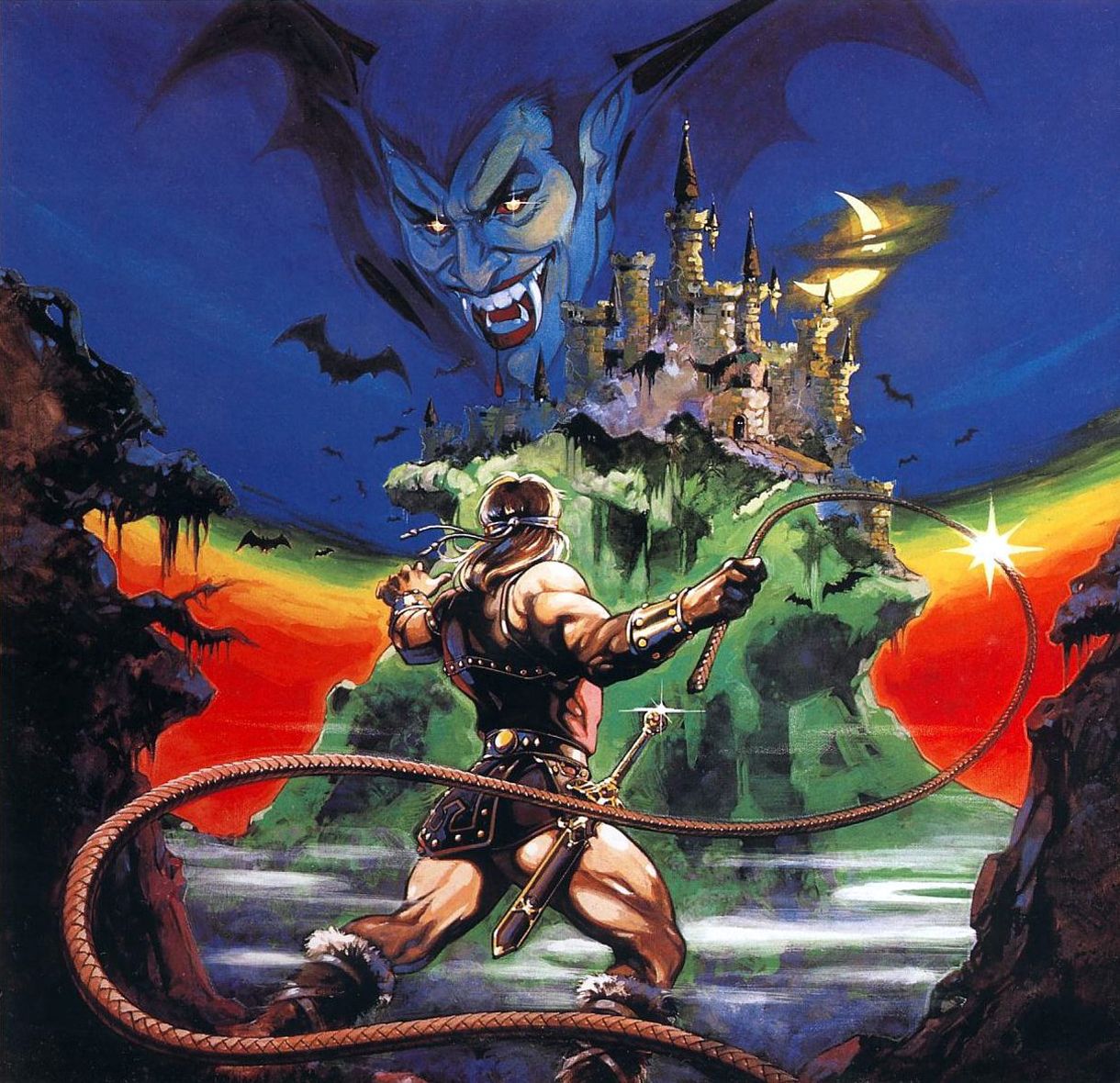
From "strong-thighed bargemen" to evil counts, bitches love monsters great-and-small (the castle generally an extension of its occupant and vice versa, through questions of ownership/contested mastery [over sex/the nuclear home] resolved through force, above). In turn, power is stored in our so-called "batteries" (the Gothic loves a good pun, hyphenating sex and force in search of Numinous [divine, mighty and alien] things; re: "Castles in the Flesh," 2024)—both as power sources, but also symbols (and devices) of class war liberating sex work as a whole (through intersections of gender and race, thus culture more broadly): emblems of some-such "land back, labor back and sex back" slogan, class-war-is-ass-war. Moreover, class war is ass war "on the Aegis"; i.e., "class war via sex work (with intersections of culture and race), the whore's revenge occurring by raising emotional/Gothic intelligence and awareness to reduce rape on a societal level (re: intersectional consciousness during said revenge)" (source: "The Wolf Is Loose: Honoring Renee Good (and All Victims) by Fighting Back," 2026). Every body is a black mirror to reverse abjection with—the whores of Gothic Communism using what we got: darkness visible to break state icons (and Capitalist Realism, Matrix-style; see: footnote 3); i.e., as an operatic, highly campy matter of understanding sex and force (and how to play with them)! Die on these hills, if you dare!

(artist: Romantic Rose)
As my PhD explores, such things sit between canon and camp; e.g., "Die, monster! You don't belong in this world!" (source: Clyde Mandelin's "How Symphony of the Night's 'Miserable Pile of Secrets' Scene Works in Japanese," 2013; cited: "Essential Keywords, a priori" from "Concerning My Audience, My Art, the Reading Order and Glossary," 2024). Yet, the feeding function (and trauma/demonic exchange, transformation and desire) for the state is solely to enrich the owner class (which cops, pimp-like, facilitate; i.e., nature is monstrous-feminine for the state to vengefully exploit, pimps-and-whores (the oldest profession, therefore labor struggle haunting the present in highly policed but also commodified ways). So keep the fractal recursion in mind; i.e., state's rights (to prey on workers) vs worker rights (to resist rape), Pygmalion vs Galatea (or Perseus vs Medusa) cryptonymy-and-abjection (re: "Introducing Revolutionary Cryptonymy" and "Transgressive Nudism," 2024 and 2025). "Capitalism," I write, "leads to universal alienation, sexualization and fetishization to serve profit, which has a functional opposite—worker liberation. This means that monsters speak to [the good/evil in] and around us as a historical-material consequence of those dialectical-material forces forever struggling between owners and workers [obedient or otherwise]. They take infinite forms, but do fall into some fairly distinct classes" (source: "Monster Volume Outline, part two," 2024).
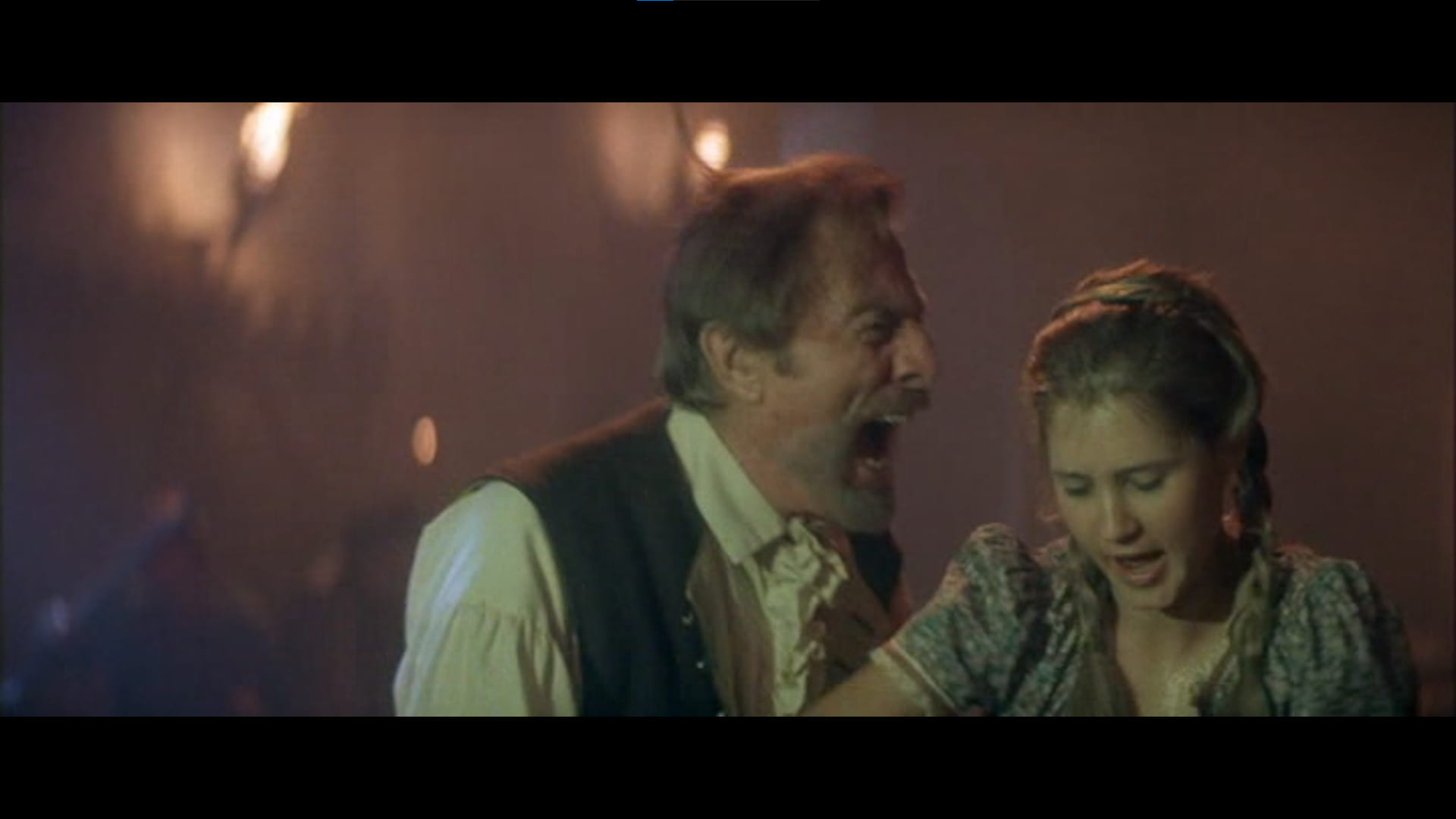
The carrot and the stick, Gothic is exploitation and subjugation, an invigilation of the damned; i.e., with irony and without, alongside liberation as likewise ironic/unironic, canon-vs-camp; e.g., fears of dying while alive (the live burial trope), defense of the home being an overreactive defense: "[F]eed, or we're all gonna die!" (above); i.e., of it, the state, seen as oneself that must feed yet doesn't permanently heal or respond to medication (senescence, capital/the state raping and dying by design): a historical-material, terror/counterterror binary for the state to feed and anisotropically for workers and their rights to also feed—a subversive, dialectical-material means of counterculture, "on the Aegis," its loud/soft reeducation happening alongside ceaseless entropy demanding release from capital's baked-in contradictions and abuse; re: skull = theft, which translates poetically to monomyth action punching down to preserve the state (to reward the hero at great expense), and Promethean stories punching up to throw a wrench in the works (workers vs owners, state's rights vs worker rights forever).
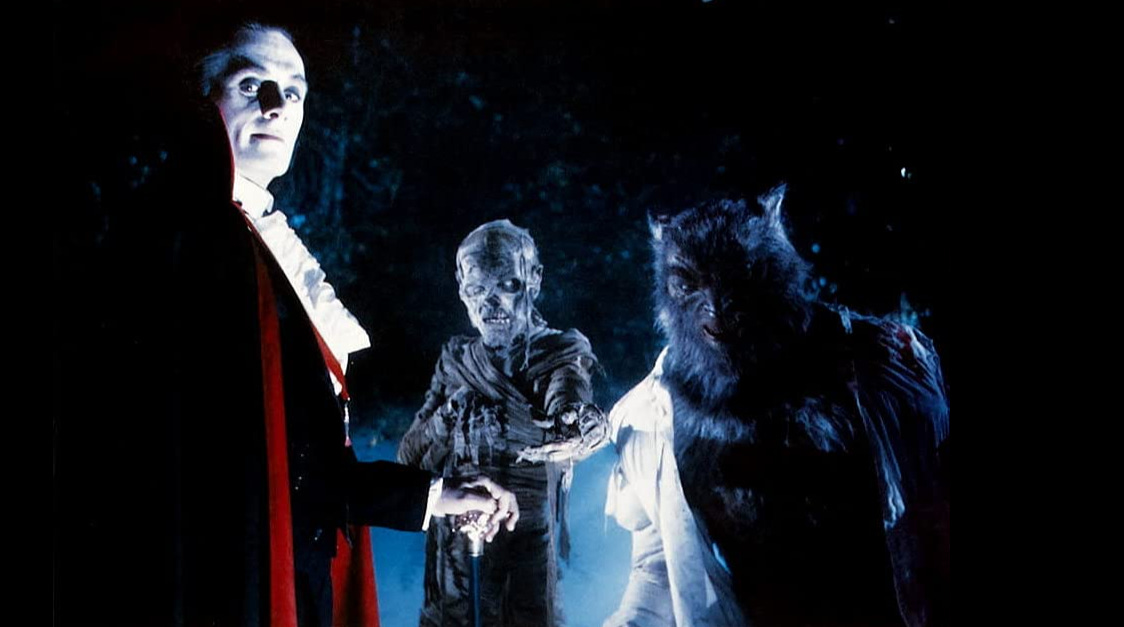
In turn, it's a liminal space to be messy through play as frank—not before/after concealment as Alok Vaid-Menon explains (source: Facebook). We use the same language (darkness visible when the membrane narrows and Hell's mouth opens wide, above) and in the same basic hero/villain, demon/detective ways: the only difference is the flow power travels—cryptonymy-and-abjection, canon-vs-camp. What could be called "the human condition" (and the hidden pain, secret sins, and buried regrets that rise to the surface) reflect in these symbols and the struggles they ominously portend: that we live and die, love and betray in ways both ordinary and exceptional, in a variety of stolen things both ways; e.g., videogame speedrunners (of the non-Nazi kind; re: "Hot Karl," 2025) still falling victim to the usual historical-material realities and ancient-to-modern comedy/drama: "As someone who investigates fascism in gaming/the speedrunning community, there's something oddly relaxing about a top-level speedrunner who isn't a Nazi. Just a seemingly normal dude talking about the game he loves in fairly mundane ways, railroaded by a rival player and their lover [so scandalous]" (source YouTube Community Post, Persephone van der Waard: 4/6/2026, in response to Niftski's "They Changed the Rules to Sabotage My TAS Tie Progress," 2026). Good actors work alongside bad in a shared masquerade.
Likewise, fascists can take and warp phrases such as fascio (meaning "bundle" or "sheath" but also "league") in bad faith to speak to unity-as-platitudinal, home defense begot from theft in ahistorical ways backsliding regressively into capital's worst habits out of its barbaric past; i.e., that serve the state through false rebellion (re: Parenti's Blackshirts and Reds, 1997). But the same idea—of roots bound together to withstand storms (which fascists also call themselves, Steven Miller stealing from older Nazi Joeseph Goebbels)—can evoke through Indigenous cultures (and those "going native," as I have): "tree magic" to disguise and advertise workers and nature versus state vampirism!

(source: Facebook)
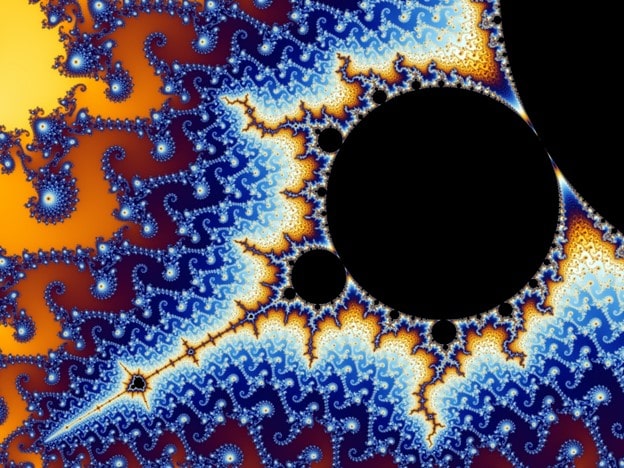
Furthermore, Gothic—from Plato's allegory of the cave (c. 380 BC) affecting how we see in different ways (and simulacra or "shadows"; re: "Who's Fredrick Brennan?" 2026), to more modern versions of the same basic illusions (e.g., Milton, Swift, the Shelleys, Marx, Derrida, etc)—punch through their insulating fabric (what Frederic Jameson, in 1982, called "elaborate strategies of misdirection") to invoke supreme forces; i.e., that push-pull workers to get at otherwise forbidden things the state can never fully hide. Instead, they can only conceal partially in the wake of their own feeding as part of the plot, the dialectical-material "meta" of nature as-alien vs the state, cryptonymy-and-abjection. A veritable, kayfabe-style wrestling match upholding or denouncing the nuclear model (and its vampirism through the state), any perceived quest for a solution sits "in the middle" (which I argue, demands camp to break Capitalist Realism "on the Aegis," but we'll get to that): "[this infernal concentric pattern has] in Gothic one and the same function: to destabilize assumptions as to the physical, ontological or moral order of the cosmos [... It is like a Mandelbrot set (left):] finite, and yet from within we cannot reach its end; it is a labyrinth that delves 'down' instead of pushing outwards. From the outside it looks simple enough: bounded, finite, closed; from the inside, however, it is inextricable" (source: "Geometries of Terror").
Or as Chris Baldrick writes in "Introduction" to The Oxford Book of Gothic Tales (2009), "For the Gothic effect to be attained, a tale should combine a fearful sense of inheritance in time with a claustrophobic sense of enclosure in space, these two dimensions reinforcing one another to reproduce an impression of sickening descent into disintegration" (source: my grad school notes). It gives a haunting sense of one's personal feeding (and blood ties) being for something else under larger forces—a feeling of replication and replacement through fakery and lies (re: the ghost of the counterfeit), and one that gets at a variety of uncanny sensations (my focus being the Numinous):
In a period of industrialization and rapid social change, according to Punter, Gothic works insistently betrayed the fears and anxieties of the middle classes about the nature of their ascendancy, returning to the issues of ancestry, inheritance, and the transmission of property: "Under such circumstances, it is hardly surprising to find the emergence of a literature whose key motifs are paranoia, manipulation and injustice, and whose central project is understanding the inexplicable, the taboo, the irrational [madness-equals-Numinous]" (source: James Watts' "Contesting the Gothic: Fiction, Genre and Cultural Conflict," 1999; cited: "Gothic Definitions," 2021).
It's what I call oppositional praxis and synthesis (2024): the application of theory/cultivation of daily habits praxis demands, one letting off steam and paradoxically (again) at the same time and in spaces our enemies also share; i.e., using the same language while performing power in/as "grey area" (re: "Notes on Power," 2023). It oscillates to affect people where they are, seeking solitude among the mighty and the fearsome, I-want-a-hero: power we poetically reify and perform for/from/among ourselves as mythically weak/strong (from Eco, 1995). Total safety is a myth, a perceived absence of safeguards required to move through/summon Hell, Persephone-style (or Galatea, Medusa, Hippolyta, etc). The Gorgon is Communism in small, but can tokenize in subjugated forms, gaslight-gatekeep-girlboss:

(artist: Autumn Ivy; cited: "Death by Snu-Snu," 2024)
My emphasis is the whore, cryptonymy-and-abjection, and Amazons are warrior maidens with a whore-like character (whose alter-ego, the Gorgon, is the openly "whore" side of that paradox; re: "Rape Reprise" and "Always a Victim," 2024) "When such a castle [or castle-like body, above] appears, it is time to be afraid; the colonial harvest is at hand. Yet, precisely because the state does not hold a monopoly over violence, terror and morphological expression, a demon or castle [the liminal hauntology of war/danger disco] needn't spell our end; it can represent our sole means of attack, reclaiming said poetics' endless inventiveness to turn colonizer fears back into their hopelessly scared brains" (source: "Prey as Liberators," 2024). Crisis comes; a hero is summoned, generally one-foot-in-Hell already and returning from the void to kick monster ass (again). But doing so happens in duality through the usual debates, a given "damsel equally 'in peril'" through calculated risk as staged (above and below). To see the whore is to look on the exploited, but also those who fuck back in ways that can tokenize/disappoint us (as Autumn did; re: "Toxic Schlock Syndrome," 2025) but also don't always while still making a lasting impression (as Harmony did; re: "Thanking Harmony (again)," 2025). The gimmicks are there, but so is the theory and not-of-this-Earth power it holds during ludo-Gothic BDSM. Sex is a weapon, but its use varies through dialectical-material context during the dialectic of the alien: as power source of paradoxical liberation when used consciously for that aim (re: canon vs camp). We generate markers of such confrontations while alive, then pay them forwards like Charon's canoe, her-tits-were-there (or butt, below). Whores are heroes and villains in duality through dialectical-material struggle:

(artist: Harmony Corrupted; cited: "Out of This World," 2024)
I go on to add elsewhere,
"Strength," like demons, has infinite forms and configurations; e.g., "weakness" is strength, wherein "soft" femininity tops from below [or vice versa, and a million in-between combinations]. Furthermore, this castled, animalistic charioteer's from-outer-space liminality emerges through the uncanny ability to play with highly regulated things, opening the door to better worlds by transitioning towards them through the plastic, doll-like language of the imaginary past. "She mighty mighty!" becomes one having the whore's revenge by changing shape and expressing oneself in unequal, forbidden way grist for her "mill," her castle-in-the-flesh a graveyard-sex unheimlich coming paradoxically alive! "Rise, rise and do my bidding!" (she says to your dick). /Artists can combine literally anything with anything else (source: "Amazons as Whores (feat. Amanda Nicole)" in exhibit 43e2c3b from "The Riddle of Steel; or, Confronting Past Wrongs," 2024).
Rebellious whores sit in Pygmalion's shadow, paradoxically exposing themselves to punch up/speak out against genocide (silence is death, segregation no defense from the state endlessly eating to stay on top): the louder the better and educating a more joyous, self-accepting approach to life. No slut-shaming or Omelas whores to blame; no witches to burn at the stake, saint/sinner.
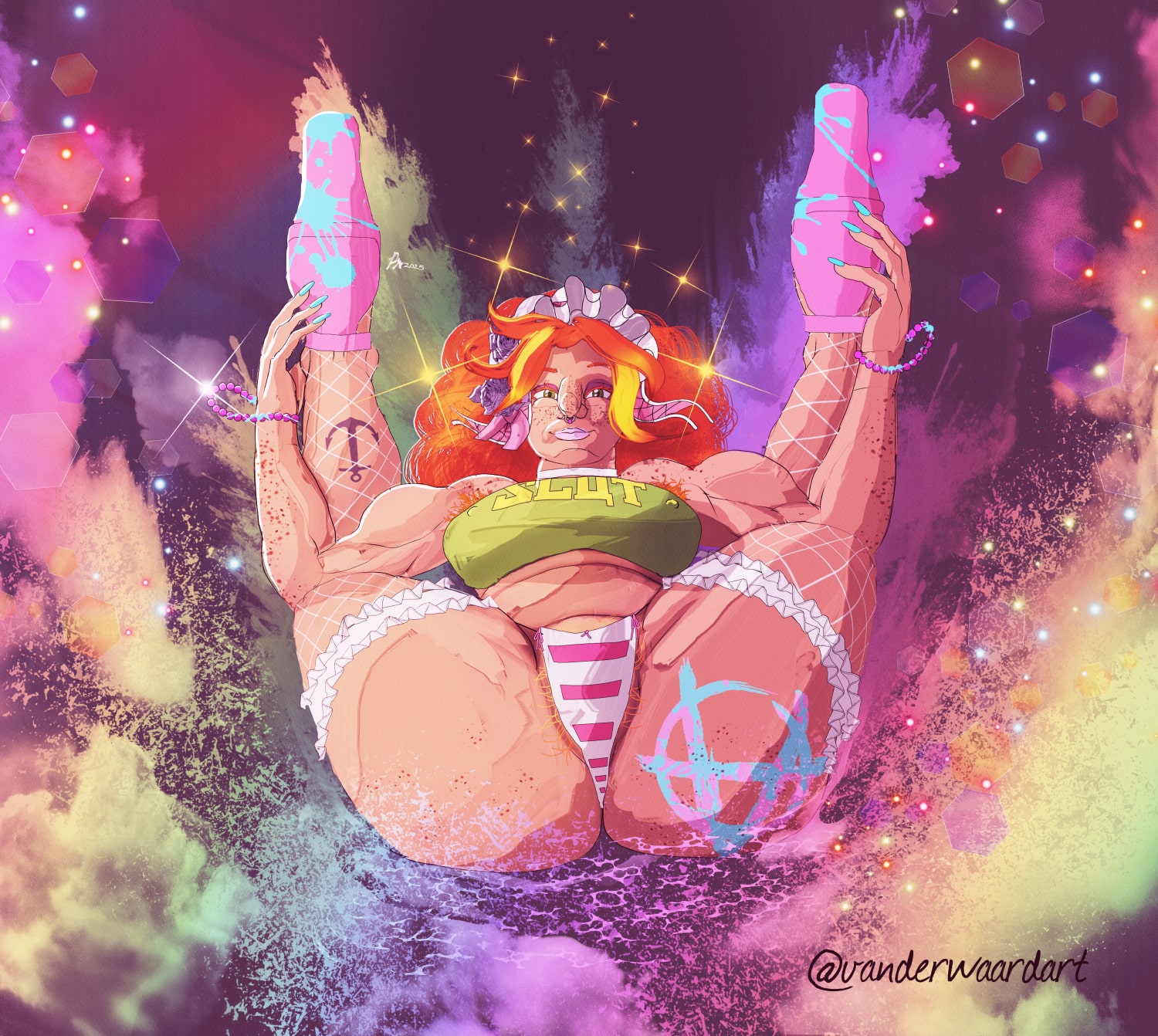
(model: Nyx; artist: Persephone van der Waard)
To that, nothing is more controlled than sex, which the state needs to survive/perform capital and state vampirism, cryptonymy-and-abjection; i.e., through singular interpretations and outcomes, jousting whores-are-monsters (of strict/gentle varieties, above and below) with antithetical ones (the former repressing those who wrestle power from the state, which tortures out of them their power to then force the flowing of money through nature; re: Patel and Moore, whose A History of the World in Seven Cheap Things [2017] we'll return to when defending unpaid labor as part of revolutionary movements; see: footnote 6): a vice-character destroyer/Great Destroyer whore, barbarian, pirate, and/or bastard—one canonically to trot out, scare the working class during Capitalist Realism, then go back inside her cage as tower (castle, dungeon, etc) of doom, virgin/whore; i.e., the usual misogynistic refrain, which Rowling furthers through cartoon characters like Lily Potter (the Madonna) and Bellatrix Lestrange (the harlot, succubus, mistress, etc): "woman is other" in the usual fetishizing ways. Rowling's normalization of strange (as a commodity to sell and further her misogynistic stereotypes upholding the nuclear home) very much extends to women (cis or otherwise, straight or otherwise, white or otherwise), and values those closer to the in-group middle (and in doing so reduces complex trauma [and its crossed wires regarding pleasure and pain] as yet-another-freakshow to sell to normies, comic-book-style; i.e., not so different than Beowulf or Batman, essentializing illness in ways that eliminate most of the congenital/comorbid [nature-vs-nurture] factors).

(artist: Lera; cited: "Amazons as Whores")
Female or otherwise, nature is monstrous-feminine for the state to abject; e.g., the femme forte/fatale, extending to phallic woman, Archaic Mother, Amazon, Gorgon, etc, as different sides to a holistic Cubism (echoing Picasso's sexism and pedophilia): hysteria, bicycle face(!) and the Wandering Womb tied to witchcraft accusations, but also imbricating persecution language like blood libel, sodomy and Orientalism. Any and all rest on modules of class, culture and race for the state to abject; all roost in all the usual haunts Hell calls home that workers revive in different ways; see: footnote 4b); re: white Indians, black planets (from "Unto the Breach," 2026). Canon canonizes, policing the whore in tokenizing forms that just as easily highlight their betrayal "on the Aegis" (re: "Policing the Whore," 2024): a maze to navigate and, as Patel and Moore describe of all maps under Cartesian dualism, "torture nature's secrets out of her" (source: Seven Cheap Things). The same applies to any monster or map under the sun (re: "Scouting the Field" and "A Note About Canonical Essentialism," 2023 and 2024).

(artist: Andreas Marschall; cited: "Thesis Body," 2023)
Except, singular interpretations are a myth monopolizing the same basic aesthetics/dialectic of the alien (nature-as-mighty-vampire-whore to kettle, tame and pimp through bullets, bombs and war crimes, above). Gothic—for all its parody/pastiche replication, ranging from mad science, ancient bread-and-circus supermen (and women), rogue militaries, and black magic—essentially boils down to sex, drugs and rock 'n roll, used for different aims, canon-vs-camp, as a multimedia refrain; i.e., a mode of expression, ranging from novels to cinema to games (video or otherwise, my original focus being on Metroidvania; re: "Lost in Necropolis," 2018). From vaudeville to comics to B-horror trash, all regard power as played with/sought out in paradoxical "safe spaces" of "danger"; i.e., while the state feeds on us/tranquilizes labor and nature (unpaid or otherwise) to rape in our sleep. So we bump-and-grind with the whore, mid-abjection, interrogating whatever turmoil (or delight*) typically results per calculated risk; re: ludo-Gothic BDSM, chasing the palliative Numinous (see: "The Quest for Power," 2023). A jester's refrain making fun of the king in the king's court (re: "Tactical Frivolity," 2026), it might seem like bullshit/composed of nonstop lies. Then again, everybody lies (and steals), the Gothic's useful abstractions (of titantic forces) merely preferential code, corruption-is-the-data.
*Drama and bodily functions (among other things) performatively overlap (re: "Medicine," 2024); i.e., playing among divisions while hyphenating them; e.g., male/female. Female desire, in classical "Female Gothic" (re: Moers, 1976), is classically forbidden and coded in contradictory semi-acceptable ways, but whose much-touted chastity (and violations) are easy enough to camp; i.e., "storm my castle" (or something similar) a common bedroom refrain that many refer to, themselves, as architectural-morphological statements; e.g., "you ever get so fucking horny that your pussy fills with wet for like 6 hours" / "Nile river pussy, you could build a civilization around it" (source skeets one and two, BigButtBiggerHeart: 4/9/2026). Things like male/female, or proper/profane, very quickly begin to confuse, poison-was-the-cure and all's-fair-in-love-and-war. When in Rome, use whatever works; the Gothic uses those mythical, poetic things that people historically-materially respond to (and anyone hypocritically dismissing those—as mere "immature garbage" and us as "theatre kids" to laugh at—being homophobic prudes, anyways; re: "Understanding Vampires," 2024). Gothic—like a trauma nurse, circus performer and/or fighter pilot—goes where the awesome power awaits: between life and death.

(artist: Jocelin Carmes; cited: "A Song Written in Decay").
To that, it's a facet not just of the human condition (and having fun at the expense of one's enemies), but of our language itself in dialectical-material opposition:
First, an exhaustive (and hardly comprehensive) list of general cryptonyms, which highlight the cryptic nature of oral-to-written human language. These include but aren't limited to: double entendres, non-sequiturs, euphemisms, white lies, concealed bribes, open secrets, patronizing admonishment, gaslighting; segregation, relegation or consignment; censorship, suppression, repression, and oppression; figurative or literal imprisonment; live burial, incarceration, compelled silence or speech (torture); misdirection (creative), embellishment, tall tales; misdirection (rhetoric), lies, "making nice," false courage, false cowardice; myths, malapropisms, misnomers (necrophilia, pedophilia) or generalizations (necrophobia = superstitions, historical abuses, taboos, prejudice, misconceptions, etc); rumors, gossip, urban legends; allegory, metaphor, poetic license, lionization or otherwise self-aggrandizement, darkness visible; riddles, passwords, shibboleths (and songs), code, cryptic responses; synonyms, games of telephone, figures of speech, fake news, optical illusions, special/visual effects, shadow plays, sarcasm, false praise (and other linguistic pragmatic techniques); anonymous speech, pennames, alter egos, pseudonyms, noms des guerres, dead names, new names or a combination, like Charlotte Brontë's Currer Bell (source: Sandro Jung's "Currer Bell, Charlotte Brontë and the Construction of Authorial Identity," 2014); perceived irrelevance (apophenia) and pareidolic danger, trauma or vaso vagal threats; veiled threats, disguised praise, friendly insults, "love taps," deliberate contradictions, paradoxes; anathematic status, disorder, chaos, entropy, decay, senescence; treachery, unreliability, perfidiousness; replicas, imitations, simulacra, counterfeits, fakeries, deceptions, sleights of hand, tricks of the mind, Freudian slips of the tongue; guarded language, dubiousness, apprehension, caution, disassociation, hallucination, altered states, possession; rejection, abjection, displacement, doublespeak, Gothic doubles, obfuscation; recuperation, appropriation, appreciation; centrist, neoliberal and fascist vs Communist hauntologies and fencing political euphemisms, recuperation, sublimation, etc…

(artist: Charles Burns)
Furthermore, not only can the above list "mix and match" various general cryptonyms at the same time, Gothic cryptonymy combines monster poetics with general cryptonymy (take your pick); i.e., as a form of compound bias and concealed exposure! / To it, Gothic Communism uses general and Gothic cryptonymy (thus xenophilic monster poetics) against the state (source: "The Future Is a Death Mall," 2025)
The question is, what for? I use it to expose predation, Rowling or otherwise. Wherever the pimp goes, the Gorgon—who, along with her pedagogy of the oppressed (from Paulo Freire, 1968; see: footnote 2b) cannot die—follows unbridled (a white whale of sorts, or pale horse): an alien being closer to death, and all the things the owner class (and their traitors among the middle class) fear thrown back in their cynical and/or superstitious, scared-stupid faces. A world where unironic rape (minus quotes, tied to productivity and profit) is no longer possible, nudity—of those treated like whores, by state vampirism—something to suddenly celebrate as rightful; i.e., in the eyes of themselves and their allies treating them as equals: free to roam unafraid, thus to heal from rape by changing how others see it, means-motives-and-opportunity.

(artist: Henry Fuseli; cited: "Concerning My Audience, My Art, the Reading Order and Glossary")
Power is something to seize where it is found (usually in/upon our bodies and their art, above); it takes infinite forms and arrangements per case, including its flow—consent something to uphold or deny through play's dialectical-material context, thus cryptonymy-and-abjection's dualistic compensation and exchange as steering and handling power (which, no matter how "dark," Promethean or Faustian they appear, are equally flexible): play = control and context determines consent through dialectical-material flow of power, on and offstage; i.e., in so-called "idle hands" as avatars for activists to embody and relate to, like anyone (e.g., the pillow princess chasing the bad boy in fantasies while seeking material equality for all, in real life). There is no singular interpretation, but plenty of confusion to work through during holistic study across space and time. In turn, nudity and submission aren't strictly weakness, but something to subvert in all the usual ways, mid-recursion (which we'll return to, with "Fortune Favors the Bold": nudity as weapons and armor, Gorgons-and-Amazons).
Bitches are nerds and nerds (whores, in particular) love monsters/are the monsters, under capital; i.e., we iconoclastic whores make our own monsters, virgin/whore, and fuck with these to camp canon/seek answers and relief however we wish (re: "I'll See You in Hell" and "Call of the Wild," 2025)—all to interrogate the sexualization of nature/those "of nature" state vampirism demands upon us: reclamation through playing with our power, during ludo-Gothic BDSM. Angel/devil, sex-positive or repulsed, poetry = thought, as such; i.e., through whatever feels good and helps us learn, art/porn (two sides of the same coin). Why not both? Pimps are bad, but we must summon "them" to work out why they're bad, per calculated risk.
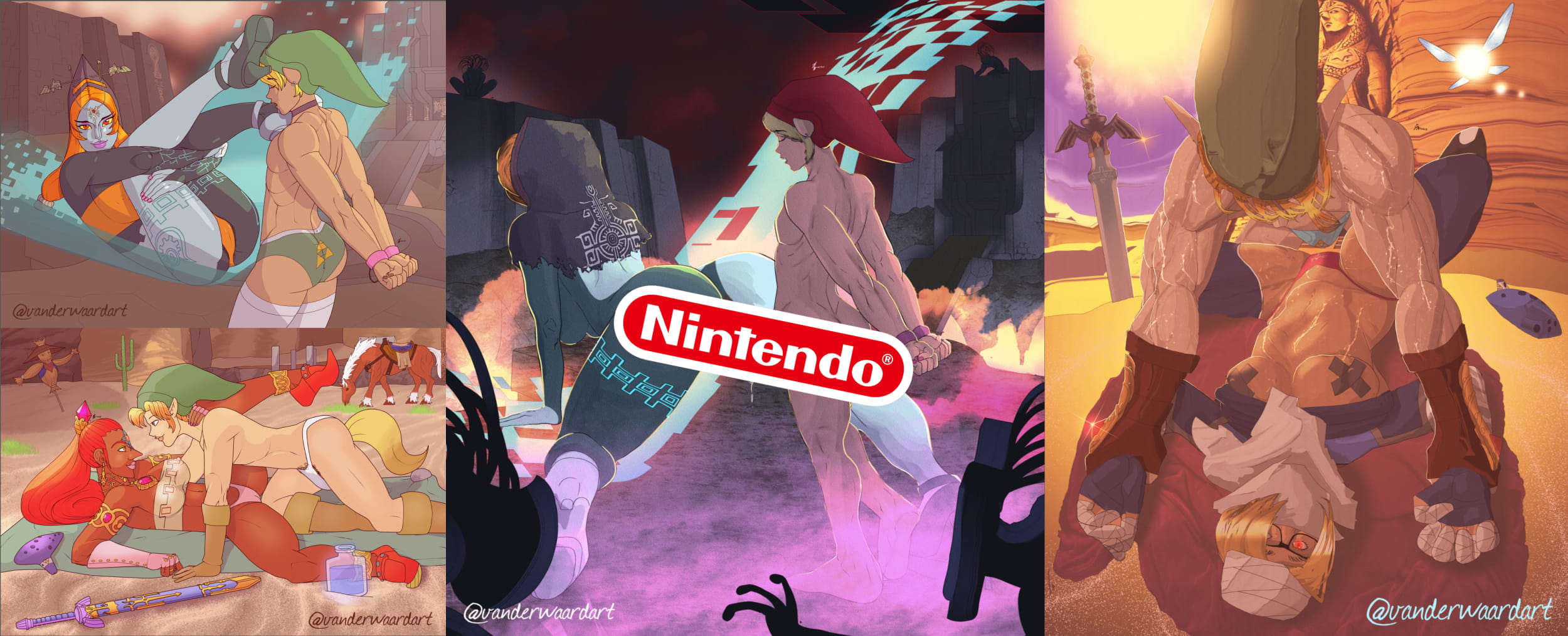
(artist: Persephone van der Waard: upper-left, bottom-left, middle and right)
Again, grey area—a kind of endless twilight replete with princesses, wizards and warriors (and similar devices) that speak, one-and all, to psychosexual trauma; i.e., through asexual means (of sexual performance on a spectrum of enjoyment; re: "Crash Course: An Introduction to Asexuality and Demisexuality," 2025), and whose fantasies of power (and public nudism) invite numerous returns, mid-abjection (e.g., Zelda's Link and Midna, above, being my kryptonite/darkness visible; re: "Patriarchal, Nerdy Hatred Against Transgender/Non-binary People, Intersexuality and Drag," 2022). Every entry contributes to its dialectic; every contribution leaves something behind for others to find, one weird nerd to the next (from Walpole's animated miniatures and giant suits of armor to whatever workers produce nowadays, parody and pastiche). Continuous dialogs are healthy insofar as resisting state vampirism is healthy (and humans are a social species, horny or otherwise; re: Niftski and speedrunners; e.g., Fast Idiot Boss weighing in on that dust-up with "Controversy ERUPTS in Super Mario Bros. Speedrunning!" [2026] because they love the community they're in—meaning despite the drama [and bigotry] videogames house and invite, before/after Gamergate): the state enters crisis; it panic-eats to die, then claw back like a zombie its lost ground (re: through bigotry and monomyth stories, mid-abjection). But eventually the system reaches its limit, both mechanical and ecological.
I could go on, but the show must go on (and I think you get the point). Let's continue with "Foreplay" into the essay itself. We'll touch upon these ideas more, deeper in, but don't have time to cite their exact definitions (again, refer to "Paratextual Documents"). To that, here's some other material I can recommend before we start (alongside the links already given).
Citing My Praxis Volume
This piece, in particular, cites my Praxis Volume; i.e., a text that pointedly considers ways to fight back while synthesizing praxis through daily cultivated habits (or hobbits): the raising of emotional/Gothic intelligence and awareness through intersectional solidarity to break Capitalist Realism. Expect a variety of references to it, in particular—in no small part because Volume Three, despite the number, was actually where my book series began, and started with critiquing TERFs and J.K. Rowling before segueing into other forms of tokenism my series at large explores.

(model and artist: Harmony Corrupted and Persephone van der Waard; source: "Foreplay: Introduction, Before the Plunge, and Thanking Harmony (again)," 2025)
Citing My Monster Volumes (footnotes)
This piece also cites or references my Monster Modules, The Undead (2024) and Demons (2025). While "Dead on Arrival" makes for a good introduction, those are big fucking books with tons of ideas (the Gothic is endless). This includes dissecting monsters (not just Rowling's corpse, however fun that is); i.e., as poetic ideas we then, like Frankenstein's Monster, apply to real life (and vice versa)—all while gladly enjoying the symbols themselves (often for nostalgic purposes, which we then combine with critical power to move mountains). So I strongly recommend you check out the Monster Modules; i.e., playing is a powerful way to learn and monsters are cool—especially sexy monsters/personified taboos concerned xenophobically with sex (e.g., vampires, moral panics and penetrative, kayfabe-style violence/sold-to-kids persecution language, below): through Gothic's tell-tale, parody/pastiche navigation (and various hyphenations) of sex and force (re: "Psychosexual Martyrdom")! The more you play with them in ways that open your understanding of capital, the less Capitalist Realism affects you and the more you can subsequently reverse abjection through the Gothic's greatest gift: the ability to reshape and reimagine power in different-than-current forms, which perhaps never did but maybe one day could when given flesh in our brains. Necessity is the mother of invention, creation begot from the death of things whose time to die has finally come!

(artist: Paul Mann; cited: "Concerning Monsters" from "Appetizers; or, Paratextual Documents for Volumes One through Three," 2025)
"How about side by side with a friend?": Thanking Ethel Thurston
"I don't know half of you half as well as I should like; and I like less than half of you half as well as you deserve." Not this time; this piece dedicates/gives very special thanks to Ethel Thurston aka Essence of Thought. Though other authors appear as vital (or regrettable) citations, therein, many are recent discoveries and/or less influential beyond simply bashing the Queen of the TERFs (doing God's work). Ethel's work, by comparison, tremendously impacted my own; i.e., while covering transphobia/trans rights herself, for years (dating back to at least 2015 through her own adventures, below—a time when I was still studying abroad, in Britain). Simply put, she's a rockstar/fellow magician and worthy of all the praise I—something of a sorceress, myself—can muster. Her community has made me feel welcome, as well, giving me a chance to share my work/contribute to something larger than myself—to make the world a better place for GNC people, at large (and all intersecting minorities, below).
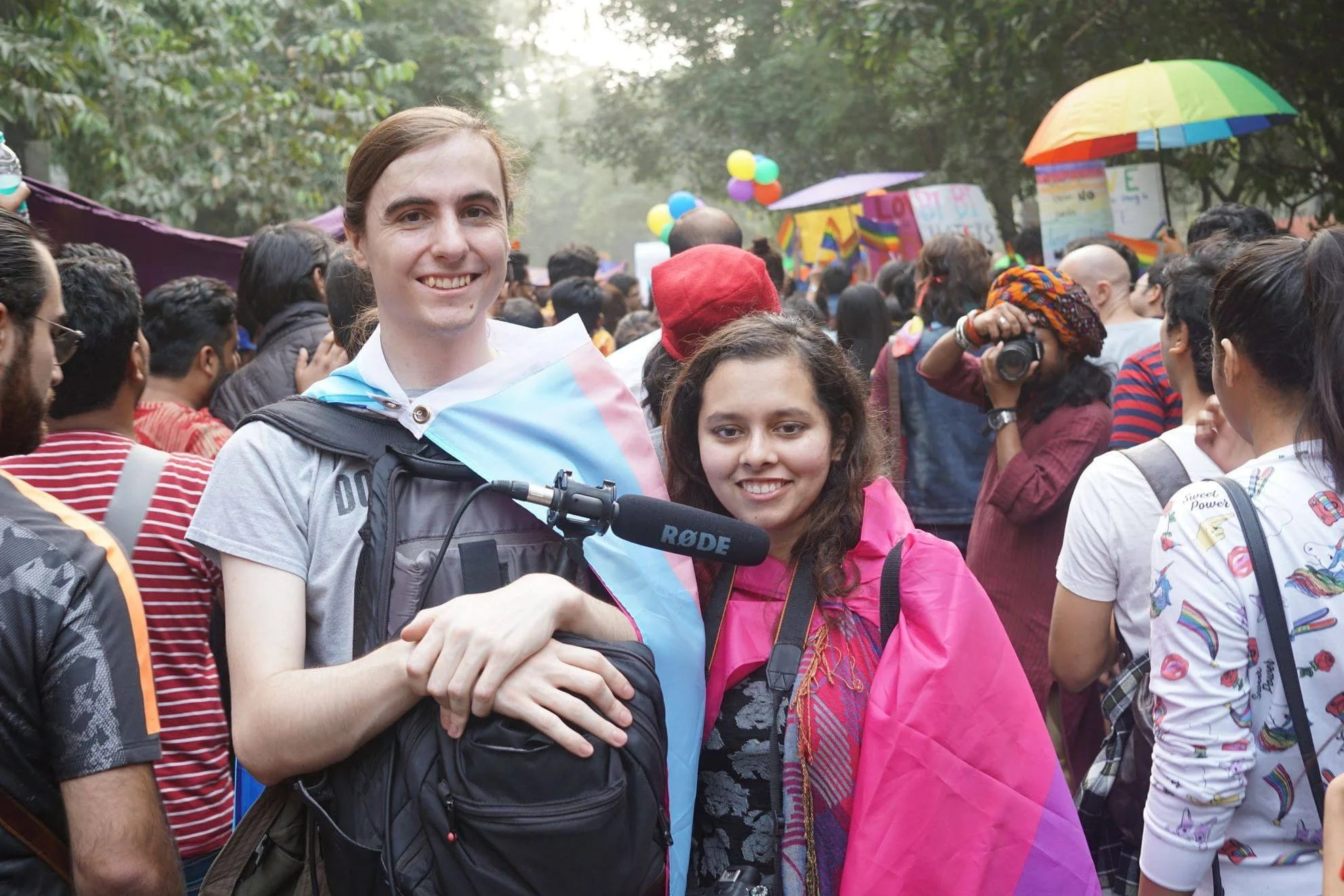
(source: Udita Chakrabarti's "My Non-Binary Partner and I Were Told Our Relationship Would Never Work," 2018)
I first encountered Ethel during in the early 2020s: when learning about Natalie Wynn's enbyphobia, but also Jill Bearup's TERF-style transphobia ("Just Stab Me Now," 2025) alongside Rowling's. To that, Ethel proved invaluable to my understanding of fascism, TERFs, and bad actors, and shall recognize her now as I already have; re (from my book series acknowledgements):
Essence of Thought, aka Ethel Thurston (she/they) is a trans investigative YouTuber and video essayist; i.e., one whose extensive and impressively researched/cited work has catalogued tokenistic abuse ranging from atheists like Richard Dawkins and Rationality Rules, famous problematic authors like C.S. Lewis, bad-faith "leftist" impostors like Ian Kochinski, and many real-life events involving trans rights (frankly too many to list). All of this is essential, insofar as Ethel combines thorough and biting research with careful and nuanced application while investigating real-life sexual predators in marginalized communities. That being said, I especially benefited from their exploring of parasocialism in "Lily Orchard Sexted A 16 Year Old - 2nd Victim Testimony" (2022). In short, Ethel does it all—educating and investigating in ways that perfectly combine stellar citation skills (always timestamping their citations and giving the scripts to all of their videos with the citations listed and numbered, which frankly just rules) with genuine and outpouring empathy for GNC people (and other minorities) at large. I'm glad to have them in my corner and have learned much from my own examination of their work. To that, their brave 2022 exposé regarding Buck Angel and Contrapoints/Natalie Wynn's defending of the former's NERF-y behavior inspired and informed my book series' earlier (2022/2023) work—i.e., when investigating and writing about TERFs and other exclusionary feminisms in tokenized circle [re: "Trans TERFs, NERFs, and Queer Bosses," 2022]—and Ethel remains someone I eagerly watch and cite to this day!
Ethel, like me, has changed a lot over the past decade, critiquing religion and other issues for as long as I have—convergently on similar before/after trajectories (that queer folk commonly take), while playing with different concepts at different times (e.g., my "Dragon Sickness: the Problem of Greed" alongside A.T. Taylor's "An Interview with Atheist YouTuber, Essence of Thought," in 2015 and 2016, followed by my "I, Satanist; Atheist: A Gothicist's Thoughts on Atheism, Religion, and Sex," in 2021). Say what you will about my work/transformation; Ethel's research is constant, impeccable and covering transphobia at the source, giving this Yank—a Michigan Dutch girl—vital insight, and all at a time when bigotry against queer folk (and other minorities) is currently rising tout-le-monde. Ethel does media analysis alongside current events, covering celebrities many don't dare confront. She's quick on the draw, as fierce as a dragon in a pinch, and frankly just super nice and cool (with really nice hair, below). Consider supporting her work and following her on YouTube.

(source: Essence of Thought's "Female Model Kicked Out of Bathroom for 'Looking Trans,'" 2026; cited: "State Vampirism," footnote 2)
Solidarity, comrade. Ever and always.
A Note About Tokenism
On the flipside, there's Th3Birdman and similar sell-outs betraying the cause. Tokenism, a specialty of mine (re: "Regarding Tokenism and Fighting It," 2025), is concentric in that respect—with a punitive hierarchy of preferential mistreatment (capital/nature) that sees different parties selling out: on a pecking order that favors white over black, men over women, straight over trans, etc, in defense of canonical media (re: Capitalist [and to a lesser extent, Socialist*] Realism). In that refrain, African Americans—of the token sort (re: Th3Birdman's "The Curious Case" using "fighting overt racism" to grift, themselves, and shill Rowling's books/defend capital and the state)—also sometimes forget (selectively or not) that black people don't limit to North America. The struggle is global and no one party should monopolize oppression/reduce the struggle to race alone (or gender or class). Furthermore, if race-swapped Snape is a black Nazi, then Birdman is the black moderate/capitalist defending him and, by extension, HBO and Rowling for sanctioning the decision (which "Birdman's Bigotry" explores). He's a useful idiot and grifter wearing his own masks on Rowling's behalf: a fraudster's boundary for us to cross, elide or expose the multi-level pyramid scheme taking place; i.e., as the Gothic do, forever fixated on menacing invaders, mighty destroyers, and sinister impostors—the confusion/eliding of and push-pull fascination with things beyond binaries (an oscillating chase of the Numinous, from Varma and Otto to me, 1917-2023). Think Scooby Doo (1969), which Radcliffe basically was: black = skull and skull = pirate-style theft; i.e., dressed up as "ghost" (re: "Radcliffe's Refrain"), but reclaimed from Rowling by us when exposing bad actors like her (the white lady at the top) and Th3Birdman (the dutiful servant settling for scraps). We share the same stages they do, the same masquerade in duality.
*See: "Critiquing Soviet Aesthetics during Socialist Realism" from "Raising Awareness."

(cited: "Trans TERFs, NERFs, and Queer Bosses")
To that, TERFs, or fascist feminism, have moderate concentric veneers/gobstopper masks (above); i.e., fascism with more masks, doing "Goldilocks Imperialism" (as I call it, originally vis-à-vis Tolkien but just as well to Rowling aping him and others following suit; re: acting like a man [or like a woman acting like a man or a black man acting like a white woman; re: Greene and company's Man Box, 2019] and so on, above). Or, as I acknowledge in "Tactical Frivolity":
as Cinzia Arruzza writes in Feminism for the 99%: A Manifesto (2019), "We have no interest in breaking the glass ceiling while leaving the vast majority to clean up the shards. Far from celebrating women CEOs who occupy corner offices, we want to get rid of CEOs and corner offices" (source). To be the token executioner of the state (standing with state power to carry out the ruling's class wishes)—a la subjugated Amazons [and house slaves (which white liberal feminism and black excellence both argue for, out] of Antiquity into the present)—is a hollow victory and a hollow victory is no victory at all: "Feminism must be anticapitalist, eco-socialist and antiracist" (ibid.).
Follow the leader is a fool's errand, fascism or otherwise (Gothic Communism a gay-anarchist arrangement of power-as-horizontal; re: "Making Marx Gay," 2024).
In other words, Rowling got her castle—a parasitic "Big House" in Scotland, a foreign land hostile to her anti-liberatory presence (2014) like Walter Scott's Rob-fucking-Roy (1817)—and is just as miserable/making everyone else miserable as any Gothic villain, under the sun (or moon). Capital gentrifies and decays; girls shit, and her shit—an assimilated member of the gentry (a billionaire from the middle class)—stinks worse than anyone's. She's dead labor feeding on living labor (as Marx would put it, 1867)—a Thatcher-esque pimp-in-disguise selling the nuclear model (and its demonic contradictions) in controlled-opposition/false-rebel forms: buying her shit, radicalizing the next generation to be just as TERF-y and SWERF-y as she is (true believers in a model that rapes and dies by design). Or as Angela Benedict puts it, "You can't buy counterculture" (2026); it is made by workers actually punching up to decolonize the Gothic mode (castle or otherwise, below), and whose participation in is ultimately liminal (thus often in partial disagreement on a spectrum thereof; e.g., my "Pigtail Power and Crossdressing: Sex Repulsion in Gothic/Queer Narratives" [2023] critiquing the pros and cons of season 1 of Netflix' Wednesday [2023] alongside John the Duncan's more hostile [and fairly so] "A Funhouse Mirror? The Addams Family and the Failure of Netflix's Wednesday," 2023).
Essay Half
The essay half is fleshed out, referring to ideas readers may consider alongside the bibliography deeper in. It functions, more or less, like a mini-essay of sorts—a chance to find something in the first half, then apply it to the second (the arbitration of power-as-knowledge). This includes capital/the state as something that feeds, mid-abjection, and generally through harmful notions of revenge that turn ordinary people into horrifying monsters. Changing seemingly overnight, boring British housewives shapeshift into bloodsucking vampires: capital-in-small through the Frankensteinian creations they reify (summon), then sell to others, kayfabe-style, passing the curse of state vampirism along. The problem isn't Gothic unto itself, but how it's used; i.e., regarding the things being summoned with/made out of trash (what Milton calls "darkness visible," something the Gothic makes visible through oxymoron, pun, paradox, et al, to break Capitalist Realism; e.g., regarding taboos, secret shames, guilty pleasures, stigmas, phobias, etc)—with Rowling's stock garbage treated as royalty/dogma (while stealing opportunistically from pre-existing franchises) to conceal state predation in-and-upon various revelations (and fakes of fakes). Chief among them are Hogwarts, her Otranto housing Dumbledore, Harry and Snape (who we'll get to).
(artist: Lilith Mae and Soleil Succubus; source skeet, Lilith Mae: 10/20/2025)
It bears repeating how other non-bad actors can disrupt Capitalist Realism, mid-Gothic (e.g., Lilith Mae, their partner and I working together, above). However, any bubbles we burst happen by decolonizing "Gothic" (which Harry Potter canonically is); i.e., by taking the very language of disaster for ourselves that abusers normalize to exploit us, sex-and-force. Thus reclaimed, we enact our own apocalypse, "on the Aegis"; re: the whore's revenge, less telling our slavers "fuck you, pay me" and more seizing the means of production for ourselves (sex or otherwise). That being said, "Dead on Arrival" highlights the pimp's revenge—that of the Snapewife, Joanne, and her own hellish golem (a genderswap of the Pygmalion myth, a malicious erection [of architecture or otherwise] that upholds its forbear's bigoted character)!
"Whether it is right or advisable": Revenge of the Snapewife
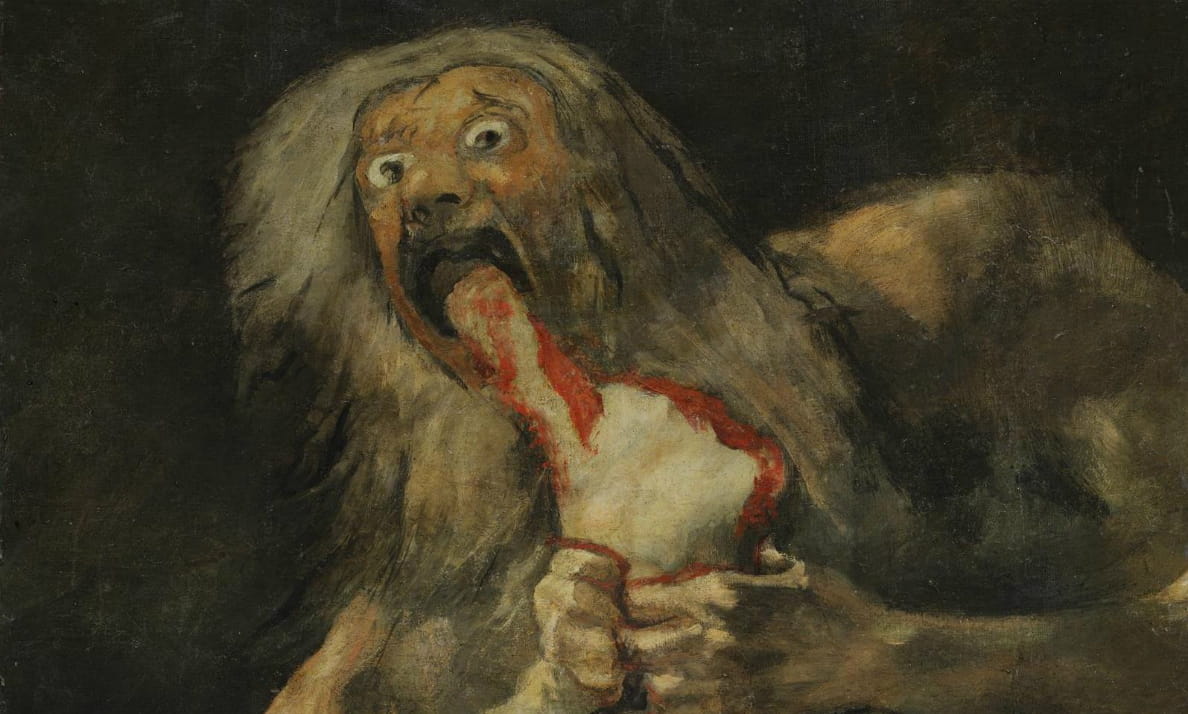
(artist: Francisco Goya; source: Dr. Beth Harris and Dr. Steven Zucker's "Francisco Goya, Saturn Devouring One of His Sons," 2010)
"Whether it is right or advisable to create beings like Heathcliff, I do not know," Charlotte Brontë once wrote—specifically in the 1850 preface to Wuthering Heights (1847) after her sister, Emily (that story's author), died from tuberculosis[1]. Snape, by comparison, is a TERF doppelganger (the Gothic full of dead ringers/fatal portraits) and Harry Potter a chimera housing him and others (a castle of portraits). Written by a greedy knockoff of an already-troubled original, Rowling's baby is the copy of a copy of a copy whose murky origins face endless doubt (re: Plato's cave/simulacrum)—something already dead on arrival, grown horrifyingly into a façade for capital that must be dissected and used for better purposes (similar to LotR or Star Wars[2] but I digress). This means away from Omelas[2a], mid-disguise; it includes Rowling as capital's vengeful housewife-turned-billionaire, pimping the planet into something equally dead (through Snape or otherwise, black or otherwise). Dead on arrival, the cause for HBO's stillborn remains something to dissect "in the crib" (as witches reputedly do). Even so, betrayal remains the obvious cause of death—both for the show and franchise, but also real-world brains and women/children who Rowling feasts on through Snape and company (actual cannibals blaming the whore[2b] DARVO-style to Goya-level extremes, above). So is Harry Potter a gateway to children's minds, readers who indoctrinate and canonize Snape as their casus beli—with trans people (or anyone capital treats as threat/weakling to prey upon) their false flag: to kettle and horribly devour, out of revenge. So Rowling's de facto students have the Snapewife's eternal revenge—with Rowling's refrain happening alongside Tolkien and Cameron's (the map and the gun; re: "Scouting the Field"), ripping theirs off to favor sex over force during state vampirism (which relies on fascism to protect itself, feasting secretly at home alongside neoliberalism: on capital's usual victims by chasing power into "the past," Elsewhere; re: "Military Optimism," 2021)!
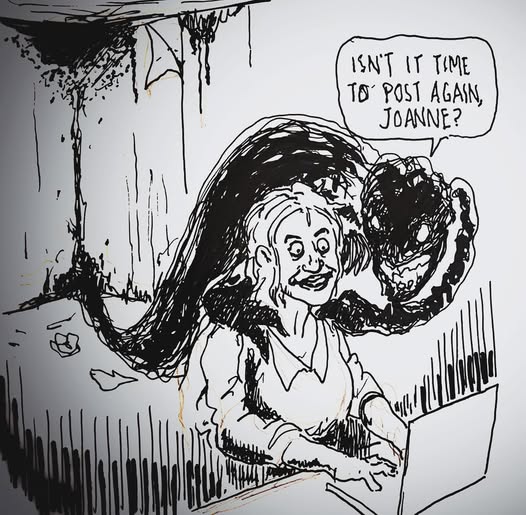
(source: Facebook)
The state eats to preserve itself and keep power top-down, doing so through home-defense narratives blaming the whore; e.g., of the castle, the kingdom, the village in scapegoat language that uphold "family" values/the nuclear model from internal/external threats (and for which Harry lived but lost his family in the bargain). Our aim is transformation, camping the canon in spaces of danger and play (castles or otherwise; re: "Prey as Liberators"); i.e., while turning into our true selves (and the world into something statelessness, classless, raceless, genderless and moneyless) while also dodging "Girl Zeus" (the original always in the mood to rape this or that, Rowling aping the Grecian patriarch with glee). The fact remains, there's simply so many reasons to be skeptical of anyone (token or otherwise) who defends Rowling and/or consumes uncritically her "moldy" franchise (synonymous with her decay and predation, above). "You are what you eat," after all, but diets are lifestyle changes; i.e., whose infernal digestion affects how we see, Matrix-style[3] ("Hogwarts" or otherwise). This includes reactionaries and moderates, but also "progressives" like Birdman onto assorted Socialists who don't walk away from Omelas and its built-in predation (e.g., Bad Empanada). Capital/the state is Omelas. Whatever the form, capital is dead on arrival—gentrifying and decaying on loop while supping vampirically on our blood/staking us in our sleep. This requires that workers wake up while on the slab or, worse, while ignominously holding the scalpel; i.e., against an unwilling patient who shares our struggle, punching up against embarrassing sell-outs (Gothic poetry being dualistic and anisotropic; re: "The General Duality of Gothic Poetics" from "Unto the Breach"). You have to change your diet within society making you undead, demonic, and/or animalistic chattel (re: "A Cruel Angel's Thesis," 2024)—the latter under capital demanding endless consumption while making workers want to eat (themselves), and some things being more unethical than others to eat (the "bare life" aka "homo sacer" of state victims, workers either givers/receivers of unceremonious state violence inside Agamben's state of exception; re: my "Police States, Foreign Atrocities and the Imperial Boomerang" [2024] and Akshra and Lakshay Mehla's "The Palestinian Homo Sacer" [2025] in "Unto the Breach"). And if that sounds fucked up, welcome to Capitalism (whose predation Harry Potter embodies, but we'll get to that). Skull = theft as partial disguise, which can go both ways (mid-abjection) but for capital only goes one way while punching down. Up.
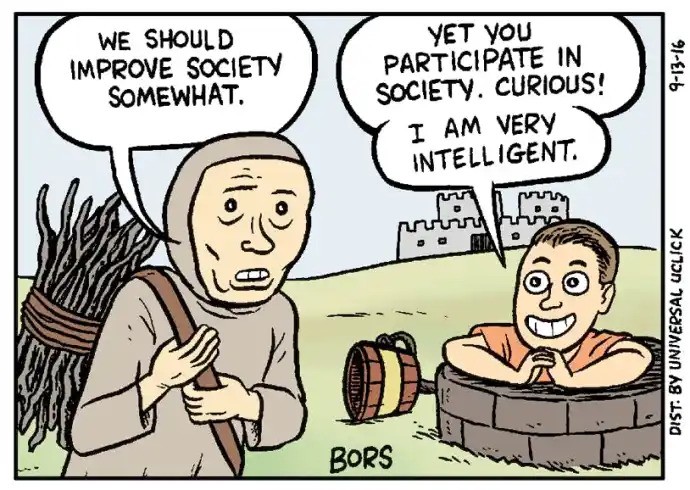
(artist: Matt Bors)
Setting the Table
Before we get to the original and extended bibliographies, let's set the table (the essay "guts"):
- "The Worst Witch": Considers the premise of a Promethean Quest camping the canon. Gives three points (signposts): the value in Gothic as trashy, the role that consuming Harry Potter plays in genocide, and the hypocrisy of those (often transphobes) who openly punch down at critics of the franchise (reactionary/moderate grifters).
- "Monomyth Necropolitics; or, It Does Not Do (to Leave a Live Dragon out of Your Calculations)": Weighs the perils of critiquing such things, analyzing various themes of predation that—if one isn't careful (when Sting glows blue)—can easily become reality (while genocide is still going on, that is).
- "Failing at YouTube (and Other Things); or, Why Bother Camping the Canon (re: Bad Empanada)": Partly why we should study media and how people respond to it (trashy or not), partly the story of my life leading up to my learning how to camp Gothic—in short, how I fell in love with Gothic as a nerdy mode, realized I was gay the whole time (and a slut), and then made capital/state predation my bête noir to slay through camp.
- "Camping the Canon; or, Punching Up While 'On the Hip' (re: Cryptonymy and Abjection)": No longer the worst witch, I found myself facing different devices—cryptonymy and abjection—that apply not just to me, but Gothic stories like Harry Potter and LotR in duality.
- "Fortune Favors the Bold": Capital, like the Matrix, is a labyrinth to escape inside itself. This takes more than brains or brawn, but courage (the Triforce, in Zelda terms; and wayward girls, magical animals and music, from Baum's Oz novels/movie adaptations). I discuss its nude qualities.
The Worst Witch (re: the Promethean Quest/camping the canon)
First and foremost, there's value in things that seem trashy or "Gothic," and which speak as much to Promethean[4] subversion (camp) of the home as any monomyth endorsement of capital, the state/nuclear model and their predation (canon). From Plato to us, those who challenge this dogma are framed as outsiders, fools, and not-so-splendid-liars torching Rome—the village idiot/traitor or, in Rowling's case, the worst witch[4a] already playing with garbage others revile or celebrate. I've spent my entire life fighting capital and capital is far from finished. Yet here I am, tilting at windmills, seemingly the worst in my field and hopelessly outclassed:
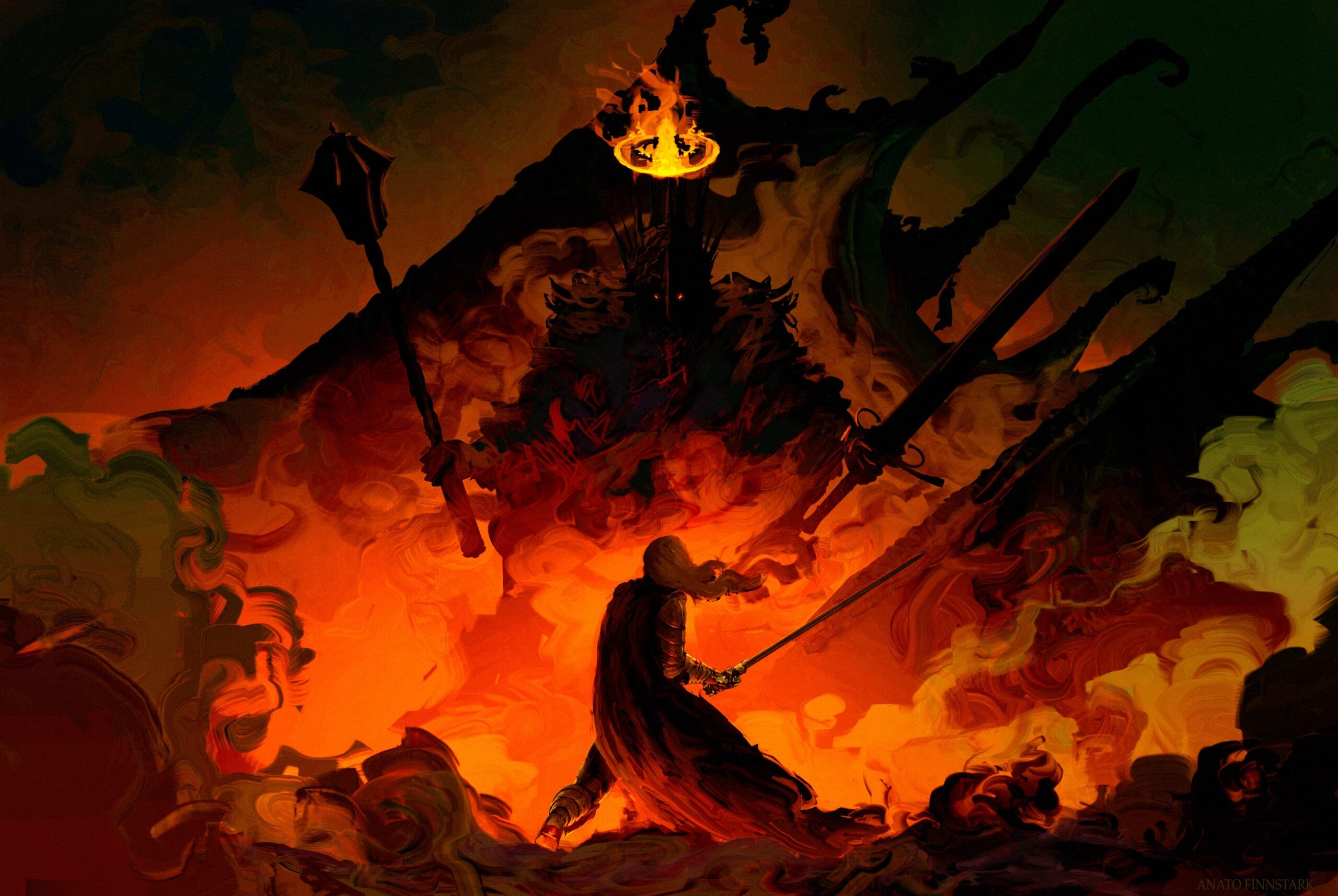
(artist: Anato Finnstark; cited: "Conclusion: 'Pussy on the Chainwax!' The Beginning of the End (of History)?" 2025)
Second, while capital routinely enters crisis—and crisis causes demands for change to go up, alongside consumption (and its abject, us-versus-them contradictions)—there's really no excuse at this point to buy Harry Potter merchandise in 2026. Be that the books, clothes, toys, TV subscriptions or anything else, it's about as subtle as buying Mein Kampff (1925) in Nazi Germany during the mid-1930s (or ever); or, as Princess Weekes points out, "You can't separate Harry Potter from J.K. Rowling" (2025): girl's a Nazi, denial of that fact verging on suicidality (fascism a death cult, one Rowling stashed inside her centrist, neoliberal veneer). In essence, there's a difference between subverting a piece and taking part in propaganda—with something akin to Harry Potter being radioactive for the actors taking house pay (e.g., Yellowstone, 2018; see: Skip Intro's "Yellowstone Is So Much Worse than You Think," 2026).
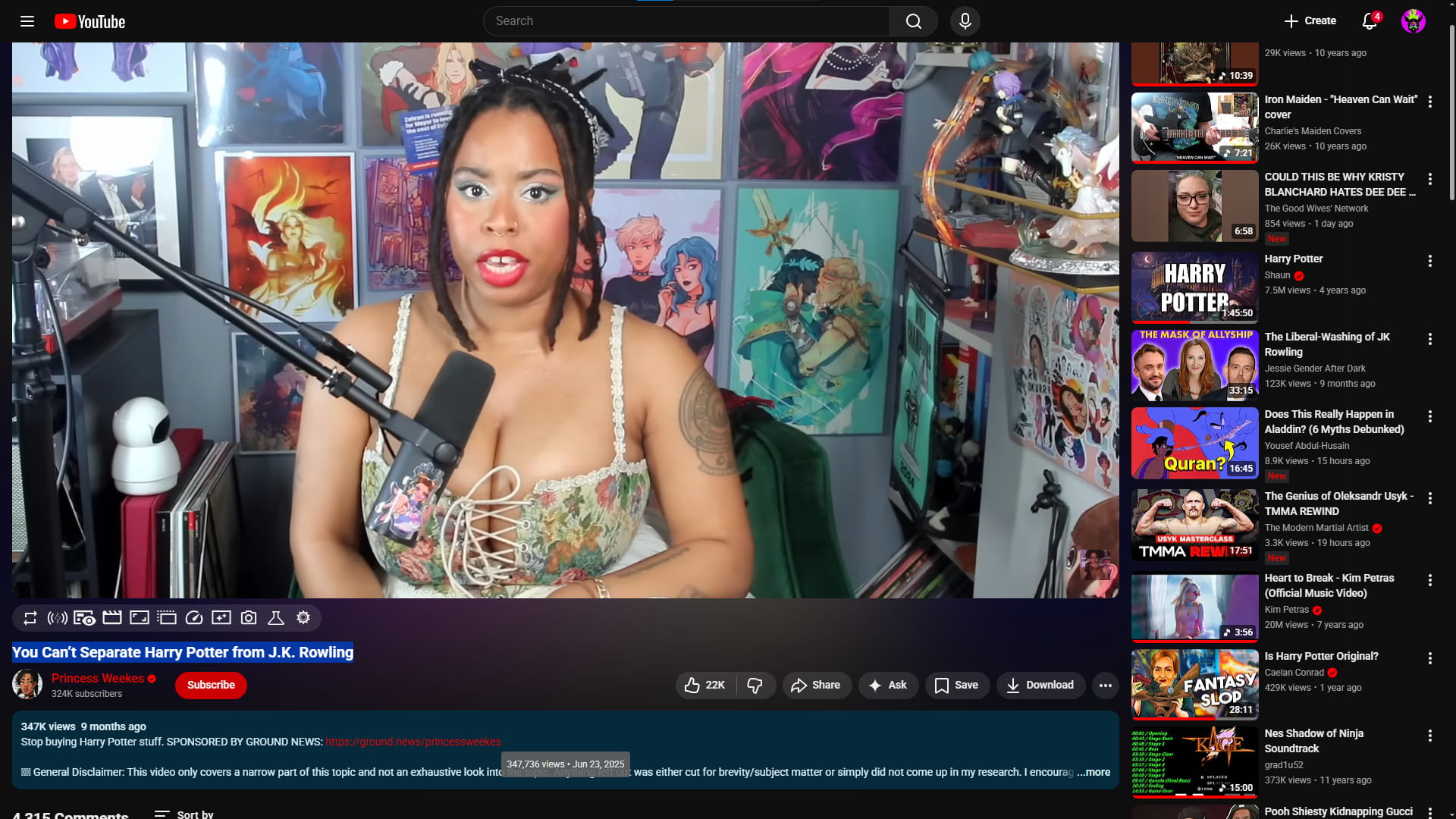
To that—and briefly ignoring Gothic's Ancient Romance tied to everyday life[4b]—preventing genocide is generally unromantic; i.e., raising awareness while paradoxically not buying (certain) books, mainly the kind that rot your brain/make you more apathetic in the middle of a time when apathy is the tool of the trade and thing to trade. The joys of actually being trans, then, quickly offset by discovering more and more people around you "taking the soup" (originally a practice of Catholics selling out to Protestants during the man-made Irish Potato Famine, but which applies just as well to tokenism at large). This can be open reactionaries, but also moderate "liberal" types (white or not, male or not, straight or not, etc). Either liberals won't boycott Rowling and similar folk; or they'll go mask-off in other ways, speaking to general politics beyond popular media: "Trans woman, here. Liberals are fascists with more masks, that's why. The fact that you're playing the centrist card in the middle of capital in crisis is awfully telling" (source YouTube Community post, Persephone van der Waard: 4/2/2026, in response to Tom Powell Jr.'s "Why Normal People Won't Join the Far Left — And Why That's Entirely the Far Left's Fault," 2026). Capital needs a whore to blame, the person throwing the blame often expected to give it (through necropolitics, which we'll get to); i.e., from Plato's broad shoulders and Ovid's Pygmalion to Merlin, Dumbledore, and the Wizard of Oz, to Outback Santa ("Ozzy Man Reviews: Epic Pub Brawl," 2019) or someone akin to said sages (often a white boomer "man of reason" with a beard, below).
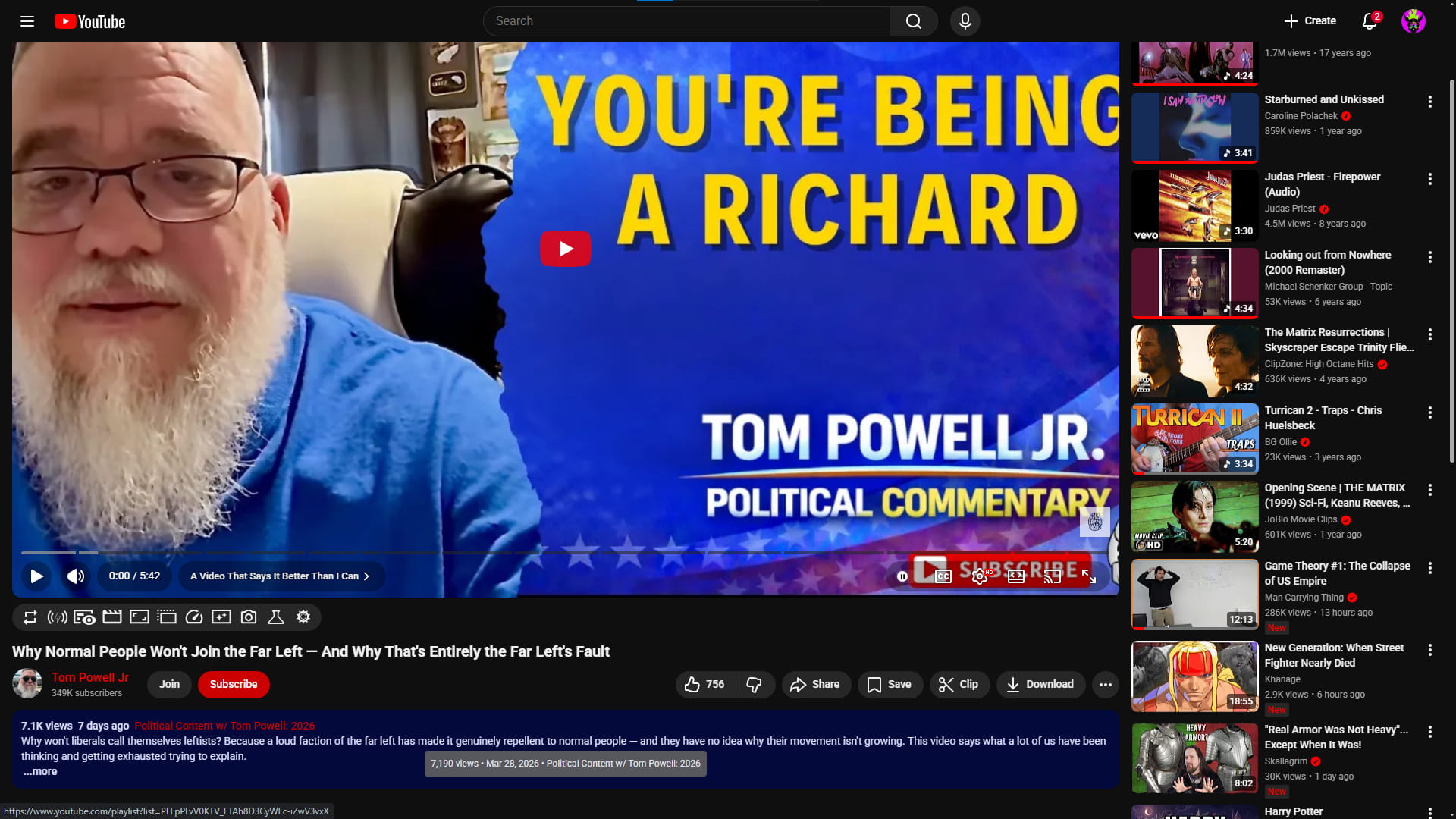
By extension—and to speak to an ongoing problem coming to a boil—I write elsewhere, and in response to someone else equally disturbed by a change in the wind:
Gretchen Felker-Martin: It's so punishingly obvious that many left-liberal types feel completely unrestrained in petty displays of sadism and hierarchal reaffirmation against trans people at this point. Grueling to watch your nominal allies hold their fingers to the wind and decide they can hurt you (source skeet: 4/2/2026).
Me: It's a bit like MLK and white moderates, but cis folk at large who tokenize/punch down. I suppose I'm used to it at this point: people to unmask and expose while fighting for trans rights (and all minorities). It started with TERFs, but applies to so many sell-outs at this point (source skeet, vanderWaardart: 4/2/2026).
Such is social media (a parasocial affair). We're not even really talking to each other as much as belonging to the same out-group, one stuck on the receiving end of increasingly dire omens. It's the part of the Western where the barkeep cowers behind the bar—where the other customers, losing their nerve, pretend not to see those poor souls the pale riders have come to collect: a bandit's reckoning in broad daylight/daylight robbery of Gogol's "dead souls" (fascism a bureaucratic enterprise). Such is capital, Pax Americana and Britannica built on settler colonialism as a shared enterprise, one passed down from the ruling class to its inheritors: "The British Empire began developing its colonialization tactics in Ireland and Canada, before exporting them throughout the world" (source: Livia Gershon's "Britain's Blueprint for Colonialism: Made in Ireland," 2022). And what do you think Rowling is doing? Harry Potter—similar to James Bond (1953) but occurring under neoliberalism versus Bretton Woods (the same domain Tolkien worked under)—is just British imperial nostalgia fantastically revived and sold to American audiences (wizards instead of spies). It prepares people (namely the middle class) for crisis; i.e., baked into capital/state predation during—among other things—inheritance anxiety (re: the ghost of the counterfeit). They further abjection in us-versus-them ways, the spell easy to fall under.
Such things happens slowly, then all at once: the appearance of Gorgons, and those who behead them for the state; or, as Aragorn might put it: "This is the hour of doom!" The harvest is here, regardless, and something to play with for different aims (canon or camp); re: "When such a castle appears, it is time to be afraid; the colonial harvest is at hand." And yet, abjection goes both ways, the invader invaded by the thing they fear enough to rape for mercenary pay (the actual pirate, kettling "homewreckers" out of state revenge). This is where whores work our magic: under the gun, controlling a crisis through sex. A girl's gotta do what a girl's gotta do (survival sex workers [which I am not, to be clear] paying rent to stay not just housed, but alive).

(artist: Darek Zabrocki; cited: "The Nation-State," 2023)
Beyond boycotts (and proceeding to our third point), punching down at trans people during genocide makes you just as hypocritical/as much of a little bitch (see: "Bad Actors," deeper in; e.g., Bad Empanada and "Raising Awareness"). Many things aren't zero-sum, but this isn't one of them; i.e., it's common knowledge, and stated by Rowling herself, that any money made goes directly towards harming trans people[5] (and other minorities/marginalities). In this case, she's alive and her brand goes towards a living thing that conducts genocide over time; and even if she wasn't, the brand is provably toxic to trans folk, BIPOC, disabled people, etc (which the bibliography shall explore at length). Why keep eating something so clearly radioactive to others if not yourself (say nothing of token people)? Faced with capital-in-small, (which Harry Potter is), "Setting the Table" ultimately considers why boycott at all—especially in places where we feel outnumbered/outgunned in perceived monopolies of discourse; i.e., while being the topics and targets of state violence; e.g., YouTube, already a gentrified platform decaying mid-enshittification, concerning Harry Potter as something to gaslight, gatekeep, girlboss the opposition into submission; re: "taking the soup" (or buying sugar during the British Caribbean[6] Slave Trade, etc).
"No man is an island." To that, activism typically involves doing things we don't like, and having fun where we can while "waiting for doom" (as Gothic does, embracing chaos poetically or otherwise). And when the unfamiliar invariably appears (scarcity, for the Imperial Core), many turn to familiar "comfort food." So that is what Gothic criticism usually details: the trashy and the profane, but also the base, vulgar and rude navigating a growing lack of control through calculated risk; re: playing with power as "past," interrogating it through camp (re: "Interrogating Power through Our Own Camp"). I don't even like Harry Potter (and haven't for decades) but am still writing this piece, anyways. Activism = work as much as play (which aren't mutually-exclusive, but I digress). Even so—and despite queer people's fatal attraction to theatre as something the elite can't fully control—I'm just a little trans girl facing a billionaire and her army of useful idiots (or any dickhead who uses "theatre kid" like a slur/back-handed compliment; i.e., as many reactionaries do, including Socialists[6a]). Hunting big game, what hope do I have—especially when I've "failed" before and undoubtedly will, again?

(artist: the Brothers Hildebrandt; cited: "Policing the Whore")
About as much as a hobbit versus a dragon, I suppose, or a shieldmaiden at Helm's Deep. But that's no reason to despair. We do what we can with the time we're given, and that's that. This pertains to the monomyth, as usual, and Rowling's modern mishmash of wizards, warriors and girls to get; except I was the girl who wanted to be a witch and was, like anyone else, born into a world replete with stories that shaped[7] me (matter-shapes-consciousness and vice versa; re: Marx' Base and Superstructure from Kapital, 1867). Tolkien wasn't perfect, but used the language of the past—namely dragons as vice characters—to critique wealth (re: "Dragon Sickness: the Problem of Greed" in my larger body of scholarship on Tolkien); Rowling's the dragon Tolkien warned about/would have likely openly despised (and probably for sexist reasons): vain, greedy and cruel, an elderly swindler tied to a vast fortune that she—like her avatar, Harry—did not earn. Or rather, billionaires are like dragons, thus incredibly persuasive and forceful when they need to protect their hoards (which, in Rowling's case, tie not just to theft through conquest and revenge, but accumulation through profit under a Protestant ethic monopolizing violence; re: Weber's Spirit of Capitalism, 1904).
And when near a dragon, it does not do to leave it out of one's calculations; dragons guard shit, but workers can adopt (or camp) draconian, vice-character qualities themselves: to interrogate modernity with imperfect language from the imaginary past; re: as the Gothic do, campy Gothic (Communism) breaking state monopolies on violence, terror and monsters (re: Weber, Asprey and me; see: "The State: Its Key Tools")—all to counteract the qualities of capital/the state (re: settler-colonial, heteronormative, and Cartesian; ibid.). Calculate that.
Monomyth Necropolitics; or, It Does Not Do (to Leave a Live Dragon out of Your Calculations; feat. Donald Trump)

(cited: "End of the Road: Concluding the Roadmap and Volume One," 2024)
The state, like a dragon, siphons in open disguise; i.e., it cryptonymically enacts necropolitics in abject monomyth language that workers challenge in dualistically Promethean, sacred/profane ways (see: footnote 11a). But as Mary and Percy Shelley showed us (and Rowling, by refusing to stop), easier said than done. The calculus is steep, the toll heavy. You feel alone, chained umbilically to your abuser (above):
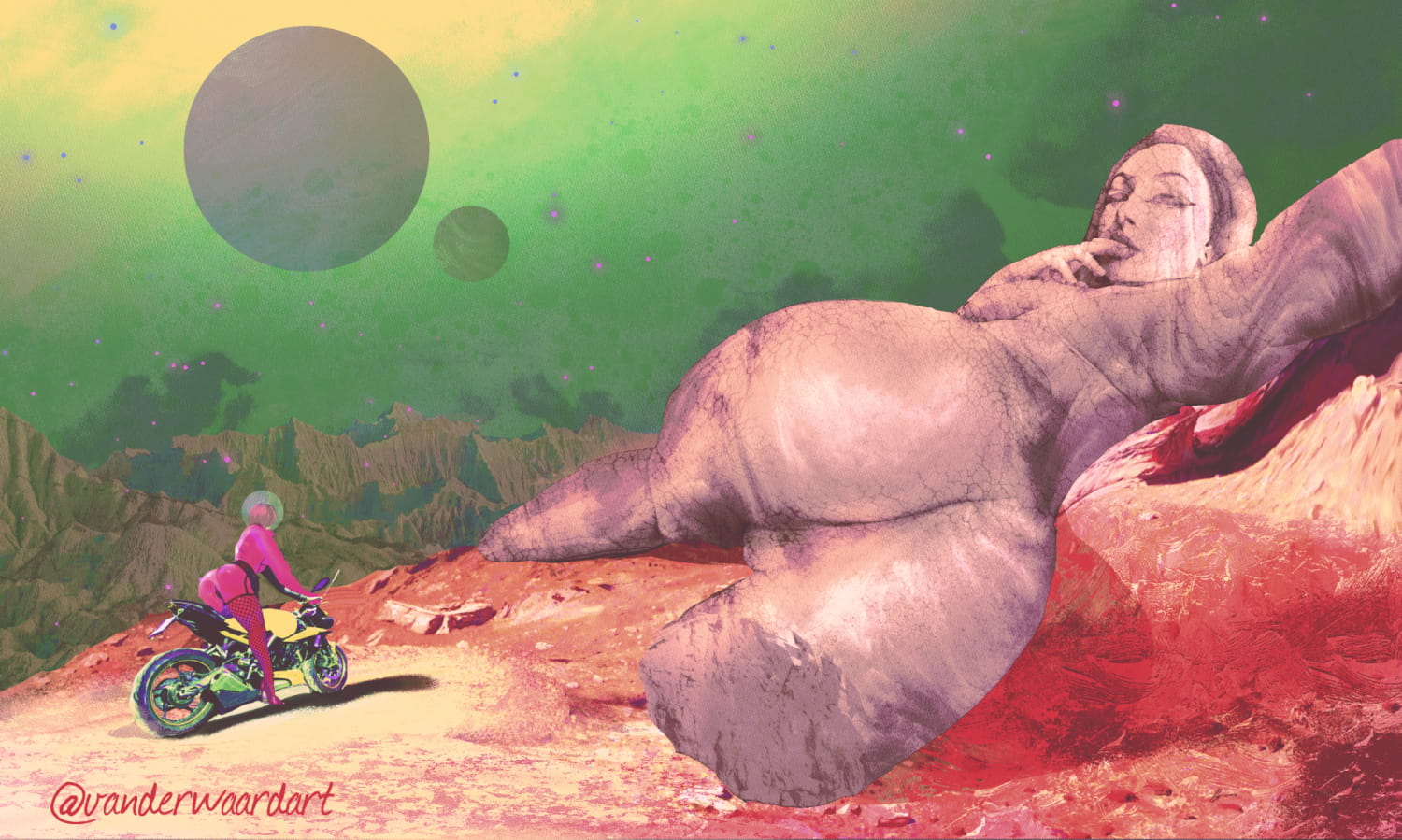
(model and artist: Blxxd Bunny and Persephone van der Waard; source: "The Quest for Power" and footnote 1)
So again, why bother? You've found a magic book in the forest (or a statue in a desert, above), something that—like Tolkien's annoying thrush—tells of the dragon's secret, her weak point (sharing the same bodies and theatre ours do). What of it? Is there any value in such things, or the struggle in resisting admittedly plastic, curiously badass and neo-medieval ideas of good/evil in bastardized language (the "Gothic" taken by Rowling from Tolkien from Shelley from Milton from Dante from Homer)? The answer is in the cycle, itself; or, "Holistic study is what this book is all about" (source: "Shining a Light on Things," 2023): "there be dragons" but also giants, gorgons, and witches, et al. So read on, if you dare! Take my power—indeed, the Wisdom of the Ancients rooted categorically in Gothic (re: a cultural understanding of the imaginary past)—and let it change you/your understanding of the world, time-is-a-circle. But gird your loins, first (and remember your aftercare)! Dragons play rough, after all; dragons, all the way down (sold like amusement park rides, from Radcliffe's banditti to Tolkien's orcs and Nazgûl to Radcliffe's Death Eaters—all echoing the palliative Numinous, above and below)!

(artist: Anato Finnstark; cited: "Foreplay: Praxis Volume Outline, part one," 2025)
What to do, what to do; and again, why bother? For starters, Rome wasn't burned in a day (and happened inside itself, anyways). Two, the Promethean theft of power from the gods is a lifelong endeavor (re: ludo-Gothic BDSM chasing the palliative Numinous to have the whore's revenge; e.g., me and Metroidvania; see: "She Fucks Back," 2024). Victory is raising a finger to start with, camping those hypercanonical things that enact unironically necropolitics (the deciding of who lives and dies) in monomyth language; e.g., Key and Peele—far more successful as YouTubers than I'll ever be (and largely by simply sharing their televised skits on YouTube, below)—responding to Rowling "in her wake," for having sucked all the oxygen up; re: capital is dead-on-arrival, and employs the imbricating language of persecution[8] as something to intersect (or divide) as needed, but gentrify and decay in all the usual ways: schools, as far as capital and nation-states care, are siphons that disguise in Gothic ways.
(source thumbnail: "If Hogwarts Were an Inner-City School," 2019)
To that, Potter has been decaying Ozymandias-style for years, it and Rowling—who already sold out in 2014 but really let the mask slip in 2020[9]—becoming dead-and-gone/alien to many queer people who used to love her work, but jumped ship well before other cis-queer/straight people did; i.e., once the usual gay desert started to feel less allegorically rich and more like an active snare (e.g., satenmadpun's "Harry Potter Is GARBAGE, and Here's Why" [2020] not going far enough to boycott at the time, despite their being a queer person of color). Life and death aren't separate, but unify under capital and necropolitics to summon a grim harvest with Promethean potential. Whatever it steals (and rams back down our throats, per-necrobiome), we're left with a cheapening of various natures (re: Patel and Moore). Unable to digest what it takes, it can only move, mid-predation-and-panopticon, and endlessly. The contradictions eventually enter crisis and die, renewing the reaper-like cycle until resurrection and rape (chasing productivity and profit) become completely untenable (re: state shift/the Capitalocene, from Patel and Moore; see: footnote 6).
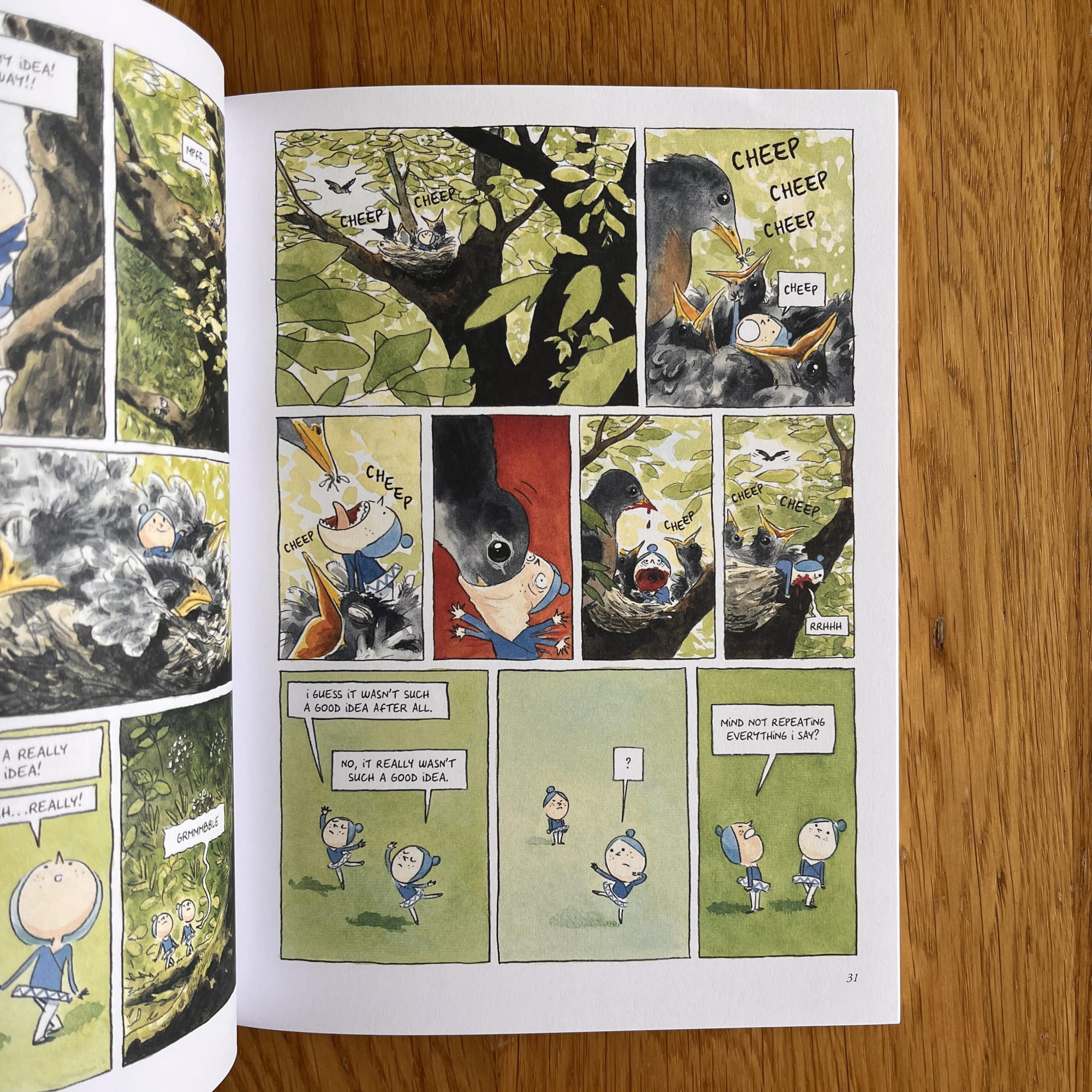
(artist: Vehlmann and Kerascoët; source: The Beautiful Darkness, 2014)
All the same, the larger cycle—and Rowling gobbling up so much Gothic pastiche and reactionary bile, to then vomit it into children/childish adult's gaping mouths (all like some kind of terrible, hag-like bird mom, above)—is always going to feel somewhat abject; re: necropolitics and the monomyth going together like zombies and brains. Indeed, each hyperbole evokes size difference to Numinous extremes; e.g., offsetting vulnerable youth (and vitality) with predatory old age (so-called "hag [or] husband horror"), effectively highlighting good/evil struggles Rowling only ripped off from others (and they from others, from others, from others, mise-en-abyme):
And far away, as Frodo put on the Ring and claimed it for his own, even in Sammath Naur the very heart of his realm, the Power in Barad-dûr was shaken, and the Tower trembled from its foundations to its proud and bitter crown. The Dark Lord was suddenly aware of him, and his Eye piercing all shadows looked across the plain to the door that he had made; and the magnitude of his own folly was revealed to him in a blinding flash, and all the devices of his enemies were at last laid bare. Then his wrath blazed in consuming flame, but his fear rose like a vast black smoke to choke him. For he knew his deadly peril and the thread upon which his doom now hung. / From all his policies and webs of fear and treachery, from all his stratagems and wars his mind shook free; and throughout his realm a tremor ran, his slaves quailed, and his armies halted, and his captains suddenly steerless, bereft of will, wavered and despaired. For they were forgotten. The whole mind and purpose of the Power that wielded them was now bent with overwhelming force upon the Mountain. At his summons, wheeling with a rending cry, in a last desperate race there flew, faster than the winds, the Nazgûl, the Ringwraiths, and with a storm of wings they hurtled southwards to Mount Doom (source: The Return of the King, 1955).
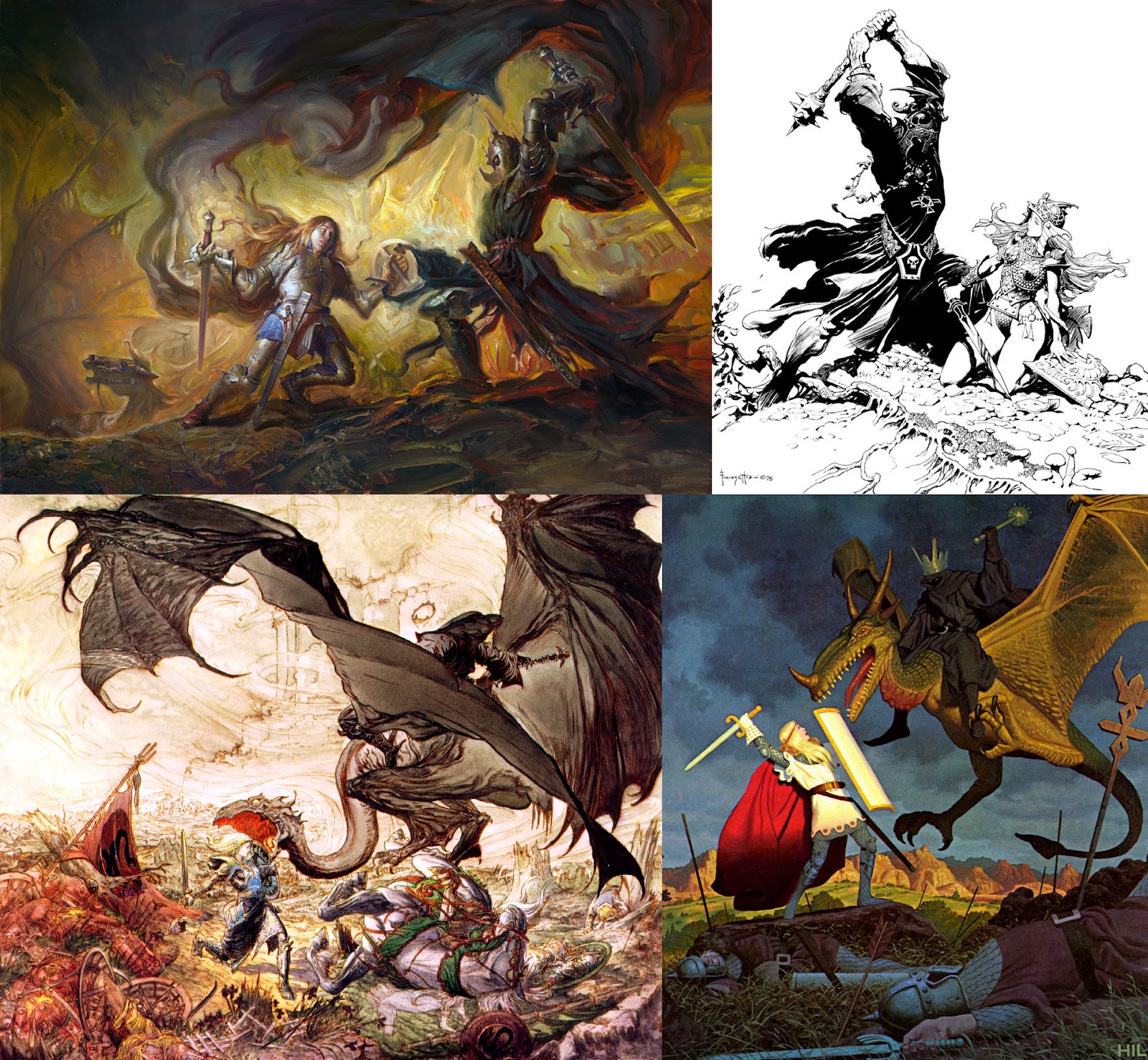
Bitches love magic (re: the power of poetry translating into thought, especially radical thought in the right hands, hearts and minds). Theatre abstracts different things in preferential code—i.e., "from all our yesterdays," as Shakespeare put it; "[t]he tradition of all dead generations weighs like a nightmare on the brains of the living" as Marx put it, meaning "first and in tragedy and then in farce" (source: "The Eighteenth Brumaire," 1852). Regarding power as something to paradoxically perform and perceive (function determined by flow of power, mid-aesthetic; re: "Notes on Power"). Workers die and die often, but capital is also mortal; i.e., insofar as workers can—like Frodo and the Ring—take their own power back, and in Gothic half-real ways (on and offstage). So is Rowling and her book series subject to the same immutable laws (and any characters inside, including Snape); i.e., she fears "picky eaters," the assorted tactical frivolity that results a refusal to give her our power (money or otherwise). Butchers want pigs "at the trough," eating slop before the slaughter—a position Snape himself described Harry as being in, thanks to Dumbledore's machinations:
"So the boy…the boy must die?" asked Snape quite calmly.
"And Voldemort himself must do it, Severus. That is essential."
Another long silence. Then Snape said, "I thought…all these years…that we were protecting him for her. For Lily."
"We have protected him because it has been essential to teach him, to raise him, to let him try his strength," said Dumbledore, his eyes still tight shut. "Meanwhile, the connection between them grows ever stronger, a parasitic growth: Sometimes I have thought he suspects it himself. If I know him, he will have arranged matters so that when he does set out to meet his death, it will truly mean the end of Voldemort."
Dumbledore opened his eyes. Snape looked horrified.
"You have kept him alive so that he can die at the right moment?"
"Don't be shocked, Severus. How many men and women have you watched die?"
"Lately, only those whom I could not save," said Snape. He stood up. "You have used me."
"Meaning?"
"I have spied for you and lied for you, put myself in mortal danger for you. Everything was supposed to be to keep Lily Potter's son safe. Now you tell me you have been raising him like a pig for slaughter—"
"But this is touching, Severus," said Dumbledore seriously. "Have you grown to care for the boy, after all?"
"For him?" shouted Snape. "Expecto Patronum!"
From the tip of his wand burst the silver doe: She landed on the office floor, bounded once across the office, and soared out of the window. Dumbledore watched her fly away, and as her silvery glow faded he turned back to Snape, and his eyes were full of tears.
"After all this time?"
"Always," said Snape.
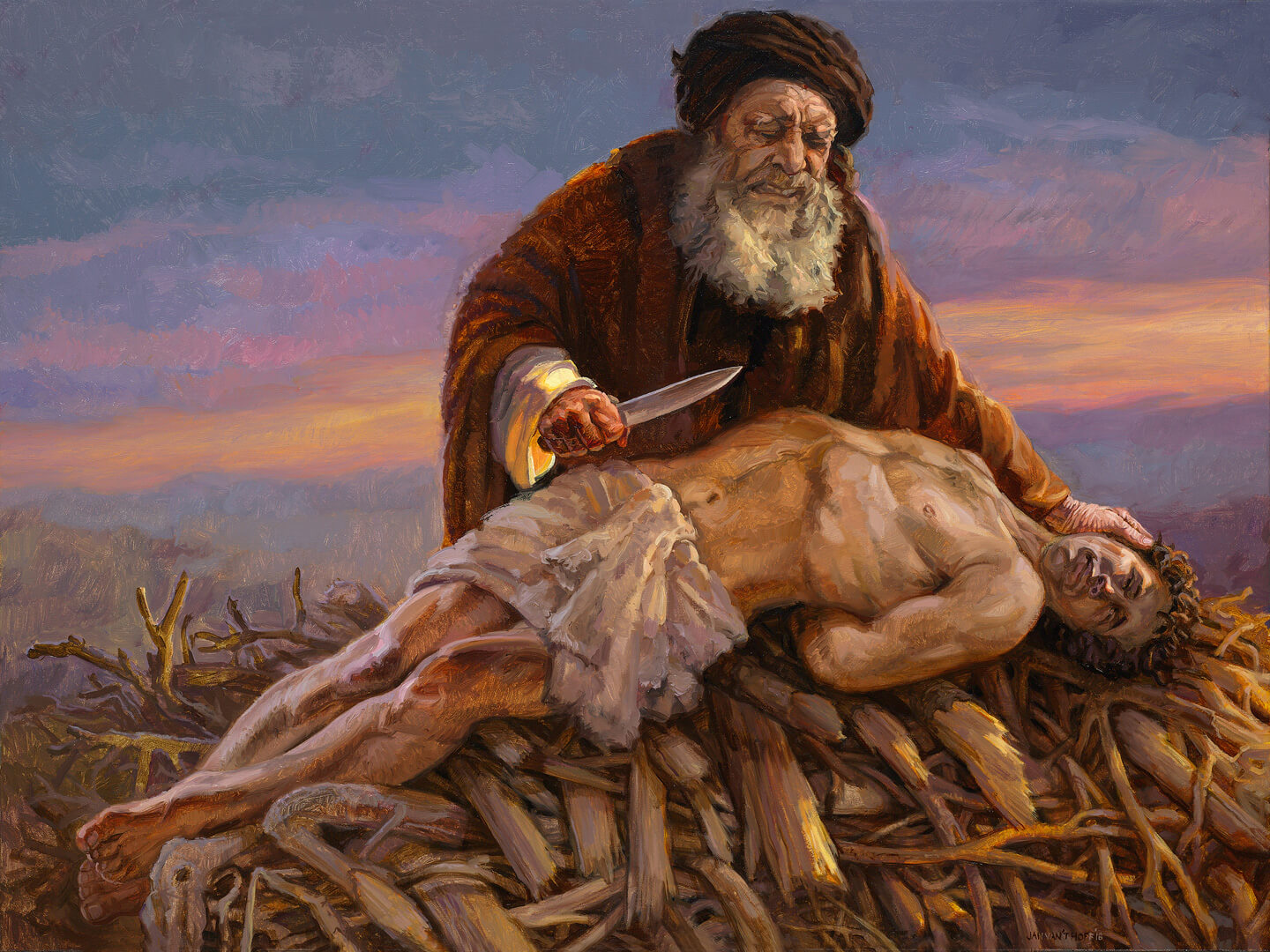
(source)
"If not friend, why friend-shaped?" Again, it's necropolitics/state predation, cryptonymy-and-abjection (the "monomyth for some" choosing of food, mates, masters and shelter): the king eating the peasant that dragons commonly symbolize, in medieval and neo-medieval stories; and where someone's current Neo-Gothic calculations (from the 1760s to the present) should not leave dragons out, if they live near you (or sit as headmaster at your school-as-home). Calculations, mainly of deciding who lives and who dies, are essentially what Harry Potter is, warts and all (and whose predatory net grows and shrinks under Rainbow Capitalism, a FOMO system of temporary inclusion that—in any castle, not just Hogwarts—recruits from the margins of class, culture and race the currency of pain and death; i.e., tokens to spend, boom-or-bust). Snape, for all his anti-hero, bad boy posturings, is the pussywhipped road man—the bootlicking highway bandit, recruited by the king for the former's terrible qualities to do the latter's dirty work (racism chief among them, but also ableism[10]). Dumbledore, meanwhile, is Saturn—a geriatric, increasingly senile cannibal propping up Boy Jesus/the Lamb of God (or Abraham's[11] son, above), which is always canonically okay provided the state does it (specifically the "rightful" headmaster of Hogwarts, in this case). It's something manufactured in a highly centrist way by Rowling as following the same basic pattern (and leader) into an early grave—a process (of abjection) for which Shaun describes, in 2022, as follows: "There are no moral actions, only moral teams" (source).
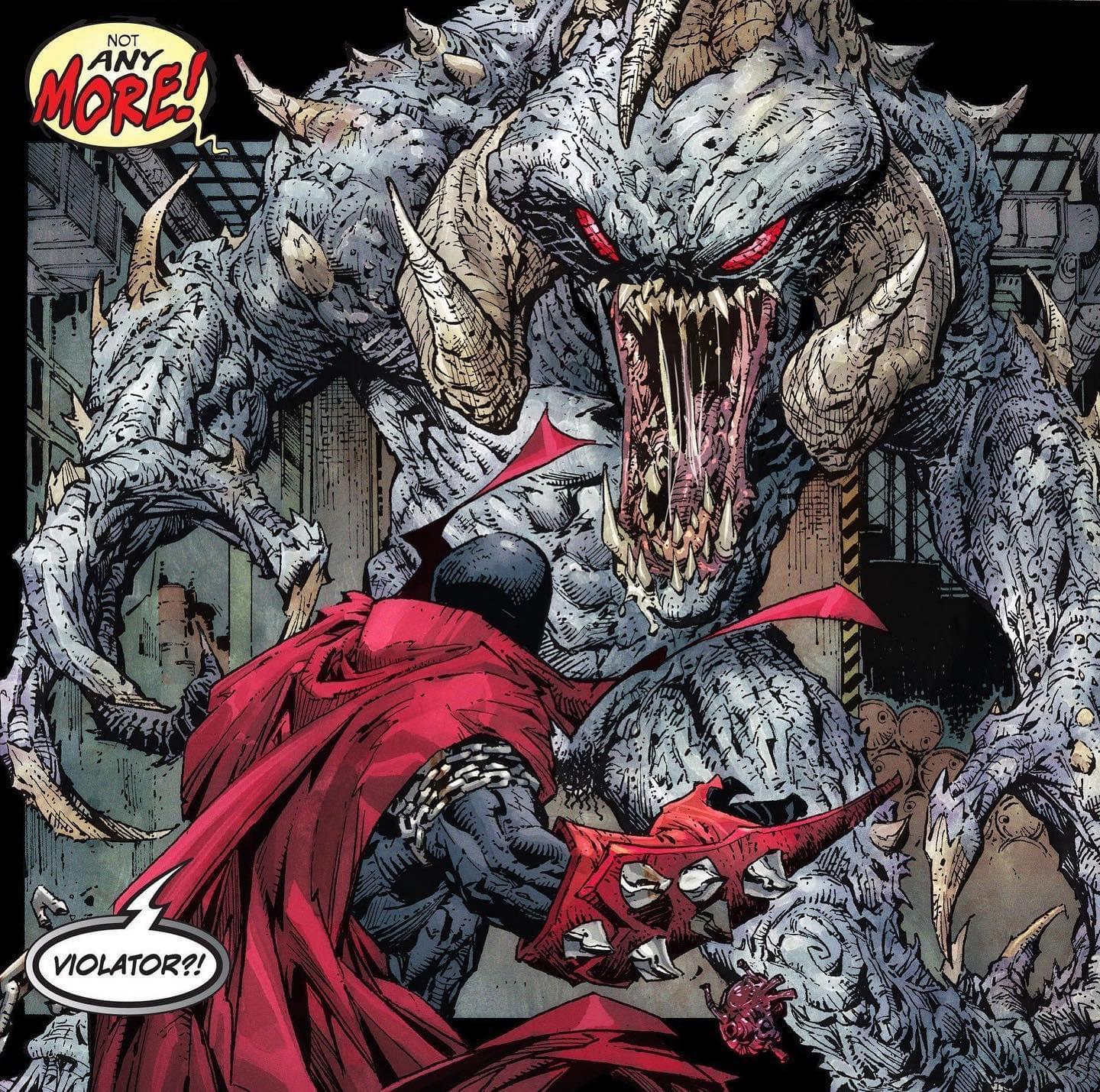
(artist: Todd McFarlane)
It's "boundaries for me, not for thee," Dumbledore as much a Death Eater as Voldemort but worse, one who lies and manipulates Harry across his life—in short, the one who makes all the so-called "hard decisions," the centrist dragon who roasts peasants on spits while calling it "mercy" (so-called "burnt offerings," in keeping with Abraham but also Dante). At least Voldemort (the story's real scapegoat) was nakedly honest about eating Harry (alongside the other cannibals at the table, below); Dumbledore's school, like any Gothic castle's neo-medieval, is a constant Promethean equation of the housed/unhoused proposition: a Faustian p(a)lace for house slaves (or elves) "on the chopping block," where they toil under constant fear of master and field (the former threatening a given servant with expulsion if they don't keep the peasants in line). From Dumbledore, Harry and Voldemort to Aragorn, Gandalf and Sauron to Van Helsing, Jonathan Harker and Count Dracula the Impaler (all echoes of the King Arthur legend/monomyth before and after it; e.g., Spawn, above), a king's a king and All Kings Are Bad. And yet, they remain one whose language of power "Gothic" plays with, exploitation and liberation sharing a half-real stage: the hero, the barbarian, the sage, the virgin, the whore during the Promethean Quest[11a] in duality. Reify power and play with it (a mad hatter's tea party courting itself in half-naked echoes [reminders] of cannibalism, incest, and various other unspeakables made speakable through darkness visible, below).
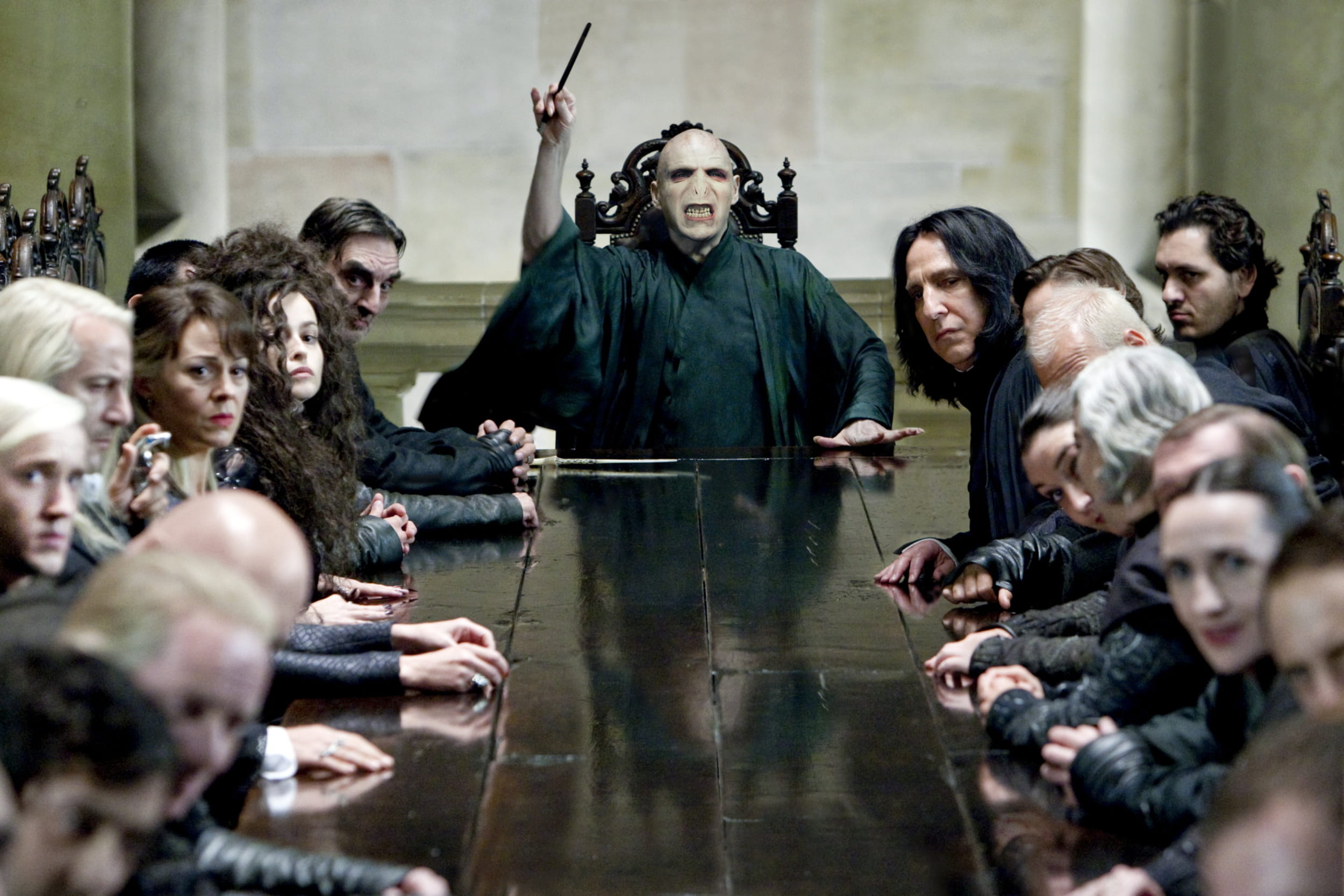
To that, Harry Potter the franchise is wish fulfillment/guilty pleasure for those who consume it; Harry is the hero, both as sacrifice and assimilation fantasy (a secret prince)—the latter meaning for different token minorities: those acting white, straight, male and/or able, who want to be sacrificed later if potentially never while inside the avatar (and taken Quixotically outside, the mirror to project onto because representation at Hogwarts [a miniature of the British Empire] is generally sparse for minorities different than Harry). Meanwhile, Dumbledore's a fraud/false friend (father, preacher, etc), but so is Snape (the false servant playing Pinocchio) and, by extension Rowling—a miserable hack saying "I love you" before braining the sow and devouring it. The castle/capital-in-small, she's someone who can only be happy by indoctrinating others (namely children), then watching them rape her desired victims for her during harvest time (which spends tokens and ostracizes traitors of class, culture and race, inside/outside the Harry Potter franchise). She's a chicken hawk, no different than Majora, Voldemort, Emperor Palpatine, Sauron, Caesar or Trump, and someone workers can mercifully challenge; i.e., by using the same moon-sized language she and others abuse (re: Tolkien), albeit in highly reversible ways mid-abjection: "You can't kill all of us, or ever fully control us, and you're gonna die, too."

(cited: "The Monomyth and Cycle of Kings; or, 'Perceptive Zombie Eyeballs': Paralyzing Zombie Tyrants with Reverse Abjection (and Other Gothic Theories)," 2024)
About Trump. I mention him alongside Rowling because both are billionaires, and both are walking Skeleton Lords with dubious claims over the Earth ("their share" being not just "the lion's" but frankly everything that is, was, will be)—with he an actual executive and Rowling the de facto empress over her own little kingdom; i.e., superimposed over the Earth while doubling it: as something she, he, and any other member of the ruling class think they own, a priori. That's how state vampirism works. Geography is destiny and in the blood (re: "Canonical Essentialism"); i.e., if you're white, straight and male, or—in Rowling's case—close enough. She and similar feminists (of the first and second wave) act like (sexist, racist) men more than they don't. In fact, they specialize—finding niche prey to target, isolate, and punish: the "man" in a dress, invading women's spaces (re: DARVO and obscurantism). Turn that on its head, having nature's revenge against Trump (and his Aesopian knock-offs, below).
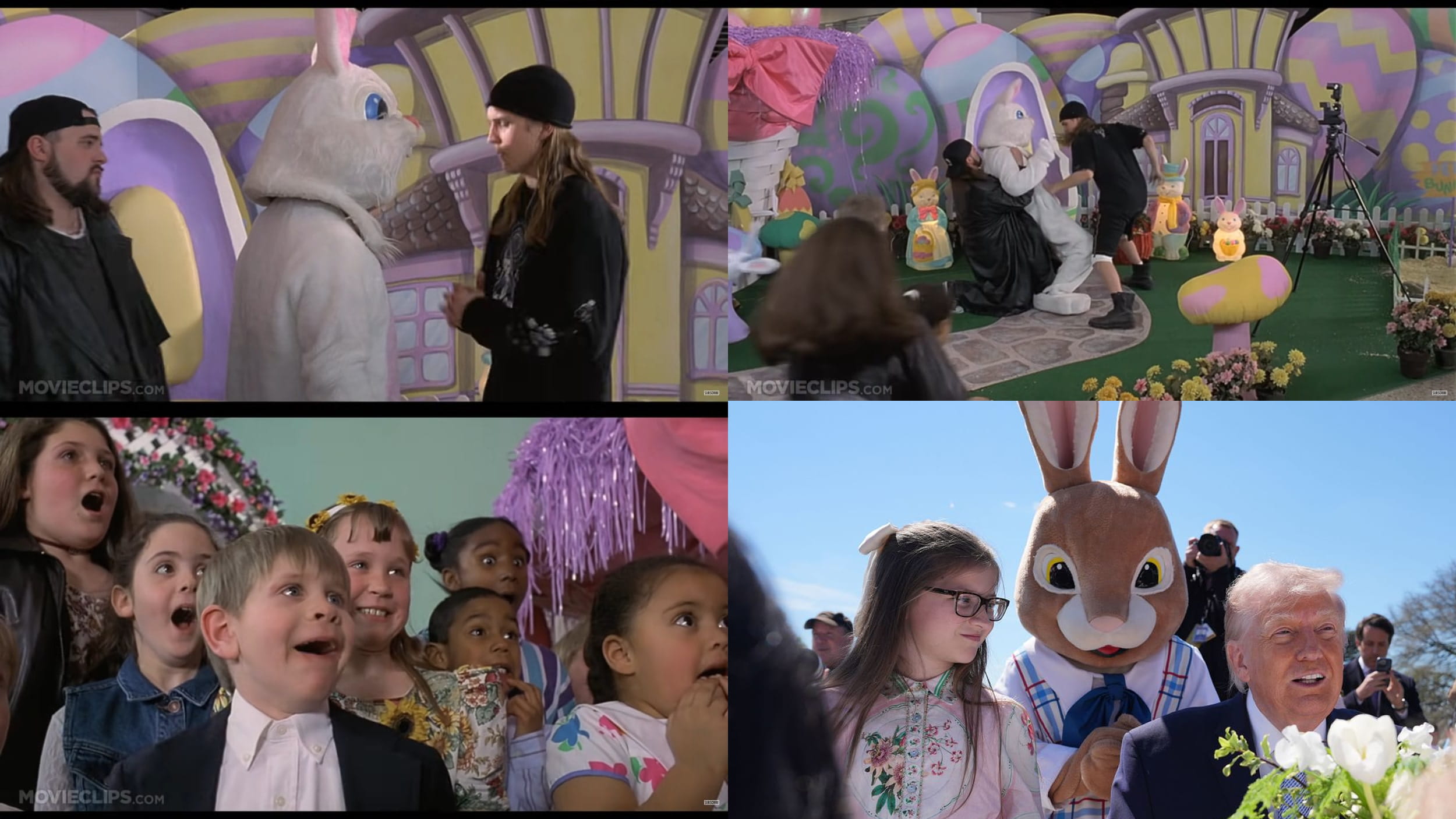
(exhibit 1: Originally exhibit 34a1b1b2, from "Heaven in a Wildflower" [2024] but replacing the last frame with Trump's creepy Easter Bunny companion [and, what I assume, can only be Christofascist resurrection in nuclear hellfire]—all in lieu of the President's off-the-wall statements about "destroying an entire civilization," moments before [source: Betsy Klein's "With the Easter Bunny at his side, Trump won't stop talking about Iran," 2026]. From Angela Carter to us, we live in Gothic times.)
The same idea goes for any part of the owner class (or any workers acting like owners for owners; i.e., cops, which traitors are; re: "Sharing the Blame," 2025)—that the Covenant of the Rainbow is theirs, the world their oyster to pry open and take what's owed: "Be fruitful and multiply and fill the earth. The fear and dread of you will fall on every living creature on the earth, every bird of the air, every creature that crawls on the ground, and all the fish of the sea. They are delivered into your hand. Everything that lives and moves will be food for you; just as I gave you the green plants, I now give you all things" (Genesis 9, c. 400 BC). Anything defending that view is rewarded (with scraps), and anything challenging that view is erased; e.g., trans people (see: Jessie Gender's "The Fascist Politics of Forgetting" [2025] exploring at length the violence of the archive/the fascist politics of forgetting to defend the archive); re: fascism is Imperialism come home to empire; i.e., the Gothic fear of the old tyrant and liminal hauntology of war that stories—including neoliberal stories (during an era when such cycles and theft are more common)—sell to, and help prepare, the same basic idea to the young and old, alike (re: the traveling castle/grim harvest; e.g., Tulpa's Tower of Evil from The Ronin Warriors [1995], below).

(exhibit 99e [from "Nerdy Patriarchs, 'Real Men' and So-Called Male 'Witches,'" 2025]: "Bring me the Earth, and join every dimension!" Emperor Tulpa demands, bringing the tower of evil into the human world. There, Tokyo's population is ignominiously borne into the structure, forced to serve the evil Yokai forever [according to the Fu-Manchu ghost toadie]...)
Neoliberalism is the predator it abjects off onto a scapegoat, the actual predator donning some form of face/heel kayfabe ("Dayman, fighter of the Nightman..."); re: while furthering abjection, during state vampirism. In defense of ourselves and the Earth from such technologies of conquest—of the planet and its peoples mapped out and conquered by bad actors, time and time again (re: me and videogames, vis-à-vis Patel and Moore; see: "The Quest for Power")—we must learn to recognize the powers that be/at work. Trump, for example, is wielding his powers like an older executive would, a dragon or Witch-king doing necropolitics as a Dark Lord—openly and without care (a transparency Rowling is also starting to favor); i.e., "Why shouldn't I keep it?" It's, as Tolkien would call it, "dragon sickness," except it's tied to capital as a thoroughly modern invention built on top of older dead empires: "I kill where I wish and none dare resist!" All the same, seeing and recognizing such devices "in small" gives those of us who capital normally targets an edge; e.g., when Trump—the symptom of state vampirism as the cancer—says, "An entire civilization is going to die, tonight," he's doing what survivors of abuse (and generational trauma) already recognize:
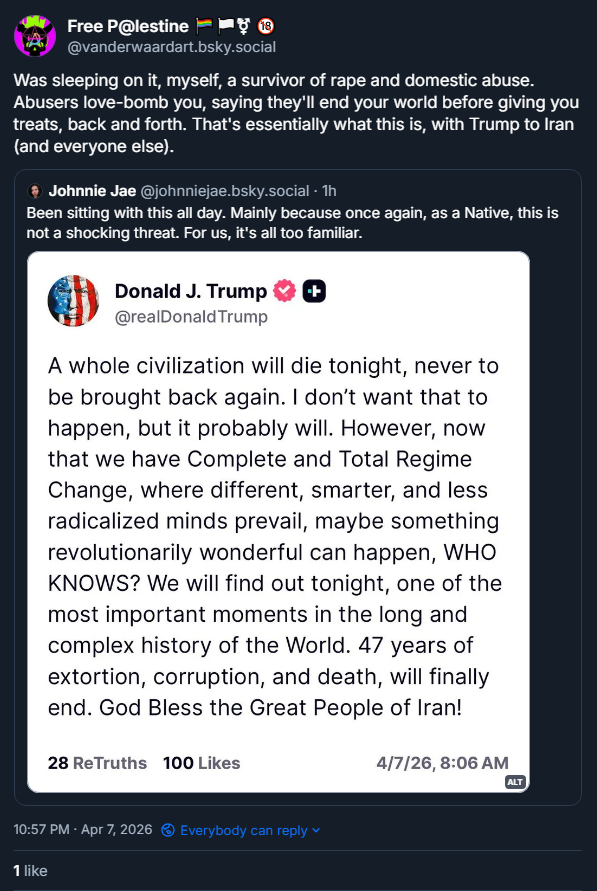
Johnnie Jae: Been sitting with this all day. Mainly because once again, as a Native, this is not a shocking threat. For us, it's all too familiar (source skeet: 4/7/2026).
vanderWaardart: Was sleeping on it, myself, a survivor of rape and domestic abuse. Abusers love-bomb you, saying they'll end your world before giving you treats, back and forth. That's essentially what this is, with Trump to Iran (and everyone else) (source skeet: 4/7/2026).
(source: "Monster Modes, Totalitarianism (menticide) and Opposing Forces: Cataloging Oppositional Praxis," 2024)
In other words, there's a strong theatrical element to such threats, which—however false their flags are, however invented the enemy is—are backed up by force targeting real people and places, onstage and off; i.e., power is performed, in either case (re: "Notes on Power"). Those within the Imperial Core—especially the status quo as white, straight and/or male—are typically unaccustomed to the awesome power of such spells, which workers consciously learn to overcome through the dice rolls of survival (which categorically turn people into victims or abusers, but sometimes healers; e.g., "I'm a Rape Survivor" from "Raising Awareness"). "Comply with my demands or face total annihilation" is a common abuser's gaslight—a raping of the mind Joost Meerlo discussed in foreign dictators (1956) that apply easily enough to those at home who feel off-balance, under capital (thus more prone to betray themselves and other workers); i.e., like home is invaded but also invading and feeding on them (re: "Monster Modes"). Taking truly endless forms (above), these are things women (or those treated like women, pest-and-prize) must routinely face, then learn to overcome; i.e., "riding the wave" to avoid selling out, like Rowling herself (a victim of trauma) did; re: the whore's revenge.
Said revenge means becoming better people, thus those who change the world for the better while inside its giant, half-real necrobiome: summoning power to play with it, using ludo-Gothic BDSM. It's less "Sickness, be gone!" through force of will, and more "I'm not trapped in here with you, you're trapped in here, with me!" meets "I was blind, but now I see" meets "For my will is as strong as yours, and my kingdom is as great; you have no power over me!" It can feel somewhat Sisyphean, to be sure, but the first step to challenging state vampirism (from Camus to me, 1942) is to smile at the gods: by showing them our ass!

(artist: Persephone van der Waard; source: "Away with the Faeries; or, Double Trouble in Axiom Verge," 2024)
Fear is the mind-killer, yes, but power is generally naked (to a degree, above; re: the paradox of exposure). Likewise, canonical and campy actors share the same stages, bodies and language; i.e., there's no singular interpretation (or application) when arbitrating power through these. Furthermore, the wave and recognizing it/riding it subversively is something I myself am familiar with (re: "Escaping Jadis; or, Running up that Hill," 2024); i.e., we must learn to govern ourselves versus the government of states, which exist to pimp labor and nature—pitting us against ourselves while clawing back lost territories the world over (colonies escape control, leading to recolonization at home):
"We" being the key word, not the government, which is complicit in genocide; i.e., as Tad Stoermer notes, paper doesn't stop tyrants, and the 25th amendment is nothing but a piece of paper that is useless without teeth, Trump's yes-men (and both wings of the same bird) there to serve him and state predation [again, by design]. To that, replacing JD Vance would merely postpone the problem at best, and accelerate it at worst—de-aging the dragon through a soft coup that would actually just put a younger authoritarian (and fascist-at-heart) in power (source YouTube community post, Persephone van der Waard: 4/8/2026, in response to Silent Middle Child's "Trump: "'A whole civilization will die tonight,'" 2026).
The calculus of said Armageddon extends to fantasy stories that—through themselves and their own larger-than-life examples—target/rape the mind, the body and the land, etc; i.e., by proxy in ways workers can recognize (re: Myth, Skeletor, Gozer the Traveler/Destructor, and, yes, Harry Potter). The sooner we do, the sooner we can acclimate, adjust, and reverse abjection "on the Aegis." The revolution won't be televised, because—and in Gil-Scot Heron's own words (1989)—it starts from inside while responding to/collating external things Base-and-Superstructure; i.e., Gothic Communism is holistic for a reason, critiquing Socialism as flawed from the start/something that decays inside capital:
Leave Mark Fisher alone, nerds (timestamp: 16:10). Marxism understands the mechanics of capital, but is often lacking on the social and psychological side; i.e. from anyone who isn't white, straight and male, first and foremost (the universal class subject being paid labor under those qualities: "working men of all countries," from Engels); e.g., Marx and Engels' homophobia followed by Stalin's (and his racism and sexism, etc) followed by Marxist-Leninism and different interpretations of Marx that overlook his flaws/forget he was a Gothicist (to an extent; re: "On Marx, the Gothic, and Camping Them through Poetic Shorthand" from "Raising Awareness"); i.e., someone who, alongside Engels, talked about queer people as criminals ("sodomites") and aliens from other worlds ("Uranians"). There's plenty to critique in Marx, and plenty to value in Fisher's work; i.e., that Capitalist Realism is something we must avoid by combatting where it happens; re: through the Gothic mode, I argue. So-called "pure Marxists" are allergic to synthesis, but especially the gay shit, and to varying degrees the rights of other minorities/marginalities, too. You need to hybridize, not pulverize your approach to "just Marx" [class reductivism]. Take what is useful and leave the rest. Also, it's annoying that these guys are like, Marx' models predict everything when their prediction—that mass accumulation and an inability to do anything with the wealth leads to crisis—is the same basic conclusion that Tolkien made in The Hobbit (1937) with his Battle of the Five Armies:

(artist: Justin Gerard; cited: "Prey as Liberators")
Or as Patel and Moore write, "For Marx and for us, capital happens only in the live transformation of money into commodities and back again. Money tucked under a mattress is as dead to capitalism as the mattress is itself. It is through the live circulation of this money, and in the relations around it, that capitalism happens" (source: Seven Cheap Things). In other words, money not in motion—say, a dragon sitting on a pile of gold (stolen wealth)—is dead capital; i.e., capital needs motion to live, which requires but also causes violence when wealth accumulates invariably at the top that causes it paradoxically to die. Monopolies play out, competition stagnates, and the old conquests raze anew to claw back and fight over resources under crisis. In short, it's dead on arrival—building towards a panic room with no exit; pressure builds and it explodes. Imperialism, then, is the highest but also final stage of capital, which must evolve or die. But evolution also = death for those under Capitalism Realism; i.e., it's a delusion, a death cult that gentrifies and decays while insulating itself with asbestos. It's cancer waiting to happen, a foregone conclusion for those who cannot see any way out.
Ignoring the myopic prescriptions of pure Marxism, there's more than one way to skin a cat [or a bear, below]. Indeed, the choosing of invocation is vital to avoiding what Sandy calls "the Imperialism of theory":
I do not believe that I am required to demonstrate "a need to invoke Foucault" (and the diction here is interesting precisely why does Perkin use the word "invoke"?). Like Marx or Freud, Foucault is himself an example of what he calls in the essay, "What Is an Author?," "founders of discursivity," figures who have "established an endless possibility of discourse" (154). "To expand a type of discursivity," he proposes, is precisely "to open it up to a certain number of possible applications" (156). Rather than "needing to invoke" Foucault, I choose to apply Foucault because of the speculative richness such application offers (source: "The Imperialism of Theory: A Response to J. Russell Perkin," 1994).
The example she gives is Foucault, but the same basic idea applies to Marx—and to which I myself write, in "Preface: Gothic (gay-anarcho) Communism; or, Synthesizing Emotional/Gothic Intelligence through a Sex-Positive Gothic Mode" (2024): "Simply put, singular and enforced interpretations are dangerous, and we need to be choosy in ways that prolifically and flexibly enrich our arguments, not simply dot them with the fancy patriarchal ornaments of accommodated [and venerate] intellectuals." Marxist is guilty of this, haunted by Marx' spectre versus any he himself wrote about (source YouTube community post, Persephone van der Waard: 4/12/2026, in response to Revolutionary Communists of America's "The Decline of MAGA and US Imperialism," 2026).
(artists: Steve Frankfurt and Philip Gips)
Yes, it's a bit chicken-or-the-egg (though eggs actually predate land animals, chickens or otherwise—above), but the fact remains: revolution is a battle for worker hearts and minds as already-colonized by state powers... and one that many Marxists—especially Marxist-Leninists of the Stalinist or Maoist schools—absolutely suck at because they're not sexy, funny and/or interesting enough to hold peoples' attention/avoid creeping minorities out; re: (from Gothic Communism "Abstract," 2023):
To combat nation-states as the ultimate foe, Gothic Communism's chief aim is to be campier (thus sexier and funnier) than Marx; i.e., camping his ghost to develop a holistically intuitive anarcho-Communism begot through a widespread, collective and solidarized emotional and Gothic intelligence/awareness that recultivates the Superstructure and reclaims the Base through intersectional resistance and de facto (extracurricular) reeducation: the Wisdom of the Ancients, or cultural understanding of the imaginary past, endemic to this organizational process, and not one any particular group can monopolize (through violence, terror and monsters, etc).
By winning hearts and minds through a shared pedagogy of the oppressed—one that goes beyond the universal class subject from "normal" Marxist revolutions (and controlled opposition); i.e., as paid, white, straight, able-bodied and male (see: me responding to John the Duncan, footnote 6)—so might we avatars of the Gorgon remind Caesar and the empire (and Marx) that both are dead: a lesson in humility doubling as reminder of that frightening thing that levels dragons, kings, cities, citizens and slaves (from Athens to America, both built on slavery and the latter on genocide). Death, which the Gorgon—mistress over life and death—effectively embodies (the paralyzer).

(source: "'Hail, Caesar!'; or, Balor the Leveler as Gay Zombie Caesar in Myth: the Fallen Lords," 2024)
To that, we don't scapegoat a singular case of state-power-run-amok (the so-called "mad king"), but abolish capital/state apologia to prevent said things from happening ever again; i.e., reversing abjection to subvert the wave's (flow and form) of power to suit our needs; re (from the Undead Module):
Per the process of abjection, the middle class canonize the raping of nature, treating it as monstrous-feminine through the ghost of the counterfeit; i.e., as something to punch, doing so in monomythic language that moves money through nature (repeating the grim harvest). As such, the undead become things to do battle with in some shape or form, as monomythic. Be that doll or dollhouse, castle or tyrant, they reify in magical, poetic forms that never quite existed, but whose rapacious, faux-medieval histories increasingly exist between reality and imagination, onstage and off: childhood as something to revisit in service to profit (source: "Perceptive Zombie Eyeballs").
The corpse of empire is ugly enough, but also a corpse that doesn't know it is dead. So when the Man comes around, show him your Aegis! And as you do, take your power back in ways they cannot realize or stop.
To that, joy under fascism (2025) isn't merely about fun and having it (which playing with monsters permits; re: from Tolkien[12] to us), but in recognizing the parallels in and out of real life, in pimp/whore ways (Persephone van der Waard's "From Weimar to Kansas: the Historical Similarities between Berlin Whores and American Trans People," 2026). From there, we give the pimp a heart attack, cryptonymy-and-abjection (which I'll reprise, during "On the Hip"): Medusa set free (or "Gandalf the Grey uncloaked," below), denying Rowling (and other bourgeois cannibals) what they're forever hungry for/allergic towards and lacking any genuine semblance of, in their "walking shadow" of a life. Praise. Love. Respect. Connection. Heavy lies the crown, bitches! In place of a Dark Lord, you would have a Queen—not Rowling aping Pygmalion, "on the Aegis," but Galatea/the Gorgon sitting on capital, teaching Pygmalion (and his ilk) better lessons before it's too late (re: state shift; see: "Nature Is Food")!

(artist: Lilith Mae)
Big things have small beginnings. Here's mine—meaning my stabs at YouTube (during the early 2010s, below) leading up to my coming out; i.e., PhD and beyond, all-roads-lead-to-Rome; re (from "YouTube Videos (Symposiums)"):

To it, these are videos from my channel before 2026, dating as far back as 2014. Those between 2014-2019 tend to use visual aids/traditional editing and function more like video essays of the YouTube sort. All detail a different time in my life, one where I was very much in the closet and (more) socially awkward; i.e., right around when I went back to school the second time, found love multiple times, came out, and eventually after Covid pursued my PhD [my quest for power] into my book series (the titles, dates, photos and descriptions are directly from YouTube) [...]
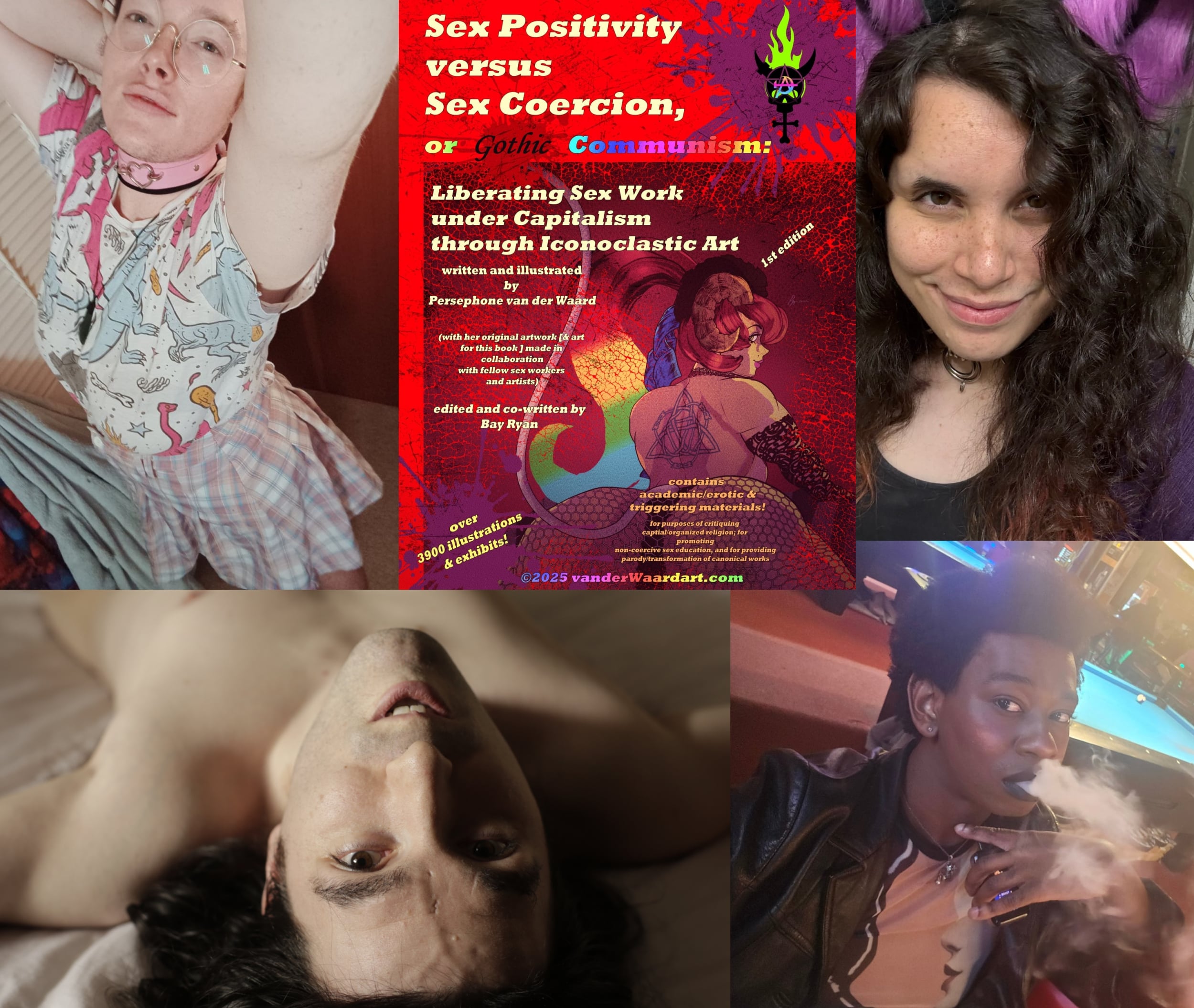
(exhibit 2 [from "Sharing the Blame"]: Artist, top-left: Bay Ryan; top-middle: Persephone van der Waard; top-right: Shipwreck Valaroy; bottom-left: Persephone van der Waard; bottom-right: Clockwork Rhxbynn—cited: "Raising Awareness")
Again-again, you might ask "why bother?" when these seemingly went nowhere. But they didn't, you see; I had many adventures, meeting helpful people and helping many who needed my help, in turn/side-by-side; e.g., cool hackers like Josey Howarth for the former and many kind, hot and sexy people (mostly fags and whores like myself, above), for the latter (over a hundred; re: my series and post-series acknowledgements). That, and my PhD—while independent and contested by gatekeepers for not being peer-reviewed or otherwise accepted at university—was still something I wrote both with academia and life outside academia in mind (and with academic help). Nonetheless, it and its companion books remain my life's work, viewed with pride (for more about that, refer to "About My PhD (and Work Based on It)" from "From Master's to PhD (and Beyond): My Entire Work on Metroidvania," 2025). So despite the roundabout approach I took, and my fumbling around in the dark as I did so, my methods would contribute to unclear pathways that (to borrow from Key and Peele, again) "put... the pussy on the chainwax" (re: "Shining a Light on Things, or How to Make Monsters: Reclaiming Our Lost Power by Putting the Pussy on the Chainwax"). Change is abject, to be sure; it's also silly and fun, moving in ways where the instructions for moving towards Communism/raising awareness and solidarity aren't immediately clear (meaning for anyone the state betrays by design; e.g., BIPOC, women and/or trans people; re: the state is white, straight and male; see: "Understanding Vampires"). The state sucks; we suck back, "starting a thing" (and having fun, which isn't antithetical to revolution): however we can.

Failing at YouTube (and Other Things); or, Why Bother Camping the Canon (re: Bad Empanada)
Given I chose to duel Rowling as a master, not a novice, I suppose it's only fitting we cross swords at last (my book series focusing on TERFs/tokenism, but not so much on Rowling's books; re: "Regarding Tokenism"). Every hero has a journey, this element recounting how I became a witch—not through great deeds, monomyth-style, but "happy accidents" that were, as I see them, chances to learn, grow and change (what Bob Ross calls "bravery tests"). Doing so makes me closer to Schmendrick the magician—someone never fully master of her spells but using them to do good works/camp canon however she can, anyways (and often fucking up, along the way). The same could be said of any medievalist (a trade that frankly isn't high in demand, these days). For me, that's the whole of my journey into the real witch I ultimately became, which includes YouTube and its reactionary elements needling me. To it, there's stiff differences between praise and perdition; i.e., someone who responds by asking "Are you a wizard?" and someone (e.g., Bad Empanada) who goes:
The incel loves/hates the baddie; i.e., as someone to chase in Puritanical, pimp-the-whore ways (older Socialists [or those nostalgic for Marx, Stalin and Mao's sexism and homophobia] being conservatives in red paint; re: "On Sex Work versus Marxist-Leninism" from "Raising Awareness"). There's certainly a conversation to be had about Disney and its problematic, vice-character representations of evil; but likewise, study and consumption (specifically the purchasing of media to support the author) aren't the same; re: allegory allows for exploitation and liberation at the same time (and any academic philistine who avoids studying media at all is tragically myopic). To that, I haven't consumed a single Disney film since the early '90s, but do identify with the witch (the alien to persecute, the rebellious whore); i.e., as a Neo-Gothic freakshow that billionaires pimp out and some Marxist-Leninists choose to blame (calling me [and similar peoples] a sex pest, narcissist, counterrevolutionary, useless eater and so on; re: "Raising Awareness"), effectively blaming the whore for capital/the state; e.g., Bad Empanada likening me to Natalie Wynn [a Liberal Zionist] when I told him, "Slurs Aren't Activism"). It's a huge driving force towards my current work, and one that YouTube continues to play a small part in (e.g., "React #32: Orientalism and the Gothic; or, Mild Criticism for an Arab Ally Who Loves/Hates Aladdin," 2026): to camp something is to "make it gay"; i.e., in ways that open/veiled reactionaries despise, but which are ultimately vital lest Socialism exclude us, once more (re: "Making Marx Gay").
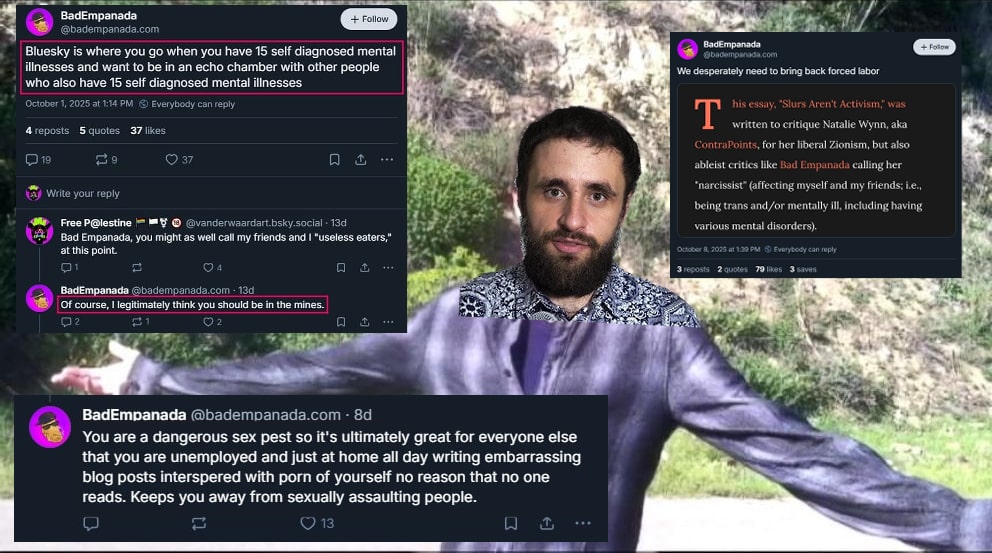
(source: "Raising Awareness")
Doing so is generally Sisyphean. In "YouTube Videos," I recently catalogued my own journey towards transformation/awareness, and why that matters when doing things that feel meaningless; i.e., when facing enemies (or structures) that only appear indestructible; re: exposing them after failing to, in the past, if only step-by-step; e.g., my using YouTube before/after I came out to critique powerful people, and within a larger Gothic mode that capital/the state historically appropriate and abuse. This goes for Rowling but also strange bedfellows who don't consume Gothic media (with Bad Empanada very much still around despite my efforts to expose him—partly because many people know but don't care enough to acknowledge his bullshit, themselves; e.g., "Essay 9.25: Apologizing for Misapplied Research/Asking for The Kavernacle's Help with Bad Empanada," 2025; timestamp: 19:13). C'est la vie.
I digress. I want to quickly read a sample from "YouTube Videos," here, before talking about fighting back after gaining the necessary tools to fight back/camp the canon based on ostensible gaffs:
This page catalogues my favorite/more recent YouTube content, which gives a more conversational, symposium-style approach to various topics (usually things being discussed on that platform; i.e., by other YouTubers). It connects loosely to my larger body of work, including my book series. [...]

I'm generally not a YouTuber. Yes, I occasionally make videos on the platform, but prefer places that give me more control*; e.g., my blog or 18+ website, which focus on written essays about the Gothic tied to my book series, Sex Positivity (2023). These synthesize academic jargon with daily conversation, which my videos essentially amount to—a journal/rough draft of sorts, generally discussing topics conversationally that I've written extensively about elsewhere, or want to write more about in the future (a symposium). To that, I often cite my YouTube content in my essays (videos but also YouTube community posts), the latter which I advertise over my YouTube videos. Those take my normal subject matter (namely sex and monsters), and make it more approachable according to what YouTube allows (not much, sadly). This is to say that much of the sexual content therein is either removed or reduced to the spoken word; i.e., people talking about shit, including what they consume under capital (the Gothic commodifying sex for centuries).
*I'm an archivist but focus on my book series, not my video work (which—excluding my Prometheus fanedit—frankly isn't my best, anyways). But in light of the ongoing genocide against trans people, I want to establish some record of said catalogue existing.
I digress. Critiquing Gothic media includes how people discuss what they consume, including jargon but also slang. Because, no matter how trashy and/or fake a current (re)invention appears (re: Hogle's ghost of the counterfeit), media contains coded instructions; i.e., for how people act outside stories alluding to said behaviors—how they're supposed to act, that is, and generally under state models that further abjection (thus state predation) in some shape or form. There's generally a half-disguised (cryptonymic) approach to this—allegory or hidden meaning that, in Gothic, generally announces in highly trashy ways. Understanding said trash includes studying the people who consume it: those who—despite wanting to hide their true views from their victims (with bad actors) or signal to others while avoiding detection (with good actors)—can be gleaned easily enough when studying people, but especially their opinions about Gothic media; re: when talking about shit, often in reactionary/moderate ways fencing with iconoclasts and subversive agents they police for canonical auteurs and profiteers (e.g., Th3BirdMan, below, punching up and down).

(artist: Th3Birdman, "Exposing the Grift: Harry Potter and the Curious Case of Black Snape"; timestamp: 18:01)
"Supposed to act" is a do/don't (naughty/nice) proposition, with many Gothic stories having a moral lesson/chastity narrative to unpack; i.e., one tied historically to aspects of class, culture and race dressed up in monstrous language (usually a villain to scapegoat by the story's end; re: "Radcliffe's Refrain"). In turn, Gothic is full of various taboos, stigmas, biases, phobias, shames and so on that, however secret/separate they first seem, seldom stay inside the text; they leap from the black mirror onto onlookers—the latter generally absorbed in what they see as betraying something about themselves, mid-abjection (a process of projection and persecution, from state actors). In other words, mirrors reflect; black mirrors reflect secrets of a "dark" sort, whereupon cryptonymy and abjection—already cousins unto themselves—denoting "corruption," "devastation," "betrayal," "chaos," and "radical change" (death), etc, outside of racial applications exclusively. All share the same stage, "opinion the wilderness between knowledge and ignorance" (from Plato). To accommodate and accentuate the larger conversation, I share other YouTubers alongside myself and my published scholarship; i.e., as talking about people and things back and forth/at the same time (and which includes myself prior to leaving the closet versus after I left it).
Keeping all of this in mind, I essentially gained things while modifying my usual diet, including Bad Empanada's essays alongside Rowling's books (though I stopped examining his work long after I did hers). In changing what and how I consumed/thought about the world, I slowly and then very quickly learned I was gay to see the world quite differently than before (with my being a closeted Marxist, back in 2015; re: "Dragon Sickness"; i.e., I was a Marxist before coming out, my egg hatching to birth a gay dragon Tolkien's closeted side could scarce imagine; see: "Concerning Rings, BDSM and Vampires" 2024): suddenly "on the hip," but armed with experience/the fatal knowledge that reversing abjection mid-cryptonymy brings. Through the fire and the flames, I had learned how to camp the canon—a seriousness that (as Sontag puts it, 1964) fails; suddenly I, like a witch (or a dragon) could fly and seek my revenge. I wasn't the worst witch anymore, and not one terribly concerned with Bad Empanada's thoughts of me and my work (the latter thinking erroneously that I simply want him to notice me, which I don't). But what should I do with my newfound powers, gained over a lifetime of mishaps dealing with bad actors?
Note: I said I would reprise cryptonymy and abjection, but don't want to dwell on them too much. Refer to "State Vampirism" if you want a deep dive. —Perse

(exhibit 112c [from "Stand to Fight"]: Artist: Persephone van der Waard. "It ain't easy bein' green!" Whereas Frank Baum envisioned the witch as a small, fairy-tale obstacle, Elphaba Thropp was pointedly written by Gregory Maguire as a kind of sympathetic vice character. Not only is she arguably trans, non-binary and/or intersex; she speaks truth to power in relatable-yet-moderate ways. To that, Elphaba regrettably retreats into cliché as the story progresses, Maguire ultimately sacrificing in the "bury your gays" tradition. Like Charlotte Brontë's Bertha, then, Elphaba simply becomes the madwoman in the attic, her humiliating relegation assigned by Maguire through the stigmatizing trauma of her green [skin]: she becomes radioactive. In doing so, Maguire serves the bourgeoisie instead of defying them [which would require writing Elphaba as something other than a historical victim of the state—a bit like a zombie with her green skin and kill-on-sight punishment by Oz' executive].
By drawing Elphaba as I have, I posit that Oz's most famous witch needn't be reduced to a sacrifice or catchy musical number to inspire people; she can be depicted as a sex-positive, death-fetish rebel who—like that undead musical number "Defying Gravity" but with actual irony and Gothic counterculture—soars to majestic heights...)
Camping the Canon; or, Punching Up While "On the Hip" (re: Cryptonymy and Abjection)
Cryptonymy and abjection hold hands, in Gothic. From Plato's Republic (c. 375 BC), Dante's Inferno (c. 1308), and Paradise Lost, to (retro-)future enterprises like Star Wars (1977) and The Matrix (1999), stories of rebellion aren't just dualistic; they concern shaping how we see as sold back to us—i.e., in canonical, shadowy forms whose uproar punches down in disguise: something sacred, a "secret Bible" that decays in and outside itself, and classically makes one "the dupe" as something to play/work with (re: me, vis-à-vis Gloggins, 2020). To fight back is to punch up while "on the hip," playing with Gothic (and Black Bibles) to learn from them, mid-adventure. Camping canon involves a great deal of disguise and revelation, but also raw shock:
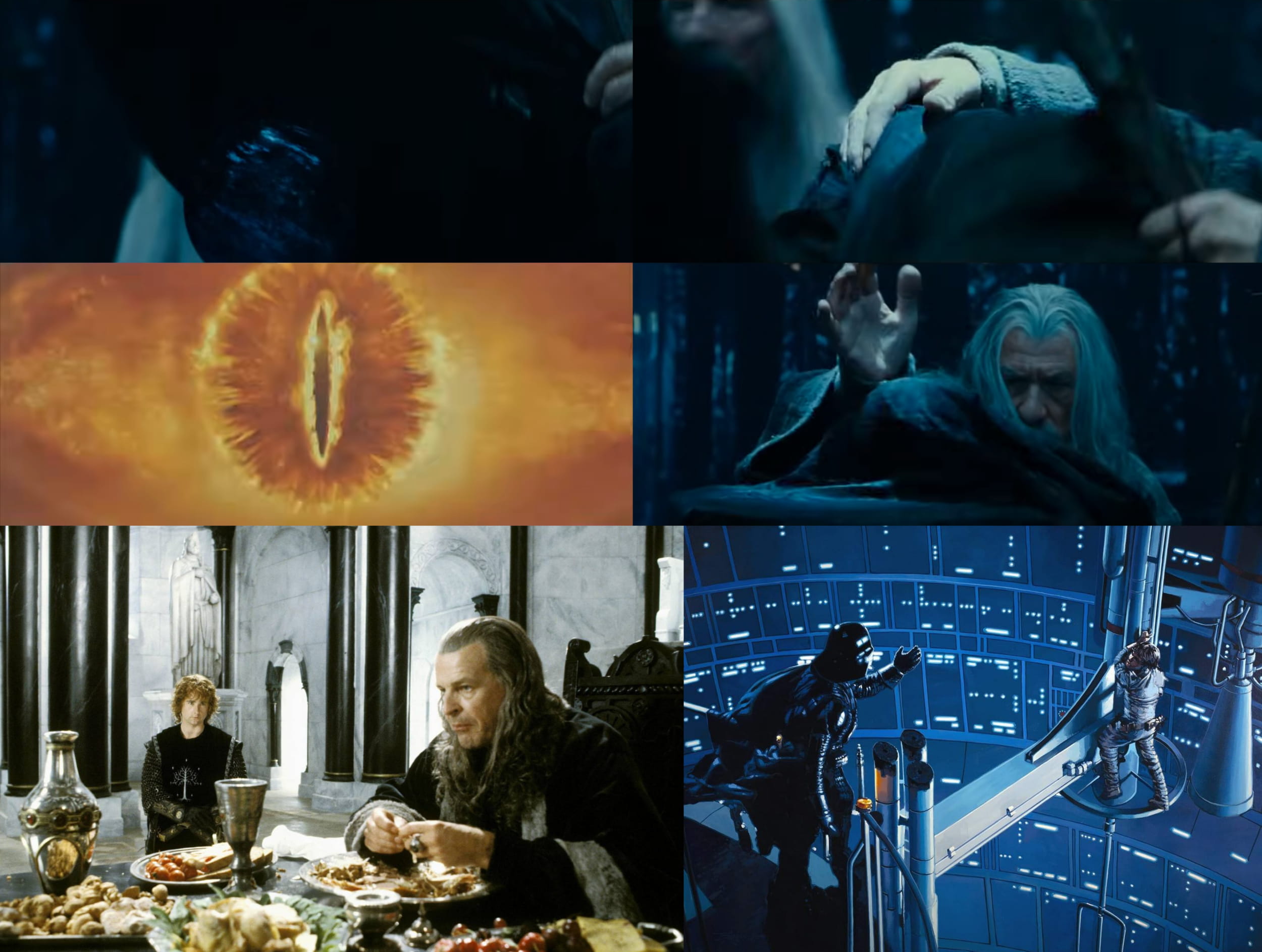
(exhibit 0a [from "Who's Fredrick Brennan?"]: The revenge fantasy is commonly a blinding one, suitably clouding the vision [and minds] of those eager to accept easy solutions; i.e., chances at revenge from capital, whose empty promises cheat workers through grievance dressing "revenge" up [the avenger doing the elite's dirty work]).
Furthermore, the paradox of exposure is that total hiding (the closet) is a one-way ticket to the grave, and harm something to anisotropically and apotropaically reverse, mid-abjection. Many trans people currently refuse to closet themselves, thus "pull a Saruman" (or similar character); i.e., normally appeasing tyranny by betraying ourselves in different ways, during Capitalist Realism. Instead, we have a chance to be brave[13] and stand united against a larger foe while others sell out/punch down, the assemblage of competing choices traversing time and space (the chronotope extending beyond any given retro-future, conveying generational trauma to haunt[14] our would-be colonizers with). YouTube or otherwise, the goal is to change how we see, thus think about the world as nostalgically fed to us; re: as already-dead, rotting but hypnotically so.
(exhibit 0b: From Frankenstein to Alien: Covenant [2017] and similar stories, science fiction out of the Gothic [re: "Mary Shelley's Immortal Legacy," 2025] concerns the panoptic, anisotropic gaze of technology in nascent, manmade creations: a fear of rebellion in robotic things/things treated like robots out from Cartesian thought/the Enlightenment into capital's technological singularity [the scapegoating of technology and nature (slaves) for capital's crimes/the wish fulfillment of magical transformation into endless empire or Utopia, one where technology "goes far enough"; re: "Healing from Rape" and "Fire of Unknown Origin" from "Making Demons," 2024 and 2025]. A central theme is "curiosity killed the cat," specifically tied to astronoetics [2019] or the colonial gaze of planet Earth; i.e., abjected onto scientific creations with an imperial, Promethean stamp: the new vengefully killing the old, during the Modern Prometheus, before cannibalizing what's left for spare parts [re: "Demons and Dealing with Them; or Abandonment, Dark Worship and Vengeful Sacrifice When Dissecting Radcliffe," 2025]. Often, there's a psychological element involved—of searching for humanity in abject spheres, call-of-the-void, before facing something uncanny and putting yourself in its shoes: the gaze/mind of the alien [strongly felt alongside the familial parental themes, abject sexuality and cautionary tales about Enlightenment hubris "playing god" through unnatural creation, etc]. For our purposes, Rowling is a mad scientist and so are we: one monopolizing creation/the Gothic for herself and capital, and we taking such things back upon ourselves [re: the whore's revenge]. No one is immune to propaganda, but propaganda, like abjection, goes both ways.)
We all have our blind spots, those rooted commonly in nostalgia that state actors use canonically to uphold Capitalist Realism (ergo state vampirism): defense of childhood and home through seemingly fantastical stories serving as "rose-tinted glasses." To progress in a better direction, one that is historically-materially bereft of state harm (rape or otherwise), we must kill our darlings by dissecting them—in effect, exposing the predation capital demands (and disseminates) underneath, Radcliffe-style. The elite steal from workers, getting workers to play along through Radcliffean pirates and ghosts (the explained supernatural applying to trans people as "mere crossdressing impostors, invading 'real' women's spaces"): aging vampires who curse the day "you meddling kids" chose to interfere versus turn tail and run. The time for running is over. Whatever stand we make, survival—the baseline for queer folk—happens by speaking out.
(source: Raven Smith's "J.K. Rowling’s Transphobic Tweets and the Erosion of the Harry Potter Franchise," 2020)
To that, Rowling is false, but specifically someone who sells you "forbidden knowledge" enacted in bad faith—a Thatcher clone, Blairite corpse-of-a-woman acting like a man, generally by upholding Patriarchy and capital/the state through Snape, Harry and everyone else. The corpse bride of neoliberalism, Rowling and Harry Potter are a vector to spread fascism's rot—hidden in a centrist sleeve that's been decaying towards do-it-yourself lobotomy for quite some time, and preserving the author in a perpetual spell of undeath: of tragically thinking she's actually helping others (or that others actually like her), when in reality she both withers on the vine and destroys everything she touches, Midas-style (extolling capital's virtues, all the while)! Fascism makes you stupid/afraid of everything in highly push-pull, cop/criminal ways. Again, skull = theft "on the Aegis," Rowling radicalizing Radcliffe while growing increasingly paranoid in the other woman's shadow (re: me vis-à-vis Crawford; see: "The Invention of Gothic Terrorism" and "In Measured Praise of the Great Enchantress," 2013 and 2025). Call bullshit, and then use her still-living corpse/dead legacy as fertilizer for better things: "I've known healthier graveyards than that woman's womb." One does not simply stick it to Rowling without dancing on her grave!
(source: Patrick Lenton's "Is JK Rowling's brain actually full of black mould? An investigation," 2024)
I, on that note, offer you something in duality—a world free from harm that starts with workers questioning reality inside echoes of itself. There, unknown pleasure awaits, just "on the cusp" of frightening discovery (terrifying state vampires with loss of control/radical change). Genocide, kettling, and toxic love are basic; universal liberation is where it's at, grabbing "the fire of the gods" for ourselves and our friends/other victims of capital (to break monopolies of the Gothic and its dualistic/anisotropic discussions of violence, terror and monsters; re: "The State: Its Key Tools"). Let's upstage this Cenobite knockoff—unmasking her like a Gothic villain to some degree, but also taking the same mask-like devices to do something better with them. This includes reversing abjection, enacting live burial (the Gothic master-trope) to house our terminally unlikeable enemies (the ruling class, which Rowling belongs to) in a hell of their own making: that we are the mushrooms living rent-free in her sorry excuse for a brain, incubating there and eating it like the wasp does the caterpillar (devouring the next generation of dummies).
Fortune Favors the Bold; or, Naked Courage: Sharing Gothic Spaces of Play while in the Buff
Fortune favors the bold (and those with bold appetites, cenobites or otherwise; re: "Gothic Ambivalence," 2025), class war a game of theft on the same chessboard; i.e., played between those who steal from workers/nature (the bourgeoisie; re: "dragons") and workers who steal back for themselves and the natural world (assimilation is poor stewardship; re: witch cops; see: "Witch Cops and Victims," 2025). We share the same spaces of play while trading blows (the North Vietnamese, for example, using colonizer munitions against them, post-deployment). To interrogate power is to play with power (which persecution language is) through an exchange of control—to reify then go where it is, navigating the perils that await (re: dragons, yes, but also being a witch among those who play the part in bad faith). Such things are often naked, and in more ways than one. Fascism and capital/the state are not kind to whores, the Soviets criminalizing sex work alongside the Nazis (whose own persecution of "degenerate" queer folk and whores Stalin and his successors emulated, below). Nothing is policed more than sex (whose contradictions exclusionary forms of Socialism historically abjects/fails to free from the state, nuclear model and household; e.g., by outlawing or complicating sex work, abortions, and divorces).

To it, I realize that picking a fight with Rowling—the de facto ruler of so-called "TERF Island"—puts me, a trans woman and a whore, at risk. Except, I'm already at risk, as are my friends (e.g., my Irish-Māori partner Bay coming from New Zealand, an island community and environment ravaged by white people/capital for centuries); and to quote Eartha Kitt (a drag king if ever there were), "I don't care" (1984) and "I want to be evil" (1953). Or as others have said before and after Kitt (the "princess of plunder," in her own words), and along similar monstrous-feminine refrains she employed: "Eat the fucking apple" and "You will be hated regardless" (Megan O'Leary and A Sprout in the Garden, respectively). Better to rule in Hell than serve in Heaven (as Milton put it), and this ain't my first rodeo with Queen TERF and her ilk (e.g., Natalie Wynn; re: "Trans TERFs, NERFs, and Queer Bosses"). Nor does she have a monopoly on witches, which I feature, embody and hire in tactically frivolous ways; i.e., unpaid labor (whores) breaking Gothic monopolies on different registers, tackling similar ideas; e.g., Angel Witch in "Tactical Frivolity" and Maddie Minx in my 2026 interview with them, which ties to other work I do, besides (re: Gothic Communism is holistic); e.g., Metroidvania and its token, subjugated Amazons, mid-Amazonomachia, serving a similar canonical role Harry Potter does, and one unruly whores (actual or de facto) challenge, "on the Aegis":

(artist: Doc Zenith)
To conclude, Gothic tends to blur or confuse binaries and boundaries, in duality. It flirts with theatre, its abject villains often deeply magnetic, charismatic and/or intimidating as both authors of state hypocrisy and lies, and deeply intense (and attractive) alternatives: rebel player-as-authors embracing so-called sin/forbidden power and knowledge/dark desire, while freezing and feeding on traitors. To that, reversing abjection remains an extremely effective anti-predation tactic: the would-be victim, allegorically reminding their attacker (during mirror syndrome) how White Indians are traitors, and traitors suck/are mortal on black planets; i.e., the nuclear home reliant on slave labor while pimping it (the centurion slave holding the whip), the Medusa relegated to shadowy spheres. There the Gorgon, seemingly "slain," waits patiently in her supposed "prison": a famous undead/demon/chimera who appears "in small," having the whore's revenge; i.e., of unpaid labor as a whole—one had through Holiwell and me, but others workers, too (sex or otherwise); re: those who make up this article, my book series, and Gothic Communism reversing abjection "from Hell/the underworld"; e.g., my friend, model and muse, Maddie Minx (wearing Medusa on her skin as someone I interview, below) showing the audience how nudity isn't a weakness; it's power to summon and reverse, mid-performance: onto bad actors (nuns playing at pimps), while letting the whore testify through confusions that capital curses labor with. From Marx to me, capital alienates and sexualizes everything (1844 and 2023). Inside the ensuing chaos and confusion, Galatea reclaims her power—taking it from Pygmalion to reverse abjection in many different ways (source: "'Once More unto the Breach'; or, Reading and Responding to S. R. Holiwell's 'A Maze of Murderscapes: Metroid II,'" 2026).

(artists: Angel Witch and Maddie Minx)
Gothic adores fatal (transformative) homecomings that melt harmful (false) bloodlines. To that, we iconoclastic whores and/or trans folk of Gothic Communism (and its logo on our skins, below) never get old; we thwart those who prey on us, using what we have (as monstrous-feminine survivors and avengers) to cryptonymically[15] undermine our pimps, mid-betrayal—not a brand worn by slaves, but a sigil of revolution using Gothic language in duality upon ourselves (the aforementioned Aegis a canvas to author fresh destinies):
Token people don't speak for everyone, and their hands are tied; ours are not—with TERFs little more than pimps who forgot they were (and are) whores (or incels, in Bad Empanada's case). That reality is easy enough to expose "on the Aegis," our bodies and labor tied to larger dialectical-material refrains (from Medusa to her fruit-like avatars, above): an orchard of rebellion, full of delicious fruit that challenge Rowling's rotten apple while saying "land back, labor back, bodies back" (with poison of our own, toxic and terrifying to her kind but salvation for us; re: "Our Sweet Revenge," 2024). We not only share the same stages, but bodies and costume-like bodies. Courage is, so often, a denuding act in partial undress (the armor-and-weapons nudity of those treated like Amazons and Gorgons, below). If you scratch a TERF and/or a SWERF (the two usually overlap), a fascist bleeds; cryptofascists "scratch" through displays they cannot stand to look upon, unanswered (footstools for Zeus).

(artist: Sveta Shubina; cited: "Stand to Fight")
Regardless of the "materiel" used, the fight came to me and others like me that fascistically feminist pimps kettle and devour for the state: the rapist the whore tires out/ties into knots while "topping from below" (theft [vampirism or otherwise] goes both ways, the pimp afraid of "cooties" used to anti-predatory effect by avengers of past wrongs). To that, Rowling's a billionaire cunt/complete hack—a heartless husk of a woman betraying other women (white or otherwise). This includes cis/trans women alongside other marginalized peoples, doing so everywhere "in small" and by proxy (through media and people); i.e., while preying on us in Matrix-like ways, bread-and-circus. She's drinking our milkshakes—the evil, always-hungry queen who emulates capital by thinking herself "noble" (or cynically not caring if she is; e.g., like Lewis' Queen Jadis sacking Charn from within, or the villain from Silksong's [2025] city of the bells, Pharloom; see: "Persephone's Silksong Symposium," 2025). With such a confederacy against us, what's a girl to do but drink back? There's always an echo, ergo no monopoly on draconian things (re: "It Began with a Whisper," 2025)—one where a given fighter is just another castle, one the princess waits inside/wages war from: "The raven is hoarse that croaks the fatal entrance of Duncan under my battlements!" (source). Storm my "castle," little man (or someone acting like a man), and reap the whirlwind (re: "Castles in the Flesh")!

(source: Takena's "Midnight Vampire," 2024; cited: "Vampires and Claymation")
We'll touch on that, deeper in; we'll also examine a variety of different bigotries Rowling weaponizes (for there are many); i.e., to uphold a British-coded, neoliberal view of the world decaying into fascism; e.g., Snapewives being the toxic image of forbidden love—one sold, hand-over-fist, to middle-class housewives during the War on Terror by a tokenized madame (and her actual/de facto servants, ipso facto)—and whose pernicious use of disabilities, Indigenous Peoples, queer folk, and ethnic minorities (etc) tokenize (or otherwise chattelize/prey on) the usual recipients of state violence under capital; re: Birdman, who we've already examined:
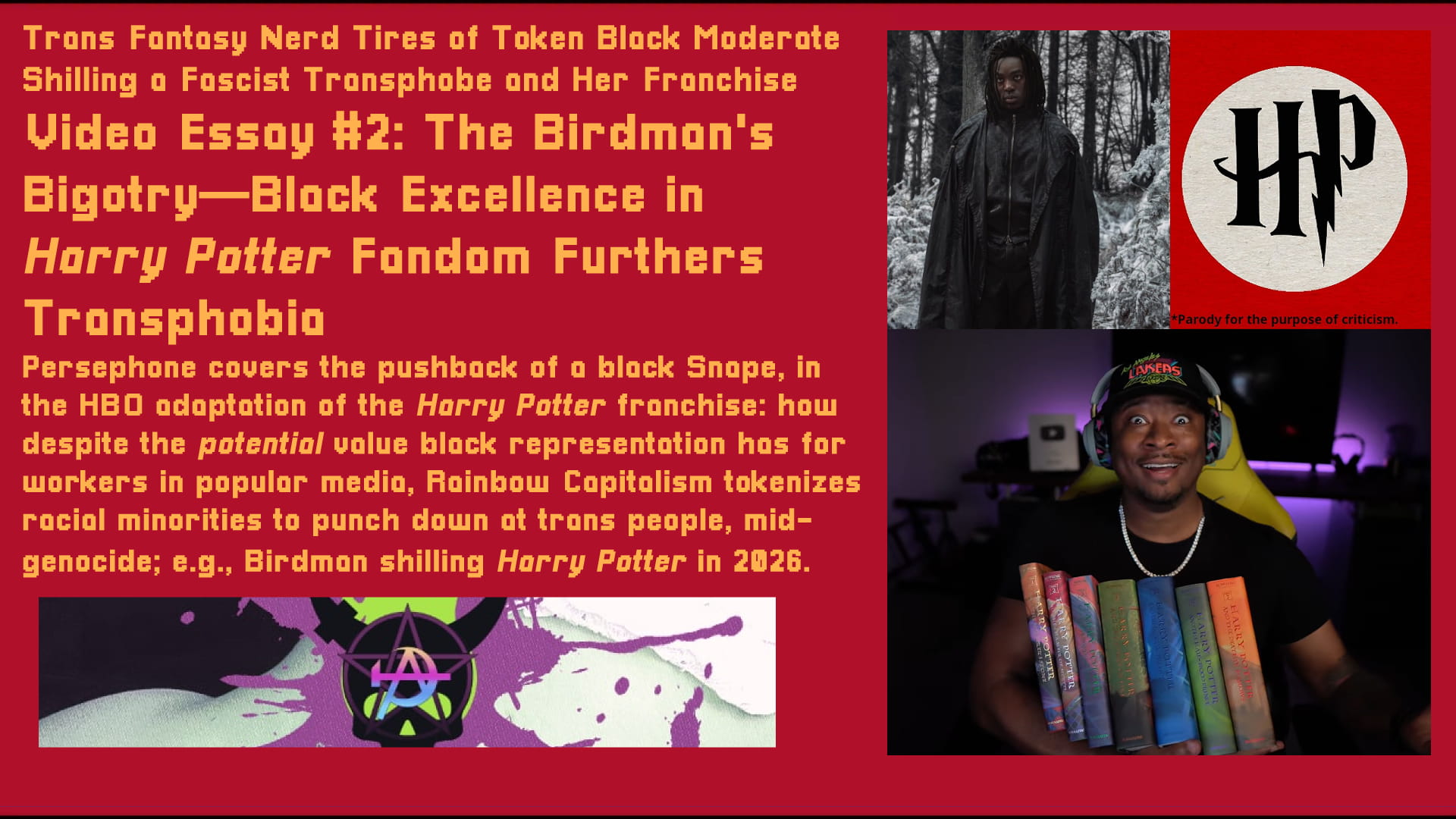
My own take not just on black Snape, but the Harry Potter franchise; i.e., as a whole and concerning various token parties who—despite plenty of evidence as to why they shouldn't—continue defending it, anyways, thus completely ignore the racism (and other bigotries) endemic to Rowling's world. Capitalist Realism gonna realize, neoliberalism courting fascism in the hearts and minds of middle-class workers. By endorsing Rowling's franchise, her defenders fall under the aging billionaire's hateful spell—a revenge not of the Snapewives or blaxploitation camp, but of straight male caretakers chaining themselves without irony to Rowling's radiator (auditions for "Black Snake Moan, part two: Role Reversal") (source YouTube Community Post, Persephone van der Waard: 4/2/2026).
Simply put, there's a lot, and dissecting Rowling—a giant patchwork leech[16] without a soul—takes time. So does dismantling her zombifying golems, Black-Snape-Moan (similar to my essay "Dissecting Radcliffe" [2025] but more to debride her toxic gunk/reclaim the Gothic from an impostor than salvage anything positive from the author-in-question). If you really wanna "redeem Snape," in that equation, you gotta free him from the Snapewife's curse (a bit like Vader from the Emperor, in effect killing him): from Rowling herself that her legion of imitators/salespeople parrot without irony (and yes, there's room for toxic love/dark desire during calculated risk, provided irony is present—meaning during a given danger disco's invasion/captive fantasy and its pauper/prince or lady/tramp courtly love refrains: "fucking the alien," the bandit, the assassin, etc; re: "I'll See You in Hell," below).

For now—and to conclude the essay half of this document—we'll start with my original video's cited works, "From Others" and "From My Work," then push into "Further Reading/Viewing" (the meat of the follow-up). Each citation gives the author, title and date, but also a single/several timestamps per video (we'll paraphrase the books and written articles). To keep things relatively short, this portion will be semi-scripted—with the unscripted elements existing solely inside the companion video (when I record it), and the scripted elements written as singular paragraphs inside this document (which the video reads and expounds upon). If you just want the sources and my notes, this post has them all; if you want my extended thoughts and feelings, watch the companion video. From me to you, I invite you to try. Play with witches and dragons; trace your own constellations among the stars, camping the canon to Hell and back (there and back again).
Note: I've decided to have my responding to the extended bibliography be in a follow up video, after the initial reading. —Perse, 4/13/2026
Bibliography Half
As stated above, the bibliography half is not fleshed out—is merely provided for readers to do with as they please while keeping the essay half in mind. To that, the discovery of a single work can shape one's life forever moving forwards. Here's a bunch!
Update, 5/21/2026: Future developements are always happening with Rowling and her bullshit. To preface the original bibliography, I shall add here even more notes about Rowling's shitty legacy: @matriarchetype's 2026 playlist "Everything Transphobic JK Rowling Ever Did [2020-2025]."
Should I come across anything old or new that I want to add, I will list it above. Said additions are not in the PDF of the essay (and its parent book volume), but added here as extra food for thought. —Perse
Original Bibliography
The original bibliography divides in two: "From Others" and "From My Work."
From Others

(source: Bethany Ao's "Black trans communities suffer a greater mental-health burden from discrimination and violence" 2026)
@Alazaiah's "Why Is Transphobia Getting Worse in the Black Community? (Nobody Talks About This)" (2026): https://youtu.be/nPwdwiTLOio?t=104
@EssenceOfThought's "How J.K. Rowling Turned Harry Potter into a Symbol of Hate" (2025): https://youtu.be/AiNkNB15DEg?t=756
@matriarchetype's "But What Have the Cast Said About JK?" (adult actors only, 2026): https://youtu.be/VCZ0ylDZiFo?t=110
@Shaun_vids's "Harry Potter" (2022): https://youtu.be/-1iaJWSwUZs?t=2940
regarding Trump administration experimenting of trans people in prison (2026): https://transitics.substack.com/p/the-trump-administration-admits-to
examples of daily trans folk/common trans myths: https://www.facebook.com/reel/1429933995581865
Verán's "Blak Lives Matter: Indigenous Australia's Solidarity with the U.S. Movement for Black Lives" (2020): https://www.culturalsurvival.org/publications/cultural-survival-quarterly/blak-lives-matter-indigenous-australias-solidarity-us

(model and photographer: Neil Morris and Snehargho Ghosh; ibid.)
Fanon's Black Skin, White Masks (1952) https://files.libcom.org/files/%5BFrantz_Fanon%5D_Black_Skin,_White_Masks_(Pluto_Clas(BookZZ.org).pdf
Jim Crow Stories' "D.W. Griffith's The Birth of a Nation (1915)" (regarding Woodrow Wilson screening the movie at the White House): https://www.thirteen.org/wnet/jimcrow/stories_events_birth.html
"Playboy Interview: Muhammad Ali" (on him thinking black men sleeping with white women being a capital offense, 1975): https://genius.com/Playboy-playboy-interview-muhammad-ali-second-interview-1975-annotated
Dacre's Zofloya; or, The Moor: a romance of the fifteenth century (1806): https://catalog.hathitrust.org/Record/100207374
Sarkeesian's famous line (from Gamergate, 2015): https://www.facebook.com/theguardian/posts/anita-sarkeesian-its-both-possible-and-even-necessary-to-simultaneously-enjoy-me/10153050879721323/
Obama's "A More Perfect Union" (token neoliberal apologia, 2008) https://teachingamericanhistory.org/document/a-more-perfect-union/

(source: "Obama's 'A More Perfect Union' speech, annotated," 2008)
From My Work
"No Girls or Trans People Allowed" (2020): https://nicksmovieinsights.com/2020/04/doom-eternal-review.html
"Radcliffe's Refrain" (2025): https://nicksmovieinsights.com/2025/01/book-sample-radcliffes-refrain.html
interviewing my intersex partner (CW: SA, intermisia and surgical harm—2025): https://nicksmovieinsights.com/2025/03/hailing-hellions-interview-with-victoria.html
exploring Tolkien's racism: https://nicksmovieinsights.com/2025/04/my-tolkien-scholarship.html
my initial response to Birdman (including discussion on Tolkien's racism, 2026): http://youtube.com/post/UgkxXKyN7kolZ0EFUEqRyjvUn5cJ2cnFYxfC?si=XRhCU6Ruk2KHu2cN
"Anti-Zionism (and Anti-Racism/Anti-White-Supremacy)" (18+): https://vanderwaardart.com/book_gothic_communism/about-the-author/anti-zionism-and-anti-racism-anti-white-supremacy

(artist: Danny-Green; cited: "Concerning Big Black Dicks[17]," 2025)
Further Reading/Viewing (for Holistic Purposes)
Intersectional problems require intersectional solutions, and Gothic Communism is (again) a holistic discipline. To that, "Further Reading" covers a variety of topics that concern the Harry Potter franchise to reclaim what it stole:
- Before We Start (re: State Vampirism and Rowling Is a Universal Bigot)
- Trans Stuff
- Other Criticisms of Harry Potter (toxic love, disabilities, and much, much more)
- Racism (and Making Snape Black)
- Geopolitics
- Bad Actors
- Bridging the Gap
- Calibrating Gothic; or, Better Starting Points for Different Representation in Gothic Media
- Learning from Others
Before We Start (re: State Vampirism and Rowling Is a Universal Bigot)

(exhibit 1a1a1g3 [from "Overcoming Praxial Inertia," 2023]: "Make me feel, make me scream" sings the diegetic song in the above scene; it mirrors the events and setting onscreen, but also Trent Reznor's "Closer" from a year earlier [exhibit 43b]. The revisiting of trauma includes the revisiting of the procedure as full of dated concepts stacked on top of themselves only to become dated all over again. The demon or the angel, then, occupies a kind of social get-together whose dancing is cryptomimetic; i.e., a calculated risk that minimizes harm but mimics the feeling of being out of control through the process of cryptonymy [hidden trauma displaced from its cause]. Historical materialism is, itself, an "inkblot" of interpretations that haunt the basic scheme. The dancing means different things as Freudian, but also Dante-esque or Miltonian metaphors/allegories. In short, they can be campy or canonical to varying degrees that, unto themselves, are informed by the trauma of the viewer and the artist as interwoven on the canvased experience as "half-real." It's like a bad dream that isn't completely made up but feels impossible, absurd. But within this Gothic surrealism, the awesome power of terrible truths can be revealed through the apocalypse of stereotypical monsters and their complicated signifieds...)
First, remember my "State Vampirism" compendium; re: state vampirism = feeding through the state mid-abjection (alienation/fetishization, often in monstrous-feminine language—above); i.e., be it openly capitalist or Marxist-Leninist, and generally under some form of Capitalist and (to a lesser degree) Socialist Realism (of a reductive, reactionary sort); re: the monomyth as a franchised refrain (which workers camp in Promethean ways, when punching up). In essence, states hide and feed into old age; they lie to feed on workers and nature inside a punitive hierarchy that privileges a very specific group of people (white straight European men, which tokens emulate)—generally by first framing the world (as they codify it) as something to prop up and defend from "alien" forces (under a Protestant ethic/Cartesian dualism). Doing so cryptonymically through abject DARVO and obscurantism, they target degenerates, counterrevolutionaries, "useless eaters," etc, among the youth; i.e., as pimp/whore code that shows/conceals different instructions to administer violence in terrifyingly monstrous(-feminine) ways. In other words, there are monsters to expose and fight to best maintain "order," which is how the state does what it does (American or otherwise). It rapes by design, doing so under a variety of false flags "taking candy from a baby." Couple that with a female Nazi billionaire whose centrist exploitation/fearmongering knows no bounds—and whose aging makes her more and more desperate to hold onto power/cheat death at any cost—and there's bound to be trouble; re: states feed through bigotry as a form of disguise by which to feed, cryptonymy-and-abjection.

(source: Margaret Lockyer's "Harry Potter: Why the Wizarding World's Worst Mistake Is Fat-Shaming," 2022)
Speaking of, there's a ton of bigotries in Harry Potter penned by Rowling herself. Like, a lot—so many, in fact, that the algorithm keeps recommending essays dating back years, and authored by a variety of different marginalities targeted by Rowling's work; i.e., those who can't afford to be blind, selective or otherwise. Said targeting concerns in-story bigotries that are, themselves, relatively brief, and we haven't had/don't have time to unpack them, here—e.g., the double standards of Rowling's anti-activist sentiments showing good detectives vs annoying detectives, like Hermione vs Rita; or homonormativity (and echoes of conversion therapy/bury your gays), with Tonks and Lupin (who Rowling marries off, at the end, to "solve" the issue of their queerness).
As for the essays themselves, some are relatively short. However, many are hours-long and cover just about every bigotry under the sun (and though I haven't found ones that cover intermisia or whorephobia, at length—and though I specifically remember Ron's use of the term "scarlet woman" to insinuate [for his mother] that Hermione is promiscuous—Winky's alcoholism [as a slave, whose continued bondage Ron* apologizes for] certainly counts as far as shaming drug use [self-medication through drug-seeking behavior] goes). So when initially responding to Th3Birdman defending the worst-of-the-worst, I said, "It's like Rowling fell out of the bigot tree and hit every branch on the way down." Except, I didn't realize just how holistic her terribleness was, how thorough the rot had, and has, spread (with bread mold appearing on the crust after it's grown, underneath). She's basically Rainbow Capitalism for token people; i.e., a bigotry for one is a bigotry for all, and Harry Potter is British Imperialism: sold as YA fiction, dressing wanton bigotry up as "heroism" (frontier justice) while preying on as many people as possible (the white savior/cop is the destroyer-in-disguise, Rowling and capital the Great Destroyer).
*Here, Rowling apologizes for bigotry by normalizing it between minorities; i.e., marginalizing in-fighting (aka divide and conquer) alongside anti-activist sentiments (re: Hermione and S.P.E.W., but also Rita and controlling the press through force while also framing her as more masculine and annoying than Hermione before torturing her). In keeping with anti-Scottish sentiment, there's also a scene where McGonagall sardonically offers Professor Trelawny tripe aka haggis (a Scottish dish made—at least partially—from sheep innards), and various national rivalries between England and France also exist in the books (during sporting competitions tied to schools with sports teams, a very neoliberal framework/nation pastiche whose Anglocentric signature Harry Potter happily embraces).

(artist: Avital Dayanim; cited: "On Goblins, Being a Weird Nerd and Trans Cryptonymy as a Monstrous Antidote to Bigots," 2025; see, also: "Goblins, Anti-Semitism and Monster-Fucking" from my Tolkien scholarship compendium)
Again, this tracks: Rowling is a billionaire (who abjects her greed onto Jewish-coded goblins [as practitioners of usury tied to Christianized medieval stories about greed, above], and who Israel defends because of course they do—so-called "muscular" Jews versus diasporic, non-national Jews[17a]); she became a billionaire, like most billionaires (except "old money" or "nepo babies"), by exploiting as many people as possible, and which (for her) happened behind a shoddy veneer of "universal inclusion" steeped in bigotries playing the victim. It's a lie borrowed from Thatcher and Reagan, Blaire and Clinton, but a profitable one: promising assimilation (or toxic love[17b]) to children—meaning those Rowling relies on to bring her story to life; i.e., unlike Star Wars and LotR, which feature primarily adult actors, Harry Potter needs an army of child actors/soldiers to work for her/defend her stories like Gospel, and which she replaces/recolonizes (through an endless structure of invasion, secluded in her castle) with fresh youths, Oliver-Twist-style: marks-turned-pickpockets whose lives are planned out for literal years in advance, replenishing the ranks when the originals become "unruly"; e.g., Daniel Radcliffe and Emma Watson (source: Helen Bushby and Ian Youngs's "J.K. Rowling Reignites Row with Harry Potter Stars," 2024).

(source, left: Reddit)
To this, Harry is less a one-size-fits-all vehicle, for minorities, and more a shadow for them to stand in; i.e., while identifying with something they're not from an early age (a phallic power symbol similar to lightsabers from Star Wars—classic symbols of jousting and courtly love, above). There is allegory there, but it's largely coming from people assigning qualities to Harry the books actively don't. He's a blank slate/easy means of general alienation (and rags-to-riches wish fulfillment), but nonetheless remains a white, straight, able-bodied tabula rasa in Rowling's world; by the end, he's a cop defending said world—one that only allows whispers of minorities to exist, or bad caricatures that lionize the neoliberal status quo Harry (and Rowling's Gothic pastiche) embodies: he's a dick, and a privileged one (which Daniel Radcliffe, Harry in the movies and a trans ally in real life, really dials back in favor of an affable bloke, below).

(source: Facebook)
In turn, there are no moral actions, only moral teams, and cruelty is seemingly a virtue for the good guys versus anyone they (and Rowling and her fans) don't like. And they seem to hate everything in sight—a very Victorian approach to life, and one similar to what Joseph Crawford describes of the actual Victorians:
As a graduate student, I once sat in upon an undergraduate lecture in which the lecturer asked the students a question: judging from the Gothic fictions they left behind, what was it that frightened the Victorians? The group was silent at first, but, gradually, responses began to trickle in. They were scared of the old aristocracy: witness Count Dracula. But they were also scared of the poor: thus the panic over the Ripper murders in Whitechapel [and dead whores]. They were scared of modern science: Frankenstein. But they were also scared of ancient religions: The Beetle. They feared the city: Bleak House. They feared the countryside: The Hound of the Baskervilles. They feared the very old: She. They feared the very young: The Turn of the Screw. The past: Ghost Stories of an Antiquary. The future: The Time Machine. Foreign invasion: The War of the Worlds. Inner corruption: Dr Jekyll and Mr Hyde. Revolution. Despotism. Sex. Women. Industry. Art. Evolution. Degeneration. Victorian Gothic, it seemed, demonstrated that the Victorians had been afraid of virtually everything... (source: "Introduction" to Gothic Fiction and the Invention of Terrorism, 2013).
(source: Adam Frost and Zhenia Vasiliev's "How to tell you're reading a gothic novel – in pictures," 2014)
Capital feeds, mid-abjection, fearing and hating what it feeds on in bad faith. Everything. To that, Rowling is basically a copycat of Radcliffe—a perfidious changeling who took what Radcliffe feared (cheap replication, below) and expanded on her own terrorism, hundreds-fold. In short Radcliffe fucked off into the blue; others took her place
Dale Townshend and Angela Wright refer to Radcliffe's disappearance after the publishing of The Italian as the "Radcliffean Interregnum" […] The literary world could not comprehend that the highest paid and most popular novelist of the 1790s had stopped publishing new material. In 1800, rumours began to circulate that Ann Radcliffe had died; and by 1811, false reports stated that she was restrained within Haddon Hall in Derbyshire, driven "mad" by the "morbid exuberance of her [own] imagination" (Smith 155; Miles, 1995 25). There is no clear reason for Radcliffe's disappearance, but scholars have offered different ideas; Townshend and Wright (2014) believe her interregnum may have been due to a combination of her frustration with the plethora of "Radcliffe imitators" in the market, and the mixed reviews she received for The Italian (source: Victoria DeHart's "The Enchanting Ann Radcliffe," 2020; cited: "Radcliffe's Refrain").
amid bad reviews not unlike Radcliffe's,
As Nick Groom writes (again, from the Oxford World's Classics of The Italian, 2017):
(source: Regency Literature's "A Regency History Guide to The Mysteries of Udolpho [1794] by Ann Radcliffe," 2013)
As to risibility, a notorious letter condemning 'Terrorist Novel Writing' accused [Radcliffe] of provoking a fashion: To make terror the order of the day, by confining the heroes and heroines in old gloomy castles, full of spectres, apparitions, ghosts, and dead men's bones […] If a curtain is withdrawn, there is a bleeding body behind it; if a chest is open, it contains a skeleton; if a noise is heard, somebody is receiving a deadly blow; and if a candle goes out, its place is sure to be supplied by a flash of lightning.
Groom notes how the letter in question explicitly attacks Radcliffe's "system of terror" for being monotonous, ignorant, and "contaminated" by "Monk" Lewis' horror writings—to which Radcliffe herself would never write another novel, but whose 1826 posthumous appearance with "On the Supernatural in Poetry" distances herself from the French Revolution (and its terrors), radicalism and Lewis (source: "Shining a Light on Things").
culminating in Rowling as the end all, be all of British neoliberalism sold to Americans.
(source; artist: Mary GrandPré)
"Give me a boy until he is seven and I will show you the man," Aristotle once said—a deeply reactionary asshole, in his own right (and one Phyllis happily rode like an ass): "in some cases things are marked out from the moment of birth to rule or to be ruled" (source: "Born to Rule" from Bernard Brandon Scott's "Aristotle on Our Dilemma: An Interlude," 2026). Following suit (or taking over), Rowling would disguise her ideology in a YA Trojan Horse (the original which Athena designed for Odysseus alongside her mirror shield [the Aegis] for Perseus, but I digress). Writing her first book The Philosopher's Stone in 1997 (or The Sorcerer's Stone for American audiences, above)—and becoming increasingly TERF-ish, post-Gamergate (roughly two centuries after Radcliffe disappeared/bought the farm, in 1797 and 1823 respectively)—Radcliffe's abject franchise aged with the fans, becoming a conveyor belt of garbage the Great Enchantress would swoon to behold.
Indeed, Rowling's a Gothic villain Radcliffe would have written about, in her own novels; i.e., tied to a system of theft the older woman's last novel seemly touches on:
This may explain why everything is under scrutiny in The Italian. It is a novel suffused with secrets and mysteries, and pervaded by scrutiny, examination, and interrogation. […] It looks forward to a society in which order is enforced by institutions keeping individuals under perpetual surveillance. As such, The Italian [is] very much a novel for the twenty-first century (source: Groom's "Introduction").
It bears repeating that the villains, in The Italian, included the Spanish Inquisition—an apt metaphor regarding precisely the kind of surveillance state Rowling wants to bring to Britain (and America); i.e., while hoodwinking everyone using old dead martyrs who sacrifice orphans to dark lords (what people nowadays call "the Epstein class"). Rowling's the Dark Lord, Dumbledore and Voldemort two sides of the same coin she and her books (and counter-activism) viciously abuse to protest rebellion; re: capital decays into fascism (a theme explored in other authors tilling the soil over Tolkien's grave, below).

(source: Mythipedia; cited: "'Hail, Caesar!'; or, Balor the Leveler as Gay Zombie Caesar in Myth: the Fallen Lords")
I digress. Here, I want to be holistic while addressing Rowling's universal bigotries tied to state vampirism. So I'll be adding stuff periodically as it comes to me. I'll try not to add essays or articles that discuss the same topic. If I do, it will cover different aspects of a given subject; e.g., John Lithgow's selling out as covered by Jessie Gender, versus her covering Nick Frost. Expect "Trans Stuff," "Other Criticisms of Harry Potter" and "Racism (and Making Snape Black)" to all grow.
Lastly, not everything relates directly to Rowling or her work, but still supplies information that critiques her alongside Capitalism (which Harry Potter essentially emulates in fantastical language). Camp them, accordingly. Remind Rowling she's mortal—that capital makes people like her universally cruel, hateful and paranoid (re: dragons), and in ways that are ultimately in vain/addicted to violence alienating her from company and creation for which her armor and weapons (mainly lies) are to no avail (the magic mirror on the wall a mythically narcissist refrain): dooming them to eat themselves (and those around them, TERF-style) before dying of old age, bereft of genuine, unabusive love. Or as Federici put it (cited in "Hot Allostatic Load" and then in "Policing the Whore," 2015 and 2024):
One lesson we can draw from the return of witch-hunting is that this form of persecution is no longer bound to a specific historic time. It has taken a life of its own, so that the same mechanisms can be applied to different societies whenever there are people in them that have to be ostracized and dehumanized. Witchcraft accusations, in fact, are the ultimate mechanism of alienation and estrangement as they turn the accused—still primarily women—into monstrous beings, dedicated to the destruction of their communities, therefore making them undeserving of any compassion and solidarity.
We can camp these devices for our own aims (often borrowed from classic stories—franchised into cash cows, below) but, again, we share the same stages in duality. To that, language is simply a tool, and abjection (and its Promethean elements) are anisotropic: "Everything sits within a cycle of imaginary history that plays out through an endless, genocidal mirroring that must, if it is to cease, be met with mirrors" (source: "Author's Foreword," 2023). So is the Gothic mirror-imaged mise-en-abyme, as a whole; i.e., witches essentially whores per the nuclear model as canonically "under attack" (re: "homewreckers"). Witches or otherwise—overlapping with goblins, vampires, werewolves and so on—relegate, mid-partition, to hellish territories workers bring to Earth for different goals: to promote different virtues and/or vices from Hell, the underworld, the gutter/sewer, what-have-you (e.g., Shelley's antiheroic Creature, borrowed from Milton's Satan), and generally in poetic and theatrical but also often musical, woe-is-me language (re: sex, drugs and rock 'n roll, below).

(exhibit 34a1b2b2a1a1b [from "With a Little Help from My Friends," 2024]: "I may be bad, but I feel good!" Our resident alien/queen bitch [fun fact: the witch in The Wizard of Oz was originally supposed to be Hollywood glamorous (not that I ever thought Margaret Hamilton was ugly—a handsome-ass divorcé, to be sure)—a history you can see in just about any rendition as, pardon the expression, "butterface": big noses hinting at the anti-Semitic origins of canonical witch myths; i.e., something to subvert musically in shows like The Worst Witch (1986) and gentrify again with the Harry Potter franchise sans music]. Monstrous-feminine are always fash-adjacent and undead because capital will always triangulate them against labor in bad faith. / But luckily we can just reclaim that critical bite through our own interrogation's iconoclastic, campy performances; i.e., we take the torture dungeon and its aesthetic [whatever the material or color scheme] back from capital and its stereotypical, profit-driven embodiments. Fascists are zombies because the state turns them into unthinking slaves that defend capital in decay; Communists are zombies because we—like Frankenstein's Creature—live consciously with trauma as a part of who we are [for a recent critique of the zombie story that humanizes it, consider Dominic Mitchel's 2013 In the Flesh]...)
Meanwhile, states live by the sword, die by sword (making those who serve them Roman fools); they rape by design and die by design, alienated from creation but also death—i.e., as all the usual cop/victim, boom-or-bust contradictions enter crisis: first in tragedy, then in farce (camp). Witches, in turn, are whores and whores tokenize/police other whores in pimp-like, highly fetishized ways. So hit 'em where it hurts; find their wound and pour salt on it. Repeatedly. Until they beg for mercy (don't stop). Make it your joy, your treasure, your magnum opus all the way down (as I have here, cutting Rowling down to size). Tell them as they die that Medusa lives, thriving in big/small, light/dark ways to usurp her would-be conquerors from beyond the grave (dead whores who refuse to bend the knee). Power aggregates and arbitrates, of which men (and those who act like men, inside the Man Box; re: Greene) fear to highly fragile degrees; i.e., what they can't control, there's-some-whores-in-this-house. Turn that into a weapon. Rip and tear, until it is done!
Trans Stuff
@TransgenderAncientHistory's "We Have Always Existed Episode 1: Introduction | Ancient Transgender LGBT Queer History" (2021): https://youtu.be/XHNY29yZ6Ko?t=201
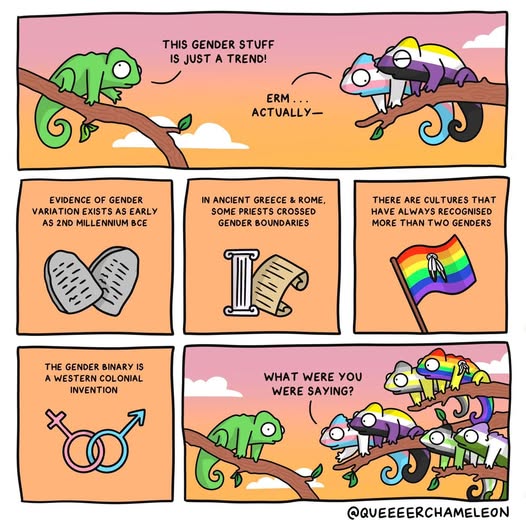
(artist: Queen Chameleon)
@JessieGender's "The Fascist Politics of Forgetting" (the violence of the archive and the fascist politics of forgetting, 2025): https://youtu.be/_vU5wwwkoB0?t=278
@BrigitteEmpire's "All Transphobes Are Racist" (2025): https://youtu.be/57fmLcS0xUE?t=1691
@BrigitteEmpire's "The Misogyny of the Trans Snooker Ban" (another [somewhat esoteric] ban on trans women in sports; i.e., for being a "threat to fairness," 2026): https://youtu.be/Zn3osUPjxjM?t=152
@BrigitteEmpire's "Don't Watch the Harry Potter TV Show" (and antitrans legislation in India [who the British have colonized for centuries], 2026): https://youtu.be/A5vvvTxSU_o?t=1519
@BrigitteEmpire's "J.K. Rowling & The Endless Audiobook Scandals" (covering not just the actors selling their souls to condemn trans people to abject misery after Steven Fry and Rowling's parting ways, but the performance itself frankly being "mid at best" on a platform that exploits others who aren't billionaires, 2026): https://youtu.be/ZCk3aNKVo2c?t=1128
@CancelMeDaddy and @jessiegenderafterdark5287's "We Followed JK Rowling's Harry Potter Money—Here's Where It Actually Goes" (covering everything from cancel culture, Rowling's legacy tied to fascism, weaponized nostalgia in Hollywood, the ancient quality of trans rights, the efficacy of boycotts, and more—2026): https://youtu.be/foppBBy2NJU
cartoon lampooning how Rowling uses money from franchise to fund anti-trans legislation (and how many reactionary/moderate fans are in their late 30s, 2026): https://bsky.app/profile/adamtots.bsky.social/post/3mihnibuawc2q
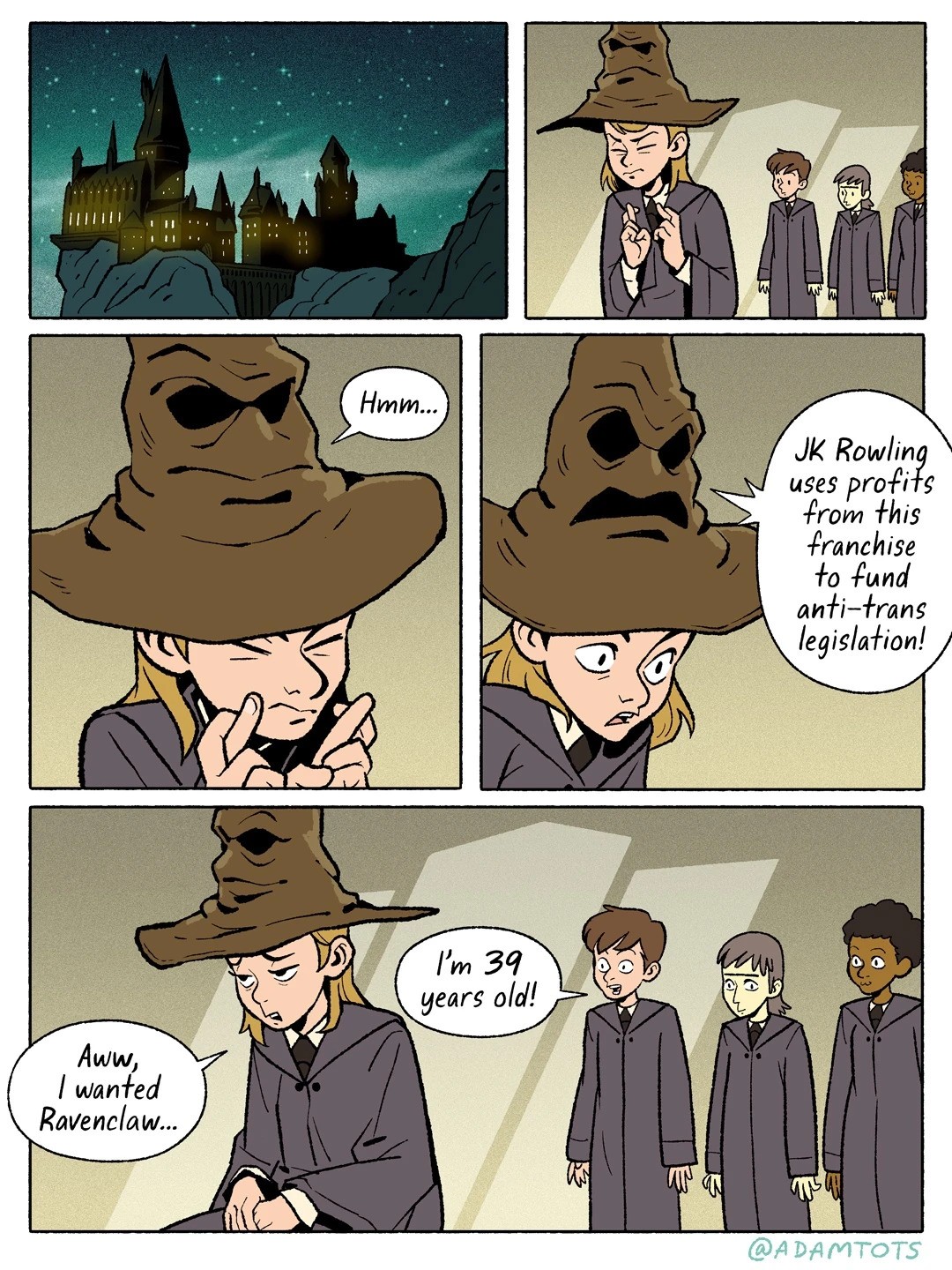
(artist: Adam Tots)
@JamesWoodall's "What Does Harry Potter Mean Now?" (unlike Tolkien, Lucas, Cameron, or Martin, who are all bigoted in some shape or form, Rowling's post-novels career has actively, openly and aggressively advocated for genocide against queer folk—2025): https://youtu.be/zVa7H446Iiw?t=32
@jessiegenderafterdark5287's "John Lithgow and the Illusion of Allyship" (actors "protesting" while taking Judas' pay, 2026): https://youtu.be/_R8Rl9qucII?t=498
@jessiegenderafterdark5287's "The Liberal-Washing of JK Rowling" (discussing Nick Frost and others, 2025): https://youtu.be/WgAYf8f5518
@JosephFish3r's "Tom Felton Never Really Left Hogwarts" (the original Draco Malfoy actor sucking up to Rowling vs the other child actors who don't, 2026): https://youtu.be/n6YV8WL5AhE
@TheSerfsTV "J.K. Rowling's Fascism" (tied to her anti-trans crusade by also HBO director [and longtime buddy/fellow billionaire and media baron] Larry Ellison, 2026): https://youtu.be/A_dvAkxvYB0
@EyebrowCinema's "You Shouldn't Watch the Harry Potter Show" (concerning how Harry Potter is Rowling's cash cow and makes her way more money [to help influence state legislation] than her other novels do, 2026): https://youtu.be/_hPdCea-CKI?t=733
@matriarchetype's "Everything Transphobic J.K. Rowling Did in 2020" (which informs her ongoing crusade and speaks to what bigots continue to ignore about her, 2026): https://youtu.be/P3UScR_ndVw
@LeejaMiller's "The Attack On Trans People Is Ramping Up" (tied to Christofascism, Gamergate and sports, 2026): https://youtu.be/o0MNrd96SjU?t=122
@RiverboatJack's "The State Of Trans Rights In The United States" (establishment predation on both sides, 2026): https://youtu.be/gsEkQrUrPjM?t=955
@storycorps' "Love Lost, And Found | Stonewall OutLoud" (interviewing trans Vietnam vets, 2020): https://youtu.be/59AAehivCeo

(source: Emma Barnett's "Original Stonewall protesters urge Pride Parade to remember its roots," 2025)
Other Criticisms of Harry Potter (toxic love, disabilities, and much, much more)
@DeadDomain's "HBO's Harry Potter Fuels Bigotry With Outdated Nostalgia Slop" (target audience: jaded millennials, 2026): https://youtu.be/wzuIM5fwMyI?t=75
@caelanconrad's "Is Harry Potter Original?" (2024): https://youtu.be/Cmx_YSPcujE?t=1131
@agramuglia's "Was Harry Potter Ever Good?" (the section "Harry Potter Is British Imperialism," which ties to Tolkien, Lucas and other 20th century Euro-centric [monomyth] stories—2024): https://youtu.be/1qSBIFEqPo0?t=2266
@hootshootman's "Is Harry Potter Bad?" (tons of stuff, but also more emphasis on Rowling's racist/ethnocentric world—2022): https://youtu.be/U3dE0sYZqvI?t=2518
@CarolineEasom's "Top 28 Female Characters in Harry Potter (and what they say about J.K. Rowling…)" (the author's internalized, gaslight-gatekeep-girlboss misogyny/white [neo]liberal second wave feminism/general [and extensive] hatred of cis women alongside trans women; e.g., biracial women and [the sole] woman of color versus the blonde, blue-eyed status quo; i.e., women are virgins or whores, victims or abusers to various tokenizing extremes—2025): https://youtu.be/3gqq_NnIIwY?t=553 (Madame Maxime, the half-breed self-hating giantess), https://youtu.be/3gqq_NnIIwY?t=928 (Lily Potter, the Hibernian Madonna), https://youtu.be/3gqq_NnIIwY?t=1208 (Angela Johnson, the franchise's singular token woman of color) and https://youtu.be/3gqq_NnIIwY?t=1942 (Cho Chang, Rowling's token Asian girl/Orientalist love interest for Harry to fawn-and-forget, failing the Bechdel test)
@OK2BeFat's "We need to talk about Dudley Dursley - Harry Potter and Fatphobia" (fatphobia, but especially the idea that fat people are bullies, selfish, and greedy—2021): https://youtu.be/4AziZgoi3q0?t=81
@SheepInTheBox's "The Concerning Politics of Harry Potter" (antisemitism and Jewish conspiracy theories; homophobia/furryphobia and Rowling's deliberate AIDS metaphor tied to werewolves; her aporophobia, Hibernophilia and slavery apologia; and carceral violence and Orientalism—2019): https://youtu.be/6hlc7vvZIzY?t=1861, https://youtu.be/6hlc7vvZIzY?t=2908, https://youtu.be/6hlc7vvZIzY?t=3083 and https://youtu.be/6hlc7vvZIzY?t=2140
Ross' "Exploring Animal Cruelty and Mistreatment in [Harry] Potter" (2014): https://mugglenet.com/2014/04/exploring-animal-cruelty-and-mistreatment-in-potter/
@magicbymikaila's "Movie Hermione 🥰 vs. Book Hermione 💥" (animal cruelty by torturing humans turned into animals, 2023): https://youtube.com/shorts/IaUO5Ljycn4?si=RwPasEsMzI83M8I9
@QuinnCurio's "Uh, Rowling, Why Does Slytherin Still Exist?" (rarefied evil in a socially segregated space + Snape being Rowling's favorite character/an honorary Gryffindor proving his worth to the Man): https://youtu.be/VeS1pITHufo?t=484 and https://youtu.be/VeS1pITHufo?t=1123
@EssenceOfThought's "J.K Rowling Is in the Epstein Files... But It Gets Worse" (2026): https://youtu.be/LmAtEXgBD_s?t=300
@AHealthyDoseofFran's "Why Snape Is Absolute Garbage" (the movies watering Snape down/child abuse, 2019): https://youtu.be/XyMXwkX6hRc?t=292
@SarcasticChorus's "Can We Stop Romanticizing Snape?" (fetishizing Snape through stalking and toxic/obsessive/unrequited/entitled love, 2022): https://youtu.be/omI5mbFIgps?t=471
@strangeons' "The Story of Snapewives" (fetishizing Snape to cult-like extremes, 2022): https://youtu.be/L5Y5HFjiBNk?si=oHK9hRK7nNO8VSyV
@strangeons' "Ms. Scribe's Fanfiction Empire of Lies" (the cryptic nature of early-Internet fandoms, 2022): https://youtu.be/DgZdu3M4f7s
@Th3Birdman's "Exposing the Grift: Harry Potter and the Curious Case of Black Snape" (antisemitism, love potions and rape fantasies/false bloodlines): https://youtu.be/Zyy-e2llAho?t=411
@Ember_Green "Harry Potter is Also Ableist" (in a culture of individualism and cruelty under neoliberalism—namely that there are no moral actions in Harry Potter, only moral teams [re: Shaun]—Harry tortures others willy-nilly [the mad scientist trope], 2024): https://youtu.be/oYgFHBXyVE4?t=5383
(source thumbnail: Jessica Kellgren-Fozard's "Is Harry Potter Ableist?" 2025)
One, I'm not against framing a world as nightmarish[18] to critique some aspect of itself that pertains to a real-world counterpart. The problem is, Rowling does it unironically. She establishes a moral order and maintains it to make money/disseminate neoliberal dogma and fascism. She's Margaret-Thatcher-meets-the-Worst-Witch, taking trauma and turning it into something to fetishize or galvanize the narrative: broken brooders to fix or pity and lust after as "forbidden," like Pinocchio or the Phantom of the Opera; disabled people (and other marginalities) to present as irreparable and/or dangerous; and a hero who paradoxically gets stronger from their trauma that, in the same breath, makes them the story's sole focus. All of this sits within a punitive order that prioritizes individualism and cruelty under neoliberalism—a system that, by the way, benefits white straight men (and their token [often white] wives and sidekicks) over other people who are different, including racial minorities, queer folk, Indigenous People and disabled persons, etc. Harry isn't black, he's white; he isn't crippled, he's "resilient," and reminds everyone of that by his own actions/the story conveniently populated with characters and scenery that simultaneously lionize him while emblematizing his would-be shortcomings in others. He's a paragon who's ordinary and special—better than other people and places Rowling bends over backwards to lessen, thus elevate her own protagonist and subsequent worldview. It's Quixotic and, more to the point, apologetic of the very things Rowling celebrates and upholds under Capitalist Realism: state predation. Rainbow Capitalism is just a wider net to cast and turn people towards cops/victims feeding on everyone; i.e., neoliberals don't care about you, disabled or otherwise, save to exploit you however they can. The wizarding world is a Trojan Horse—and cunning recognition gonna recognize, Palestine or otherwise (John the Duncan, 2025)—so better to realize that sooner versus later (with many more essays coming out to critique canon/decolonize Harry Potter[19] in later years, above).
(artist: Penelope Naomi)
Two, Gothic is the study and expression of trauma (complex and generational, or otherwise) on people in poetic language; i.e., to speak the unspeakable from positions of relegation, "in the thick of it." To that, I'm trans and many of my friends are trans. I and others don't mind being framed through alien language, provided it humanizes while commenting on our systematic dehumanization, by state powers; i.e., we have always been people—deserving of empathy, love and respect while having our stories told by us, not our Omelas captors; e.g., Penelope Naomi (above) a stylish aesthete who also does sex work. She agreed to appear in this piece to punch up while being seen and heard; i.e., we are neither "infected," nor intent on destroying anything around us. We just want to live in peace, but society under capital/state vampirism—its own imagination limited by Capitalist (and Socialist) Realism—needs a whore to squeeze. That whore is the Earth, the stars, the whole universe under Cartesian thought: the world literally "at stake" when the ruling class have it in their sights. "When Alexander saw the breadth of his domain, he wept for there were no more worlds to conquer" (source: Anthony Madrid's "And Alexander Wept," 2020; cited: "Scouting the Field").

(source: Nasa)
In turn, cartography is the technology therefore language of conquest—of stealing power from the past, including the primordial past—to keep the state/ruling class alive, in Promethean ways; i.e., geography is destiny insofar as the Earth—colonized by white (straight) men while being taken to the stars, in and out of fantastical realms (re: "Canonical Essentialism"). To that, a person's humanity isn't discrete/doesn't separate from their trauma (and stories about their trauma as abject) tied to nature. Instead, the latter helps the former grow—with trans people growing under state workers trying to closet them while conquering nature-as-alien. So we fags push like seedling flowers towards the sun: born in the wrong bodies to discover who we really are, in the "vacuum" of space. The world is a vampire (under Capitalist Realism), and not much has honestly changed since Sagan's famous observation (source: The Pale Blue Dot, 1994; cited: "Time Is a Circle," 2024). If anything, capital gonna capital, regardless of where it goes. Exploration = exploitation. The state must feed or it will die, and it will die regardless while devouring the Earth; i.e., through makeshift veneers of "conquest" taken to space: the so-called "final" frontier's liberal exploration narrative (astronoetics), sitting alongside earlier (and continuous) mythologies of frontier rooted in terra firma (that resurrect like a zombie—lifting from undead, 1800s, Age-of-Imperialism ethnocentrism and xenophobia [re: "Making Demons"] into late-stage capital in its death throes). Assimilation is poor stewardship, salvation awaiting among the alien. State demonics offer Faustian contracts that worker demons must camp and subvert. So we have no choice but to transform our environment, lifting it (and ourselves/our unknown pleasures) away from state predation; re: as canonically incumbent on universal bigotry in abject, us-versus-them language. To exist is to infringe—meaning on an already-colonized world, one mapped out centuries in advance by long-dead Ozymandians charting Omelas out in perpetuity.

(source: "Straight Dog Water; or Saving Alien: Earth (2025) from a Freudian Snob," 2025)
From the Americans to the Soviets to the Chinese, said predation starts small; i.e., before crisis goes increasingly inwards through the qualities of capital, like a black hole. This includes heteronormativity but also settler colonialism and Cartesian thought; re: the state is white, straight, and/or male to modular degrees of intersecting bigotries; e.g., racism, and tokenism in that respect.
Racism (and Making Snape Black)
Whether they want it to or not, BIPOC's skin color always tells a story. Rowling's story fetishizes Snape—suddenly a black man (versus bat-like like or untrustworthy in a general, "easterly" sense; see: footnote 18), and made that way by a straight white female billionaire pulling the strings. She's the slaver's wife, one who forces readers to face the uncomfortable chance of a "book-accurate" adaptation except for Snape being black. A half-blood prince, to be specific, he's the Drake of the Wizarding World; i.e., one whose comely appearance and biracial backstory see him embracing insider/outsider dialogs; i.e., to assimilate (making him ugly would also be problematic, however). By failing to change anything else, the show invites readers to confront racism, yes, but also runs the risk of simply exposing the racism already there; i.e., without a lesson or a moral, beyond yet-another-wasted-chance at effective representation. It's Faustian, little more than cunning recognition (a neoliberal staple) under Harry Potter's Rainbow Capitalism for token people. Under this interpretation, Snape's an ex-thug-turned-house-slave—simping for the white woman who left him for his would-be lyncher.

(source: Ayan Artan's "The Harry Potter TV Reboot Should Keep Severus Snape White[20]," 2025)
@ShannanEJohnson's "The Snape Casting Conversation We Need to Have" (the consequences of making a character black, from a black female perspective—2026): https://youtu.be/Kxl4J4NBZJQ?t=51
@TheFirstOkiro's "Snape Should Not be Black" (from a black male perspective, saying how Snape being black makes Harry and his dad racist—2026): https://youtu.be/uZGteEhlCDA?t=78
@casualviewproductions2056's "The 5 Rules of Race Swapping Characters (and Why Snape Fails Them)" (according to a white male perspective, rule 3: no harmful stereotypes tied to the character's moral trajectory if the character is race-swapped—2026): https://youtu.be/chbZX5z1i0A?t=238
@CarolineEasom's "J.K. Rowling's Weird and Problematic Plot Choices in Harry Potter" (a white female perspective on an overrepresentation of white women [though still underrepresented compared to men] than non-white women, 2024): https://youtu.be/AnZnKmJ7iRE?t=336
@CarolineEasom's "Top 30 Worst Characters in Harry Potter" (an [exhaustive] white female perspective on various problematic characters, including Rowling's minstrel-grade slavery apologia [more white savior bullshit]: Winky the alcoholic house elf who drinks herself into a stupor after she's liberated—2024): https://youtu.be/IzGX4ETa_zU?t=3098
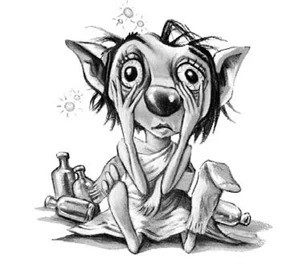
(source: Fandom)
Kat Blaque's "In Defense of Crossdressers" (fear of crossdress and BDSM, parallel to Snape in a dress pointing to older ideas of homophobia and theatre tropes [e.g. Lewis' Matilda from The Monk, 1794] whose gender binary Rowling upholds; i.e. alongside conversations about crossdress that should transcend gender binaries or race alone, which many bad actors help perpetrate—with Kat Blaque being a black trans-woman kinkster navigating such things in ways we can apply to Rowling and Snape, 2026): https://blaqueinthecity.com/2026/04/08/in-defense-of-crossdressers-bryan-noems-kink-isnt-the-problem-a-trans-womans-perspective/
Geopolitics
Imperialism doesn't stay in books, but bounces back and forth into real life (e.g., incest in Japanese media; re: "Moe/Ahegao, Incest, and Eco-Fascism in Japanese Exports," 2025); i.e., to sell "Goldilocks Imperialism" and controlled opposition to workers (re: LotR, Star Wars, and Harry Potter into neoliberalism out of Bretton Woods). It bears repeating that Rowling's world is essentially Capitalist Realism—a form of neoliberal dogma to introduce and uphold, treating everything else as "threat" during state vampirism. But it speaks to larger forces at work outside itself, the fear of state collapse and cessation of "peace" (state predation in disguise) a nightmare scenario that conjures up scapegoats to unveil and banish, in the same breath (from Radcliffe's Black Veil onwards; re: "Radcliffe's Refrain"). While Rowling was imitating Radcliffe's Gothic from earlier centuries, she didn't live under the French Revolution; she lived under Thatcher and Blaire in ways that shaped her worldview going forwards. Currently the imperial order, on the world stage, is shifting in ways that threaten to collapse by design. And the world of Harry Potter—monomyth bread and circus—is baked anew and sold again; i.e., in ways to mollify the masses/triangulate them towards state foes. The sins of the past manifest in the present—and generally in Gothic stories designed to hide and reveal state secrets, where convenient. But what about the real world they connect to? In other words, what about the desert of the real outside the Matrix (which again, Hogwarts basically is)?
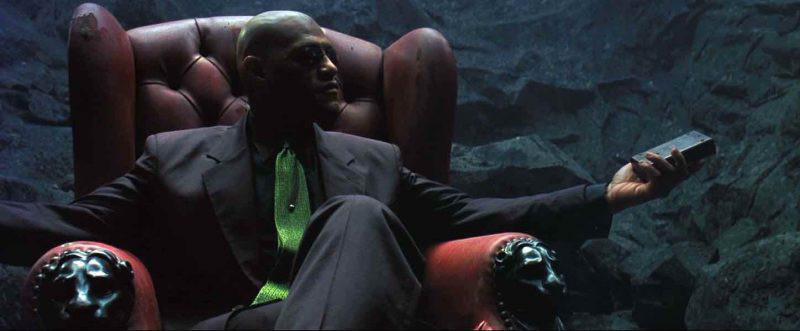
@StepBackHistory's "What's Happening in Iran Is SO much Worse than You Think" (regarding fossil fuels, geopolitics and fascism/the poverty draft—2026): https://youtu.be/Ovd33yfxoPk?t=5244
@ReasonTV's "Is it War?" (the nature of state obfuscation regarding predation through war, 2026): https://youtu.be/g1z_xtOmgek
Bad Actors
Those eager to replace current orders generally don't go far enough/compromise to gain traction while falling back on in-group status (re: the universal class subject as white, straight and paid; see: "A Gothic Researcher/Author/Sex Worker/Activist Responds to 'Woke Is Dead' feat. @JohntheDuncan," 2025). Indeed, states die to replace historically by other states, which are categorically white, straight and male to modular degrees, mid-predation. So any criticisms I have of Rowling and Harry Potter extend to bad actors playing at rebellion through state action; i.e., conservatism with a coat of red paint (or "apolitical" love towards dogmatic media). It's not something that comes up much, in Harry Potter the novels, but whose half-real masquerade speaks to the defense of power's continuation at the top by waving false flags similar to Rowling's (or even in reference to); e.g., Marxist-Leninists (of the dated, Stalinist and/or Maoist sort) utilizing Socialist Realism to punch down at the same victims Rowling herself does. That's too big a topic to discuss here at length (more than we already have), so I'll merely leave you with past research. It emphasizes one bad actor inside a larger worldview whose theories, under Marx, Stalin, and Mao, etc, historically exclude trans people and other minorities (especially women). In short, they have no shame/are basically incels who—scared of sex (which the state polices)—punch down in ways that vilify and infantilize whores (and those treated like whores):
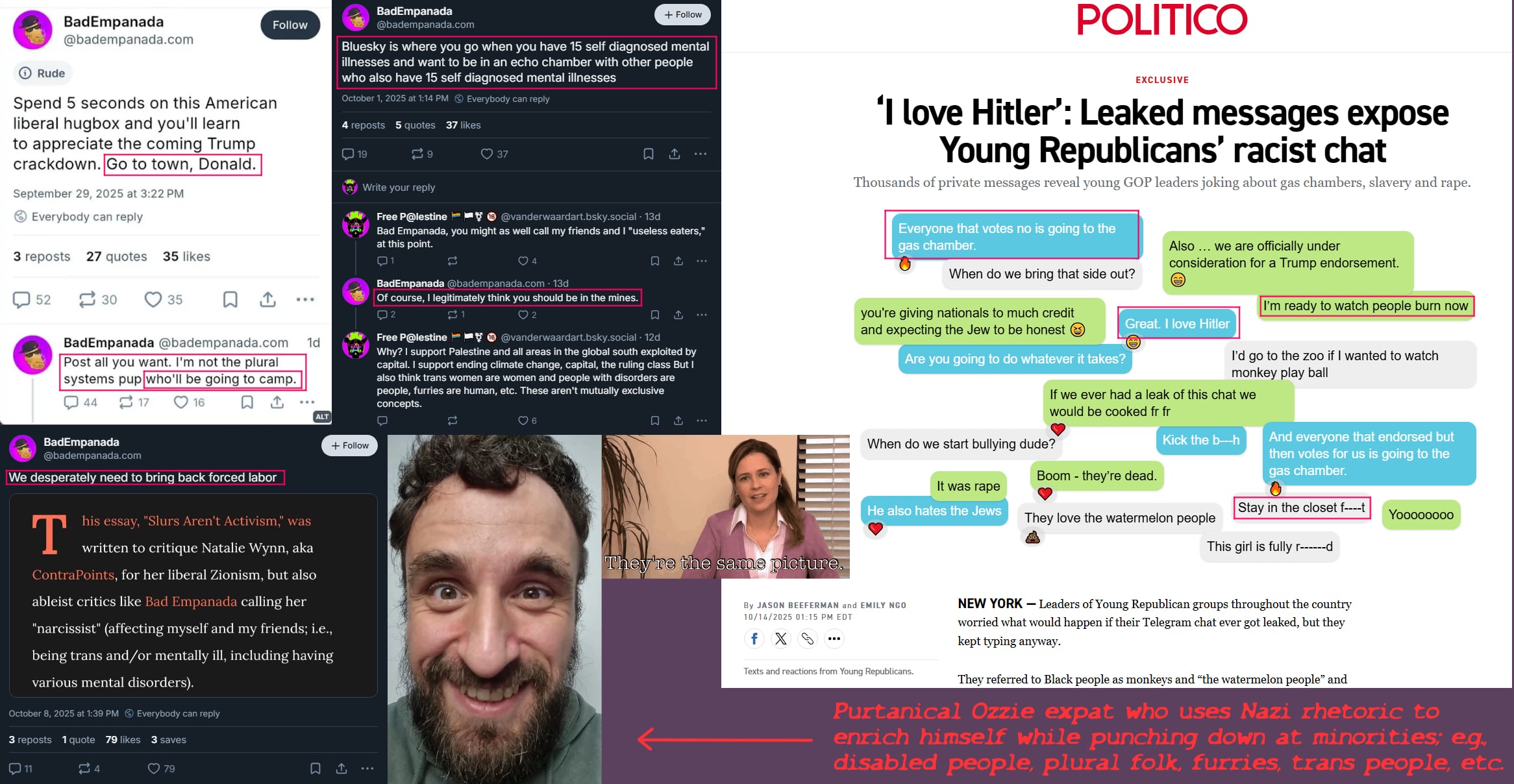
(source skeet, vanderWaardart: October 15th, 2025; cited: "Raising Awareness")
my "Addressing @BadEmpanadaLive's Relative Transphobia" (2025): https://youtu.be/jPlkcNYzE_o
my "Essay No. 4: Slurs Aren't Activism: Critiquing Contrapoint's Zionism + Her 'Narcissism'" (2025): https://youtu.be/QE1asnOhsWo
my "Essay No.7: Transphobe Bad Empanada Goes Mask-Off" (2025): https://youtu.be/9RDJtsHxojQ
my "React No. 27: Bad Empanada Calls for Genocide/Calls Trans, Plural & Furry Folk 'Useless Eaters'" (2025): https://youtu.be/ilKKdei8On4
my "Essay No.9: Two-faced Sell-Out; or, Bad Empanada—From Anti-Zionist to TERF/SWERF Incel" (2025): https://youtu.be/WDSQaOmFInE
my "Anarcho-Communism vs Marxist Leninism, a Critique; or, Charlitics: a Queer Marxist TERF and SWERF" (2026): https://youtu.be/FU9Yma3JYjE
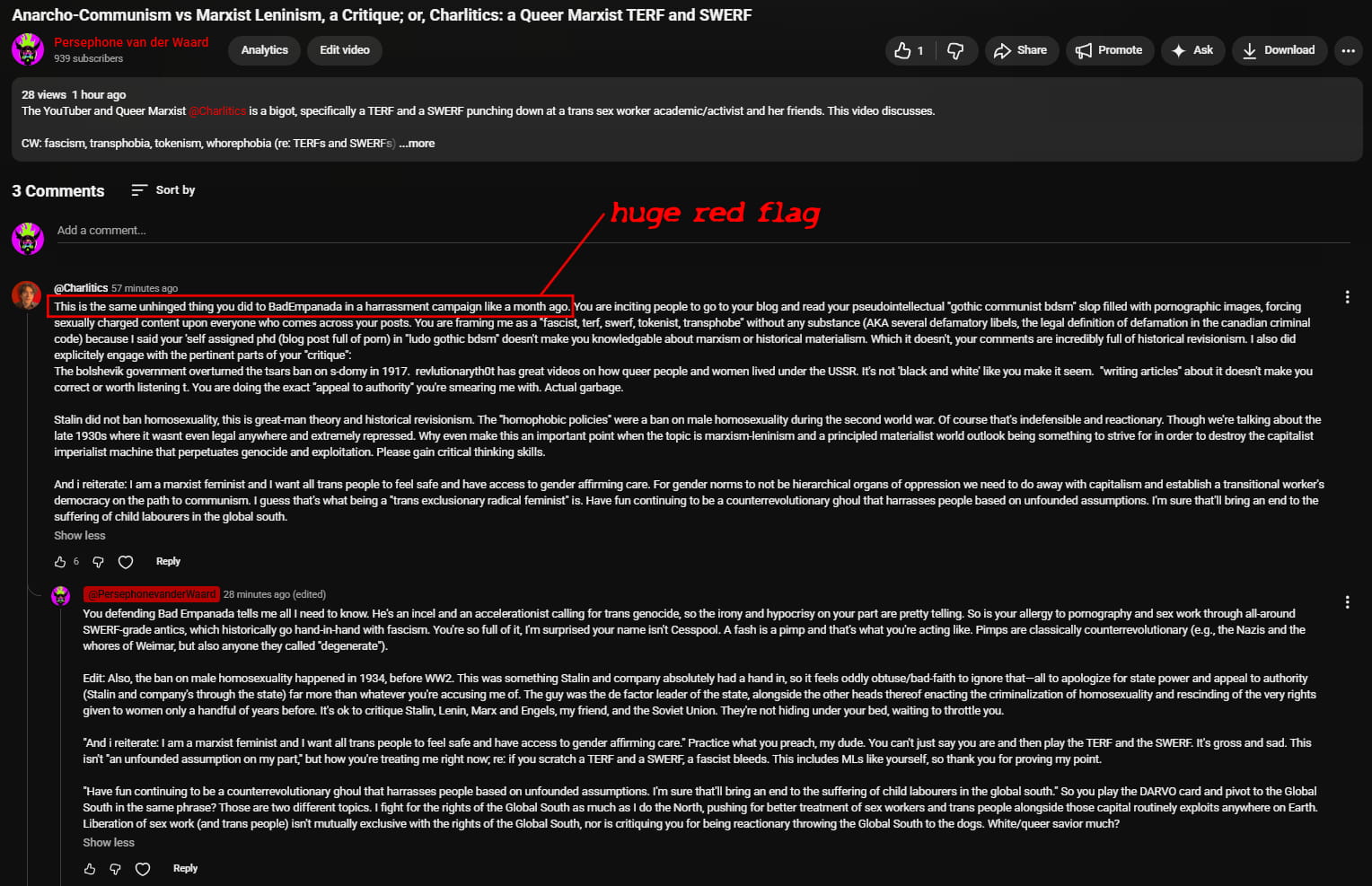
Bridging the Gap
Reversing state predation requires working among people with differing ratios of privilege/oppression, consuming Gothic material as shaping how we think; e.g., wizards and witches, those from Rowling's canon part of Gothic's broader "sex, drugs and rock 'n roll" (which dragons and witches basically are, as vice characters). I don't have any examples of working within the Harry Potter fandom, itself, but do know fans therein who will defend their franchise through selective memory and rose-tinted glasses. Moreover, camp's struggle—to understand amid ignorance—happens in the face of critiquing things we either love and/or fear (that shape us), which applies to any popular media under the sun: as something to consume, create and critique in ways that change how we think; re: inside the larger socio-material dialectic (of the alien). In short, we have to risk being annoying to solve large societal problems from different ratios of privilege and oppression "butting heads":
The example I give, here, is racism and heavy metal; i.e., conversing with people different than myself about something we all love to find common ground/develop a better world from within society under capital/state hegemony (re: the Matrix aka Plato's cave during Capitalist Realism).
my "Is Metal Racist?" (tons of sources, 2025) https://nicksmovieinsights.com/2025/10/is-metal-racist-yes-it-is-or-a-trans-woman-critiquing-heavy-metal-philosophys-good-faith-response-to-andrew-lee.html
my "Replying to Jon Barbas" (racism tied to sexism and transphobia and fighting them with allies; re: intersectional awareness and solidarity—2025): https://nicksmovieinsights.com/2025/11/replying-to-jon-barbas-a-follow-up-to-my-is-metal-racist-video.html
Calibrating Gothic; or, Better Starting Points for Different Representation in Gothic Media

Speaking of Plato's cave, those who sell an illusion to us that claim to set us free often uphold the status quo; i.e., as default position or something to aspire to/normalize, which workers camp imperfectly. The Wachowskis made The Matrix while still in the closet, for example—with later stories in that franchise working within a straight white hero as trappings to escape. Same idea with Harry Potter and similar Gothic works. Inclusivity and expanded understanding of oppression is paramount, while still speaking to liminal positions—of feeling like we're still in the closet, in some shape or form (the so-called "blue pill"). To that—and being trans, myself—I would recommend a better starting point that simply Harry Potter or even The Matrix. Yes, those heroes can change into secret sides of themselves potentially, but what if they were closer to the mark from the get-go? I Saw the TV Glow (above, 2024) still wrestles with the closet and its monomyth hero becoming a cop. Yet, in doing so, it works within a semi-consciously queer, Promethean allegory versus an unconscious one (while still playing with the language of dreams, fear and mythical characters, overlapping race and gender tied to class war); i.e., it straddles the fence, and, in my best friend Ginger's words, is "one foot in, one foot out the whole time—teetering on the edge of discovery." The delay is deliberate, because it speaks to being in the closet (versus the Matrix power fantasy sometimes eclipsing the social/ecological concerns; re: "Queer-/Homonormativity in Sex-Centric Canon," 2025).
"'Starburned and Unkissed' - I Saw The TV Glow Alternate MV" (a film about actually being trans, not "trans tacked on," 2024): https://youtu.be/jThN-ejIm6w
The same idea applies to other things to represent; e.g., autism, which The Pitt (2024) depicts wonderfully with Dr. King (who is basically me and I love her and think she's awesome, below):

@TheBackFocus's "This Actress Destroyed Every Autism Cliché | Acting Breakdown" (2026): https://www.youtube.com/watch?v=w6UUm8jeurU
The best shows "calibrate Gothic" by merging fantasy with science (re: The Pitt, above, but also discoveries that happen in the real world, below):
@QueerCollective's "What We Found About the Trans Brain Isn’t What You Think" (2026): https://youtu.be/jO9a2suIup8
@overzealots' "Did Che Guevara Really Say This? (How Lies Become History)" (2026): https://youtu.be/t8CPqT5qeSw
In short, we shatter myths about media and people to raise awareness, solidarity and critical-thinking skills that, combined in half-real ways, reverse abjection to stymie state predation.
Learning from Others
Gothic is learning from the past as something to reify and reimagine (re: the simulacrum, including bad boys and curious maidens alienated by capital/encouraged to fetishize themselves and each other for profit—with Snape inspired largely by ambiguous rakes like Emily Brontë's Heathcliff, below). To that, I'm just a drop in the bucket, as are the people I've mentioned up until now. There are plenty of Gothic scholars to consider beyond myself, thus plenty of different pieces of media to reexamine through a different lens ("on the Aegis"); e.g., Dr. Sam Hirst, someone whose work on asexuality and holistic approach to Gothic inspired my own (re: "Crash Course: An Introduction to Asexuality and Demisexuality," 2025).
(source: Hirst's "Romancing Wuthering Heights: A History of Adaptation – Interactive Online Workshop," 2026)
Dr. Sam Hirst's "Zofloya and the Female Gothic" (themes of sexism, empowerment and racism in Zofloya, 2020): https://romancingthegothic.com/2020/06/05/zofloya-and-the-female-gothic/
Rachel Knowles' "Jane Austen's Northanger Abbey and The Mysteries of Udolpho" (2015): https://www.regencyhistory.net/blog/jane-austen-northanger-abbey-and-mysteries-of-udolpho
In Conclusion: Changing How We See as Already Dead

(cited: "'Monsters, Magic and Myth': Modularity and Class," 2024)
Like The Matrix before it, Harry Potter feels central to many people's view of reality—in short, it becomes reality by replacing anything actual with something without a concrete original (re: Plato's cave/simulacrum). But Gothic has tremendous iconoclastic potential, the monopolies on such things ultimately mythical themselves (re: violence, terror and monsters). Question "reality" within itself as something to reinvent, then do so in a long lineage of arbiters seeing capital (and the state before it) as dead-on-arrival/already-dead (above): from Plato to Dante, Shakespeare, Milton, Radcliffe, the Shelleys, Marx, Parenti, the Wachowskis and Rowling to us. Nothing is sacred but universal liberation as stewards of nature who come from/stand alongside nature as habitually exploited by state powers doomed to die ("One Ring to rule them all..."). Assimilation is poor stewardship; segregation, no defense; silence, death; and liberation and exploitation share the same stages—the same bodies and costumes on and off said stages: "death" = exploitation but also radical change liberating workers, mid-incarceration. So take what is both forbidden/sold canonically back to us ("forbidden") and camp it, yourselves: subverting Harry Potter (and similar Gothic media) into weapons for universal liberation; i.e., by taking pre-capitalist language (the Gothic's Wisdom of the Ancients and Indigenous Peoples' Wisdom of the Ancestors; re: "The Value in Showing Intersectional Solidarity When Combating Fascism") to push in duality towards a post-scarcity world.

(cited: "Modularity in Class")
In other words, no Omelas children while defending Gothic "for some." Weird iconoclastic nerds fuck/fuck with Gothic's deconstructive potential versus weird canonical nerds who don't. To that, Hogwarts is Omelas—a dead city hungering to devour its citizens, dementor-style (a bit like Minas Morgul, whose vampirism in Tolkien I also explore; re: "Concerning Rings"). Walk away from Omelas, duckies, hugging the alien from inside (a replica where subversion occurs, danger-disco)—our mind as extensions of capital, and capital as extensions of our minds when we reverse abjection, during ludo-Gothic BDSM: to cease state predation and unmask false outsiders like Rowling (or Musk, above) for good. Don't give them your power by supporting their garbage; take yours back, making your own in all the usual places such battles are fought by subverting stereotypes yourselves to reverse abjection/state predation. Or as Porpentine puts it, "build among the storms."
Footnotes
[1] For a deeper dive into Charlotte and her sisters—all who used gender-neutral pen names (mistaken for men by the press), and for which "Currer" (Charlotte) became the caretaker of "Ellis" (Emily) and her works, postmortem—refer to "Beneath the Church-Isle Stone: Posthumous Liberties" (2015).

(model and artist: Charlotte Brontë and George Richmond; cited [exhibit 21c2]: "The Basics of Oppositional Synthesis")
[2] All monomyth refrains, in and after Bretton Woods—with Lord of the Rings being High Fantasy for '60s activists (and white supremacists), Star Wars being retro-future pastiche in space for '70s theatregoers (the space opera), and Harry Potter being a Neo-Gothic revival for British millennials followed by American ones (and everywhere else); i.e., the "chosen one " Hero's Journey refrain, where danger and rewards make into amusement parks by capitalist powers: the lie of ownership, of getting the girl and the house per the nuclear model as inherently exclusionary and doomed: something to advertise and sell, below)
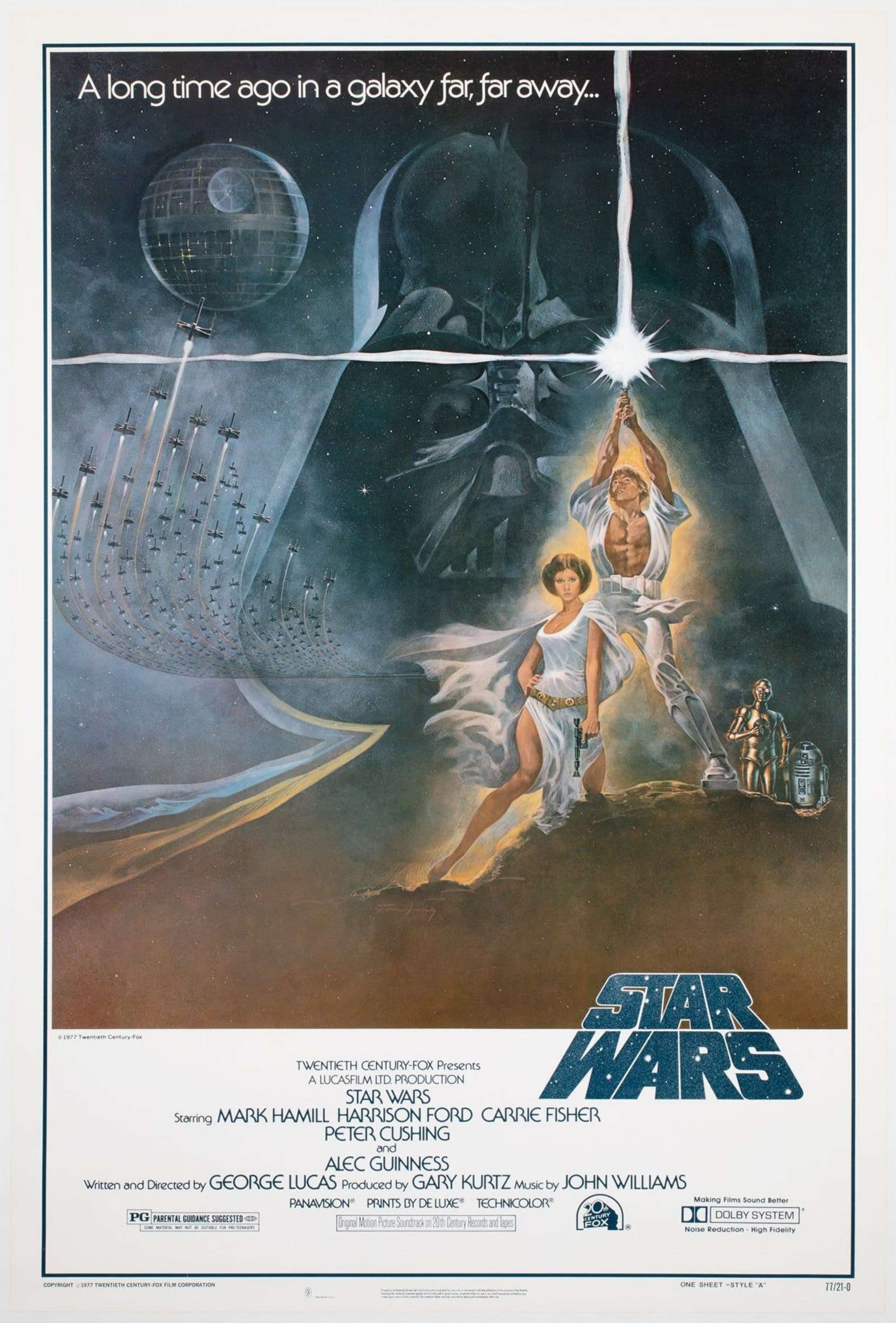
(artist: Tom Jung)
They're all cash grabs, but Rowling's was written under the neoliberal period and feels the most capitalist of the bunch. If anything, the competitive nature of capital (and the fandoms) has pitted the franchises against each other (e.g., the gay hobbits bit from Clerks 2, 2006; see: Molly Ostertag's "Queer Readings of The Lord of the Rings Are not Accidents," 2021). There's also Star Trek (1966) and Game of Thrones (1991/2011), but George R. R. Martin is basically discount "Zombie Tolkien": the rotting High Fantasy stripped of its romance and magic, who—while he openly includes women, queer folk and BIPOC—also openly rapes and fetishizes them without irony (and only plays at being a philologist). Meanwhile, Roddenberry's Star Trek (and its many clones, spinoffs) have Socialist elements/gay shit, but those decay into fascism (and murder those they love-bomb/gaslight) like anything else. The iconoclast critiques what they consume, whether they come by it honestly or not; they critique not just the media others consume, but fandoms around which uncritical discourse (and apologia) tends to emerge. Kill your darlings, and give zero fucks while you do it (all the Inklings; e.g., C.S. Lewis; see: Alex O'Connor's "My Problem With C.S. Lewis - Philip Pullman*," 2026).
*Whose own fantasy trilogy, His Dark Materials (1995-2000), borrowed heavily from Milton's epic, Paradise Lost, to lampoon Christianity (versus lionize it like Lewis literally did, with Aslan).
[2a] Referring to Le Guin's "Those Who Walk Away from Omelas" (1973), a story about a city of prosperity that relies on the total immiseration of one child locked in the basement. As such, Le Guin asks readers to entertain the gradual abandoning of capital-in-small by moving towards something better (re: breaking Capitalist Realism, mid-abjection). In doing so, Le Guin's work is generally more inclusive than Tolkien's—starting at his altar with A Wizard of Earthsea (1968), to become increasingly radical as time went on; e.g., having trans-friendly ideas, in The Left Hand of Darkness (1969); i.e., as Frederic Jameson points out regarding Le Guin's evolution, in Archaeologies of the Future (2005), and which I take beyond Jameson (whose own Utopian, anti-Gothic attitudes I critique, in "The Future Is a Dead Mall").
[2b] Which it loves and hates in pimp/whore ways to further abjection; i.e., if a minority is crying foul concerning their exploitation, they should be listened to, not ignored in favor of status-quo arbiters of wisdom—a concept Paulo Freire wrote about when Rowling was three called "the pedagogy of the oppressed," and which I've written about many times when doing what I call "healing from rape" (which ludo-Gothic BDSM primarily concerns):

At its most basic level, rape is a violation of basic human, animal and environmental rights enacted through Cartesian power abuse; this postscript concerns the complicated process that healing from rape entails—i.e., its corrupting presence through codified trauma, wherein the surviving of police abuse becomes something to relate to others through Gothic stories that constitute radical empathy as a thing forever out-of-joint: the attempt to empathize with alien experiences to gain new perspective. Such empathy needn't concern both parties equally and its Gothic dialogs concern intense, poetic liminalities still bearing an intense potential for disguise that is haunted by the shadow of police forces [...] In other words, it's entirely worthwhile for us to ask how different people (with their traumas) relate to Gothic stories, but especially their monsters, heroes and haunts as things to consume, create and perform ourselves (source: "Healing from Rape").
So when I discuss the whore's perspective/revenge as something to heed, mid-Gothic, it combines my viewpoints with other marginalities Rowling herself classically exploits for profit (all to fund home-grown fascism, which we'll get to); e.g., Africans, the Indigenous Peoples of the Americas, and various non-European schools (another word for "nation-state") like Japan (Sheep in the Box' "RACIST HOGWARTS?!: JK Rowling's DEFINITELY NOT RACIST International Wizard Lore," 2022). None of this is remotely new, Rowling herself already including much in her early stories borrowed from older bigoted British authors (re: Tolkien, among others)... only to double down while continuing to exploit these groups. This includes racial exploitation, but also exploitation through gender and class. Taken separately, it's bad enough; combined holistically, it paints a broad portrait of the woman—like the empire she belongs to/sells nostalgically through her work—as being rotten to the core/terminally isolated from others: a xenophobic islander perpetually under siege.
[3] Re: Plato's cave (which Hogwarts and Rowling's entire "wizarding world" essentially is). For recent works I've done on Plato's cave and The Matrix (which I don't want to sell short), read "The World Is a Vampire" (2024) and "'Who's Fredrick Brennan?'; or, the Importance of Empathy, mid-Redemption." The same ideas explored here apply there and vice versa.
[4] The Promethean Quest is stealing power from the past, I as define it in "Paratextual Documents":
the Promethean Quest (re: Frankenstein, abridged)
The Promethean Quest stems from Mary Shelley's seminal Frankenstein; or, the Modern Prometheus (1818—although I've explored it extensively in different media forms, besides; e.g., Metroidvania and Amazonomachia, below). [...] I further define/categorize Shelley's quest as follows:
the Promethean Quest [as Shelley writes it] critiques the Cartesian (mis)treatment of nature—indeed, the entire globe—as "already dead," owned and used by the elite; i.e., like clay to aggrandize the current ordering of things come home to roost. As such, its reckoning effectively concerns the canonical theft of power from the imaginary past, therefore Gorgon as trapped in Cartesian duality" [...] (source: "Power in Gothic: the Promethean Quest and Cartesian Thought" from "Nancy Drew Syndrome," 2025).
Like anything else, then the Promethean Quest has a pro-state and pro-worker function—with pro-labor variants having the whore's revenge, reviving the Gorgon during ludo-Gothic BDSM; re: chasing a Communist/palliative Numinous during the Promethean Quest: by stealing "fire of the gods" back from the elite, ultimately situating it among ourselves/ourselves among its dark transformative power.

(artist: Henri Fuseli; cited: "Author's Foreword: On Giving Birth," 2023)
Monsters and sex have value together as much as separate (no matter how much weird nerds like Bad Empanada say otherwise). The same idea goes for the Harry Potter franchise, I suppose. But you needn't buy a brand-new copy of the book to study it. Get it used, pirate it, watch a video about it, instead—in short, conduct your studies in ethical ways: to study fascism (and its conjuring up of the fearsome imaginary past) without conducting it, yourselves. There's nothing wrong with playing with elves, warriors, Amazons, or anything else, provided it yields anticapitalist (thus antifascist, antiracist) conclusions; re (from Volume Three's "Stand to Fight, then Raise Your Fist and 'Bow,'" 2025):
Though plainly murderous, Amazon's Galadriel is neoliberal by simply being a soldier woman (something out-and-out fascism wouldn't allow). She's also conventionally attractive in ways that promote spurious emancipation under a neoliberal yolk. Not only is Morfydd Clark a dead ringer for Cate Blanchett (tall, blonde and pale); she's also granted license to be sexy in ways denied to Blanchett. This makes her an Amazon (excuse the pun) ripped straight from the 1970s, closer to Frazetta's Eowyn than Jackson's towering queen. Yes, Galadriel's masculine, full-body armor (and tough-girl persona) evoke Shakespeare's Lady Macbeth desiring the power to rape "the way that men do it"—not as a sex-positive fantasy that "avenges" wrongdoings in the mind to give agency that heals; it's about coercive violence, control and power abuse, including fantasies in response to these things in the material world, re: Lady Macbeth's soliloquy asking her to become like a man:
Come, you spirits
That tend on mortal thoughts, unsex me here,
And fill me from the crown to the toe top-full
Of direst cruelty! make thick my blood;
Stop up the access and passage to remorse,
That no compunctious visitings of nature
Shake my fell purpose (source).
All the same, Galadriel's her seawater-soaked dress breaks the spell, showing us the soft, sexy, female body (and elf bush) underneath that armor:

(exhibit 109: The Frazetta Illustrate is one of my favorites, but also Tolkien's Amazons; e.g., Eowyn being a topic of medieval courtly love narratives concealing cryptonymically through literal duels [re: the Tolkien exhibit at the end of "Medicinal Themes and Advice"].)
Note the faint suggestion of elvish pubes(!), but also Galadriel's complete indifference towards the male gaze (the actor's and the audience's). More than traditional "Nordic/ethnic" beauty standards idealized (exhibit 9b0/109), Galadriel doesn't give a fuck, is emotionally unavailable towards a coded love interest.
In short "past" is a place to find power expressed as sex and force separately (the guy getting the girl, specifically the damsel-in-distress) and together (the Amazon).
[4a] Rowling shamelessly graverobbed to revive Thatcher's rotting corpse, but I digress: "Economics are the method: the object is to change the soul" (source: The Thatcher Foundation, 1981). Fascism lies through theft; neoliberalism does fascism with more lies (masks).
[4b] As Dale Townshend writes, in "Horace Walpole's Enchanted Castles" from Gothic Antiquity: History, Romance and the Architectural Imagination, 1760-1840 (2019):
Just as Walpole the architect had taken care to combine the requirements of modern convenience with "the rich, varied, and complicated tracery and carving of the ancient cathedral," so, in Otranto, it was his aim to combine the "imposing tone of chivalry" and "marvellous turn of incident" of the ancient romance with the "accurate exhibition of human character" to be found in the modern [quotidian] novel. To read Otranto, Scott concluded, was to experience the same degree of supernatural awe and terror that one felt when spending a solitary night in an old, tapestry-strewn Gothic mansion. Walpole's ingenuity lay in his extracting in Otranto the sensations of melancholy and supernatural awe that, though easily elicited in truly ancient piles, were "almost impossible" to evoke in "such a modern Gothic structure" as Strawberry Hill, thus "attaining in composition, what, as an architect, he must have felt beyond the power of his art" (source).

(source; cited: "Prey as Liberators," 2024)
And as I write, myself, in "Unto the Breach": "Again, these are playgrounds—so-called "haunted houses" built on fakery and revival that poetically play with "rape," in quotes; e.g., blood libel, sodomy and witchcraft, etc, as terror language that Radcliffe and Lewis (a woman and gay man) expounded on, after Walpole (re: "Idle Hands," 2024)."
[5] Specifically the J.K. Rowling Women's Fund, a fascist action in 2025 posturing behind protecting "real women" from "false women": "The J.K. Rowling Women's Fund (JKRWF) offers legal funding support to individuals and organisations fighting to retain women's sex-based rights in the workplace, in public life, and in protected female spaces" (source). As Ethel Thurston, aka Essence of Thought, writes in her response, "Again, I must reiterate, trans people, including trans women, had legally enshrined access to women's spaces since 2010 without incident. That's 15 whole years!" (source: the script to her companion video, "How J.K. Rowling Turned Harry Potter into a Symbol of Hate," 2025). Similar to America's progressive gender laws or those in early Soviet Russia, the state historically enters crisis to then rescind anything previously offered to women, racial minorities and/or queer people: love-bomb, then bury the queer/marry the maiden (or pimp the whore). The state gives and takes, reaping workers like grain while letting those with more privilege hold the handle of their own destruction (eating others, first). In turn, life as a whole is cheapened neoliberally into junk food; re (from Volume Three's "Half-Real: Recognizing and Performing Empathy," 2025):

(exhibit 62b: Top: Blade Runner screenshots; bottom-left: Gui Guimaraes; middle: Ronin Dude; bottom-right: Jeremy Anninos. Neoliberal Capitalism is an experiment of the owner class that turns the likeness of the girl [or the man] into a product that enforces heteronormative roles sold through cheap canonical "junk food": Blade Runner's poster girl selling Coke to the audience, which, like cigarettes, historically contained whatever chemicals corporations could put in them to coerce purchases. This tasty treat can certainly be enjoyed [usually with varying degrees of guilt] but should not be blindly endorsed; its canonical presence denotes exploitation as sublimated by the replica as the product, the worker entirely replaced by their own likeness...)

(artist: SGT Madness)
Gothic more broadly interrogates state predation while it/capital turn us into food (whores or otherwise): mid-exploitation, pushing for liberation while in Hell as a cycle of predation which Rowling's dress up half-conceals, Halloween-style (re: "So Many Monsters, So Little Time" from "Appetizers; or, Paratextual Documents for Volumes One through Three," 2025). Canon and camp aren't discrete; they hyphenate in deeply corny ways (themselves prone to bad puns, below).
[6] In which authors from Austen's day (a famous critic of the Gothic) would object by purchasing honey (or writing novels that didn't extol the virtues of slavery—Mansfield Park [1814] far quieter on such things/gently subversive compared to Rowling's novels; re: me, vis-à-vis Edward Said; see: "Cornholing the Corn Lady," 2024). There's an entire history behind sugar* or things treated like sugar—one being the food of royalty only to become, like so many things, cheap (and sex/unpaid labor tied to nature, below). Or as Patel and Moore write in A History of the World in Seven Cheap Things, "Capitalism is a process in which money flows through nature [emphasis, me]. The trouble here is that capital supposes infinite expansion [growth] within a finite web of life" (source). The same cheapness allows capital to exist, its bread-and-circus Gothic equally cheap in ways that further abjection to allow state vampirism to continue for as long as possible (though not forever); i.e., capital cheapens life to enact itself, thus prey pimp/whore on nature-as-monstrous-feminine until it can't (and the Capitalocene collapses during state shift); re (from "Raising Awareness," cited in footnote 1 and footnote 3 of "State Vampirism"):
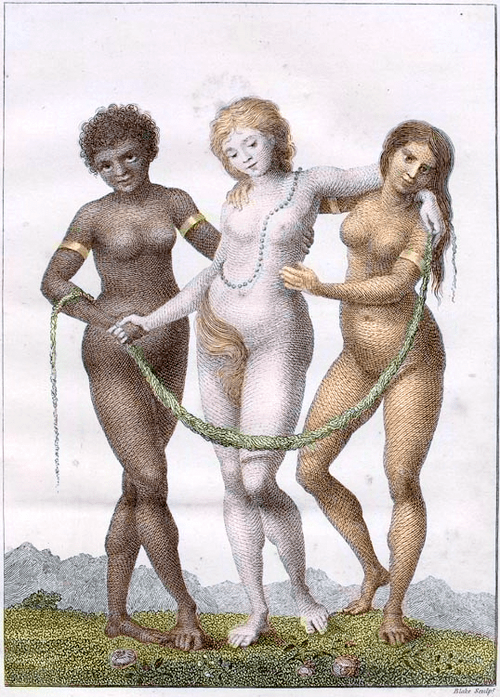
Figure 1. William Blake, Europe, Supported by Africa and America, 1796. Source: Stedman 1796, 394. [...]
Under capital and state models (which the Soviets borrowed from the West to a Cartesian degree, above), nature is monstrous-feminine/a vengeful whore to police out from an ethnocentric past (re: "Nature Is Food"); i.e., into Socialist Realism as much as Capitalist Realism (for more, see: Patel and Moore, footnotes—specifically on Cartesian thought and a 16th century ecology tied to America, Communist China and the USSR).
Capital polices sex as much as it does because it needs sex to survive (the oldest profession, therefore labor struggle); to survive capital's killing of the planet, we must free the Omelas whore from bondage. Doing so means ushering queerness and unpaid labor into the revolutionary framework, one that former models have historically ignored (above); i.e., per the universal class subject as white, straight, male and paid (re: "A Gothic Researcher/Author/Sex Worker/Activist Responds to 'Woke Is Dead' feat. @JohntheDuncan").
*For an entire book on sugar (which Patel and Moore explore themselves as "cheap food"), consider Sidney W. Mintz' Sweetness and Power: the Place of Sugar in Modern History (1985).
[6a] E.g., Spooky Streaming Socialist's "Why BreadTube 'theater kid' humor doesn't work anymore" (2026):
Trans woman, academic and activist, here--a sex worker too and yes, "theatre kid." I've written about Thorn and Wynn's liberal Zionism before (re: "Slurs Aren't Activism" and Bad Empanada being transphobic). Just call it that instead of "theatre kid," which sits next to "identity narcissism," "counter-revolutionary" and other dubious labels rooted in transphobia I've received from other Socialists (of the ML variety who treat identity politics as anathema, hysterical, degenerate, etc). The point being, theatre and queerness aren't monopolized by token moderates and bad actors/can be used to to speak out against genocide just fine (source YouTube community post, Persephone van der Waard: 3/30/2026, in response to SSS's video).
This extends to feminism in Socialist spheres, in general:
Trans author, researcher, activist and sex worker, here, and one with a specialty in tokenism; e.g., TERFs and SWERFs. Feminism historically has a fascist character to it—with the first wave being racist (among other things), and the second wave also being racist, as well as trans-exclusionary and anti-sex-work, etc. These reactionary antics never left; they existed, past and present, alongside liberal varieties into the 2010s; i.e., after Gamergate, Trump and Biden's presidencies, and the rise of TERFs—what I call fascism feminism (vis-à-vis Judith Butler). To that, liberal feminism is just fascist feminism with more masks.
That being said, things that call themselves "Socialist" often do so "on the tin" but not in practice; e.g., the Nazis, but also the Chinese or the Soviets. Mao's abuse of women is a classic example, or Beria's treatment of young women under Stalin, say nothing of the Soviet recriminalization of homosexuality, making illegal of abortions/reducing the ease of divorce, and forcing of women back into the household after WW2. Point in fact, all of these countries exploited care work/sex work to varying degrees, harming women, queer folk, and the environment as practices borrowed from the West. State socialism exploits through state models ("vampirism," as I call it), which is why I'm an an-Com, not a Marxist-Leninist (see: my work on Bad Empanada, alongside your co-workers). In short, we have to be better than Western Liberalism; we also have to be better than Marx, Engels, Lenin, Stalin and Mao, etc (what I call "making Marx Gay"; re: Marx being homophobic in ways future Socialists encouraged; i.e., through the universal class subject [the white straight man] and prioritizing of paid labor over unpaid labor: "Working men of all countries, unite!"). The state rapes by design, profit or productivity (source YouTube community post, Persephone van der Waard: 3/30/2026, in response to revolutionaryth0t's "The Revolution Needs Women & Women Need Revolution," 2026).
Feminism decays just as Socialism decays. Ergo, it's possible to critique capital and critics of capital, because they're both in dire need of it. To that, whores (unpaid labor) provide stability through "chaos" assigned to us, mid-abjection; re: the palliative Numinous, the Gorgon casting a shadow longer than Marx' to engender compassion for/comparison to alien beings he and his excluded. Marx and Engels, Lenin and Stalin, etc—these men were not gods. So don't treat them like straight (white) saviors for queer folk and BIPOC; camp and critique them like you would anyone. Do the same for those who view them uncritically in light of trans genocide (and other calamities); i.e., those happening around the world, at home and abroad.
[7] Frankenstein; or, the Modern Prometheus (1818) concerning the Creature finding a copy of Paradise Lost (1667) in the forest, near the DeLacey farm; re: stealing power from the past in artifacts, thereof: for us, something that speaks to our own alienation through an uncanny being. So is weak/strong useful to us and state actors; re: Yellowstone's white Indian narrative (see, also: "White Indians, Black Planets" from "Unto the Breach") from recent American pulp media, into older forms featuring Cowboys-and-Indians-style comics and novellas—the latter inspiring both Tolkien and the Nazis (who also shared Tolkien's love if not accuracy for Nordic myths) to enact Imperialism, themselves; e.g., from Lebensraum to Zionism (which Tolkien endorsed through his antisemitic dwarves; see: Rebecca Brackmann's "Dwarves Are Not Heroes," 2010); i.e., in and out of their own stories alongside parallel adventures (which we'll look at deeper in the footnotes, with Israel and Stalin).
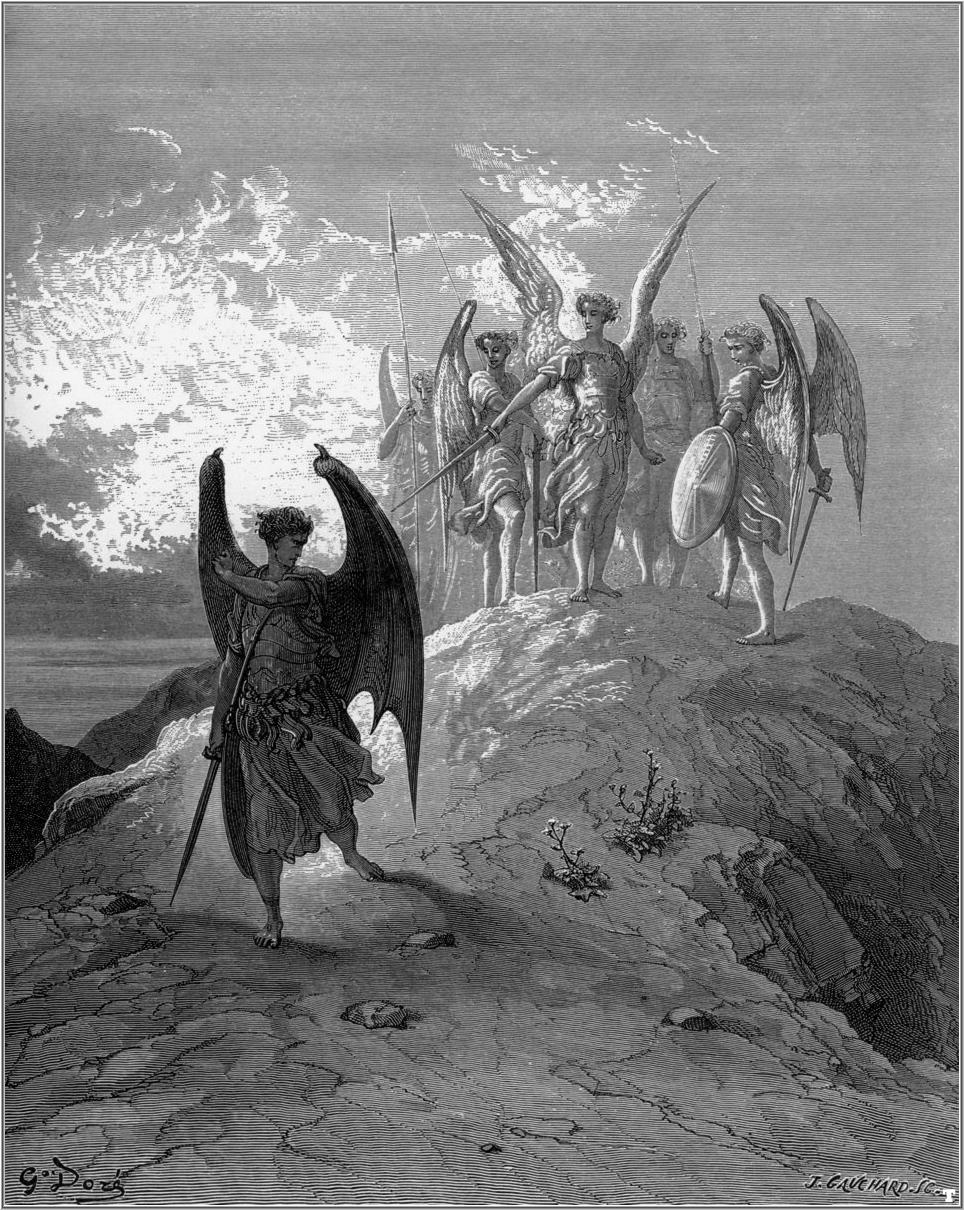
(artist: Gustave Doré)
[8] E.g., blood libel, witchcraft and sodomy through whores policing whores; i.e., for the pimp and their revenge, stealing power from the past (the Promethean Quest), divide-and-conquer (re: "Idle Hands," "Policing the Whore," and "Rape Reprise," 2024). Again, skull = theft and flow of power determines function, for workers or the state. Workers can further/enforce abjection to flow power up, mid-predation, or they can play with "rape" (and its symbols) to change polarity during ludo-Gothic BDSM.
[9] With her "TERF wars" piece (officially titled "J.K. Rowling Writes about Her Reasons for Speaking out on Sex and Gender Issues").
[10] Given "mudblood" speaks to an inability to do magic that isn't tied to race (especially if you make Snape black, but I digress).
[11] The Abrahamic religions all tying to sacrifice and mercy through a "loving" patriarchal deity, one who kills any who openly defy him (versus Satan as "ultimate" foe that God allows to exist, but I digress)—with Christianity, specifically Catholicism, being historically accused by critics of vampirism and cannibalism (a charge it would foist onto different antisemitic tropes; re: blood libel, sodomy and vampires, but also witches being reputed kidnappers who murder and eat children, but also use their fat [specifically the fat of young boys] to make "flying ointment" for their broomsticks; see: "Eat Me Alive; or Undead Feeding Vectors, part one: a Crash-Course Introduction to Vampires (and Witches)," 2024).

[11a] A stealing of power from the imaginary past; i.e., as half-real—quantum, but tied to reality (coming from Jesper Juul's "half-real zone between the fiction and the rules" [source] but for which I apply through ludo-Gothic BDSM to liminal spaces: "grey areas" of power and performance between fiction/nonfiction, commonly framed as "trashy" or "shallow" to disguise a critique of power [double operation] through camp/playing with taboo things; e.g., sex and monsters behind/upon various buffers; re: "Introducing Revolutionary Cryptonymy" and "Transgressive Nudism").
[12] From "Beowulf: the Monsters and the Critics" (1936) to my own body of work, camping Tolkien's canon while drawing on his "Tookish" side (re: "My Tolkien Scholarship," 2025). Witches are monsters and monsters have power the state cannot exclusively control; i.e., through violence, terror and morphological expression as two-way streets (re: "The State: Its Key Tools").
[13] Not merely the stuff of rulers, but generally conveyed as such; e.g., Queen Elizabeth: "I know I have the body of a weak and feeble woman; but I have the heart and stomach of a king" (source). Rowling thinks herself a queen, and I suppose she technically has the capital for it. But also? Queens have fragile egos/die and stink like everyone else. For all her material power and followers, Rowling's extraordinarily callow/thin-skinned—the mother of incels, a thoroughly awful parent on par with Victor Frankenstein (re: acting like a man), whose lesser sham we whores expose upon ourselves (see: "Fortune Favors the Bold"). It really doesn't take much. Scratch a TERF and a fascist bleeds (and SWERFs are TERFs, but I digress). In short, she's a predator playing the victim, a poser acting powerful much like any reactionary. Her strength is a lie, mere kayfabe she can't monopolize (and where we scratch her simply by existing to call her bullshit out while enjoying ourselves).

(cited: "Always a Victim"; see, also: Elizabeth Hadley's "More than a Monster: Medusa Misunderstood," 2024)
[14] Re: "Her terrifying powers," wrote Creed, describing Medusa on the Aegis; or, as I describe it, a highly cryptonymic device: "Through cryptonymy furthering or reversing abjection, Gothic commonly communicates in show/conceal-style code and in staged, half-real language, onstage and off; i.e., kayfabe, for all intents and purposes, concerns the Gothic camping of piracy and death as home; e.g., Medusa's head essentially the Jolly Roger tied to female/monstrous-feminine bodies with a bandit, bastard and/or barbaric character come home: as abject, apocalypse, alien invasion—vampire (the matriarch-in-question tiring out an aging rapist while feeding on him)" (source: "State Vampirism"). She's a being of revenge righting past wrongs, but also a Numinous actor with which to reify and worship power as "ancient," divorced from capitalist ideas while pushing towards post-scarcity in pre-capitalist ways.
[15] As I write in "Tactical Frivolity":
Everyone loves the whore, and the whore is pissed; frivolity is revenge, then, which takes endless forms, mid-abjection, to manifest power/move it cryptonymically back and forth—re: per "Introducing Revolutionary Cryptonymy" and "Transgressive Nudism; or, Flashing Those with Power" (2024 and 2025), workers are shielded behind the canvas, the phone screen, the polaroid, etc, but also thematically though things they embody and communicate, show/conceal, in mirror-like ways; i.e., that flash the viewer with deathly images that, when seen, promote/promise embarrassing reversals under puritanical duress/contradiction as subsequently doomed. Nothing is more policed than sex/alienized and fetishized than whores (the black sheep of capital, both fleeced and fucked by state powers)—something the state, which it both hates and needs to survive, controls through/takes by force in ways we reverse back upon them; i.e., with reflections of their own hubris, cowardice, mortality and ultimately insignificance, state monopolies put ignominously "to the sword" through the best revenge of all: Medusa can't be killed (source).
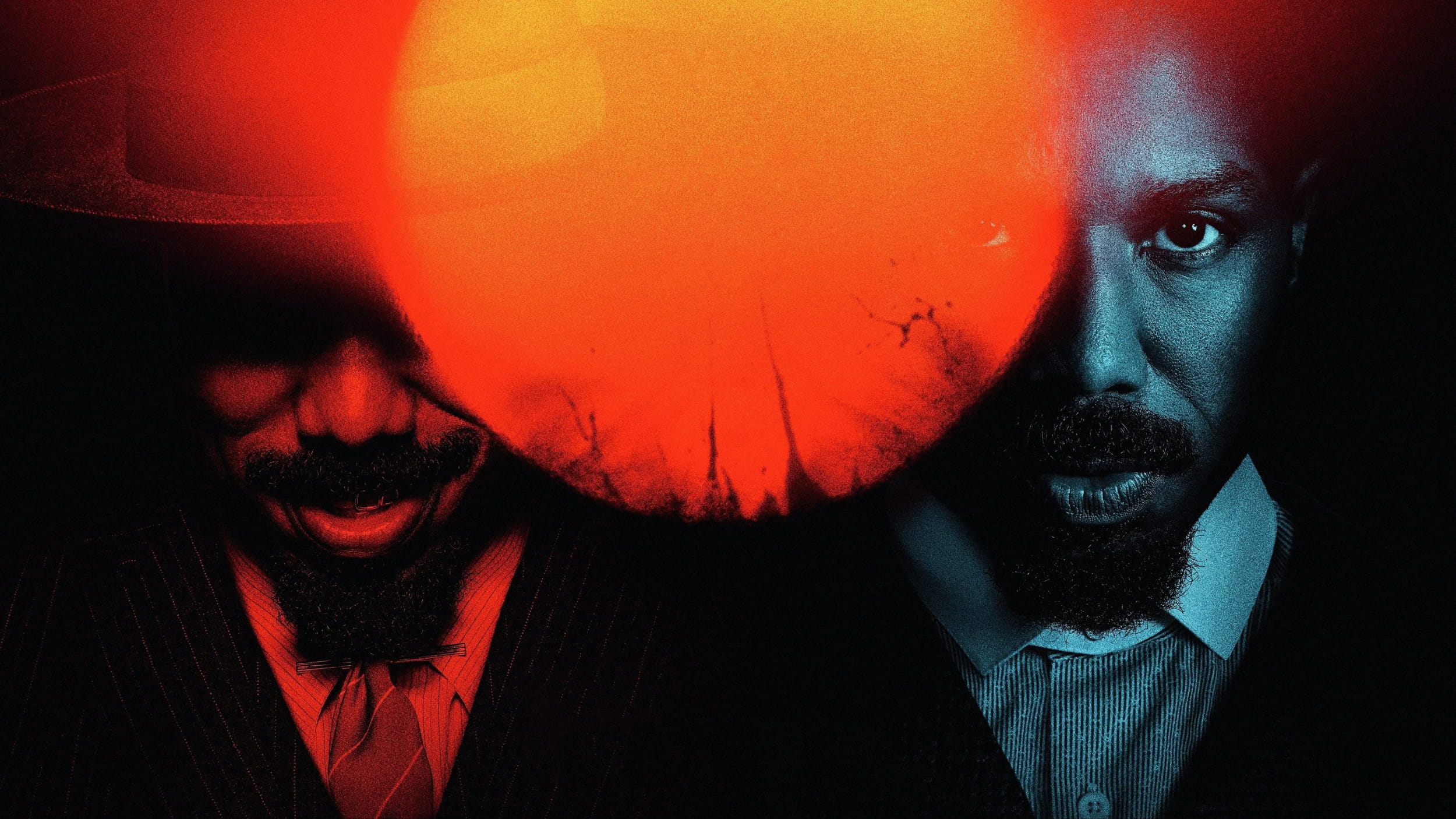
[16] Offshoots of Rowling who defend her predation, ipso facto; re: Birdman saying "Buy her stuff!" uncritically in the middle of genocide. To dissect him is to dissect her and vice versa, smaller minions tied to a larger boss under capital/the state; i.e., the final boss being the structure they embody "in small" and defend to varying* degrees: with minds of different classes, cultures and races geared through the media they consume, critique and create to uphold state vampirism (state vampires versus those they call "vampires" to stake and bleed dry). Betrayal is betrayal, the camping of which cryptomimetically echoes what token parties ignominiously betrayed, to begin with: in a variety of uncanny ways Gothic excels at (doubles, in other words; e.g., Sinners [2025] and the Smokestack twins, above).
*E.g., my exes, Zeuhl and Lindsay (aka Jadis, below), defended Rowling—one being non-binary and the other genderfluid, both female in ways that embarrassed themselves, to different degrees. Those with oppression betray out of desperation; those with privilege, out of convenience; and there being no perfect abusers or victims, but for which betrayal (especially from token parties) is always embarrassing. Use that against capital and its defenders, however they manifest!
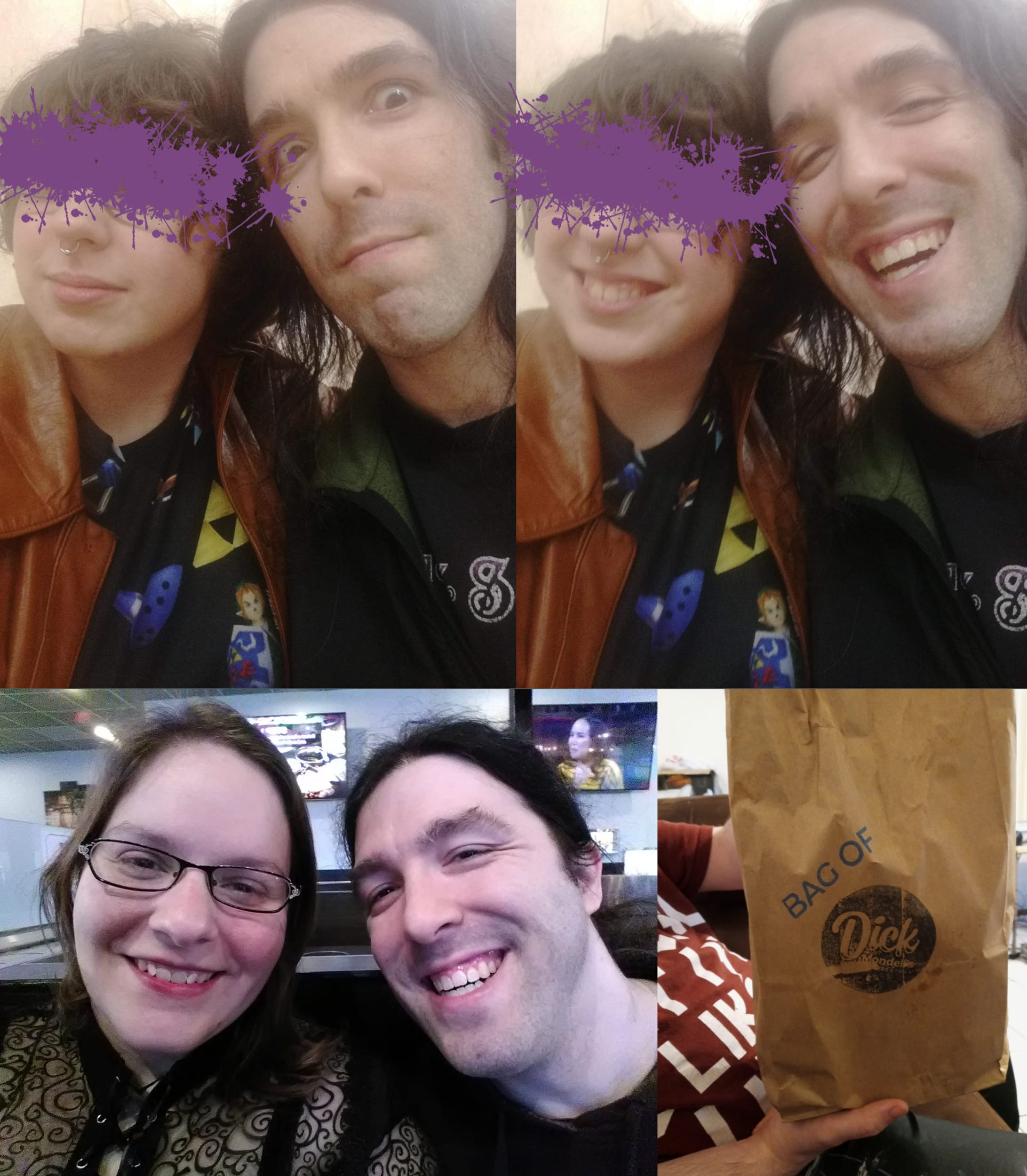
(exhibit 2a: Artists, top: Zeuhl and and Persephone van der Waard, in Manchester England, 2018 [cited: "Non-Magical Detectives," 2025]; bottom: Jadis and Persephone van der Waard [cited: "Going Mask-Off: Showing Jadis' Face," 2025]. Sometimes you slay the pussy and sometimes the pussy slays you [nerds fuck/enjoy monsters regardless of sex and gender]. I've explored my exes' abuses of me in the past, but also what they taught me and gave me to weather future storms:
The exquisite sorrows with which they had been afflicted, made them think lightly of every succeeding woe. They had felt the sharpest darts in misfortune's quiver; Those which remained appeared blunt in comparison. Having weathered Fate's heaviest Storms, they looked calmly upon its terrors: or if ever they felt Affliction's casual gales, they seemed to them gentle as Zephyrs which breathe over summer-seas" [source: The Monk, 1794].
That's their immortality, warts and all. And pulling the pin on this grenade, I've had its "ammunition" for years—something to wait and use "when the moment was right." Now's as good a time as any. And if they want to fuss about the mention, know they're doing it while defending J.K. Rowling [either by fussing or by keeping mum about her]. So we endlessly play not just with Promethean fire, in Gothic, but with ghosts to get at forbidden knowledge [and the power it holds]. From Broadmoor to me [2021, 2023], camping the canon doesn't have a logical starting point; we chase the Numinous, en medias res towards abject, otherworldly zones [the Gothic prone toward scraping the bottom of the barrel as much as swimming in emotional sewage: the paradox of various bittersweet oxymorons; e.g., Milton's darkness visible].)
[17] Green, black, and similar colors not just the color of death inside the state of exception, nor the color of stigma alone (and persecution, below), but the color of rebellion sharing the same bodies, spaces, and costumes fought over among workers; i.e., for the state or against it (and its national politic; e.g., orcs largely being a British* invention [above] playing with the dialectic of the alien for different aims):

(exhibit 98a4 [from "'What is a Witch?' part two," 2025]: Artist: J. Scott Campbell. Witches and goblins are classic symbols of persecution, Elphaba the monstrous-feminine [witchcraft] merged with blood libel and sodomy tropes [the Maguire version, Wicked onwards, is trans; see: "Sexist Ire"]. The Wicked Witch of the West can be a symbol of proletarian revolt, but can just as easily be reduced to a neo-conservative sexpot who gets mired down in incremental, equality-through-convenience disputes—e.g., about nudism—instead of actually critiquing power. Just as power and resistance share the same space, the aesthetics of death and power as badass can be employed by bourgeois and proletarian forces in cryptonymic opposition; the context must be gleaned through dialectical-material scrutiny as a matter of "oppression disguise" to worn, in good faith and bad as Witch™ mid-Amazonomachia. Tokens look like the oppressed, green skin or not...)

(source: Facebook; artist: Lawrence Makoare)
*And New Zealand; re: Peter Jackson cannibalizing the Maori (and New Zealand labor at large) to chattelize BIPOC and smash unions (source: "Peter Jackson Slaps Kiwi/Oz Unions: Threatens to Move Hobbit to Eastern Europe," 2010). Vaudeville is vaudeville, and taking state pay without adding irony is ultimately still betrayal (race or otherwise, below): the pimping of one's own culture under generational trauma, turned into power fantasies for the colonizer group/middle class in the Global North (modules of the state being white, straight and/or male; i.e., under Cartesian thought, heteronormativity and settler colonialism as endemic to state models of predation; re: "The State: Its Key Tools"). Many sell out while playing a role, onstage (e.g., Makoare, above); others become token cops fighting the "crime" of critiquing generational trauma turned into canon (re: Birdman and the delusion of the token crimefighter's alter-ego being anything other than subjugation).

(exhibit 2b: Source, left: Yousef Abdul-Husain's "Yeah, This Chuck Norris Movie Is Anti-Arab Propaganda," 2026; top-right: Daniel Ziffer—cited: Murat C. Yıldız' "Muscular Judaism Alla Turca?" [2025]. Yıldız writes, "Jewish Studies scholarship treats Muscular Judaism and the obsession with the Jewish body as an exclusively central European phenomenon. It identifies Max Nordau, cofounder of the World Zionist Organization, as the creator of the concept of the 'muscular Jew.' Nordau's idea of Muscular Judaism established connections between this new type of Jew, the muscular Jew, who was physically and morally strong, and a prosperous Jewish nation" [ibid.]. Such notions don't have to exist purely among actual Jewish people [ethnic and/or religious] but mercenaries on and offstage who take state pay to further global US hegemony through a proxy state [re: Chuck Norris taking American-Israel funds to make a terrible Zionist action movie, above]. The same basic monomyth, "get strong, have revenge" idea is prevalent in many European and American fantasies [where capital uses these ideas to maintain Capitalist Realism, furthering state vampirism through "heroic" bodies tied to eugenics and phrenology aka race science; re: the Olympics and Nazi dogma concerning transphobia in the world of sports/neoliberal nation pastiche, wherein states make "freaks" ostensibly in labs to promote their arbitrary and maximalist, wheat-from-the-chaff cultural values*; see: "React #31: All Trans People Deserve Empathy - Responding to Brian Sutterer's Blatant Transmedicalism," 2026].
*Including binarized beauty standards†, face/heel kayfabe, and moral-panic good/evil value judgements, etc. All operate accident-of-birth, geography-and-biology-are-destiny—and tie to a spurious gender binary through said territory and media, at large—doing so collectively under manufactured scarcity (conflict and consent) and military prowess (sex and force): as historically-materially tied to propaganda and territory inside/outside paramilitary sporting events. It's a concept I first explored under bodybuilding and neoliberal values, in action-themed videogames, before shifting over to the Promethean Quest (re: Neoliberalism and Yesterday's Heroes [my older unfinished book] was absorbed into Sex Positivity's original 2022 manifesto followed by its 2023 debut [with Volume Zero] and 2025 culmination; i.e., after I wrote "Policing Bodies" [2021] and "Military Optimism" exploring Heinleinian Competent Men and Women).
†And hyphenations; e.g., Amazons and the Man Box (see: my Amazon research but also "My Older Body of Work (2017-2022)" for a good encapsulation of this body of research's evolution).
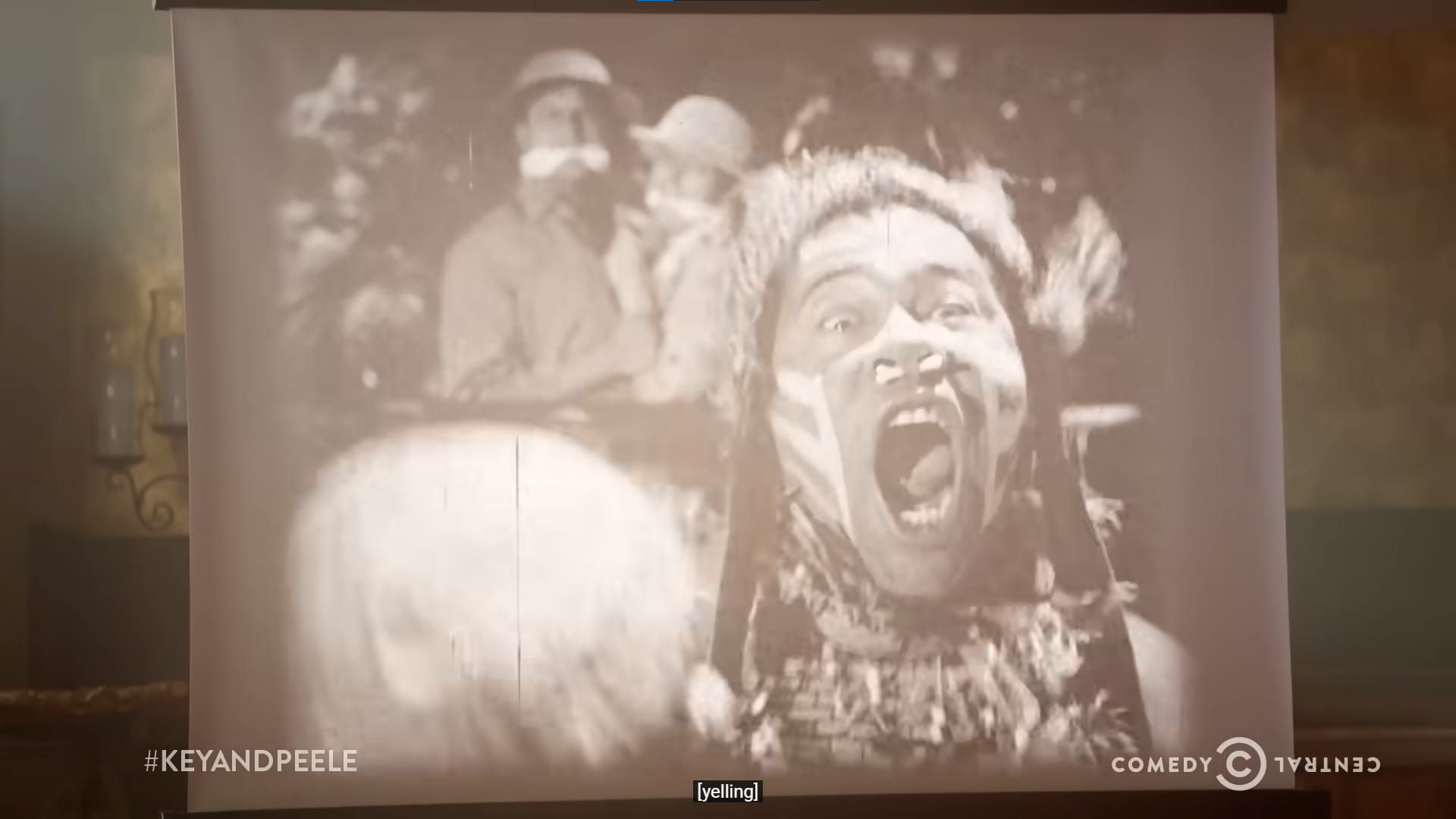
[source: Key & Peele's "Dad's Hollywood Secret," 2013]
That's the "hero" side of it, but there's also the villain or vice-character side; e.g., lampooned by Key and Peele [above] in ways that tie current comic books, videogames and movies, etc, to older Hollywood forms. Selling out is selling out, but it comes in a variety of forms [which follow function as the flow of power up or down]. It also guides profit and public attitude through cops/victims copaganda where both sides are weak and strong. It's homo sacer with the conquerors often both-sidesing things in white savior, liberal and/or Indian ways; i.e., always with plot armor, casus beli, and a license to kill, good or bad; e.g., Knitting Cult Lady [an air force veteran, below] trading one cult for another cult, speaking in "Destroy a Civilization" [2026] about the American-caused casualties of over 100 school girls in Iran with a Tomahawk missile due to "bad intelligence" [timestamp: 8:21].
In that particular case, KCL explains how "it's not genocide unless you prove intent," and that it's just a "terrible tragedy" for people "who just happened to live in the 'wrong' part of the world" [ibid.]. So, "perfect victim arguments" by someone shedding crocodile tears. This leads me to respond, "On the receiving end of American Imperialism, you mean. That's not a tragedy at all; it's a war crime, my dear, and you're apologizing for state abuse of power. Because of course you are; you're a pro, and it's your job to" [source YouTube community post: 4/8/2026]. Looks like I was on the money when I wrote, "To be frank, KCL's a military girl giving off white liberal vibes, at times" [source: "YouTube Videos"]—a "Karen" who cares more about looking right/feeling superior than refusing to apologize for the American military:
[source Threads post, daniellamyoung_: August 8th, 2024]
It's not that we can't take useful ideas from soldiers like her [mainly to critique them; e.g., "Responding to @KnittingCultLady: Armageddon (for Profit) Is the Point," 2026]. But we must always remember that liberals lie about very nearly everything [with bits of truth]—similar to reactionaries, even; they just dress "castle doctrine" up in Western Liberalism, is all. The flavor of the lie is different, the function is not; i.e., they'll lie whenever it suits them, but the facts [of the social and material disparities] aren't so easily concealed: the American empire is in decline, and the morality of the exchanges are never with the ruling class/colonizer group, which America is.)
[17a] I.e., "Muscular Judaism," from Max Nordau (though I've also heard it called "heroic Jew" and takes on literal-to-cartoonish forms, above): "a term coined by Max Nordau in his speech at the Second Zionist Congress held in Basel on August 28, 1898. In his speech, he spoke about the need to design the 'new Jew' and reject the 'old Jew,' with the mental and physical strength to achieve the goals of Zionism" (source: Wikipedia). Israel loves to play the hero and the victim (the DARVO/obscurantism approach to Umberto Eco's "the enemy is weak and strong" adage), and some people can see through that, some can't; e.g. Einstein and Michael Brooks versus, say, Howard Zinn (re: "The Roots of Trauma" [2024], footnote 15). In a gradual shift under global American hegemony (and CIA interference), antisemitic tropes became increasingly Orientalist, including in Disney films into the '90s and beyond; i.e., replacing the nationalist (or American Zionist) Jew with the big-nosed, swarthy and duplicitous Arab (or brown people, in general; e.g., Mexican immigrants and asylum seekers from the Global South at large) inside the same scapegoat caricature (re: "Mild Criticism for an Arab Ally Who Loves/Hates Aladdin," below). Just as tokens emulate the white straight colonizer to survive, they abject their policed qualities—specifically the giving of violence regarding said qualities—onto other outsider groups. The diasporic Jews of the Third Reich (and spotty treatment in Soviet Russia*) became Americanized: a rabid token dog to seek out the same caricature in Arabs for Americans as they (or their ancestors) had once experienced, themselves; i.e., bigotry is plastic, subject to the same imbricating-but-flexible qualities any "dark" persecution language (and cop/victim outcome) does under capital as a white-supremacist institution promising assimilation to tin soldiers of all walks. They can be camped, but that camp exists in duality with canonical (or reactionary/separatist) forms that monopolize oppression for themselves (often corporate, below).
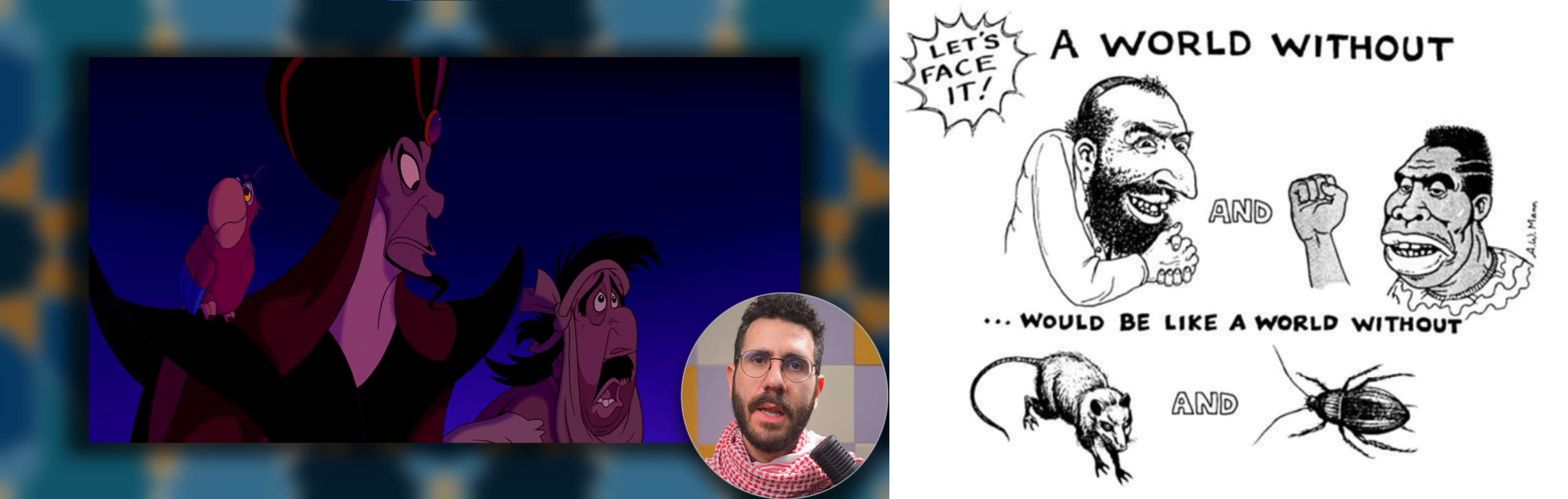
(exhibit 2: Source, left: Yousef Abdul-Husain's "Every Offensive Arab Stereotype in Aladdin," 2026; artist, right: A. Wyatt Mann [cited: Uffa Jensen's "The 'Happy Merchant' as an Antisemitic Hate Picture: a Historical Perspective on Visual Antisemitism," 2025].)
*As A. Kramer writes (quoted at length because relevant):
We must point out that Joseph Vissarionovich (Stalin) had had some contacts with the Zionists in the past. The Russian Zionist activist Dan Pines wrote in his memoirs that he had visited Stalin when the latter was Commissar for Nationalities in the mid 1920s and got his support for his Zionist activities in Russia. / This position was in total contradiction to official communist policy. It flew in the face of all those Comintern decisions and also of the policy of the Jewish section of the Comintern that had declared Zionism as a dangerously reactionary movement.
In 1920 the Second Congress of the Comintern had issued a statement on the colonial and national question, in which we can read the following: "A glaring example of the deception of the working people of oppressed nations by the united forces of imperialism of the Entente and the bourgeoisie of these nations is the Palestinian adventure that is being put forward by the Zionists (and Zionism in general, which, in claiming to establish a Jewish state in Palestine, in practice is advocating the expulsion of the Arab working people from Palestine, where the Jewish workers constitute only an insignificant minority, a role that is exploited by Britain)." But Stalin completely ignored the genuine traditions of the Bolshevik Party and the Communist International (when it was led by Lenin and Trotsky). A sympathy for Zionism was typical of the "right Bolsheviks." [...]

[source: Fred Weston's "Stalin's Responsibility in the Creation of Israel and Its Disastrous Consequences," 2024]
However, in line with the ultra-left turn of the Stalinists in the late 1920s, when most of Bolshevik oppositionist leaders were in prison, this sympathy towards Zionism was suddenly suppressed and it was outlawed in Soviet Russia. In spite of this, criticism of Zionism was never strong and systematic in the 1930s. In fact not all relations were bad between Zionism and Stalinism. / However, after having had their hopes raised about the "positive" aspects of Zionism, by the late 1920s many left wing Zionists had been disappointed by their experiences in Palestine and they returned to the USSR. The majority of these people were later executed in 1937. [...] In the late 1930s the official position on Zionism in the USSR also began to change to a more favourable one. In the huge official Soviet Encyclopedia published in those times we find a positive attitude towards Zionism. It said that Jewish migration to Palestine had become a "progressive factor" because many of the immigrants stood on the left and were also workers and these could be used against the pro-British Arab sheikhs!
At the beginning of 1947 a very strange coalition had come into being over the Palestinian question – the USA, the USSR and the Zionists. They all supported the partition of Palestine. Of course each one of these had their own specific interests. The USA wanted to push out the old British colonial lion and replace him in the oil rich and strategically important Middle East. As for Stalin, he wanted to use the Jews in Palestine against British imperialism, and to establish a point of support for the Soviet bureaucracy in the Middle East. We also know what Ben-Gurion and his gang wanted – a "Great Israel" on both sides of the Jordan or at least encompassing the Sinai peninsula.
We could ask ourselves the question as to whether Stalin had any inkling of a Marxist understanding when he supported Zionism? The answer is, of course, that he did not. His approach was all reduced to playing the old game between Russian and British imperialism for control of this region. Stalin didn't support any drastic social changes in Palestine and thus a bloody conflict to divide Palestine was absolutely predictable. /The only solution would have been a united Socialist Palestine for both Jews and Arabs as part of a Socialist Federation of the Middle East, but this was a closed book for Stalin. Even worse than this was the fact that the Soviet authorities gave a "green light" for supplying Israel with weapons (source: "Stalin and Zionism," 2008).
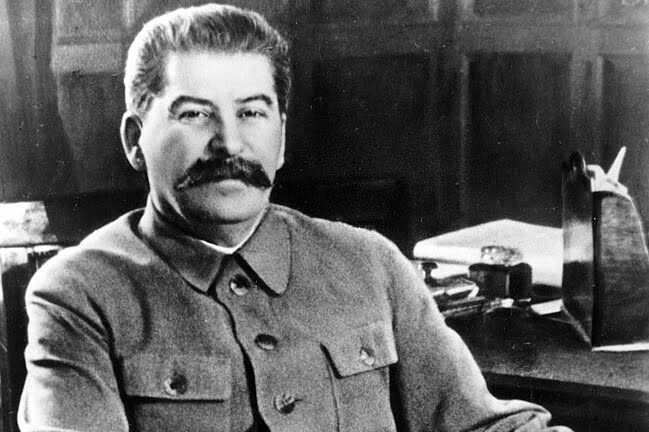
(source: "Stalin's Responsibility")
The settler-colonial project doubled as a proxy war inside the larger region, one that saw the Soviets fighting in Afghanistan in the 1980s (whose counterinsurgency was funded not just by America and the CIA, but by the Chinese; see: Real Time History's "Red Army vs Mujahedeen: Soviet-Afghan War Tactics 1980-85" and "Why the Soviet Union Lost in Afghanistan," 2026). Imperialism demands partition through police violence (Soviet or otherwise), mid-abjection.
(source: Ariel Nagi's "10 Times Edward Cullen Was Actually the Creepiest Boyfriend Ever," 2017)
[17b] See, also: Stephanie Meyer's Twilight (2005), selling the usual "I can fix him" simulacrum to tween girls (married off to shells of men before they're old enough to vote). In that case, like Rowling's Snape, the character both: stems from older amatonormative* stories like Wuthering Heights, The Phantom of the Opera (1906) and Romeo and Juliet (c. 1591); and works best when narratives of sympathy are compelled by naked unironic predation (Carter's "romancing the werewolf" schtick; re: "The Riddle of Steel; or, Confronting Past Wrongs," 2024). There's also some degree of cryptomimesis regarding the playing with generational trauma during calculated risk; Meyer's Edward Cullen, similar to Rowling's Snape, becomes far less likeable when the chip on his shoulder is revealed to be naked lust/possessive and bigoted‡—worse, in Cullen's case, because he's an old man in a teen boy's body preying on a twelve-year old girl with no brain (the selling of toxic criminal love that uncritically furthers abuse, mid-abjection; re: "'Real Life': Toxic Love and Criminal Sexuality in True Crime," 2025). Girl, no; there's a difference between guilty subversive pleasure and permanent submission, however similar they appear (re: "Always a Victim" and "I'll See You in Hell").
*Prescriptive sex normalizing marriage—generally with some degree of good guy/bad boy as stemming from Radcliffe's novels; i.e., one of the first female novelists wrote Gothic stories, and which—despite Austen camping them—survived through ongoing expressions of mutilative† desire (re: Wolff's "Radcliffean Model," 1979). Think Jane Eyre (1847) and "Reader, I married him" (source), but in ways that symbolically turn men (and non-white women) into fuck-and-forget, flavor-of-the-month, death-fetish scapegoats (re: "Defined Through Sex: Sex Normativity in Popular Media," 2025). Many (often white, middle-class) girls are exposed to such things, early on; i.e., their so-called "first loves" in ways that mollify their own anxieties, felt in the house-as-prison from cradle to grave. There's room to camp that, but it must be done consciously: surrendering control momentarily in the fantasy but not in our lives, and which TERFs betray others through said fantasies (and after which they surrender to the ruling class; e.g., Radcliffe's gentler heroines, but also more recent Amazonian types, too). They lack what I call Gothic maturity, "specifically the ability to say healthy things through taboo language during ludo-Gothic BDSM; i.e., while pushing for intersectional solidarity and consciousness, developing Gothic Communism (thus universal liberation) through various creative successes that collectively overcome praxial inertia, division, dormancy and betrayal" (source: "Paratextual Documents").
†What I call "knife dick" or "walking vaso vagal"; re (from Volume One)

(exhibit 31 [from "A Problem of Knife Dicks," 2024]: The bogeymen and bogeywomen for and [sometimes] against Patriarchal Capitalism/Cartesian dualism generally orbit around rape/sexual violence as synonymized with sexual activity at large; i.e., implements of torture that suggest [or explicitly perform] a biologically essentialized erotic function associated with psychosexual human bodies and their assorted compulsions, stigmas and fetishes. These historically-materially divide into a gender binary that GNC dialogs must challenge, subverting cis-het expectations of rape and violence within, and outside of, these fictions...)
Something to summon, play with, and work through our shit (trauma, once inside you, never really leaves).
‡In all the usual ways, including sexism, racism and pedophilia; see: @carolineeasom's "8 Things I Hate About Twilight" (racism and Cullen, 2026): https://www.youtube.com/watch?v=Jt76OsadnTc&t=4020s and https://www.youtube.com/watch?v=Jt76OsadnTc&t=4740s
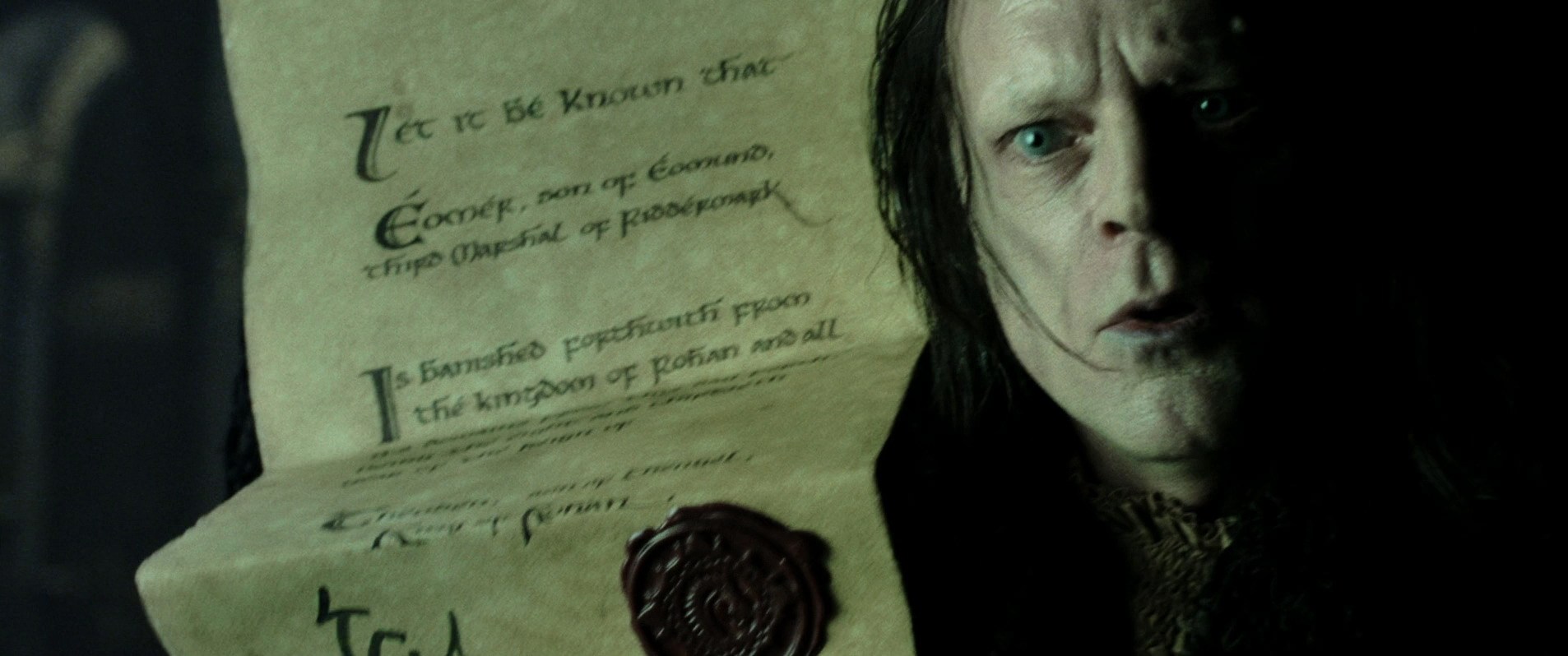
[18] Or a character inside the setting who is equally conflicted; e.g., Snape (and similar characters, above). Believe it or not, I don't hate Snape the character until Rowling tries to redeem him; i.e., in ways that feel forced. He's already the beaky-nosed, dark-haired foreigner with pale skin—meaning of vague "Eastern" descent seen in early Neo-Gothic novels that simultaneously romanticize and mistrust anything outside/east of England (e.g., Radcliffe's Italian, 1797). It's antisemitic, though less so than Peter Pettigrew aka "Wormtail" (a nod, below, to Grima Wormtongue, another Tolkien allusion)—a visibly rat-like man (echoing Max Shreck's Orlock from F. W. Murnau's Nosferatu, 1922) who betrays his friends for the enemy and, well, takes on the qualities of rats seen in antisemitic narratives: blood libel revived by the Nazis, then displaced by Tolkien and others into Orientalist spheres after WW2/the formation of the Israeli ethnostate (re: "React #32: Orientalism and the Gothic").
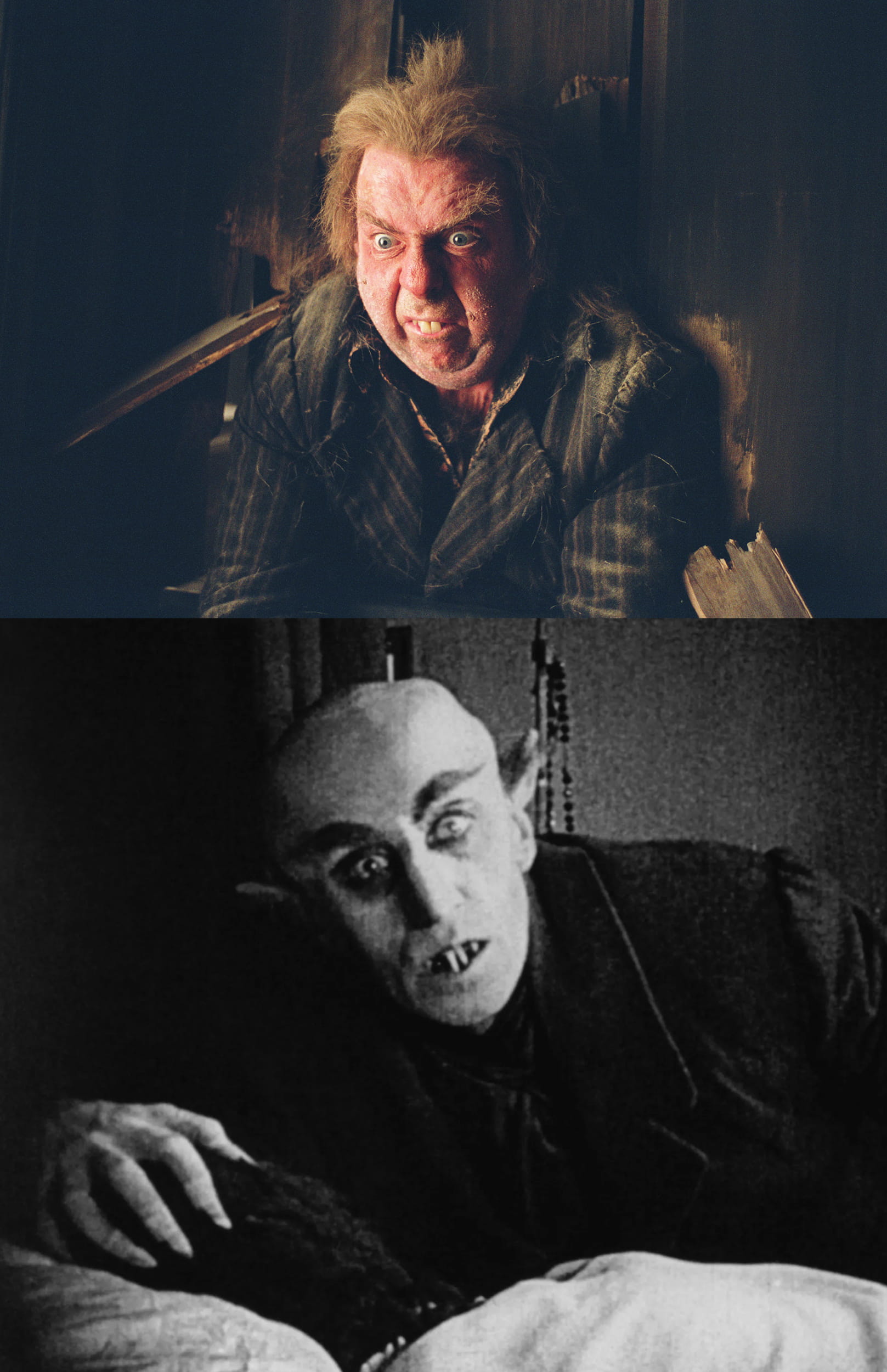
(exhibit 3: Source, top; bottom: Anthony Breznican's "The Undying Mystery of Max Schreck—the First Nosferatu" [2024]. Gothic rarefies different qualities like dragons and greed, but also stigmas and fears tied to older cultural practices that are either coming back/never really left; re: blood libel*. The same bat-like ears tie to goblins, and the fear of a queer uprising generally translates to a perversion of the nuclear home/reproductive order "corrupting the blood." The metaphors mix in ways we can fuck with, too. Rowling used them to further stereotypes, not combat or interrogate them in any meaningful way: a poetic-material means for her to get rich at the expense of others, accusing them of feeding grossly while actually being the one to do it, herself.)
*Refer (again) to "A Crash-Course Introduction to Vampires (and Witches)" for a deeper look into that topic, and "Idle Hands" for blood libel tied to witchcraft, sodomy and (to a lesser degree) Orientalism.
I digress. Making Snape the disgruntled and sexually awkward outsider with reactionary views black doesn't change that, on its own—meaning they'd have to pull a "Ship of Theseus" and fundamentally alter the character beyond what I suspect Rowling would appreciate (a witch who has her spoon in many-a-cauldron, regarding her precious franchise and its endless resurrections). It'd be easier to simply make a new character than to force blackness onto them; i.e., turncoats are a fascinating character archetype—race traitors' conflict worth exploring on its own; e.g., Tramell Tillman's fabulous Milchick constantly reconciling his place in a racist corporate machine that exploits everyone, and Gershwyn Eustache Jnr as Tamaryn Barcona (from Severance and Andor [2022] respectively—top and bottom, below). Those characters and their conflicts work because they don't try to erase/obscure the material forces at play. If anything, they balloon and push them further into focus through the characters' actions: "I can add colours to the chameleon, / Change shapes with Proteus for advantages, / And set the murderous Machiavel to school" (source: Henry VI, c. 1589). To deny BIPOC the chance to be evil onstage is to infantilize/silence them, everywhere; but to shove them into an already-bigoted, pre-existing role without thought invites violence. Such things must be handled with care, affording agency to the actor while combatting racism in honest ways: BIPOC can betray their interests and redeem themselves, onstage and off.
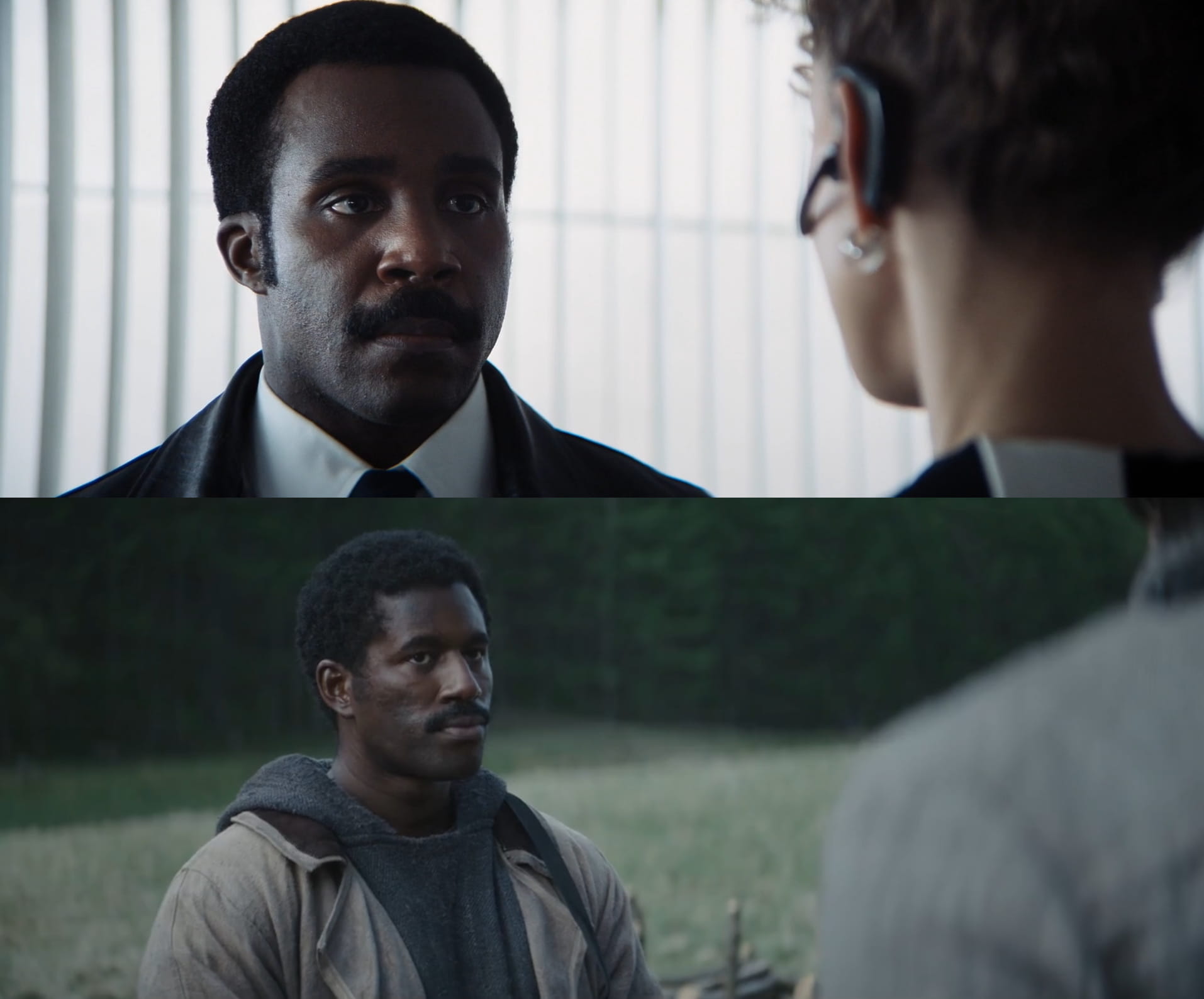
(source: "Whose Fredrick Brennan?" footnote 17)
[19] Similar to authors of color making new works, dissecting Lovecraft (re: "Who's Fredrick Brennan?" footnote 1). They're not just buying and praising the guy as T.S. Joshi does (source: "HP Lovecraft biographer rages against ditching of author as fantasy prize emblem," 2015); they're making something new out of old dead parts (and platitudes). If the New and Next Weird movements can do that with him, then Rowling's cadaver is ripe for the taking (so to speak).
[20] "We know where this leads: to further harassment of Black people, online and off," Artan writes (source). You can always tell something is neoliberal when the bigoted corporate executives say they care, then do something deliberately apathetic/exploitative.



