My husband loves to "nerd snipe" me. This particular time he told me about Fredrick Brennan, the founder of 8chan (2013) with brittle bone syndrome who died yesterday. This blogpost—the first in a good long while (on a blog mostly full of extended essays and book chapters from my website)—examines a desire to change from nadir-level positions; i.e., while seeking empathy mid-redemption, and also while recognizing how despite my research into fascism I basically had no idea what 8chan even was; re: Brennan, who Bay described for me and for which this essay explores Brennan's legacy of seeking and finding redemption after throwing 8chan to the wolves (or Pomeranians, below)!

(source: Aurora Almendral and Yuliya Talmazan's "Founder of 8chan Wishes He could 'Uncreate' Forum Popular with White Supremacists," 2019)
Table of Contents
Note: I've expanded "Who's Fredrick Brennan?" greatly since first publishing, table of contents included; and while I've made numerous changes throughout, the clear-and-obvious addendums are in bold and color-coded. —Perse, 3/14/2026
- Concerning State Vampirism
- Disclaimers
- Changelog
- Piquing My Interest; or, a Veteran Gothic Nerd, Raised on Lovecraft and Learning About Brennan for the First Time
- Thesis: Empathy and Redemption through Unlikely Heroes
- Essay Body: Blind Hubris and Learning to See
- Conclusion (feat. Beethoven, Byron, and Bojack Horseman)
- Footnotes (feat. Severance*, 2022)
*Footnote 17 is basically a spoiler-filled "mini-review" for Severance (which I'm watching as I polish this essay).
Concerning State Vampirism

(artist: Karen B.; cited: "The World Is a Vampire," 2024)
This piece (essay or otherwise) is part of a larger series on state vampirism. As I conceive it, state vampirism = feeding through the state mid-abjection*, be it openly capitalist or Marxist-Leninist. These are largely questions of aesthetic, whose Promethean (self-destructive) function extends to other configurations "of Omelas"; e.g., Zionism. Furthermore, there's overlap between my anti-Zionist work and my work critiquing Marxist-Leninism/state vampirism alongside capital, so consider reading both.
*Which state predation and revolutionary action both rely upon to function; i.e., "on the Aegis" as something to further or reverse, mid-vampirism, through paid/unpaid labor (re: me, vis-à-vis Julia Kristeva). To that, abjection (us versus them/alienation and fetishization) is one of four main Gothic theories my book series utilizes—the other three being hauntology (retro-future), cryptonymy (show/hide) and chronotopes (time-space) alongside smaller theories; e.g., Jerrold Hogle's ghost of the counterfeit† and Barbara Creed's monstrous-feminine (Gorgons and Amazonomachia, as I study it). As a queer sex worker and academic, I dialectically-materially prioritize abjection and vampirism through unpaid labor—chiefly sex work as exploited by Cartesian dualism and its harmful, maximalist binaries under Capitalist Realism, treating nature as monstrous-feminine (re: "Nature Is Food," 2024)—but mention the other theories, too (access "Four Main Gothic Theories (the Four Gs)" in "Paratextual Documents" for their longer definitions). In essence, capital/the state rape by design, which unpaid labor prevents by breaking Capitalist Realism mid-abjection; i.e., reversing abjection during ludo-Gothic BDSM (rape play) when having the whore's revenge (which "State Vampirism" explores at length): "to break the profit [and productivity] motive by making a world for which it (and rape) are no longer possible using these methods; i.e., by using the same demonic and slutty language capital does, but at cross purposes" (source: "Rape Reprise," 2024).
†Re: "Raising Awareness" (2025), footnote 1.
Disclaimers
"Who's Fredrick Brennan?" is part of my Sex Positivity book series, which continues after its June 2025 finale in small-form content; e.g., essays on and interviews with other sex workers, all of whom I credit on my Acknowledgments pages and Sex Work page. This piece doesn't focus on sex work itself, but widespread exploitation; i.e., in a shared predatory system, "whoring nature (and workers) out" in highly abject ways.

(artist, left: Bay Ryan; right: Persephone van der Waard)
For the Visually Impaired: I'll be reading this essay out loud on my YouTube channel.
Disclaimer Regarding Essay Contents: All opinions are my own; i.e., as part of my research, conducted alongside my book series, Gothic Communism (2023). The material within is written/speaks about public figures and popular media for purposes of (sex) education, satire, transformation and critique, hence falls under Fair Use regarding copyright and free speech regarding defamation/obscenity laws (the Miller Test; source: Justice.gov). Click here for my entire series disclaimer. Lastly many of the links on this page lead to my age-gated 18+ website where my entire work on Gothic Communism is stored and exhibited.
CW: racism, ableism, and rape*; police brutality and carceral violence; fascism and the Holocaust, gore (stabbed eyeballs and Oedipus Rex)
*Meaning (from my definition) "to disempower someone or somewhere—a person, culture, or place—in order to harm them," generally through fetishizing and alienizing acts or circumstances/socio-material conditions that target the mind, body and/or spirit) […] Rape can be of the mind, spirit, body and/or culture—the land or things tied to it during genocide, etc; it can be individual and/or on a mass scale" (source: "Psychosexual Martyrdom," 2024).
Concerning Keywords: My arguments rely on various keywords I've previously coined, which here present in bold while color-coded (usually only once, while stressing their keyword status; e.g., ludo-Gothic BDSM, Metroidvania, or the palliative Numinous, etc). While some are given here, in abridged form, "Paratextual (Gothic) Documents" (2024) provides all neologisms, in full.
Changelog
—3/14/2026: Expounded on Plato's allegory of the cave, giving more examples/visual aids and moving things around. Numerous changes top to bottom, including the footnotes' mini-review of Severance. Added a Changelog section. Fixed the footnotes.
—3/12/2026: Added more signposts/examples for fun, expounding on this essay's theme of sight (and blindness of tragic heroes who learn to see, mid-redemption).
—3/10/2026: Signposted things a bit more, adding some polish and extra details.
—3/9/2026: Initial release.
Piquing My Interest; or, a Veteran Gothic Nerd, Raised on Lovecraft and Learning About Brennan for the First Time
"Who's Fredrick Brennan?" I asked, nonplussed as I brushed my teeth. "He's the closest person to Lovecraft as anyone I know," Bay replied, referring to Lovecraft's supposed turn away from racism[1].
This got my attention—my being a certified weirdo, raised on Lovecraft but also having no idea who Brennan was. Like Brennan, Lovecraft was a racist, highly xenophobic guy whose views changed over time:

(artist: Matthew Childers; cited: "Mandy, Homophobia and the Problem of Futile Revenge," 2024)
The shoe certainly seemed to fit, prompting me here to craft a small essay about Brennan; i.e., one guided by the same morbid curiosity with kindred spirits (minus the racism) that I had with Lovecraft, monsters, and the Gothic: a desire to change, developing empathy through redemptive arcs made in thoroughly weird territory (my own transformation being when I came out as trans, in my 30s [re: "Coming Out as Trans," 2022]—also, as I did, striving to be less racist, sexist, whorephobic, etc, through my own creations and those of my friends).
First, some context. Given my career looking into various campily Gothic curios, ludology (the study of games[2]) and BDSM relics alongside fascism—i.e., as already policing sexual labor for the state; e.g., TERFs and incels, eclipsing other weird obscure shit from the early Internet, whose bizarre conspiracy character Qanon hoarded, in a post-COVID world—I was already familiar with pulpy oddities like Time Cube, Cockrub Warriors, the JO Crystal, and moe and ahegao tied to Japanese incest culture/eco-fascism (a Japanese export haunting manga/anime sold to American weebs) as being preceded, one and all, by older forms of exploitation media besides Neo-Gothic novels: twink exploitation books and movies, from the '90s under Cooper and Araki; Tom of Finland and leather daddies in the 1970s; joy divisions from the 1953 novel, House of Dolls, dragged by Hook and company into British postpunk/disco-in-disguise; the whores of Weimar and Berlin counterculture, before the Nazi rise to power in 1933; and yes, Lovecraft and company's Weird magazine, cranking out pulp media during WW1/the interwar period (with Lovecraft not just a racist homophobe, but something of a pussy slayer according to his ex-wife). There's also the neoliberal period and videogames; i.e., my tripartite expertise: through ludo-Gothic BDSM, Amazons and Metroidvania. Whatever the form, there's always something stranger and unequal in terms of power to uncover (and play with), behind closed doors; i.e., Gothic nostalgia, abjection and poetic reinvention walking arm-in-arm with politics, philosophy/paradox, poetry and shadowy spaces of play since Matthew Lewis (ripping pages from Dante, Shakespeare and Milton as Broadmoor argues, among many others by his own account): an open-secret gay man collecting oddities/darkness visible from "confirmed bachelor" Horace Walpole's Strawberry Hill and its corresponding media's giant, fake, castle-grade museums of wacky psychosexual strangeness, warring ideas/fears/desires (e.g., rape[3]), and alien taboo things (a "sinister corner of the Western imagination," as Baldrick tells it—1764's Otranto, yes, but also double-incest[!] yarn, The Mysterious Mother, inspired by Sophocles' Oedipus Rex[4] [429 BC] and never meant for widespread publication or consumption). Gothic plays with "past" as a flexible document, not something writ in stone—one in where exploitation and liberation occupy the same spaces, onstage and off: used by actors, good and bad, through different aesthetics in duality that poetically interrogate and send power flowing up or down.
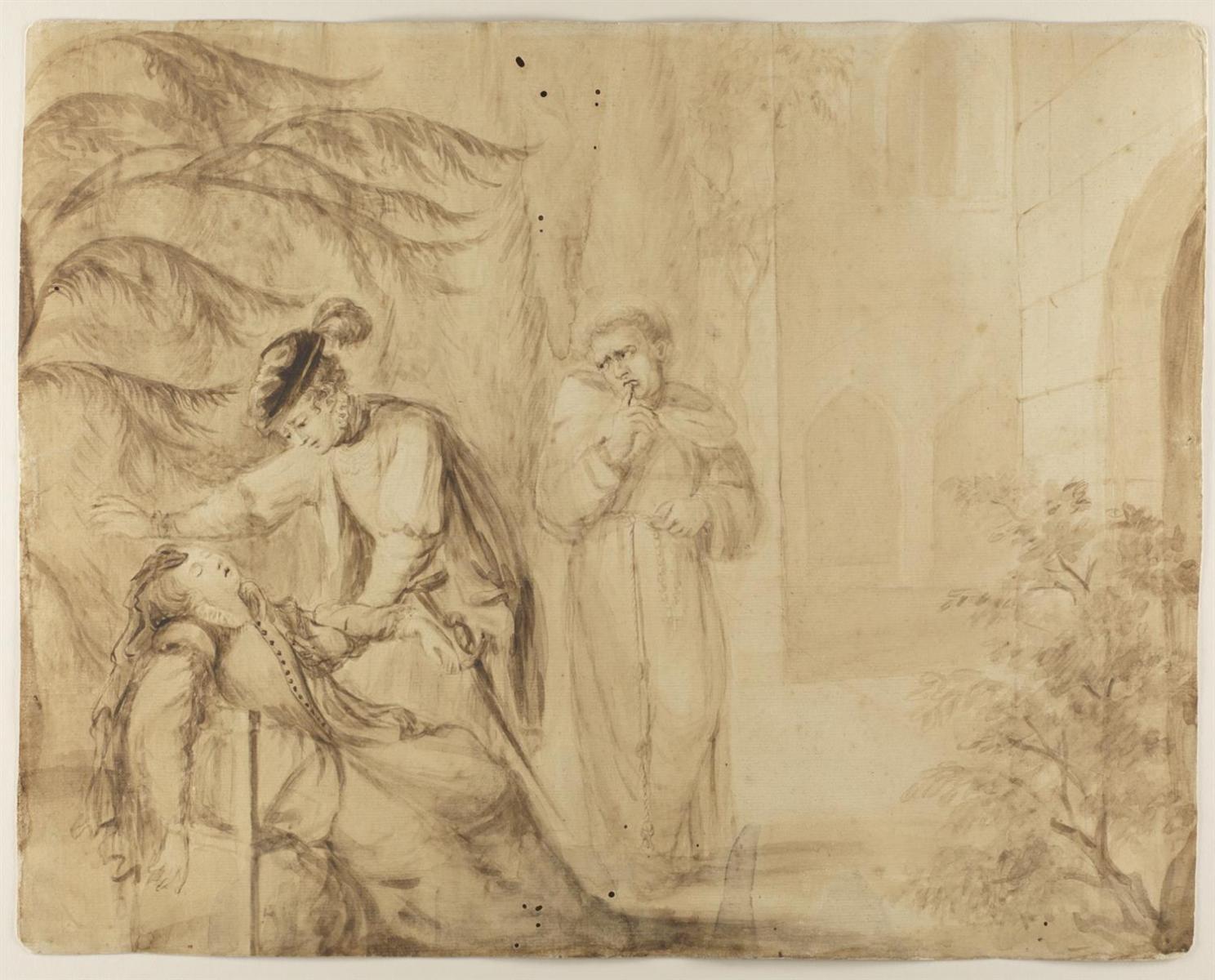
(source: Lewis Walpole Library's "A Staged Reading of Horace Walpole's Play, The Mysterious Mother (1768)," 2018)
The point being, I've seen and read a lot. So I suddenly felt intrigued, with Brennan; i.e., whilst learning about someone new (to me): as steeped in such a thoroughly awful zone (of white supremacy and racism/ableism) who not only rejected it, later on, but actively tried to make the world a better place!
Thesis: Empathy and Redemption through Unlikely Heroes

(source)
I digress; our focus here, while survey in its approach, is empathy and redemption through unlikely heroes, namely Brennan and similar half-real[5] (quantum) characters we'll unpack, deeper in; e.g., Chelsea Manning and R. Derek Black, from real life (and H.P. Lovecraft), as well as fictional "Gothic" examples like Victor Frankenstein/the Creature from Frankenstein; or, the Modern Prometheus, Darth Vader from Star Wars, Neo from The Matrix and Norman Nordstrom from Don't Breathe 2, etc (1818, 1977, 1999 and 2021). In turn (and to supply a small thesis argument), the state kills empathy to preserve itself/suit its needs by abusing power mid-abjection (which rape ultimately is, whatever the form); i.e., to prevent change by keeping power vampirically "top-down," fascism defending capital by denying redemption while raping worker minds, cryptonymy-and-abjection (our focus being on Plato's Allegory of the Cave [c. 380 BC, above]—with The Matrix and similar simulacra [meaning "shadow" or "likeness"] informed by Plato's famous thought experiment: casting shadows on cave walls to fool ignorant onlookers in ways games let workers interrogate; re: me, vis-à-vis Gloggins; e.g., "The World Is a Vampire"). Keeping our premise and thesis argument in mind, empathy—as something to encourage, under capital as inherently divisive (Cartesian or otherwise)—demands work to "unfuck" ourselves, mid-abjection (facing shadows); without work (which play and poetry are, "Gothic" or otherwise), people can't redeem thus change themselves and society/the material world: as having shaped so many peoples' way of seeing the world, before, during and after one's "hour upon the stage" (re: Marx's Base and Superstructure: matter shapes consciousness and consciousness maintains matter, below). Allegory haunts; it echoes hidden things—including empathy and redemption—as passed, cryptomimetically[6] to and fro, through a shared dialog of poetry in motion; e.g., order as something to impose and chaos a means of defying it, central top-down power vs decentralized variants punching up; i.e., regarding redemption from Promethean (self-destructive) acts of creation: made fascistically through grievance, and whose hostile, reactionary effects (namely scapegoats, DARVO/obscurantism and revenge) in which infringing workers are initially blind towards (as we'll see with real people Brennan, but also stories like Paradise Lost, Frankenstein and Severance, etc). Blindness = apathy as inability to self-redeem, and whose toxic creations amplify state vampirism: as incumbent on such "failures," which encourage wanton death and destruction as tied to endless profit exploiting workers and nature by design (while furthering abjection).

(source: Rana Indrajit Singh's "Base and Superstructure Theory," 2013)
All of that being said, Gothic Communism is a holistic discipline—one that "shares the graveyard" (or castle) with capital. So once more unto the breach!
Essay Body: Blind Hubris and Learning to See
Today's theme is sight; i.e., on empathy achieved poetically through creation-as-sight of a heroic paradoxically blind, dark and/or forbidden type: seen through redemption reclaiming lost vision, mid-allegory (re: shadows). The examples given here—namely Nordstrom, Neo, and Milton's Satan, but really any of them in some shape or form (e.g., Dark Link, below)—concern the hubris of grievance requiring redemption, after monsters (of a fascist sort) are made (and which Gothic plays within through the shadowy language of doubles).

(artist: Gabriel Dias; cited: "Thesis Body: Gothic (gay-anarcho) Communism vs the State; or, Galatea inside the Shadow of Pygmalion," 2023)
First, Greek heroes were tragically blind, growing increasingly immutable, tidy and rote, under capital/the state (which offers Promethean/fatal vision, under systemic [criminogenic] grievances). The fact is, humans are mortal, "warts and all"; they change whether they want to or not, and not always for the better (e.g., Mao Zedong growing more reactionary/abusive over time, not less; re: "Mao's Vampirism" from "On Sex Work versus Marxist-Leninism" in "Raising Awareness," 2025). This includes death as essentially a form of radical, unwanted change; i.e., people die, often leaving their work—whether good or bad—unresolved and derelict. This likewise involves our social views tied to said works; i.e., redeeming themselves through evolution as chaotic, under pressure, wayward; re: Lovecraft's rampant racism, but also Brennan's tied to monsters he made that survived him, dancing on his grave. Blindness is a luxury we can't afford—one that redemption, as a quest, trades for empathy as painful in light of short-sighted, seemingly "heroic" creations (theft from the gods, below): learning to see through allegories "darkness visible," or the shadowy vision of those chained to Hell, to a rock, to punishment for past wrongs made-in-grievance (the fascist MO). In turn, we can ask what we've been blind to, and what supposedly "godly" beings (the ruling class) steal from us, in duality.

(artist: Henri Fuseli; cited: "On Giving Birth," 2023)
To it—and to reflect on Brennan's complicated legacy after his death; i.e., as being forever tied to his former work, Prometheus-to-his-rock (above)—the man himself died only yesterday but did so years after renouncing his reactionary ties to 8chan (which currently survives him as 8kun). And having written extensively about TERFs and incels in my book series, already (re: "Regarding Tokenism and Fighting It," 2025), I wish to comment on Brennan's actions, here: tied to fascism as something to fight, any-which-way (and which combines different groups; e.g., queer and disabled folk, which we'll get into). Capital and its built-in apathy/division are the problem (re: the abjection process and subsequent alienation and fetishization [1980, 1844 and 2023] not simply endemic to state vampirism and capital, but fundamental—categorically bound to an endless cycle of death, decay and rebirth, whose trademark theft [and lies through open concealment] historically-materially preserve state power by exploiting nature as a whole); the solution requires empathy to work (re: reversing abjection in monstrous-feminine language), which demands understanding where fascism (and those who enact it) essentially "come from": a path to redemption, working uphill in prison-like conditions that conceal themselves from those born into them (see: footnotes).
We all gotta start, somewhere; revolution—specifically revolutionary optimism, hiding in plain sight—starts small, stemming historically from places without hope that engender tokenization (from disabled people, in Brennan's case). Introduced to 4chan through a toxic relationship with the Internet (an outlet for his disease tying him to incel culture), Brennan escaped online as a mad scientist might; i.e., through acts of revenge, defying the gods by stealing their power to make monsters; re: making 8chan in the early 2010s, only to spend his remaining years on Earth trying to repent, ergo dismantle his creation: a site infamous enough (through stochastic terrorism) to have its own Britannica article, and whose dubious precursor, 4chan—specifically its /pol/ section tied to violent conspiracy groups like Gamergate and Qanon—was revealed, in 2026, to have ties to billionaire pedophile, sex trafficker and trans chaser, Jeffery Epstein[7].

Redemption takes work, which many substitute with words; i.e., plenty of people say they'll change and never do, their insincerity preventing empathy ipso facto by doubling down on broken systems while alive (and haunting them after death). As far as rebellion goes (true or false), labor and legacy walk arm-in-arm. Think the plot to Mary Shelley's Frankenstein (which birthed science fiction out of Gothic media critiquing capital from the start) and you've got the gist—specifically her "making monsters" motif, whose subsequent mad science inhabits a larger theme/framed narrative; i.e., during relationships with creations that, good or bad, meaningfully impact the world: by taking responsibility for one's actions, fire-of-the-gods. In turn, heroism = taking responsibility to achieve redemption and raise empathy mid-abjection (which Victor didn't do, posturing as hero but actually sucking at everything he does; see: "Celebrating Mary Shelley's Immortal Legacy" [2025] for a deeper dive into Shelley's work).
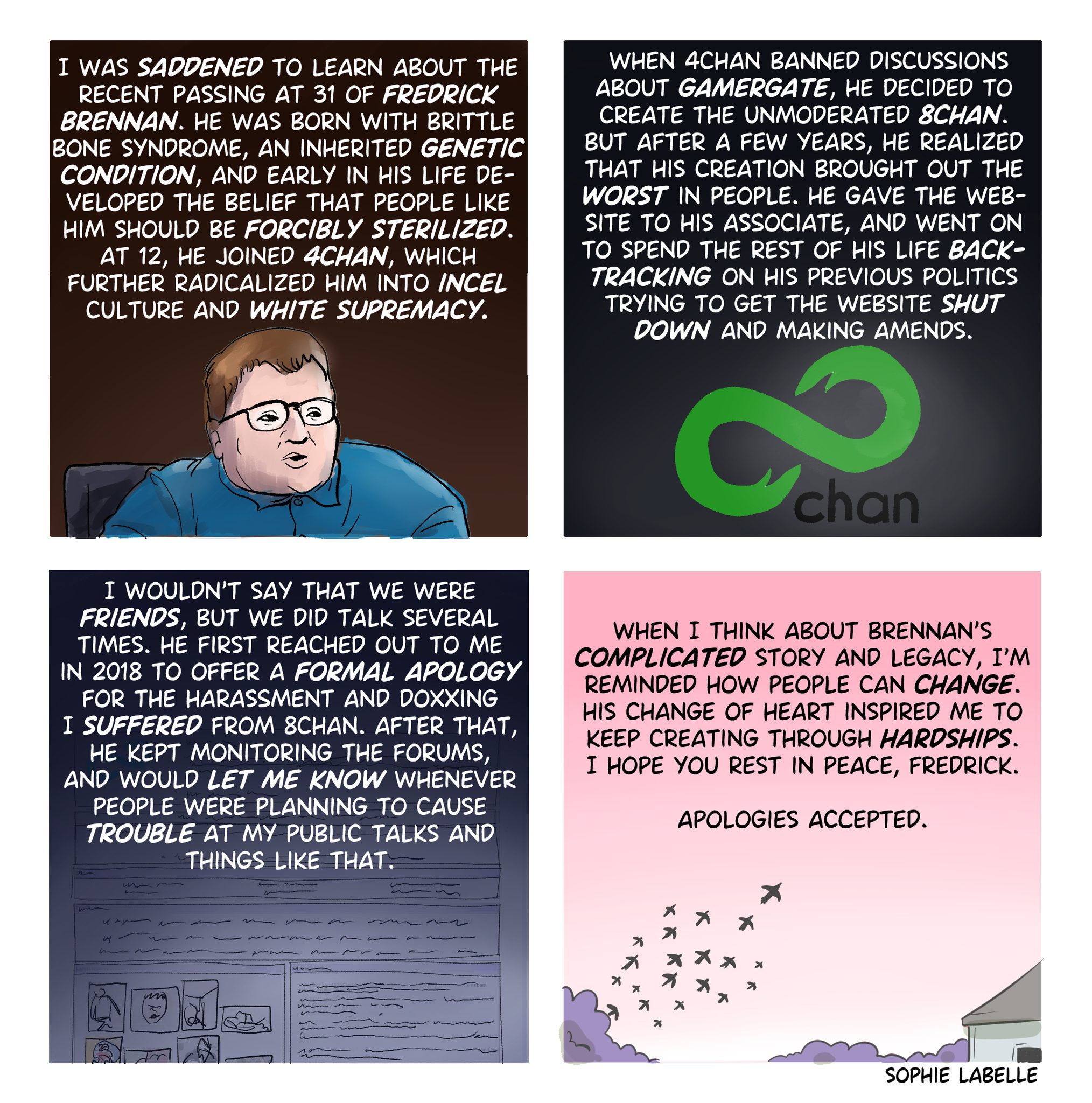
As far as that goes, Brennan seems to have put in the work before death, striving to right past wrongs he put into motion—so much so, in fact, that trans rights activist and cartoonist Sophie Labelle (above) wrote his eulogy after he died (on March 8th, 2026):
I was saddened to learn about the recent passing at 31 of Fredrick Brennan. He was born with brittle bone syndrome, an inherited genetic condition, and early in his life developed the belief that people like him should be forcibly sterilized. At 12, he joined 4chan, which further radicalized him into incel culture and white supremacy. / When 4chan banned discussions about Gamergate, he decided to create the unmoderated 8chan. But after a few years, he realized that his creation brought out the worst in people. He gave the website to his associate, and went on to spend the rest of his life backtracking on his previous politics trying to get the website shut down and making amends.
I wouldn't say that we were friends, but we did talk several times. He first reached out to me in 2018 to offer a formal apology for the harassment and doxxing I suffered from 8chan. After that, he kept monitoring the forums, and would let me know whenever people were planning to cause trouble at my public talks and things like that. / When I think about Brennan's complicated story and legacy, I'm reminded how people can change. His change of heart inspired me to keep creating through hardships. I hope you rest in peace, Fredrick.
Apologies accepted (source, Facebook post, Assigned Male Comics: March 8th, 2026).
"Give me a boy until he is seven, and I will show you the man." Brennan, already disabled, was barely a teenager when tokenized by fascism (which typically recruits young men from broken homes, effectively invading them; e.g., Healing from Hate and Neo-Nazis, 2019). Such themes—namely a fall from grace, whose subsequent pursuit of empathy happens through redemption, onstage and off—are commonplace in Western canon; e.g., former-slaver-turned-abolitionist John Newton, his "Amazing Grace" (1772) singing famously about "I was blind and now I see," and contrasting through similar states of folly that speak Gothically of damned rebels: ontologically condemned for past sins they currently seek redemption (thus salvation) for. Again, redemption = work. In turn, redemption-seekers make amends under darkness, Hell, perdition, what-have-you, as self-inflicted curses informed by the world around them (and generally under a Protestant ethic, but I digress); i.e., conveyed perhaps most famously (for Western consumers) with the Dark Side, from Lucas' Star Wars (1977): whose monomyth, tragic-hero pastiche displays victims repeatedly falling prey to a seductive sales pitch, and one where capital divides and houses the living and the dead in highly uncanny ways. This includes Emperor Palpatine, wooing Vader before trapping him in a purgatorial undeath inside his armor (essentially burying him alive). Redemption = escaping the armor while confronting the language that put Vader there, to begin with.
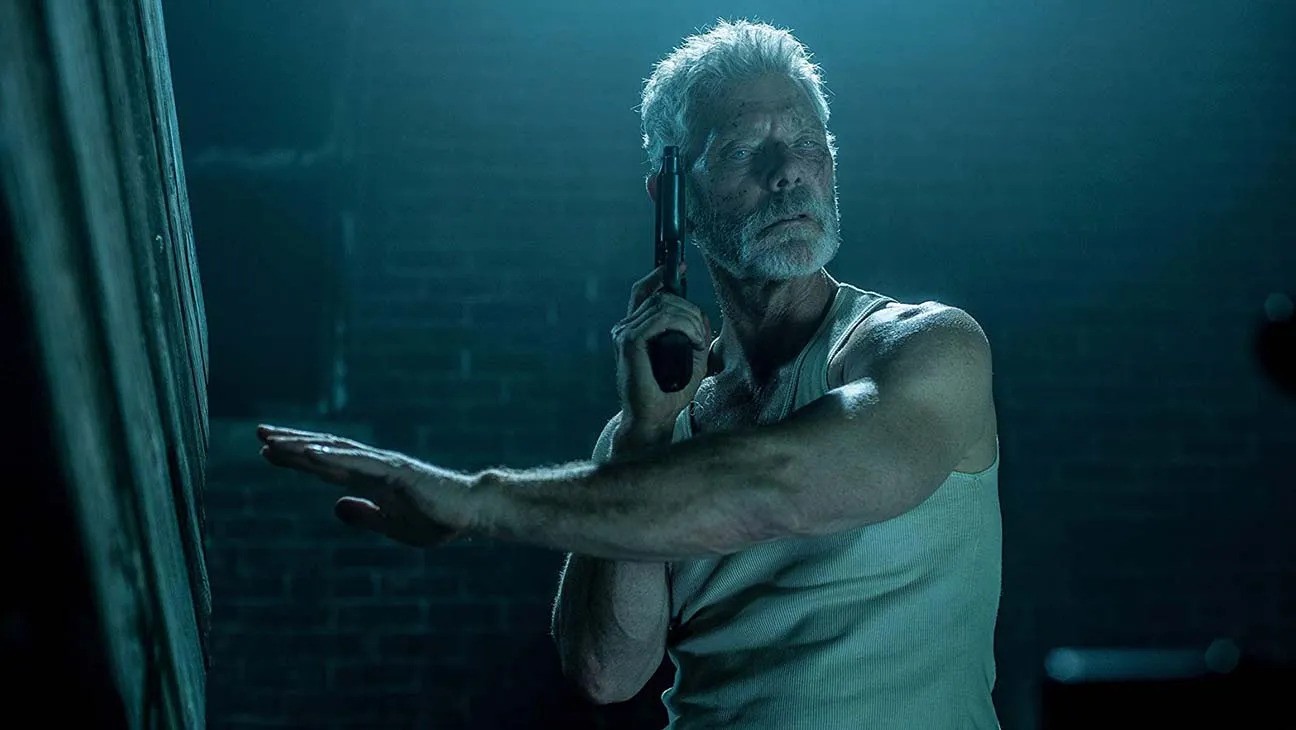
Foresight is commonly a curse, in Greek myth (e.g., Cassandra). I've argued before[8] how similar characters tragically impart fatal wisdom, and whose conspicuous (operatic) martyrdom/moratorium then extends as half-real—meaning out from Milton's Satan/Shelley's Creature and into Gothic media, at large: interrogating reality by inventing it (from Parenti to us) through theatre that bleeds gruesomely and Numinously into real life; i.e., not just composites but disabled people akin to Hugo's titular hunchback (1831) or Leroux' Fantôme (1909), etc, which workers might compare to real historical figures; e.g., Norman Nordstrom (from Don't Breathe 2, above) a kind of "gargoyle" or Black Penitent (and estranged father holding his daughter captive before dying to defend her while confessing his sins). Whatever the blind man's form or home, they share the same panoply Brennan does—one with no clear (or sacred) boundaries, while climbing Jacob's Ladder towards redemption or tumbling back down into Hell on Earth (a similar quest for power in Greek stories and Mount Olympus, but also Neo-Gothic novels; re: Shelley's Modern Prometheus). Such things commonly have one foot in Hell, speaking between history and fable to impart forbidden knowledge via redemption. It's both dualistic in its "sympathy for the devil" commentary on the human condition, under capital, and whose eclectic variables—both social and material—repeatedly define (and redefine) what it means to be human, through allegory (re: Plato's shadows and Milton's darkness visible).
In turn, such matters (and their aching wounds) amend a larger document, one dialectically-materially forever at play/under construction, from player to player. It invites us to consider how monsters are made, but also blind in ways that go beyond a literal disease: fascism and state apologia a mental snare to fall into/walk away from while fumbling around/searching empathy out under cloak of darkness (Capitalist Realism); re: Nordstrom but also Milton, the latter a troubled man, who—famously of the Devil's party without knowing it[9]—was disabled and wanting (for) redemption: a medically blind asshole, having his three surviving daughters dutifully transcribe Paradise Lost (1667) from their father's dreams every morning into Latin (the lingua franca of older times, still in use by church-goers and intellectuals, below). In doing so, Milton—a devout Christian—accidently redeemed himself while remaking Satan; i.e., no longer a dogmatic Biblical tool, but the sexy atheist symbol of the British Romantics (and torn, empathetic precursor to Shelley's Creature; re: Broadmoor): crying out, "Better to rule in Hell than serve in Heaven," under capital and its increasingly Protestant world. Laden with trauma, rebels are commonly undead—seeking redemption while rising from the grave, their allegory intact insofar as capital/the state commodify and workers reclaim them, mid-abjection; i.e., inside copies of rebellion, which Brennan saw 8chan as, and which other makers of media have struggled with along different points of entry (re: the Matrix franchise starting rebellious, being corporatized, then wrestling with its own allegory decades later).
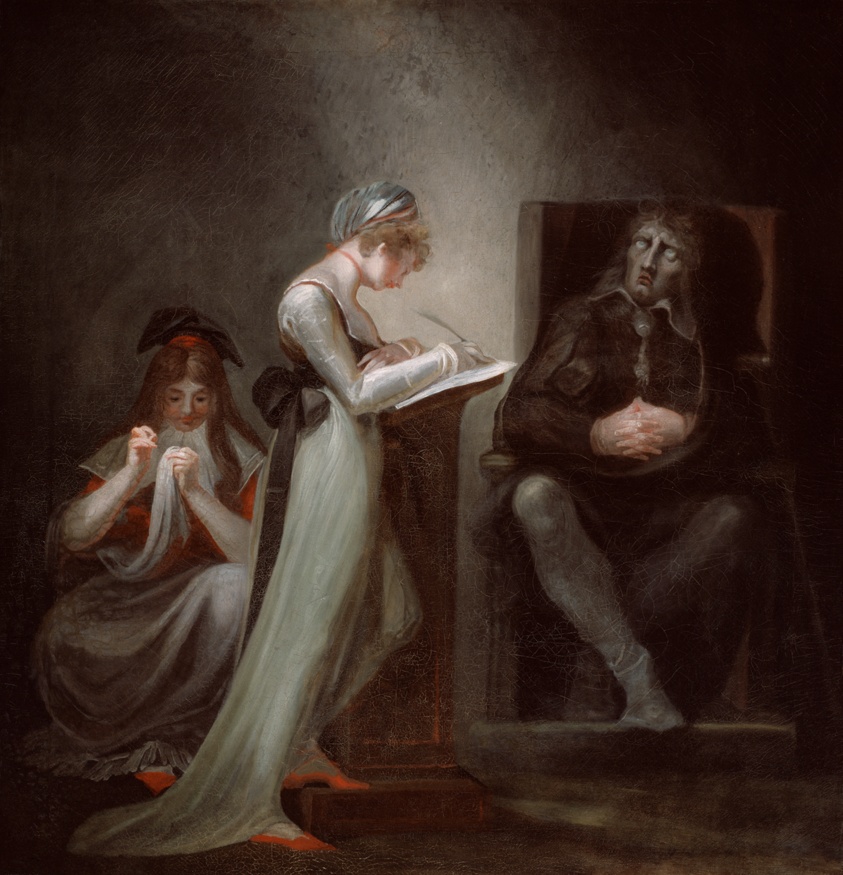
(artist: Henry Fuseli)
Back to Brennan, who Labelle forgave for his own creative actions; i.e., as formerly abhorrent, Brennan going on to demonstrably renounce and deconstruct his own hateful deeds (and products of those deeds), time and time again (a curious inversion of the creator/creation dynamic and master/slave argument, Milton's poetics made). If this isn't redeeming then I don't know what is, but redemption applies on a case-by-case basis; e.g., Vader reclaiming his lost humanity without apologizing for empire. The moral isn't easy forgiveness; it's redemption, which again takes work by the person seeking penance from those they actively harmed—not a simple pardon, but death of the old self someone turned into and currently rejects: by recognizing one's choices through hindsight/upon reflection before voluntarily chasing new metamorphosis. So does one's sight tie to one's creative acts and abilities as equally forbidden by the state, should they threaten state power (and why states allow stochastic violence [namely fascism] to persist, versus stamping them out). Creation enables redemption by letting the scales fall, fostering empathy as something to see through state lies: as technological extensions of ourselves, which reflect hidden sides we commonly abject/communicate through allegory to discover after long being ignored. Workers must, lest they surrender their power to a larger predatory system, abdicating responsibility ergo blame to become apathetic towards and through creation—as a means of sight, from Plato to us.
Per case, the creator has the power to create but also recognize said power making them partly responsible (which varies, depending on one's privilege and oppression). This means they aren't a machine, which—when weighed alongside the bourgeoisie and capital—makes the worker(s) being duped partly to blame for their labor as coming from them (despite alienation, Marx): to empathetically "reap the whirlwind," viewing the consequences by facing of one's hand in making monsters for ill/using them for harm. Like breaking a wrongly-healed bone, forbidden sight changes how we see—meaning in ways that deeply hurt, because they warp how workers think about the world being viewed, per case. It's still an act of redemption; re: reversing abjection by embracing our role in a larger process (not denying it through division and violence, below).
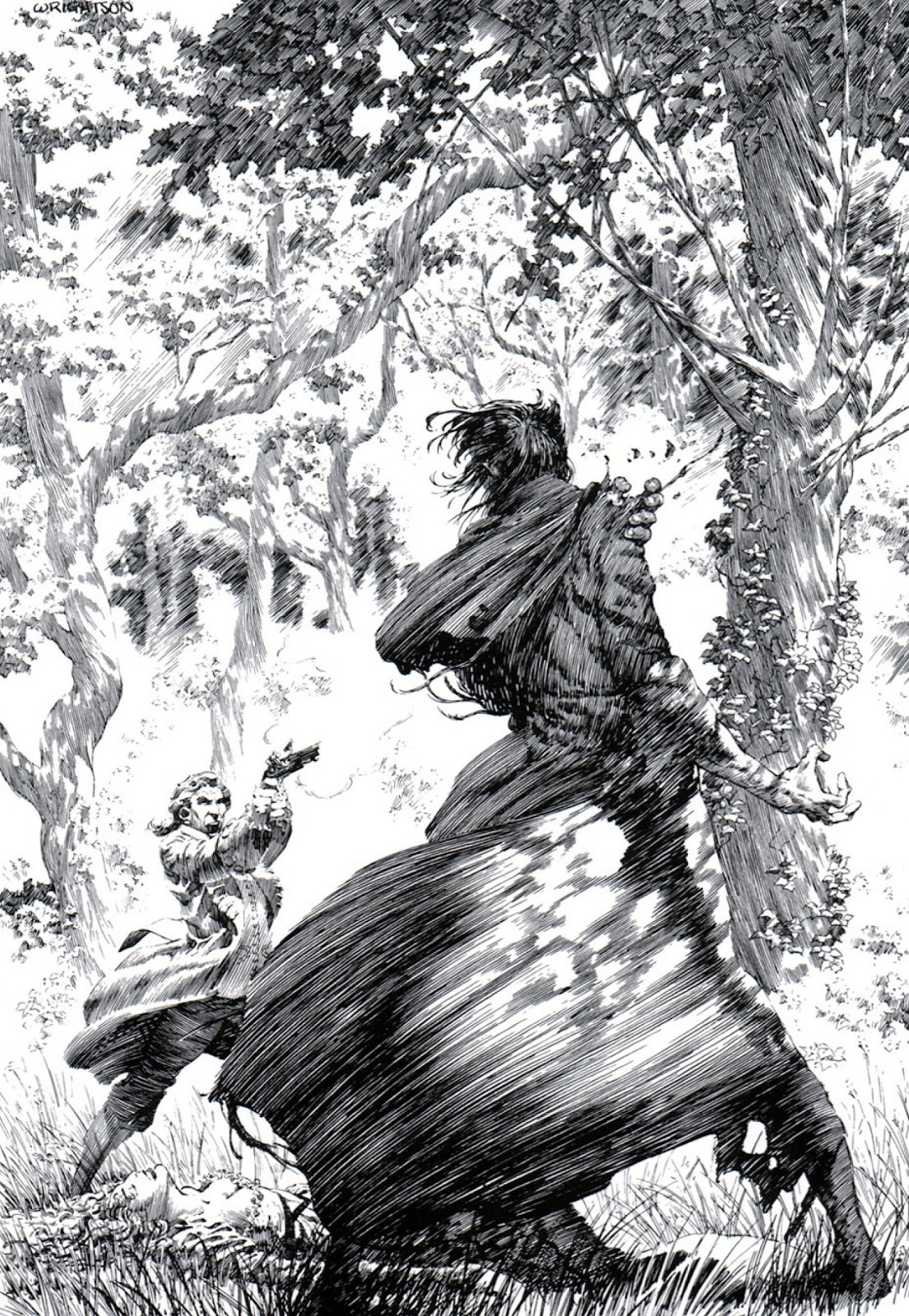
(artist: Bernie Wrightson; cited: "Psychosexual Martyrdom")
By relating to our creations, including their affect on said process (therefore workers and the world, at large), redemption levels the proud. Doing so, "on the Aegis" (a means of troubling reflection), requires genuine humility over a long period, enacted in good faith; i.e., not when the patient is young and dumb, but "sad and wiser" through age by trying to unlearn past mistakes and faulty knowledge: to foster empathy from apathetic states of mind, whose Platonic "shadows" we're trying to escape while grappling with them (and doubles of them, doubles of doubles, etc). Doing so requires the viewer(s) to actively question the world around them, interrogating what they see through play as making up who we are since birth; it takes maturity to enact, which many people never grasp while defending the system across all registers. As Morpheus (an allusion to the king of dreams, from Greek myth) explains:
The Matrix is a system, Neo. That system is our enemy. But when you're inside, you look around, what do you see? Businessmen, teachers, lawyers, carpenters. The very minds of the people we are trying to save. But until we do, these people are still a part of that system and that makes them our enemy. You have to understand, most people are not ready to be unplugged. And many of them are so inured and so hopelessly dependent on the system that they will fight to protect it.
This—like most of the movie—alludes to Plato's cave being the world; i.e., something to see and play with, however untrustworthy and illusory it feels, to describe reality as a form of play shaping existence; re: Gloggins and I (through the illusory nature of games informing trust and choice), but other authors, too; e.g., Gustav Le Bon: "The masses have never thirsted after truth. They turn aside from evidence that is not to their taste, preferring to deify error, if error seduce them. Whoever can supply them with illusions is easily their master; whoever attempts to destroy their illusions is always their victim" (source: The Crowd: A Study of the Popular Mind, 1895). Seduction, then, becomes a Faustian bargain—specifically one that favors state power—when it removes responsibility from workers, turning them into machines to give and receive state force; i.e., while placing blame onto state victims, mid-simulation; e.g., whores (and unpaid labor as a whole): as things to pimp, per hauntology, without irony.
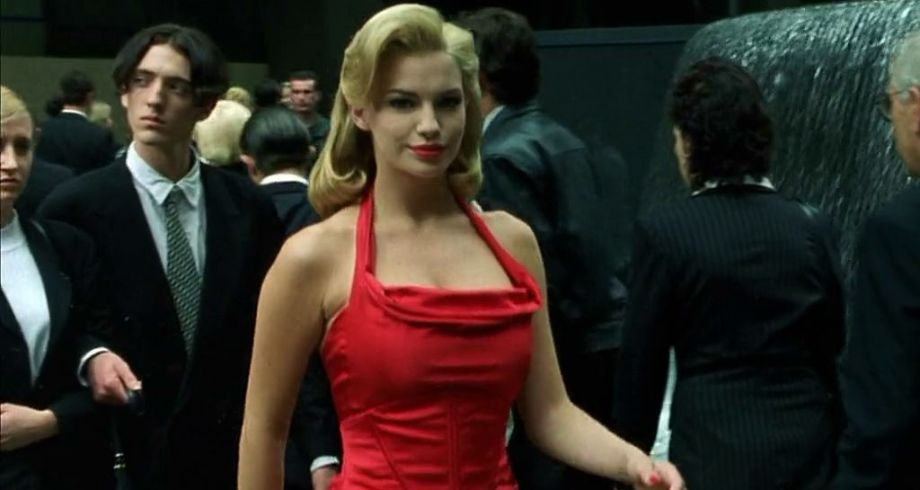
The same dangers also appear in Mark Fisher's Capitalist Realism (2009), which warns of moments in vision where it's easier to imagine the end of the world than of capital; i.e., settling for inert heroic fantasies versus any meaningful attempts to change the system—one destroying the world behind illusions, which crumble through a faltering belief/dying faith in romance-as-decayed: crumbling to hide state shift inside reactionary fantasies of power and revenge (under neoliberal markets [and media] engendering fascism). My book series (and subsequent essays) build on such things, sharing the same stage (and language) our enemies do; i.e., while seeking empathy mid-abjection, a Communist (and gay-anarcho) Gothic helping workers challenge default views. By facing those painful realities—ones historically afforded by state positions—workers seek redemption-as-Promethean-Quest: one to uncover labor's role in self-deception, while paradoxically playing with shadows; i.e., to an ironic degree, one that frames apathy as blindness taught by the state when irony is absent.
From Plato to Le Bon to the Wachowskis, Fisher and I, all speak to benefactors of class division (and similar intersections of privilege under state models, concerning culture and race) as historically-materially enacting self-deception, ergo destruction: a self-imposed state of grace/willful (and senile) ignorance turning blind eyes; i.e., from inside Plato's cave, extending outwards and inwards—of those in power "martyring" themselves (through argument), then blaming the victims DARVO-style while still being victims, themselves. Under capital, the ruling class (and their servants) belong to a particular "hell" of predation, its inability to reflect furthering abjection to stymie redemption: those who act as creators but don't take responsibility. Divided from creation, state defenders grow stupid under Capitalist Realism because they can't create (thus think) for themselves/are "in the cave," as it were: "Capital breeds stupidity because it alienates the ruling class from creativity as something they own but do not do, themselves. So they become addicted to/dependent on workers" (source YouTube Community post, Persephone van der Waard: 3/13/2026, in response to Quarantine Collective's "The Best Can't Win," 2026).

Capital instills blindness framed as "sight," one workers break only by blaming themselves and their actions for capital's continued existence (a system of exploitation created by slavers and servants of slavers). So it bears repeating how Brennan consciously left 8chan, his place filled by Jim Watkins in 2018, who—it also bears repeating—is either Q (of Qanon) or someone who knows him: "I definitely, definitely, 100 percent believe that Q either knows Jim or Ron Watkins, or was hired by [them]" (source: Adrienne LaFrance's "The Prophecies of Q," 2020). The process is ongoing on, shared over time, happens between workers. In turn, fascism relies on scapegoats, apathy and conspiracies to work; conspiracies, while built on kernels of truth, make up realities that become alternative—i.e., to the one we live in while alive (with Qanon touching on state predation [re: Epstein] while blaming it on Jewish people): blinding spaces of escape and violence that expand, under Capitalist Realism, when dissidents "break the spell" of state lobotomization (the latter "zombifying" workers; re: Principal Skinner—tilting Quixotically at windmills to demonize children [above]—speaking to the death of parody/an undead lack of consciousness under so-called "Zombie Simpsons," 2012).
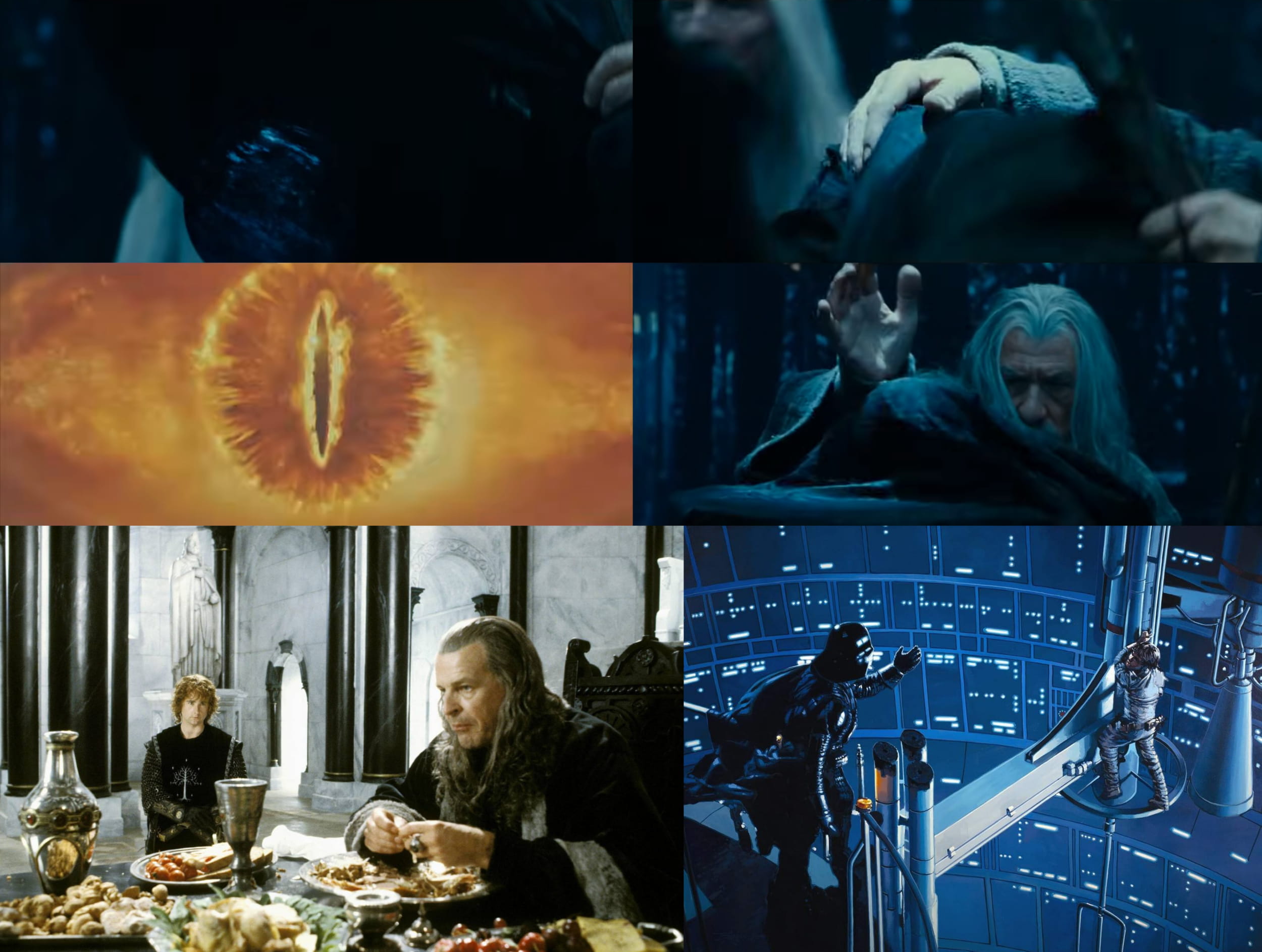
(exhibit 0: The revenge fantasy is commonly a blinding one, suitably clouding the vision [and minds] of those eager to accept easy solutions; i.e., chances at revenge from capital, whose empty promises cheat workers through grievance dressing "revenge" up [the avenger doing the elite's dirty work]:
Shadows and theatre walk arm-in-arm, serving the state since Plato's Republic [c. 375 BC]. Challenging such device and delusion means playing with shadows, doing so deliberately to paradoxically expand imagination beyond state aims [ergo Capitalist Realism]. This "darkness visible" generally occurs through neo-medieval theatre of a campy sort, which isn't without issue; i.e., bread and circus, one whose "Star Wars problem" shares among similar centrist stories weaponizing shadows to conceal [and perpetrate] state harm; e.g., Lord of the Rings [1954] or Starship Troopers [1959] unable to solve capital's "failures," merely scapegoat its regular function [exploitation] to further abjection: state heroism something to gentrify and decay in demand of enemies, per ethnocentric territory [re: "A Note About Canonical Essentialism," 2024]. Out from Greek monomyth and Beowulf [c. 750] into modernity-looking-backwards, heroes like Aragorn, Rambo, and Ripley canonically divide into state-serving copies. All somewhat regressive, delusional, and blind, Campbell's "hero with a thousand faces" [1949] smuggles state villainy to aid in state predation: on heroic, half-real/retro-future bodies that "police Omelas," in bad faith [re: "Overcoming Praxial Inertia," 2023]. Every pimp needs a whore—someone whose rape helps preserve state predation, dressed hegemonically up as "order" that decays by design. Workers may camp canon consciously to "leave the cave," freeing their minds, but share the same stages [and shadows] state defenders use [re: "The Camp Map: Camping the Canon," 2023].)

(artist: Andreas Marschall)
In keeping with Plato's cave, some people—when faced with the illusion of reality as not only false, but blinding and perfidious—promptly go mad; i.e., killing empathy while blinding themselves, preserving state hegemony (re: Vader tormenting his son, Luke, to either recruit or kill him under fatal vision, a various counterparts doing the same to themselves and those around them, above). Others embrace the truth, thereby changing through work to see through state power (which illusions control in game-like ways; re: The Matrix but also Andor [2022] and Severance having their own "playgrounds"; see: footnote five, below): exposing "home" as fake, hostile, invaded, and ultimately vampiric under capital making workers lonely and sad, by also occupying reality as both highly stylized and artificial seeking truth being cryptonymically sold to them[10]; e.g., Neo being a former corporate employee who, no longer a slave to the grind, "follows the white rabbit" (versus Satan formerly serving Heaven chasing Eve); i.e., as something workers change from inside, and practicing through replicas that capture the feeling of the lie "at play." A given "matrix" isn't just a "cave," then, but suitably maze-like—one whose labyrinth "playground" houses monsters (which heroes are) that, under these arrangements, give and receive state force: as something to uphold, yes, but also subvert—bending reality to our will/serving actual rebellion inside cartoon façades haunted by fascism's false double, below).

This isn't "new." The most famous (and generative) example, at least in the West, remains Plato's aforementioned allegory—a text endlessly cited and revived, from the tragically imperfect heroes of Greek plays (re: Sophocles) into future simulacra/cryptonymic shadows of theatre, out from an expanding state mid-abjection; e.g., Ovid's Metamorphoses (c. 8 AD), Beowulf (author unknown), Dante's Inferno (c. 1304), Cervantes' Don Quixote (1605), Shakespeare's Macbeth, Milton's Paradise Lost, every Neo-Gothic novel ever (1764, onwards; e.g., Lewis' The Monk and Radcliffe's The Italian [1974 and 1797] wrestling with state lies[11]), Blake's Marriage of Heaven and Hell (1790), Austen's Northanger Abbey (1803), Shelley's Frankenstein, Carroll's Alice in Wonderland (1865), Baum's Wizard of Oz (1900), Orwell's 1984 (1949), Hitchcock's Psycho (1960), Dahl's Charlie and the Chocolate Factory (1964), Herbert's Dune (1965), Levin's The Stepford Wives and Strugatsky Brothers' Roadside Picnic (1972), Le Guin's Those Who Walk Away from Omelas and Solzhenitsyn's Gulag Archipelago (1973), Foucault's Discipline and Punish and Forman's Cuckoo's Nest (1975), Scott's Alien (1979), the retro-future cyberpunks of the 1980s (e.g., Blade Runner or Brazil, 1982 and 1985), Total Recall (1990), Shirow's Ghost in the Shell (1995), the Wachowski' sisters Matrix franchise[12] (1999-2021), Gondry's Eternal Sunshine of the Spotless Mind (2004), etc—all the way to the 2010s' Gamergate, Qanon, and similar stories being suitably half-real, conspiratorial: the aforementioned "dupes" of Capitalist Realism tilting at windmills (or shadows), but also heroic explorers in various liminal spaces seeking human connection (which empathy is); i.e., out in terrifying deserts[13] thereof, science fiction historically concerned with journeys for truth as beset by dangerous illusion (re: as my book series routinely explores, vis-à-vis Gloggins but also Shelley's Promethean Quest chasing Numinous vapor trails; see: "The World Is a Vampire" and "Making Demons," 2025).

Gothic—in describing the shadows of real life—has exploitation and liberation occupy the same nightmare space. Mid-abjection, such stories' holistic apocalypse pointedly displays empathy's societal dearth, doing so in highly operatic ways (re: Star Wars, Paradise Lost, etc). So their allegories target how capital explains and ultimately tears empathy away (while feeding on it behind hyperreal illusions—especially through increasingly abject, parasitoidal extensions of the ruling class, above). Per Plato, their doing so happens through powerful illusions that workers maintain, which themselves operate under all-powerful governments, corporations, churches, what-have-you, as "pulling the strings" (and generally when neoliberal capital decays into fascism, mid-crisis): looking at "shades" like Brennan to learn from them—effectively raising the ghost of a man I had no idea even existed before today to then learn from/pass along his redemptive deeds (or Rashomon-style echoes of them, 1954). At the very least, he loved dogs, a redeeming quality in its own right and one that shows a caged humanity complicated by these reveals: a demonstrable lack of the so-called "perfect abuser" and victim, alike (with me, in writing this post, effectively painting the portrait of a man I didn't know/whose complicated reputation and legacy precede and proceed him). We're all devils, under capital, empathy a creative exercise in imagination and history eloping towards redemption—work(er)s-in-progress whose development either arrests or relaxes, accordingly.

(source)
The point here, Bay explains (and I agree/reinforce), is that radical transformation is possible/can happen while "inside the cave"; i.e., that people seemingly "beyond redemption" (or otherwise "divorced from reality" thus without hope of change) can radicalize in the opposite direction; re: Milton's Satan, Shelley's Creature, etc. Doing so happens under highly messy circumstances, the penitent-in-question ignominously trapped between media and the world that media (Gothic or no) poetically describes in duality. So did my husband cite not just Brennan's eulogy but also R. Derek Black; i.e., their own testimony to a former life (thus name), The Klansman's Son: My Journey from White Nationalism to Antiracism (2024) written by a trans woman who—in seeking empathy on the road to redemption—came out/wrote their memoir after leaving the Klan behind:

(source: Matt Lavietes' "Ex-KKK Leader's Child Comes Out," 2024)
As a child, Black came out to the world as a white nationalist on the syndicated daytime talk program The Jenny Jones Show in 1999. Then, while trying to hide their white nationalist credentials as a college student roughly a decade later, Black was outed in a student-run online forum. In 2013, Black came out yet again: In an article published by the Southern Poverty Law Center, Black condemned white supremacy and their famous family’s ideology and came out as an antiracist. / Now, in the memoir The Klansman's Son, the 35-year-old child of former Ku Klux Klan leader Don Black and a close family friend of the notorious former KKK grand wizard David Duke is coming out as transgender (ibid.).
In doing so, Black was dead to their former selves; i.e., someone to relate to, upon reflection/postmortem, thus creating a new, more empathetic self on the corpse of the apathetic old: "in the sight of this world he/she is now dead" (the "second life" queer people experience often[14] one that eats their fake straight past, absorbing it to aid in radical transformation). What's more, Bay shared both stories with me, and I—the Gothic scholar with an excess of empathy (and troubled past)—acted in ways Bay probably predicted; re: nerd sniping the mortician of a poetic sort, raising the dead to heal from trauma, step-by-step.
Fascism, then, is a disease that requires heeding the dead; i.e., a process called "the Wisdom of the Ancients," in Gothic circles, and "of the Ancestors," in Indigenous ones: Bay is Irish-Maori, valuing my perspective as I pull forbidden (or lost) knowledge up "from Hell." Doing so takes pre-capitalist ideas into projects of post-scarcity within capital, disguising themselves as theatre and "mere play" (re: Gloggins, me). Remembering that Gothic Communism is both holistic and dualistic, so is abjection when raising empathy through redemptive acts changing how we see—not simply of the dead being raised, but the living dead and those who hail and hark them above ground, Hamlet-style (c. 1599):
I am thy father's spirit,
Doom'd for a certain term to walk the night,
And for the day confin'd to fast in fires,
Till the foul crimes done in my days of nature
Are burnt and purg'd away. But that I am forbid
To tell the secrets of my prison house,
I could a tale unfold whose lightest word
Would harrow up thy soul, freeze thy young blood,
Make thy two eyes, like stars, start from their spheres,
Thy knotted and combined locks to part,
And each particular hair to stand on end
Like quills upon the fretful porcupine (source).

(artist: Henry Fuseli)
Literal death aside, people "die" while alive; i.e., they change under grave circumstances (so to speak) that, while we're born into places that shape us, we are not slaves to them/forever blind, should we choose; e.g., I am not a slave to the woman who raped me, nor the conditions that sent me hurtling towards them, during COVID (re: "I'm a Rape Survivor" from "Raising Awareness," 2025). The same goes for Brenna alongside Black, LaBelle, and similar people born into cults, crime/police/military families, etc, under capital; i.e., as a heteronormative system of theft that feeds through open lies, namely illusions of reality that many refuse to question (which, again, takes work by acknowledging one's own hand among shadows); e.g., queer people as "heralds of Styx" (the moth a symbol of death/radical change, below), which capital/the state commonly fetishize (on either side of the Atlantic): as serial killers/men in dresses (vampires), to abject/gag non-token actors in straight hearts and minds (re: blaming the whore as monstrous-feminine, but I digress). We're warlocks who practice "black magic," burned at the stake but not before the state has its way with us/pimps us out, mid-abjection (a witch hunt tied to various moral panics; e.g., gay panic a police crusade—one "rescuing" damsels distressed by "degenerate" fags, below).

(artist: Dawn Baillie)
To counteract such orders (and redeem ourselves, mid-abjection), workers radicalize through other people (dead or alive); i.e., as social beings, redeeming through change as an ongoing enterprise informed by past examples: cryptomimetically shaping us, from cradle to grave, as born to accept or reject our chains. Whether queer and/or disabled, non-white, etc, as similar positions of alienation (that differ through flavor and degree), doing so gets harder as time goes on but isn't impossible/can be taught through intersecting dialogs of redemption that Gothically mirror Brennan's (e.g., me coming out at 36 requiring facing my straight side as a source of shame/past harm, the tragedy of delayed development eclipsed by the joy of my coming out). Queerness, then, generally denotes a radical position that tends to "lean left," insofar as conservative politics generally won't allow it anymore than it would disabled people (the Nazis and Soviets, alike, framing queerness as "degenerate"; re: "State Vampirism"); i.e., redemption is an act of self-preservation tied to self-reflection (and -definition) that "strikes back"; e.g., military[15] trans woman Chelsea Manning blowing the whistle (and inspiring her Sense8 [2015] double, below): the trope of the queer hacker[16] crossing back around into real life—with Manning "cucking" tech-bro billionaire (and perpetual divorced dad/giant Nazi), Elon Musk, by dating his ex-wife, Grimes. So while the state tokenizes queer folk into military roles, Manning escaped the cave in classic fashion: "We'll steal your wives."

Similar transformations to Black and Manning can be seen with the Wachowskis, but also myself as likewise "laboring within blankness[17]" to escape society's norms: a radical transformation, one Gothically interrogating heteronormativity and the state, side-by-side (we fags live to stir the pot). So, while I never found myself in exactly the same conditions that might radicalize me—i.e., through grievance like Brennan was, internalizing ableism to birth a monster state actors weaponized against him ("spending the token," as it were)—I also study reactionaries/toxic environments, ergo understand how they recruit from broken homes like mine (a queer woman): to tokenize different people, including disabled people like Brennan. Milton was right, then; the mind is its own place—a given minority nerd often aware enough, at a tender age, to see their abuse, per case, but often weaponized through their labor (thus creations). Thus, redemption becomes necessary. If we are to evolve, it happen generally on the ashes of prior embarrassing creations.
So are things like 8chan made—the mad scientist (and childish outsider) trying to "fit in," while seeking connection in abject ways. Escaping those things that devour creativity (and pervert it into state tools/scapegoats) means understanding who we are—both in ways that shake us to our core, but also test our ability to remember where we come from; e.g., the Creature: "It is with considerable difficulty that I remember the original era of my being; all the events of that period appear confused and indistinct" (source). It's always a dice roll, and similar strains of fascism comport a "den of scum and villainy" robbing cradles, over time; re: through seductive lies founded on actual grievance and revenge: those ranging from early 20th century examples, onto Star Wars and early neoliberal cases, onto the "Pirates of Silicon Valley" (1999) and Bush-era shenanigans (which include ICE and the Patriot Act)—all followed by Gamergate/the Manosphere, Qanon, incels, and the TERF movement of the late 2010s (the latter two introduced to me by another ex, a non-binary person who helped radicalize me into leaving the closet: Plato's cave for gay people, and one said radical went back into, effectively selling out; re: "Non-Magical Damsels and Detectives," 2025).
Conclusion (feat. Beethoven, Byron, and Bojack Horseman)
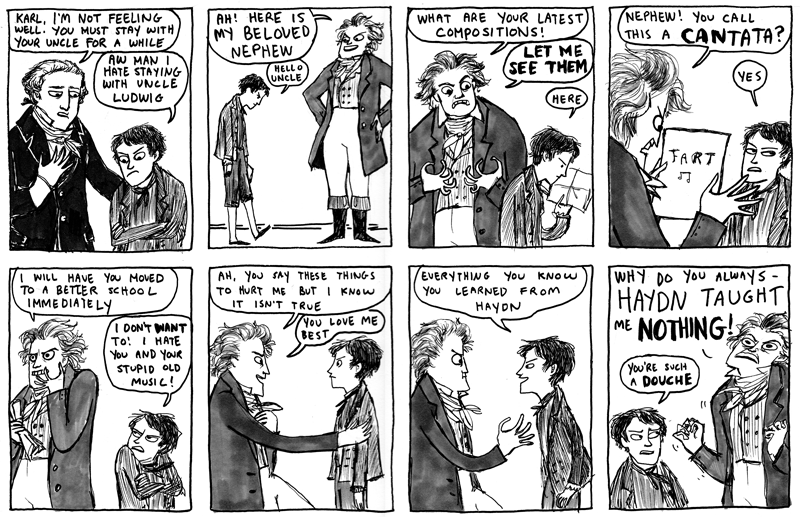
(artist: Hark, a Vagrant)
Speaking of dice rolls, lets conclude the essay on empathy as something to seek; i.e., by speaking to the eclectic, random nature of real-world redemption stories tied to media (autobiographical or otherwise); e.g., Beethoven, Byron and Bojack Horseman alongside Brennan (again, random). Call it a thought experiment.
Beyond Brennan, the world is full of such redemption stories among historically historical figures with a legendary status—meaning one that describes the very conditions, accident-of-birth, that made them necessary when challenging fascism; e.g., Beethoven, warts and all (above): "Prince, what you are, you are through chance and birth; what I am, I am through my own labor. There are many princes and there will continue to be thousands more, but there is only one Beethoven" (source: Rick Fulker's "Why Beethoven Snubbed Princes and Put His Music First," 2016). Ever the sour grape, Beethoven would likewise critique Napoleon
"On May 18, 1804, the French council of State declared Napoleon Emperor of the French. Upon hearing the news, an angry Beethoven crossed off the Eroica's first inscription to Bonaparte. (11) 'So he too is nothing more than an ordinary man,' he cried out" (source: John Clubbe's "Beethoven, Bryon and Bonaparte").
doing so among the company of men who were, themselves, also far from perfect (also check out Existential Comics, who do the same thing but with philosophers. e.g., Karl Marx, physical media, and dialectical-materialism, 2026):
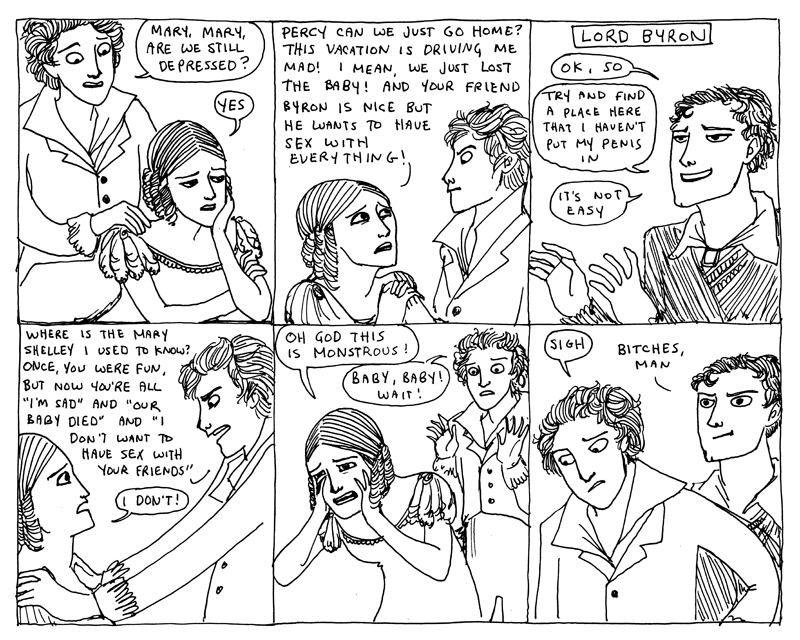
(artist: Hark, a Vagrant)
Redemption isn't always serious, on its face. Alas, whether silly or serious, many workers who "need Jesus" (redemption) do not "pull a Beethoven" (or Brennan, for that matter). Instead, they merely accept their fate; i.e., "knowing their place" inside a predatory system that conveniently favors their position under capital: to not change, neither themselves nor the world they connect umbilically to that's sucking them dry but slower than others further from the in-group.
To that, fascism employs the same redemption rhetoric, just in reverse; i.e., through said stories (and their underlying realities), which classically place people in harm's way to engender predatory behaviors. Thought shapes under capital to maintain capital—meaning as state vampirism fast-tracks workers towards radical backslides: into fascism as a mythical "point of no return," a given dupe "Caesar crossing the Rubicon"; i.e., as king-for-a-day scapegoats seemingly "beyond redemption," suddenly being threatened with poverty anew (thus undeserving of empathy for having "caused it"; e.g., TERFs; re: me, vis-à-vis Porpentine and Federici; see: "Policing the Whore," 2024). No one is "immune"; anyone who can escape should be studied as to learn from their mistakes but also their successes/desire to change—re: Brennan, but also myself, Vader and Lovecraft, etc (the latter who, again, maneuvered late in his short life, seemingly away from racism; see: footnotes).
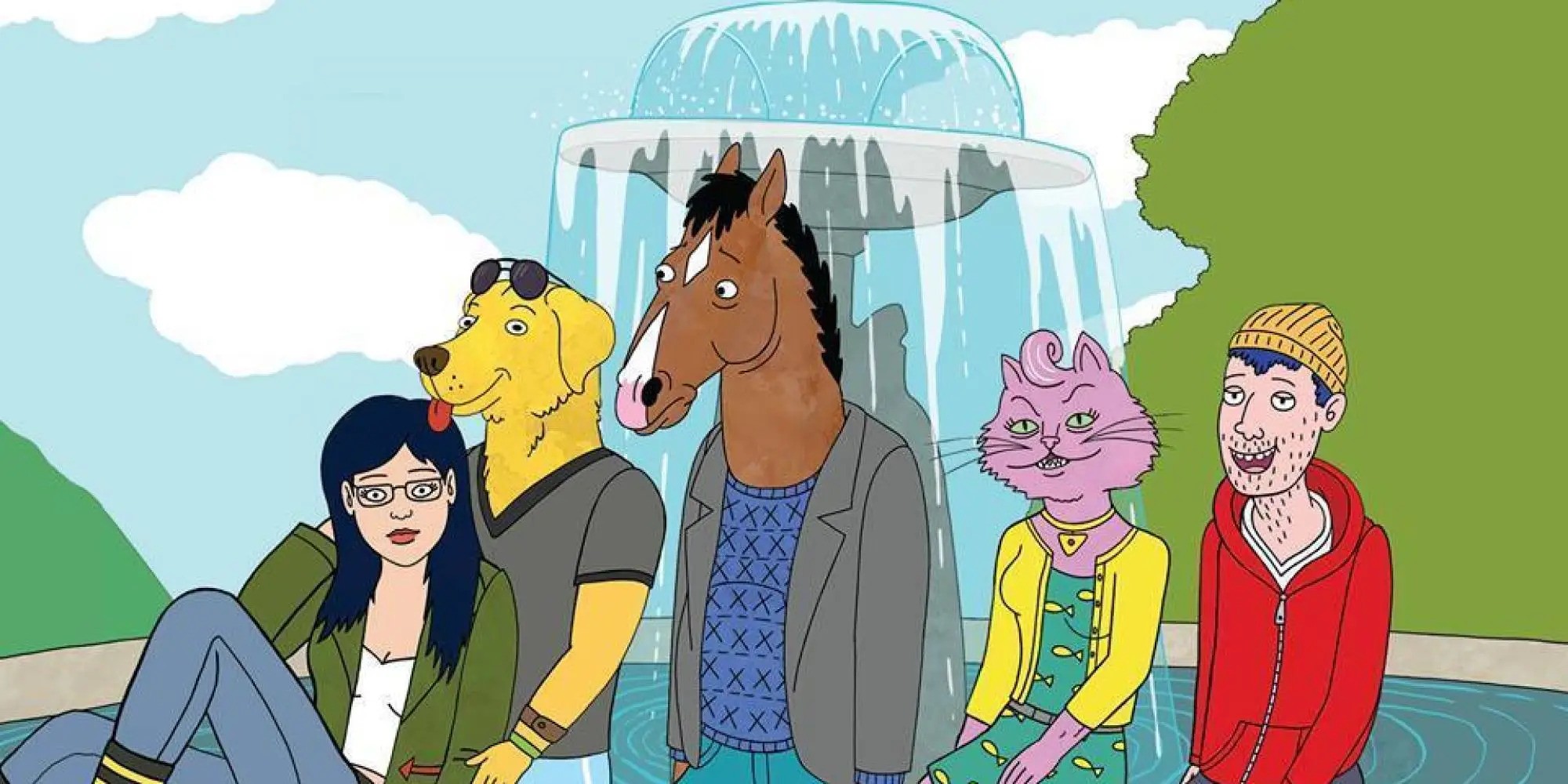
The takeaway, here, is that people aren't set in stone, nor is fascism a fatal disease like rabies; i.e., that kills its host because catching the disease = an irreversible death sentence. It's really not, poetry (Gothic or otherwise) demonstrating thought as tied to the material world and vice versa, onstage and off. To that, such things translate to empathy towards a variety of so-called "lost causes"; e.g., in the same conversation, Bay also introduced me to Bojack Horseman (2014). Same idea as Brennan seeking redemption by disowning 8chan, except the catalyst is addiction versus brittle bone syndrome (or an allergy to girls; re: incels). Imperfection is the point, starting from a low point that describes reality as liminal; i.e., moving towards a desire to change that doesn't always go as far as we'd like, while we're alive, but perhaps further that we give ourselves credit for and which others use to develop a better world after we die: as part of a larger chorus echoed among similarities playing with pain to push towards empathy and redemption (the opening premise, in Bojack, being how the hero—a talking horse, no less—gradually becomes disillusioned with his show's bogus, televised [and for-profit] view of "real life").
[1] To an extent, yes, but never fully away from it, either—an idea explored not just by me (re: "Mandy, Homophobia and the Problem of Futile Revenge") but other authors, too; e.g., Logan Nance, who writes:
Howard Phillips Lovecraft was a prominent horror author of the 1920s and 1930s, who helped pioneer the cosmic horror genre. Lovecraft’s racism is well known, but most of the literature on Lovecraft is from literary scholars, not historians, and the works which attempt to connect Lovecraft to his times are lacking. His many letters have been overlooked as historical sources, and many authors perpetuate a false belief that Lovecraft repudiated his racism as he grew older. Lovecraft engaged with a variety of different beliefs about race, such as a racist interpretation of eugenics, anti-immigration nativism, and scientific racism. Lovecraft did undergo a shift in how he perceived certain racial groups such as Poles and Italians, shifting slightly from a biological understanding of race to a more cultural one (which focused on inherited traditions, customs, and values common to a particular race), but this shift did not apply to African Americans, whom Lovecraft still considered biologically inferior up until his death in 1937 (source: "Popular Purity: Change Over Time in the Racial Views of H.P. Lovecraft," 2023).
This being said, it's not unheard of for black authors to use Lovecraft's racism against him; i.e., as part of something positive, antiracist:
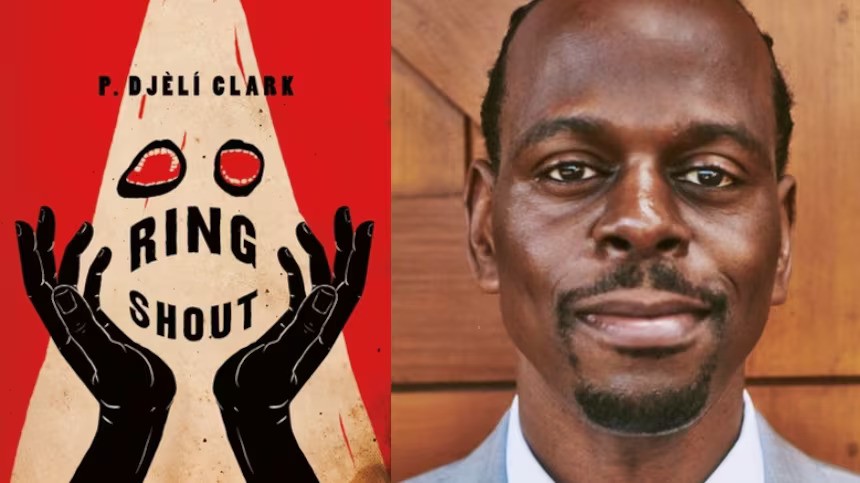
[P. Djèlí] Clark's most recent book, Ring Shout, is a story of the rebirth of the Ku Klux Klan, aided by dark sorcery and monsters. He says Lovecraft's own themes and ideas can be used against him — and white supremacy today. / "We took the stuff that you created, and in many cases you didn't have our characters at heart, you didn't have people who look like us at heart, you actually had us in very negative roles, and we're gonna take it from you. And we're gonna flip it around," Clark says. "We're gonna do what we want with it, and there's nothing you can do about it. My writing is not an ode to Lovecraft, it is more so a jab" (source: Matthew Lazin-Ryder's "How Writers Are Turning H.P. Lovecraft's Racist Work on Its Head," 2021).
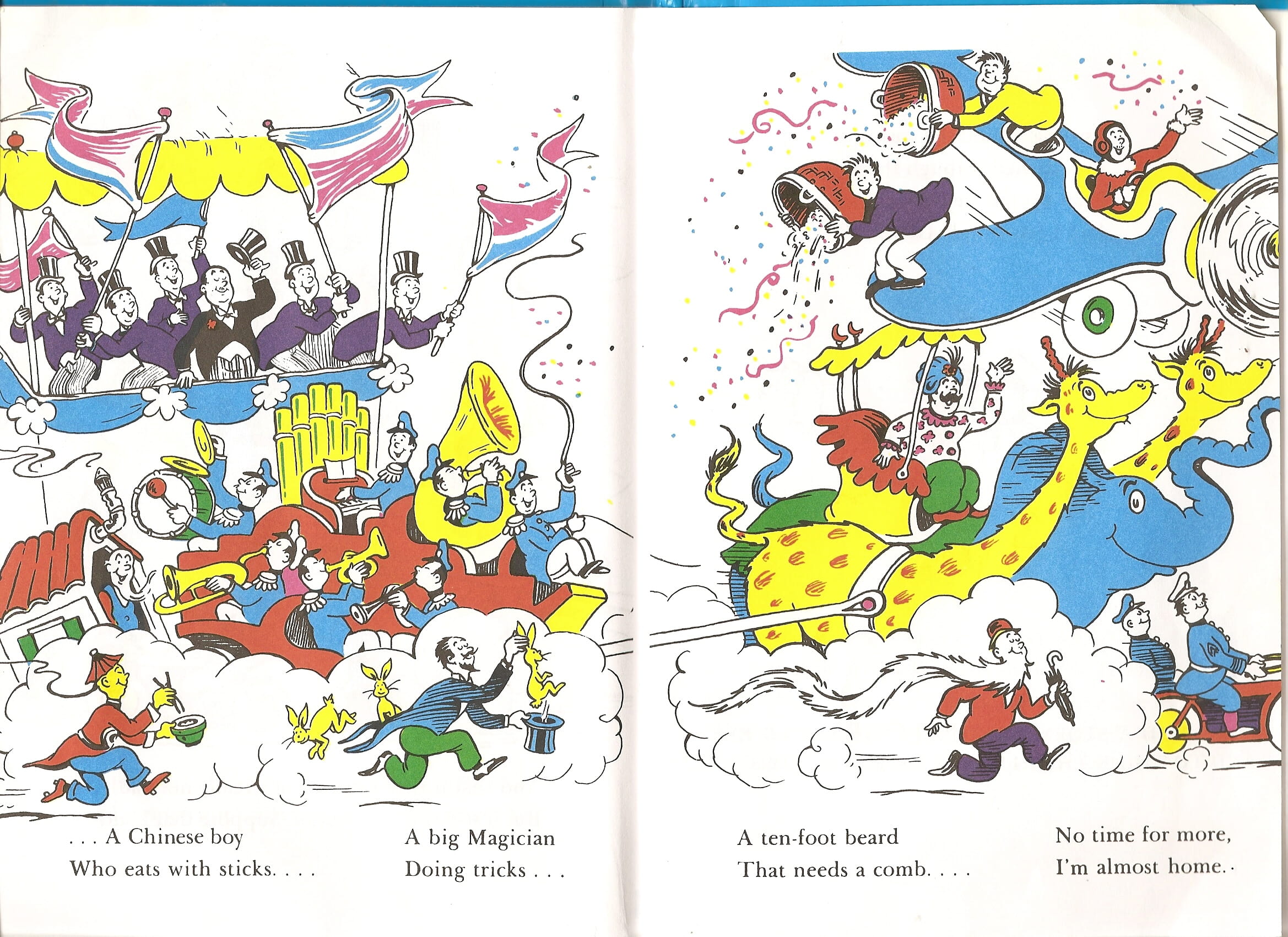
The fact remains that Lovecraft himself, despite his racism, actually evolved—meaning he moved over time away from a strictly biologically essential worldview whose continued shift was cut short by cancer (dying in 1937, aged 46). This is undoubtedly being charitable, as whether Lovecraft would have continued towards rejecting racism outright remains open to speculation; i.e., as other racist men of the same time period would eventually make fully-formed changes to their views on race, albeit ones that occurred slowly over several decades; e.g., Doctor Seuss:
While the vast majority of the works he produced are positive and inspiring, Ted Geisel [aka Dr. Seuss] also drew a handful of early images, which are disturbing. These racially stereotypical drawings were hurtful then and are still hurtful today. […] Mulberry Street was written in 1937. By contrast, the much-beloved The Sneetches was written in 1961 just as the Civil Rights Movement was well underway. Ted wrote The Sneetches as a parable about equality. By drawing bird-beings, he transcended the boundaries and pitfalls of using humans as characters, and allowed all readers to relate to the characters as best they could. On March 2, 2016, President Obama agreed with Dr. Seuss telling a group of interns: "Pretty much all the stuff you need to know is in Dr. Seuss. It's like the Star-Belly Sneetches, you know? We're all the same, so why would we treat somebody differently just because they don't have a star on their belly?" (source: "Dr. Seuss Use of Racist Images," 2024; cited: "Green Eggs and Ha(r)m," 2024).
(source)
Rome wasn't "burned" in a day. Furthermore, so many "pull a Nero," fiddling in ways that maintain state powers, thus predation. Again, it's all a dice roll, awareness and solidarity things to strive for under discouraging forces (surveillance and police violence)! We shouldn't erase such things, but preserve, exhibit and understand them in totality. This includes recognizing that, while Lovecraft and Seuss were racist, other men like Rod Sterling and, later, Frank Zappa were anti-racist. Yet, the likes of them worked inside the same basic "Gothic" as shared by openly racist men, operating under widespread moral panics capital demands (race or otherwise); i.e., dialectically-materially through a shared aesthetic, therefore code fought over/with in half-real territories of play (which allegory [and the hidden meanings therein] involve).
[2] Not to be confused with Professor Jiang's weird, Rasputin-level predictions through something he calls "game theory." Something of an academic con man after Jordan Peterson, other people have covered Jiang more recently after he dropped his mask (calling him a CIA plant, among other things; e.g., The Kavernacle's "Professor Jiang is a TOTAL FRAUD," 2026). As I write,

I came across some of his videos a year or so ago, where he's responding to students while teaching different concepts. I liked some of his ideas on Marx and neoliberalism; e.g., "the revolt of the elite," which wasn't [one] I'd heard before but it made sense. Same idea with the tyranny of the dying (old bourgeoisie) under capital, and the Roman death river theory tied to Israel and its genocide. Yet, I saw other videos that had Jiang flip-flopping and arguing through different works divorced seemingly from dialectical-material analysis. It was like he suddenly had a knowledge gap/was working from an entirely different toolset and not for the better. Also, I saw another YouTuber, Quarantine Collective, discuss Jiang's dubious use of "game theory": to make broad predictions about geopolitics in a very Jordan Peterson, grifty kind of way. / To summarize: As a ludologist who employs Marxist ideas though an an-Com (not Marxist-Leninist) approach, I think Jiang's a broken clock at best, but haven't seen him use game theory [to be able to critique him] (source YouTube Community post, Persephone van der Waard: 3/5/2026, in response to Extra Andrewsim's "What's The Deal With Professor Jiang?" 2026).
Note: Since writing this, Jiang's reactionary antics have only escalated further (The Kavernacle's "Why Nazis LOVE Professor Jiang (He Is DANGEROUS)," 2026). —Perse, 3/20/2026
[3] "Rape" something Walpole's castles played with, by putting it in quotes/camping it through calculated risk—the unique configuration of dead metaphors, tired conventions and neo-medieval pastiche something that inspired ludo-Gothic BDSM as I conceived it (re: "Prey as Liberators," 2024): playing with "rape" to give survivors/potential victims an element of control, yes, but also ability to instruct future generations in coded language:

(source: "Room for Both: Horror and Social Commentary in 3 Japanese Classics," 2018)
[4] A hero blind to his own folly who, after solving the riddle of the Sphinx, unknowingly marries and impregnates his own mother after killing his father (the realization, post-revelation, he responds to by famously gouging out his own eyes—the complex immortalized by Freud, but the act alluded to in countless pieces of media; e.g., Parade of Funeral Roses [1969], above).
[5] From Jesper Juul's "half-real zone between the fiction and the rules" (source), but for which I apply through ludo-Gothic BDSM to "grey area" liminal spaces: of power and performance between fiction/nonfiction.
[6] Defined by Jodey Castricano, in Cryptomimesis: The Gothic and Jacques Derrida's Ghost Writing (2001), as "a writing predicated upon encryption: the play of revelation and concealment lodged within parts of individual words" (source); i.e., "writing with ghosts." I expound: "As Castricano writes of cryptomimesis [...] in regards to ghosts, I would argue the same notion applies to all undead, demons and animalistic egregores; i.e., writing with both as complicated theatrical expressions of the human condition under Capitalism [and the state]" (source: "Paratextual Documents").
[7] Epstein and Poole met years before the former's death, rubbing elbows in ways that coincide (at the very least) with the rise of alt-right culture into the Internet mainstream. As Ryan Broderick writes:

One of the central internet mysteries of the last 15 years is why 4chan creator Christopher Poole reversed course in 2011 and brought back the site's politics board, which is called /pol/, or "Politically Incorrect." It would become the staging ground for Gamergate, the 2016 Trump campaign, and the far-right populism wave that swept the world in the back half of the 2010s.
A version of /pol/ was attempted two times before it finally stuck. First, as /n/, which was meant to be a section for news content. Which ultimately became the "transportation" board in 2008. And then again, in 2010, when Poole launched /new/, largely as a way to quarantine the overwhelming amount of support on the site for Ron Paul's 2008 presidential campaign. Poole shutdown /new/ in January 2011, telling users at the time, "As for /new/, anybody who used it knows exactly why it was removed. When I re-added the board last year, I made a note that if it devolved into /stormfront/, I'd remove it." (Stormfront is one of the oldest Neo-Nazi communities on the web.)
So it has never made much sense as to why Poole would ban /new/ for being a racist hell hole and then, barely a year later, launch /pol/, a board specifically designed to be a racist hell hole. But buried inside the newest batch of files related to the Epstein investigation is a possible hint as to what made Poole change his mind. He met with Epstein the day before /pol/ was created.
On October 20th, 2011, Boris Nikolic, a venture capitalist and former advisor to Bill Gates, sent Epstein the Wikipedia page for Christopher Poole, writing, "There is a cool guy (KID) that you should meet." Four days later, Nikolic followed up, asking Epstein, "How did you like moot? He is very sensitive so be gentile." (Poole's username for years was moot or m00t.) "I liked [him a lot]. I drove him home, he is very bright," Epstein replied. Nikolic went on to write that, "he will be a friend" and that he is "one of the greatest hackers" (source: "Epstein Met Moot" from "Here's How Epstein Broke the Internet," 2026).
Again, it's all about the company you keep, and Epstein—a known pedophile and billionaire sex trafficker for other billionaires—kept company with the founder of 4chan, a reactionary cesspit helping breed the very conditions fascism used to enter the mainstream (all symptomatic of capital decaying by design, mind you, but still important to acknowledge). "Opinion is the wilderness between knowledge and ignore," argued Plato; Gothic, I argue, is the domain of imagination that public opinion, like a fatal portrait, bleeds into and out of (re: "Understanding Vampires: 'What Is (Problematic) Love?'; or, Positions of Relative Ignorance to Relative Clarity," 2024).
[8] Re (from Volume Zero): "the popularity of the monomyth during seminal get-togethers like Star Wars remains entirely haunted by 'Darth Vader' as the fascist 'death father' who threatens to turn the young knight errant, 'Luke Skywalker,' into a false copy of the black knight instead of a white knight as also being a false copy [...]—the horror being there is no escape from the death knight because white knights serve the state, thus conduct or assist in genocide during the return of the good king/revenge of the bad king" (source: "Thesis Body," 2023).
[9] As Blake explains, British Romanticism courting Milton's inkblot antihero; re (from Volume Zero's "Notes on Power," 2023):
Milton exhausts a tremendous amount of energy explaining the pre-existing intentions to Christian hegemony and its warlike hosts' heteronormative purpose, but the entire paradigm is challenged by Satan making monsters for himself: he can create, transform and do things previously thought exclusive to God. It may be to a lesser degree in terms of sheer time spent in the perceived moment of things, but solidarity is a seditious proposition told through the Arch-Fiend as the Byronic rebel of the story: the anti-hero having the power to rule in Hell by making pandemonium (a place whose name means "all demons") and tempting God's children with it. This power is beholden to the same principles of performance, but offers the ability to organize differently than God does: horizontally versus vertically—i.e., anarchistically and anachronistically for workers and the oppressed.
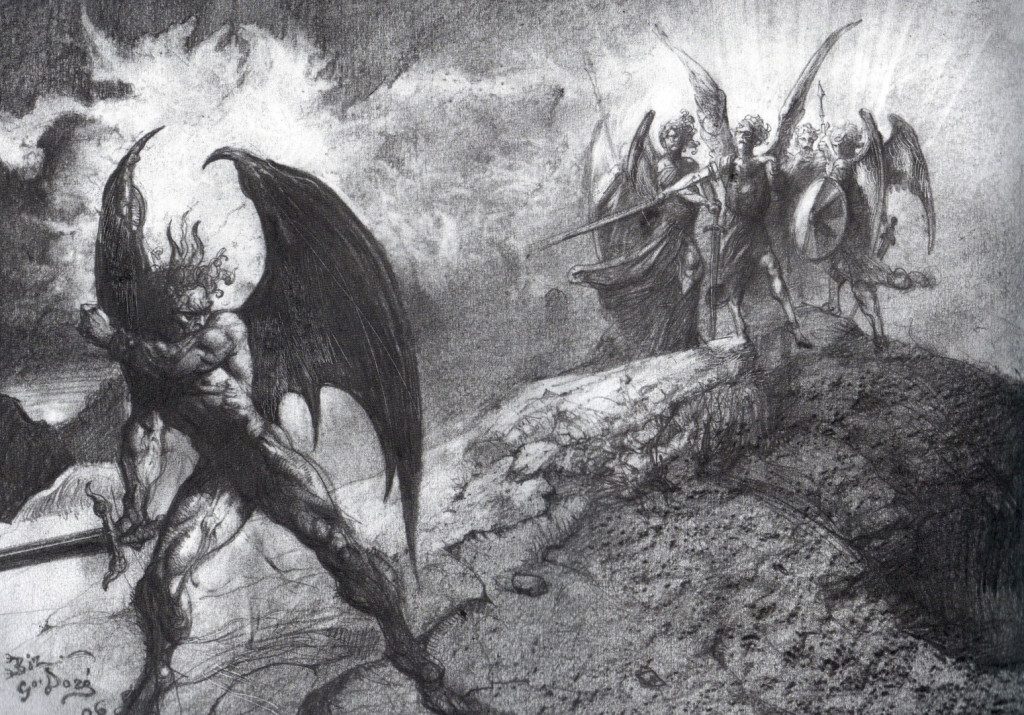
(artist: Gustave Doré)
Because of its allegory as having such awesome revolutionary potential, Milton was described by William Blake as being of the devil's party and not knowing it; or as Jamal Subhi Ismail Nafi writes in "Milton's Portrayal of Satan in Paradise Lost and the Notion of Heroism" (2015),
According to [Tesky] Gordon, it was Blake who expressed this view most emphatically by saying that Milton was of the devil's party without knowing it. He expressed this opinion chiefly in relation to the portrayal of Satan who, according to him, has been depicted as a character possessing certain grand qualities worthy of the highest admiration. Other romantic critics supported this view with great enthusiasm. [Percy] Shelley, for instance, reinforced this view when, in his "Defense of Poetry," he said:
"Nothing can exceed the energy and magnificence of the character of Satan as expressed in Paradise Lost. It is a mistake to suppose that he could ever have been intended for the popular personification of evil. Milton's Devil as a moral being is as far superior to God, as one who perseveres in some purpose which he has conceived to be excellent in spite of adversity and torture, is to one who in the cold security of undoubted triumph inflicts the most horrible revenge upon his enemy."
According to Shelley, it was a mistake to think that Satan was intended by Milton as the popular personification of evil. This argument is still very much alive and valid today (source).
In other words, Milton's story is sympathetic to the devil's rebellious plight because it supplies him with the means to escape and make trouble in ways that speak truth to power through monstrous poetics; i.e., by playing god and camping canon through the language of stigma and bias, power and resistance, undead and demonic animalization (e.g., Satan turning into a toad or a snake to tempt Eve), feeding and transformation through disguised struggle, open resistance and subversive/transgressive means of power exchange and expression that camp canon, thus fall on the side of labor and sex positivity. The British Romantics all adored Satan, but particularly the second generation of more rebellious poets (whose poiesis endeared itself to Satan's by making that which has never existed; i.e., a fabrication that favors its own campy arrangements of power and material conditions over the canonical fabrications of the status quo and its arrangements); to Byron, the Shelleys, Blake and Keats, Satan was a righteous dude, the underdog fighting from the "superior" ethical position against a giant, "all-powerful" bully while on the poetic/theatrical backfoot: the underdog from Hell.

(artist: Gustave Doré)
These aren't platitudes, but ontological descriptions of power-in-action through warring positions thereof inside the state as status-quo [...].
[10] Where cryptonymy (of a revolutionary sort) comes into effect, and well before so-called "AI" turned everything into the venture capitalist's 21st century stab at what Plato had warned about into later millennia; i.e., through the allegory of counterculture sold as forbidden sight by corporations dogmatizing sex, drugs, and rock 'n roll, and whose appropriation workers endorse or reclaim through the sales pitch offering blank parody (as Jameson calls it); re (from Volume Three's "Transgressive Nudism, or Flashing Those with Power," 2025):
As Se7en123 writes,
The song, 'Megalomaniac,' is meant as an ironic song to satire other punk bands that have gone mainstream and over their own heads. In this song, KMFDM talks about how they are the best thing since Jesus Christ. The video is the perfect ironic statement, filled with marketing, and even a disclaimer stating "WARNING: THIS VIDEO HAS BEEN CREATED FOR PROMOTIONAL PURPOSES AS A PART OF THE MARKETING STRATEGY FOR THE SINGLE MEGALOMANIAC BY KMFDM"' (source: Genius).
I would argue its branded "counterculture" and "appropriate rebellion" has a German, shock-flavor similar to Rammstein, but also bands like Sepultura (re: exhibit 94c2b, "Obliterating Phoebe") or System of a Down (re: "Toxic Schlock Syndrome"). There's rebellious potential, but the allegory—as something to activate—is still packaged and sold to a mainstream (white, middle-class) audience; e.g., The Matrix
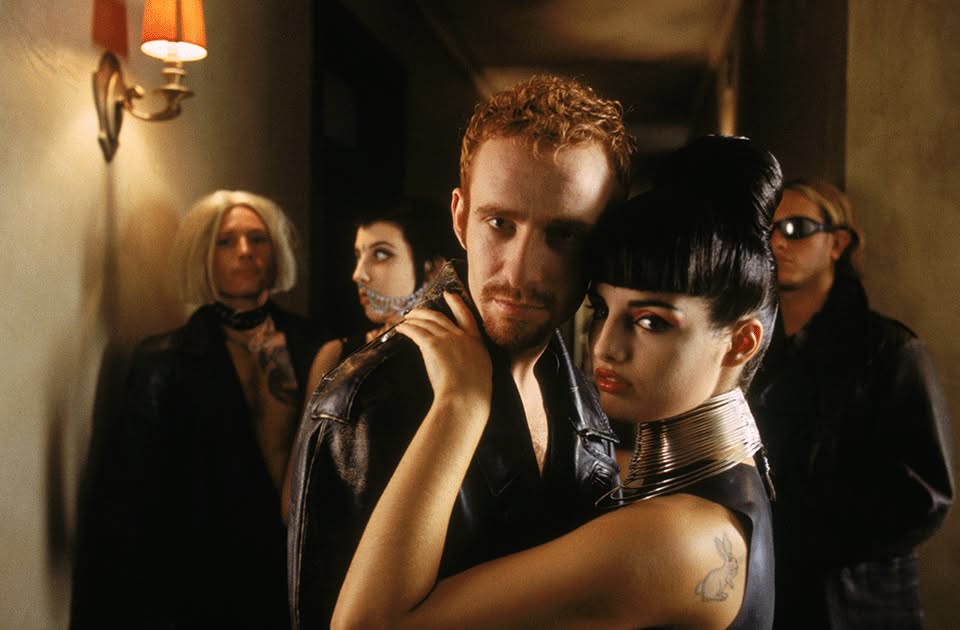
and Neo being the party-goers' "own personal Jesus Christ" while chasing the aforementioned white rabbit's liberatory potential amid bread-and-circus escapism (see: "'Follow the White-to-Black Rabbit'; or Magic, Drugs and Acid Communism" [2025] for further examinations of this idea): navigating style and aesthetics as a means of moving power by performing it, seeing it, working with and within it, etc, as "set free" within prison and pastiche; re: "the Matrix has you, Neo," followed by Neo "learning to fly" by the film's end. Again, the state and labor share the same stages (and shadows), in duality. However, only workers seek "real" as a means of connection—one they must find "among the fakes," the simulacra, etc, that "live in Gothic times." Updated by modern tech to exploit workers, so much online has become fake in Gothic ways (or "hyperreal," as Baudrillard explains); i.e., because that's what capital wants (and has the means to enact—the ruling class wedding the Base to the Superstructure through state-corporate mergers, abusing computers under technofeudalism/surveillance capital enacted by different facets of capital; e.g., tech bros, CEOs, corporate shareholders, billionaires, celebrities, churches, politicians, and cult/military leaders, etc).
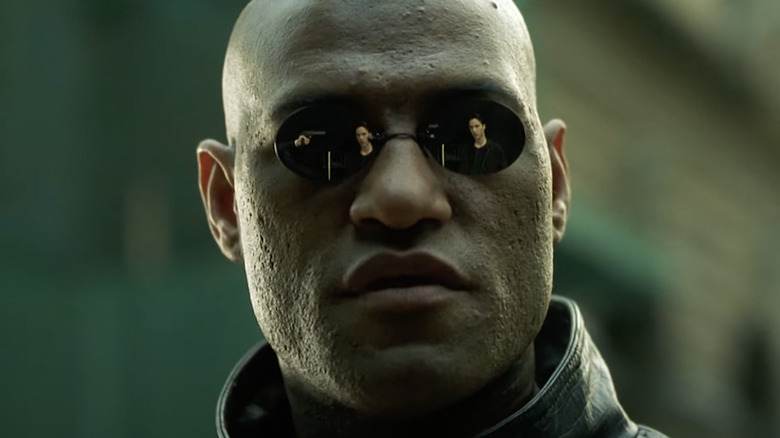
[11] Whose twinkish hero, Neo, eventually can see through state illusions, but only after being physically blinded (the forbidden vision of an oracle, the film's queer directors granting the male action hero a classically female role and boon/curse). So "I'm trying to free you mind" become a poetic, performative means of ignoring the eyes; i.e., as tools of state deception into the brain, a place unto itself that workers—from Milton, onwards—must Satanically reclaim: "The mind is its own place, and in it self / Can make a Heav'n of Hell, a Hell of Heav'n" (source). Satan was a rebel threatening radical change; so was Morpheus (whose shields his eyes with not just opaque but highly reflective glasses, below).
[12] The "desert of the real," to quote Baudrillard (thus the Wachowskis, who cite him in their debut; source: Abigail Lister's "The Matrix | Explaining Jean Baudrillard and the Desert of the Real," 2023).
[13] Perhaps mostly famously (from Gothic media) with Radcliffe's Black Veil, from Udolpho (1794; "Radcliffe's Refrain," 2024)—itself alluding to Milton's darkness visible (echoing Plato's cave) that Shelley would give an actual voice (re: "Making Demons"). Per Aguirre, such stories yield an "infernal concentric pattern," one where my work alludes to Milton, Radcliffe and Shelley, et al, through Metroidvania: by questing for a palliative Numinous during ludo-Gothic BDSM (re: camping the canon; see: "The Quest for Power" [2023] and Persephone's 2025 Metroidvania Corpus vis-à-vis Aguirre's "Geometries of Terror," 2008). The spell (of Capitalist Realism) occurs through play. So does breaking it, function a means of flowing power up or down: by playing with shadows in duality (no monopolies).
[14] Everyone's different, of course. I speak of escaping heteronormativity by devouring state illusions/the nuclear model, and doing so in abjectly parasitoidal ways (re: "The Caterpillar and the Wasp," 2024); re: The Matrix (especially the first Matrix) being a highly queer film in straight, monomythic clothes—one critiquing Capitalism (and its vampirism) through a playful lens, and which invites forays into a gay underworld: "The Matrix is a very important piece of GNC media, one whose philosophical merger with action-hero tropes it camps in critique of Capitalism" (source: "Queer-/Homonormativity in Sex-Centric Canon"; written 2022, published 2025). This includes state vampirism under concentric, prison-like simulations in decay (re: "The World Is a Vampire," which explores Plato, ludology and vampirism as it pertains to The Matrix and its anti-capitalist critique).
[15] With many whistleblowers through history having military and/or hacker expertise; e.g., William Blum and Edward Snowden offering an inside scoop informing their exit from military life; i.e., as yet-another-machine to dismantle, under capital.

(source: Samuel Leighton-Dore's "A Young Keanu Reeves Starred in a 1984 Homoerotic Thriller called Wolfboy," 2019)
[16] Neo's titular "newness" a puppet for the Wachowskis: to speak to a burgeoning queer Communism through Keanu's "twink death" come back around (above).
[17] From a critique of Sense8 by Claire Light, who writes:
The Wachowskis fail to examine characters in the characters' own context. These are some of the basics of fictional world building and character development: you create the rules of the world, create the worldview, situate the character in this worldview, pick out notes of the worldview for the character to hold as a personal philosophy, motivate the character according to that personal philosophy, and have the character act throughout the story in accordance with these motivations. Missing out on any of these layers — especially the first, broadest layer of cultural context — leaves you with a character that may or may not be alive, but whose motivations, worldview, and context are a blank. And most of Sense8's characters are laboring within blankness [emphasis, me]. Again, they gain a certain amount of rootedness, but not one that is trustworthy, because they are rooted in this same cultural absence (source: "Sense8 and the Failure of Global Imagination," 2015).
By extension, the horror of the hero exiting Plato's cave is the earth-shattering revelation/reality of a broken illusion; i.e., that nonetheless exists, mid-chaos, as something to experience and overwhelm: the feeling that our world is a lie, the very groundings of "reality" a prison to house our minds in and out of stories into the material world (see: "The World Is a Vampire" from "State Vampirism" to further unpack this idea); e.g., Milton's blank verse and flirting with devilish power to, in essence, "play God"; i.e., as Mary Shelley did, when writing Frankenstein based on Milton's famous (and seditious) tale. Illusions are things to navigate, then, meaning while they inform/shape who we are. There's bound to be inertia and confusion when seeking reunion under capital's divisions, its more recent hauntologies penned by people openly of the Devil's party (as queer people like the Wachowskis are, camping monomyth stories through Plato's allegory of the cave).

In that sense, we're all "blank" to some degree; i.e., working dialectically-materially within division to rewrite ourselves/society at the same time. Few things feel as "uphill," for doing so challenges not only our sense of self, but one tied to society as something that apathetically resists change. To historically-materially preserve power's current, deeply unethical/disparate arrangements, under state models, so the ruling class and cops (their servants) crush empathy to abject rebellion/preserve state orders; i.e., by turning people into machines, mid-panopticon; e.g., the agents from The Matrix, working under constant surveillance to replicate,
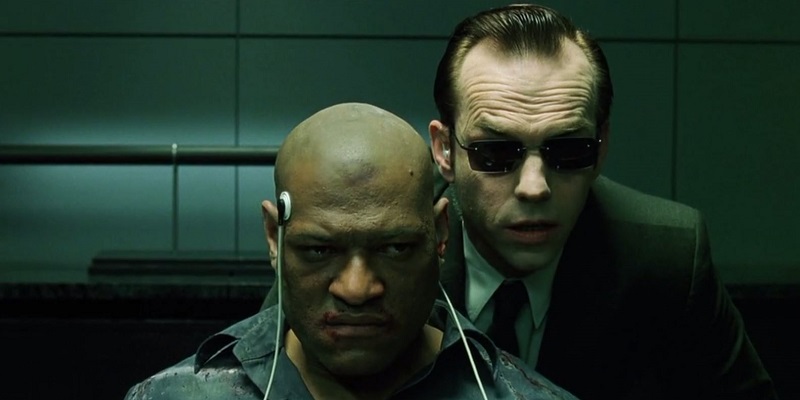
a position they then abject, as cops do (corporate or otherwise), onto their victims: as "the virus" to expunge under an eco-fascist microscope, structures of power defending themselves from "homo sacer" under permanent states of exception (re: Agamben); i.e., whether church, state, or some combination thereof obscuring ruling-class violence, "hiding holocaust" under capital behind different uncanny and sterile, but also stale, hypernormal, corporate veneers: banal deceptions—curated and streamlined like a Hugo Boss clothing manual, fetishizing the mundane under a marketable, predetermined ordering of all things (an act parodied by postmodern horror/crime movies like Fight Club and American Psycho,1999 and 2000)—hiding decay that require some degree of self-convincing to operate, mid-exploitation. It's a similar vein of thought tied to imperial, Mussolini-grade corporations in Disney's Andor and Ben Stiller's Severance: turning people into numbers that hide the carceral violence state bodies exact upon them, mid-prison, but also two (or more) halves* that grow increasingly divided from/alien to each other, which reunite/reignite during moments of troubling comparison.
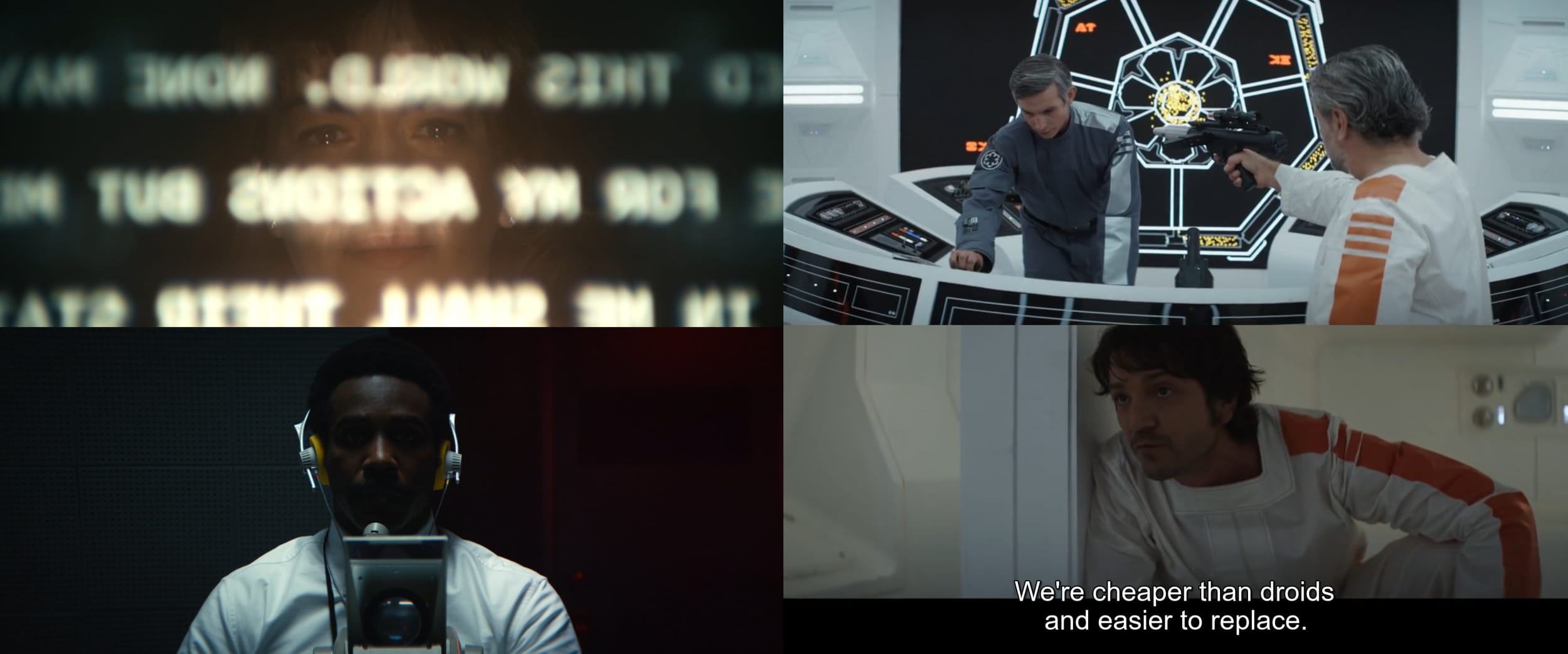
*In-group versus out-groups (and all the discrimination/division that affords, mid-abjection; e.g., H.G. Wells' Time Machine [1895] and eloi/morlock society therein echoing older ethnocentric refrains). Wherein one half (the creator) doesn't know/care the workplace is a prison, one it takes the body to (a delivery system); the other (the slave) knowing it's a prison, but whose own consciousness tragically lives and dies inside the space as always waiting for/watching them like a hawk (enterprising middle management working the panopticon while inside it to corral, police, triangulate, and betray other workers): stuck inside the body's brain-as-prison, specifically when utilized psychomachically between Foucauldian, Pavlovian spaces of control and cohabitation overlapping said function, mise-en-abyme (the corporate stomach, capital-in-small's Russian doll/space of concealment eating workers alive while chattelizing and enslaving them, chasing quotas in the shadow of dead CEOs propped up as gods):
Severance is basically "Dilbert from Hell," a place where the ruling class expect total obedience at all times; i.e., viewing nature/workers as rude machines to exploit for profit; e.g., by stealing their identities, but erasing out of existence—any who directly attack the top, but also when the "outie" retires (making them complicit, and echoing Blade Runner's slave-catcher execution of replicants: fascism-as-filing-cabinet, death a clerical dispassionate means of population control deliberately written into the paperwork). It's a wonderful critique of capital, which both rapes/decays by design and whose Protestant ethic/profit motive cultishly blurs the lines between hospital, prison and home, but also Heaven and Hell, inmate and guard: as compelled divisions of worker labor but also the body and the mind—their separation forced, coerced and monitored incessantly under Cartesian dualism raping the mind (and in more ways that one, below). It's a process overseen by a vision of the founder or leader (menticide, per Joost Meerlo, happens under totalitarian regimes). Everything is stolen, fake, hostile and dogmatic (echoing Matthew Lewis' "artificial wilderness," in The Monk). Fraternizing is likewise forbidden, but separation impossible because humans are a social species and total division drives them mad—enough to submit desperately to corporate brain surgery to get ahead, only to change their minds (so to speak) and try a more DIY variety when the corporation enslaves them:
Ergo, you can never leave, and instead are tortured constantly inside until you either weaponize mad science in response (above), or adopt corporate vision/tow the company line (of which awful actions are hidden behind seemingly banal fronts: power centers of slavery and theft [tech or otherwise] lying to workers, post-abduction and per Faustian bargain in a hierarchy of values and positions, to eek their labor out of them inside labyrinthine† uncanny labor camps/temples of abject bondage, misery and state-corporate propaganda disguised as "home," trouble-in-Paradise; i.e., until they rebel, die or both—all to keep capital alive amid constantly diminishing returns and gross perversions of nature and work trapping everyone inside to entangle, post-separation. Death always wins, every theft capital makes diminishing the owner class: as increasingly suspicious/paranoid of—but hopelessly alienated from/addicted to—nature as thing to mechanically imitate and siphon, yet still subject to its natural laws leveling them flat. The more they take, the weaker they [and the planet] become, mid-Capitalocene; the more workers seek liberation from/clarity regarding the nightmarish lies folding in on themselves).
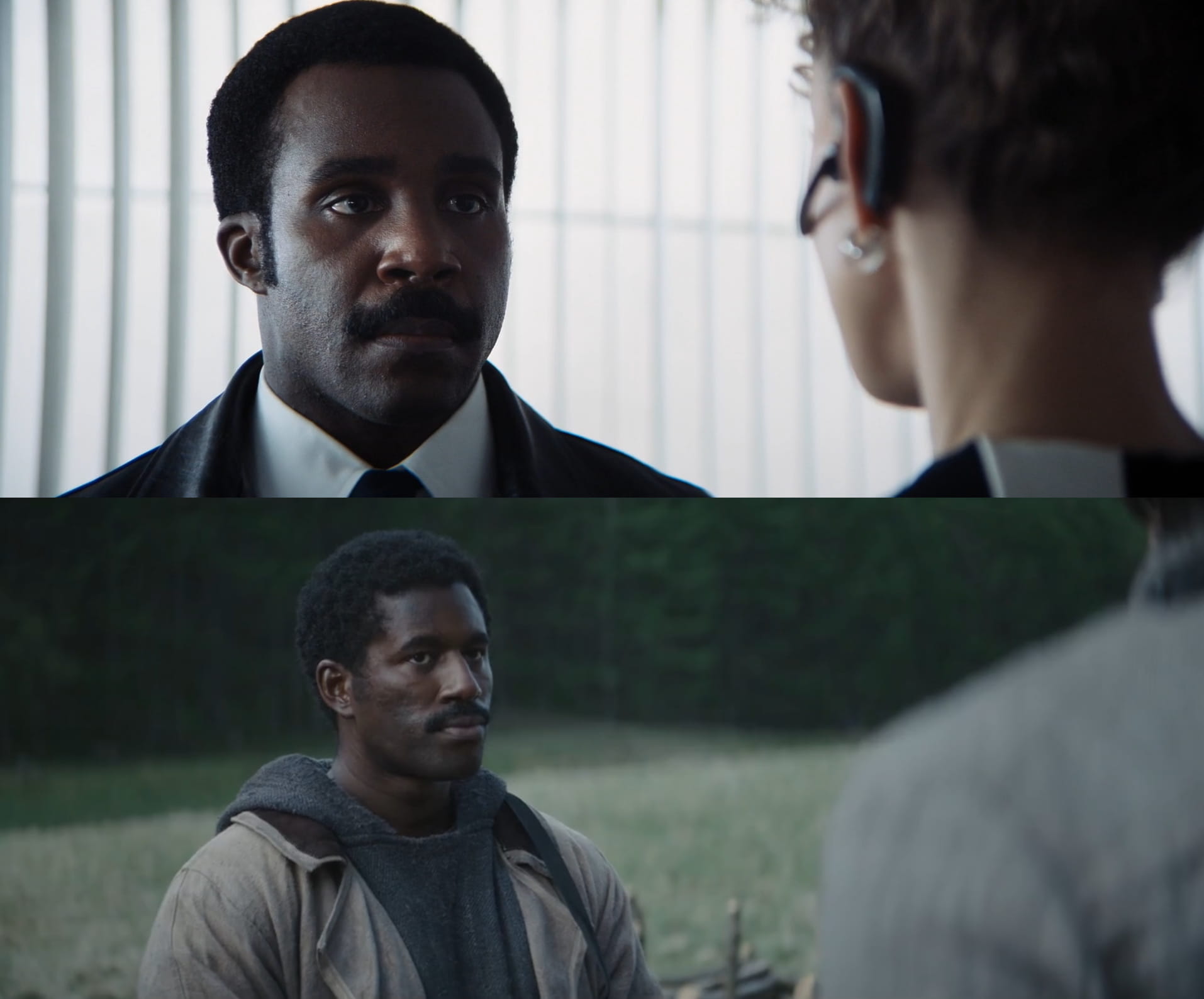
†Another cage-like system/means of control, one subject to its own rules, holy/diseased contradictions and godly myths/paradoxes (of omnipotence and omniscience) regarding work; e.g., the mapping of the maze something to forbid, yet foiled by human memory (and willpower) as something the state—like so many other things, about Humanity—can't control despite whatever soft-spoken, opportunistic, one-way lies they tell themselves and their workers (a nod to Harvey Weinstein from Green's The Assistant [2019] but also Metatron-style go-betweens, borrowing from older church-and-state Christendom into technofeudalism). This includes especially about "owning" the world; i.e., whose cognitive dissonance and estrangement (through various metaphors of autonomous violation, each infringement evoking the invasive, non-consenting procedures of castration, lobotomy and drug-induced torpor/myopia/mind control/false memories/automation/euthanasia/conversion therapy [and so on] under duress, etc) are ultimately imperfect, temporary and fated like all the rest to dissolve under hard realities: no amount of corporate force, lies and espionage can conceal trauma or make it vanish in pursuit of profit (exploiting women, queer folk, racial minorities, Indigenous Peoples, etc, while tokenizing them; e.g., black Nazis‡ and turncoats seeking redemption in the same kayfabe-style performative spheres, above). Quite the opposite, corporations aren't people nor are they gods; they're a curse, a mortal one that someday soon will happily end. Capital dies by design, after all. Ergo, it self-sabotages throughout every corner of itself to fall on its own stupid sword.
‡Racism being a theme explored throughout my work; e.g., "Back to the Necropolis" and "Concerning Big Black Dicks" (2024) from my book series, and my anti-racism essay series produced after June 2025.


