This post gives the summary and extended written argument to my seminar-style response to Dead Domain, "Gothic Ludology and Indigenous Themes in Halo (and Similar Stories)." It features a variety of references to my book series, Gothic Communism (2023), but also different research topics—videogames but also Amazons, BDSM, and more.
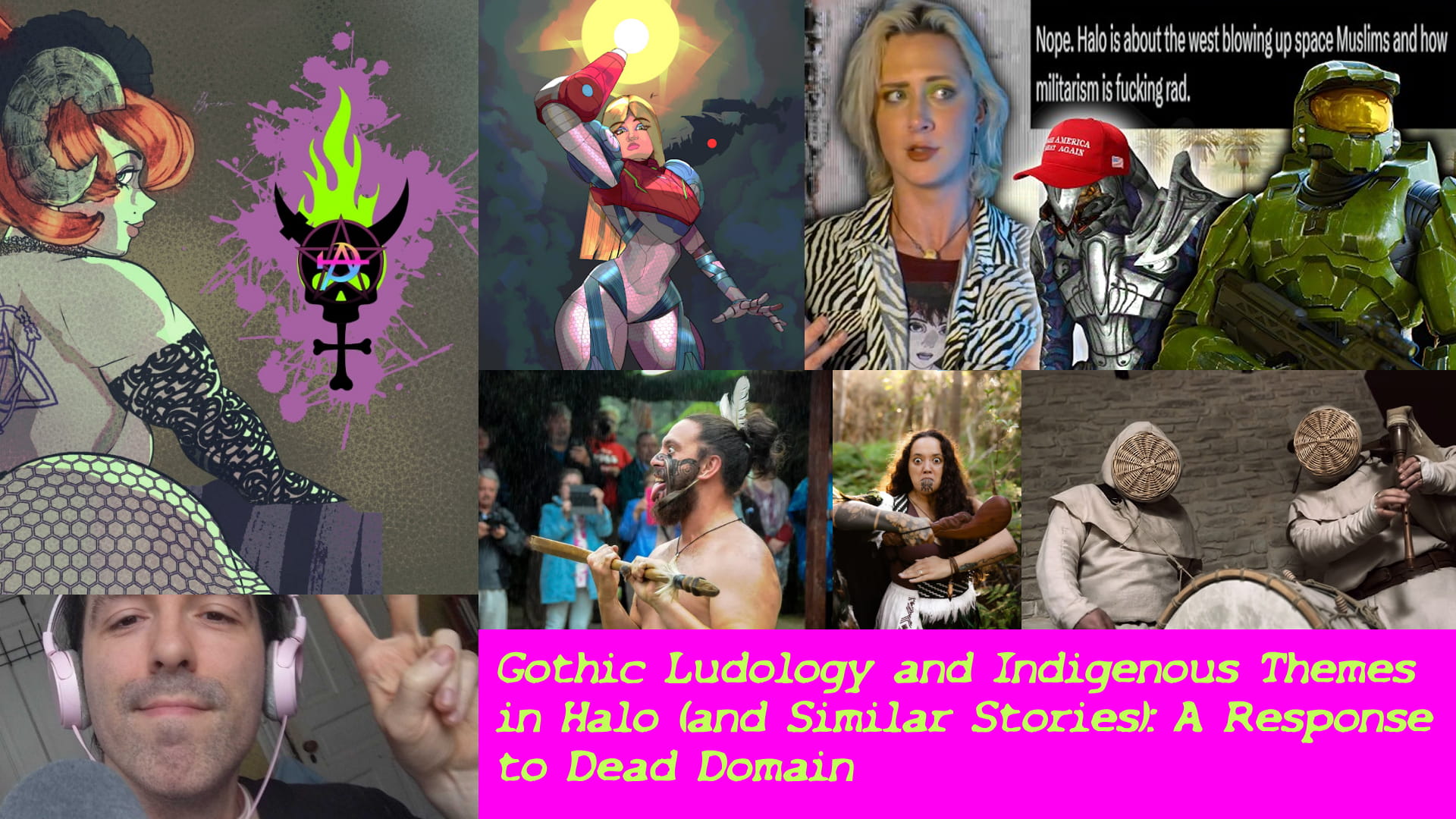
To it, I saw Dead Domain release a video on Halo (2001) and media literacy as sometimes flagging—meaning when people write off neoliberal media (most videogames) as fascist, when that's not always the case or helpful; i.e., doing so doesn't describe how these illusions work on teenager brains to uphold Capitalist Realism long after they grow up, nor how we can subvert them to reverse the abjection process therefore state predation under capital. To do so, I draw upon Gothic ludology merging Gothic poetics and the study of play, but namely my research of different shooters under neoliberalism—from Metroid and Mega Man to Doom to Halo alongside their palimpsests (e.g., Aliens, Starship Troopers, Frankenstein, Plato's Republic)—which I then marry to various Indigenous perspectives or codes I've picked up along the way (to camp space operas, which tend to play White Indian in hauntological settings): ancient kayfabe, the monstrous-feminine and Amazonomachia (Amazons and Gorgons), Maori haka and pukana, and Scottish-Irish threat displays tied to music and nature.
Thesis Portion (timestamp: 21:45)
As a Gothic ludologist and the author of Gothic Communism/the coiner of what I call ludo-Gothic BDSM, I want to avoid singular interpretations to media whose function isn't immediately obvious/can go different ways mid-confusion:

When examining Dead Domain's video, I want to stress here that such language exists in duality and is used by different sides when waging war on different registers; e.g., Amazons and/or vampirism (and different theories, too; e.g., Marx' "capital = vampire/dead labor [machines] sucking on living labor" argument). This includes play-as-teaching-device through different theatricalities (e.g., kayfabe, drag and camp) instrumental in war as both a basic argument to wage, but one that ties just as well to different praxial elements: of class, culture and race separately and together when surviving capital through said lessons—a means of survival through play by teaching better lessons that change the world, doing so in ways that raise awareness and allow for teamwork that illustrate and navigate such dialectical-material minefields over time. There, play is the vector within a larger Gothic mode no one can monopolize, land = home and home a space of play that enters Gothically into conflict. Hurt is possible in the unheimlich (the uncanny or "unhomely" space), harm is not, and lessons about harm may be taught concerning how they manifest in and out of themselves; i.e., regarding state contradictions and monopolies workers can fuck with and bend to serve ourselves, mid-play.

(exhibit 1a1a1a1_a [from "Thesis Body," 2023]: Artist, left: J. Scott Campbell; bottom-middle: Fabián L. Pineda; right: Tom Jung)
Videogames (of any genre) are canonically neoliberal bread and circuses, for example, but remain nonetheless spaces to wage and communicate ideas antithetical to capital; i.e., of war using dead metaphors by good actors and bad, "on the Aegis" (Athena's mirror shield as Creed discusses, adorned with Medusa's head as a terror device capable of great violence: the "kissing cousin of force"). There's no set purpose* to theirs or any other language, especially when divorced from overt nationalism or payment of someone (a corporation, for example); i.e., for goods that unironically facilitate genocide and exploitation of nature. Something is generally a message and code at the same time, but also shorthand standing in for different language of play simulating war (e.g., "nukes" translating to "direct damage")—with war more broadly historically relying on deception as much as brute force to operate, and whose cryptonymy as such either furthers or reverses abjection mid-dialectic (struggle) to send power vampirically up or down (up being state predation [exploitation of nature as monstrous-feminine under Cartesian thought, what I call state vampirism] and down being workers preying on the state to take back stolen things).
*What Zizek calls "universal application"—an idea he largely applies/restricts to music, which I extend to any kind of language (especially monsters, body language and sex, which hybridize easily enough, in Gothic) to dialectical-material struggles: those humanizing the dehumanized in abject language that flows power down, accordingly. Such things generally happen in duality (even with national uniforms, which can be camped under the right circumstances); an '80s training montage can just as easily become satirical of the state, while appearing as dumb, useless garbage (the cryptonymy as space and/or body of concealment, the ensuing mise-en-abyme [recursive hyphenation, overlap and procession] allowing for revelation mid-concealment).
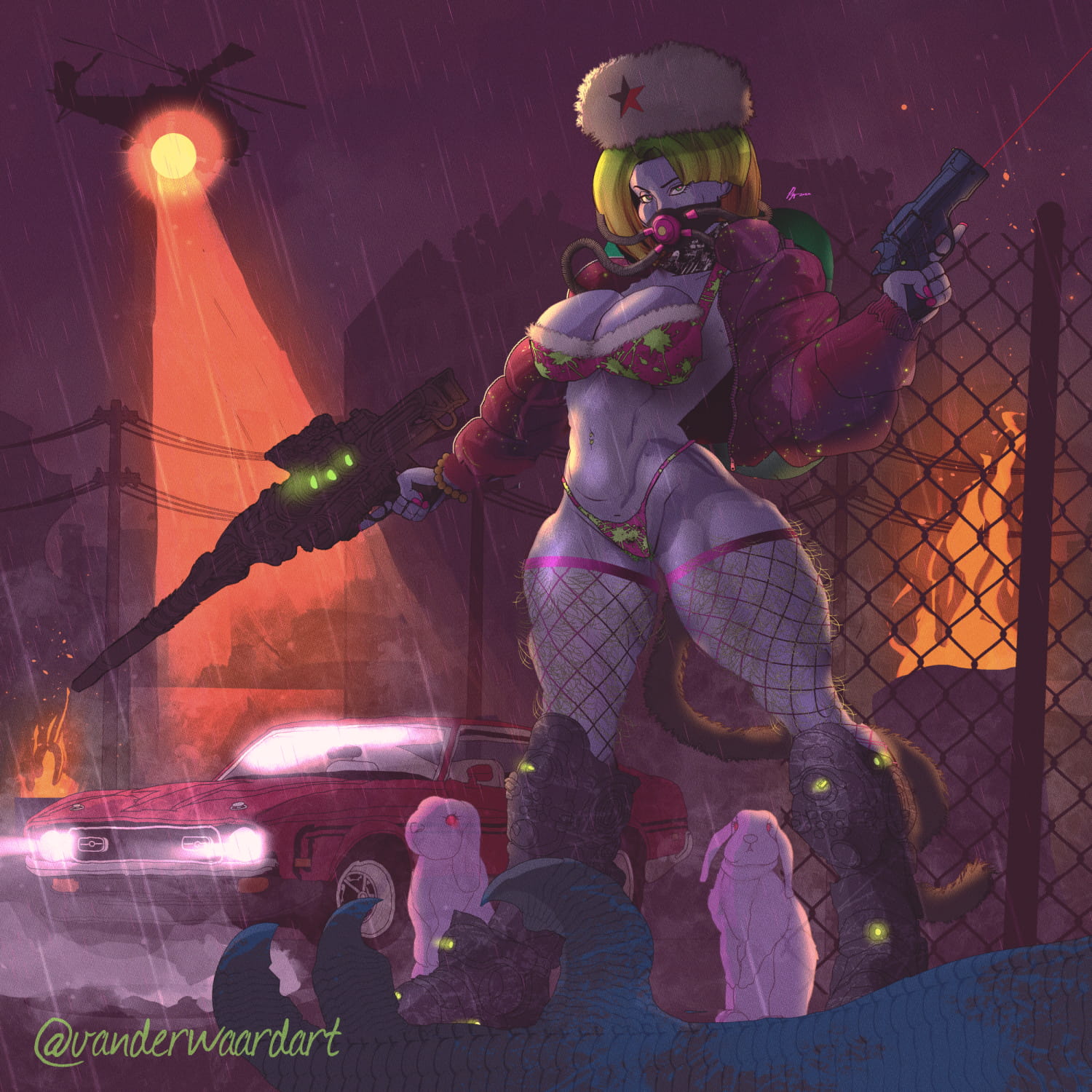
(artist: Persephone van der Waard; source: "Arrows for My Quiver" from "Quality Beyond Measure: Remembering Jonathan Joss," 2025)
The state essentially sucks; works suck back in diametrically-inverted ways aka asymmetrical warfare, which takes on class elements relaid in Gothic language (e.g., Amazons, above). Gothic generally concerns the dialectic of the alien in dialectical-material forms. Flow = function, not aesthetic; and something is generally multiple conflicting things at once—both a song or a dance, but also paradoxically a weapon depending on its usage, and means of education accordingly to communicate power anisotropically and apotropaically: determined by direction to ward off evil, and generally in liminal spheres of performance that confirm different answers tied to our own troubling pasts; i.e., as something to perform in spaces of confusion seeking resolution; e.g., "Are you here for peace or for war?" Humans make war as something to act out and help us survive not just natural scarcity but manufactured scarcity under capital as haunted by its own skeletons, gargoyles, what-have-you as performatively up-for-grabs, dualistic.
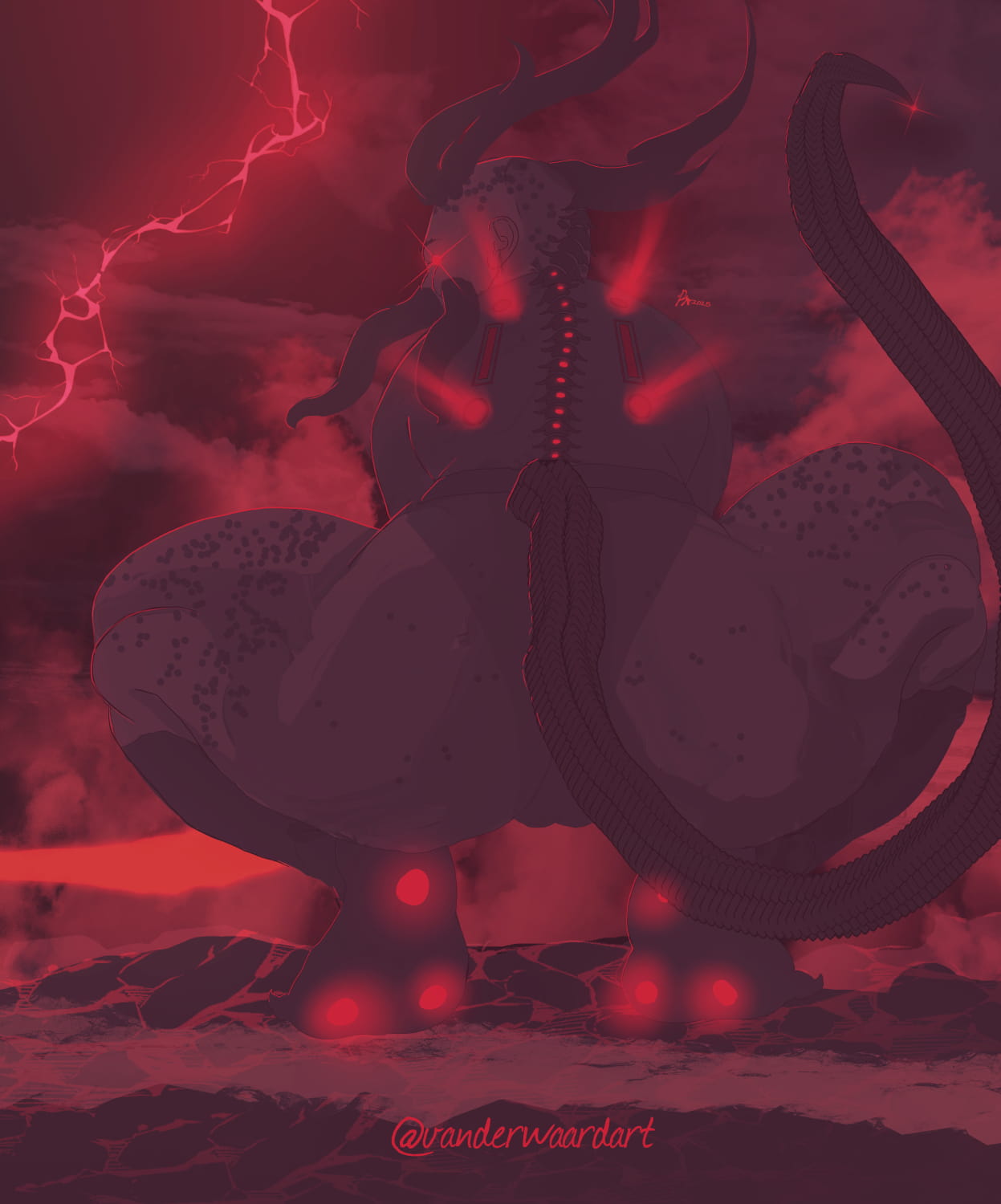
(model and artist: Maddie Minx and Persephone van der Waard)
As something to uncover and lay to rest, then, Gothic calls this "the Wisdom of the Ancients" and Indigenous People "of the Ancestors," and historically involves a Promethean, hauntological foray into the past; i.e., as something to summon, enter and steal power from in warrior-like ways; e.g., Gothic castles that travel through time—the chronotope a location of space-time that conveys Gothic ideas of power, mid-exchange, and whose Numinous elements I further articulate as the liminal hauntology of war (the timely arrival of a killing zone/site of rape and all-around power abuse, per calculated risk). Versus a police-grade, monomyth form under capital for capital (and Capitalist Realism), Gothic Communism and ludo-Gothic BDSM aim to push workers away from the state (as Cartesian, settler-colonial and heteronormative): by using pre-capitalist language—that of violence, terror and monsters (sex and force)—to usher in post-scarcity and break Capitalism Realism intersectionally upon ourselves:
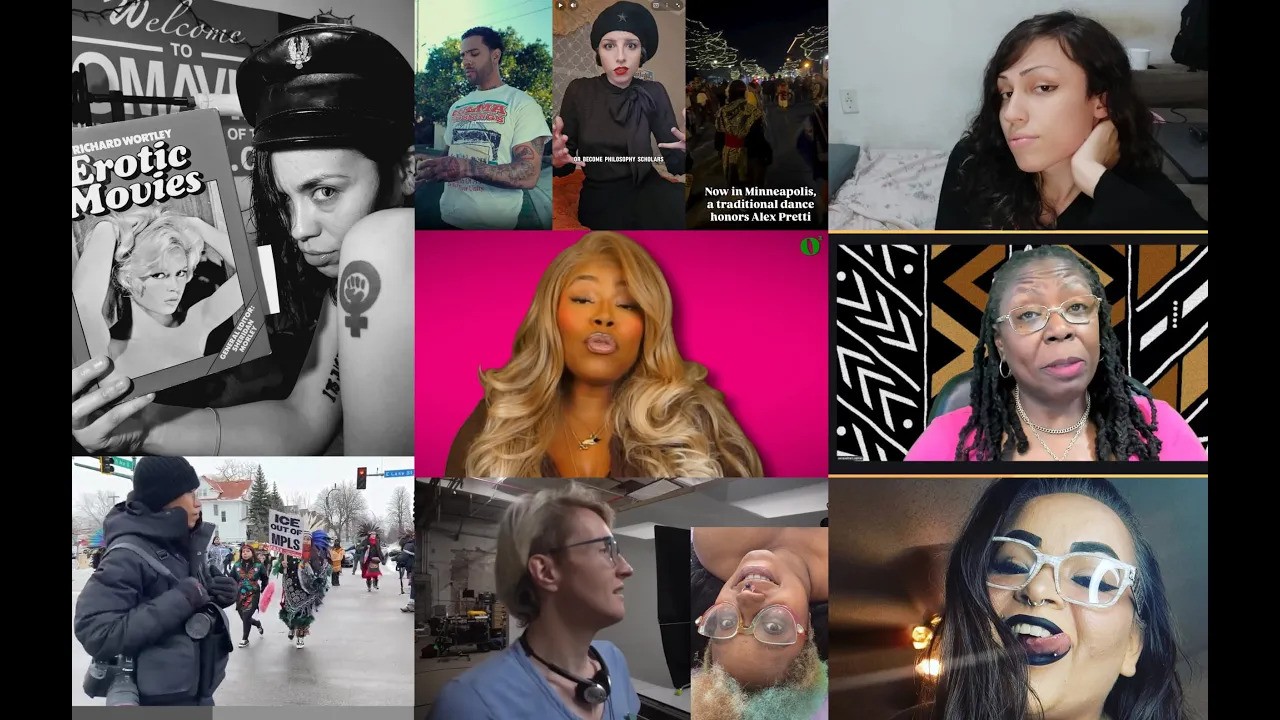
(source skeet [alt-text]: vanderWaardart, 1/31/2026 [the thumbnail for "The Value in Showing Intersectional Solidarity When Combating Fascism"]: "From top-left to bottom right: Mercedes the Muse, Vic Menza, Lady Izdihar, Mexican Indigenous dancers honoring Alex Pretti in Minneapolis, Alicia Axiom, Olurrinati Politics (center), Black Liberation Media, a local Indigenous protest in Minneapolis, Jessie Gender, Rhyna Targaryen, and Julesss Next Door")
Point is, there's no monopoly to the Aegis or anything that stands in for it and its mirror-like qualities; but, all the same, duality remains when meting such things out. Generally (as I argue), this happens on/offstage as "half-real"—meaning between the two but also performers for/against the state in oft-kayfabe-style ways (where no Fourth Wall exists): those who colonize media in bad faith, Gamergate-style; i.e., as white straight guys (and token parties) have done for centuries; e.g., with Shelley's Frankenstein, the Wachowski's Matrix films, Lucas' Star Wars, or anything else. Anything can be a weapon to pass information along for different sides, and generally incompletely. There terror but also joy:

(artist: Persephone van der Waard; cited: "Away with the Faeries; or, Double Trouble in Axiom Verge," 2024)
To it, I would imagine Halo—like any other franchise—has countercultural elements thrown in; but will just say now those are undoubtedly allegorical/recuperated by corporations in service to profit. So the bourgeoisie can disguise themselves and their motives behind Platonic means of entertainment: shadows on the infamous cave wall that distract from the usual goings-on. That knife cuts both ways, but with corporate media generally has the owner class holding the handle/censoring anything they can't directly control (to spheres of influence they can later invade, discredit, or otherwise "kettle," all under state crisis coming routinely back around until planetary crisis crystalizes).

(exhibit 1a1a1c1: "Thesis Body")

