In light of del Toro's Frankenstein (2025) hitting theatres, this compilation outlines Mary Shelley's ur-text; i.e., as having a profound impact not just on del Toro or myself, but the entire world. It will review del Toro's adaptation afterwards, looking backwards concentrically into a series of fatal portraits: my and del Toro's work, but also a variety of other creators, besides.
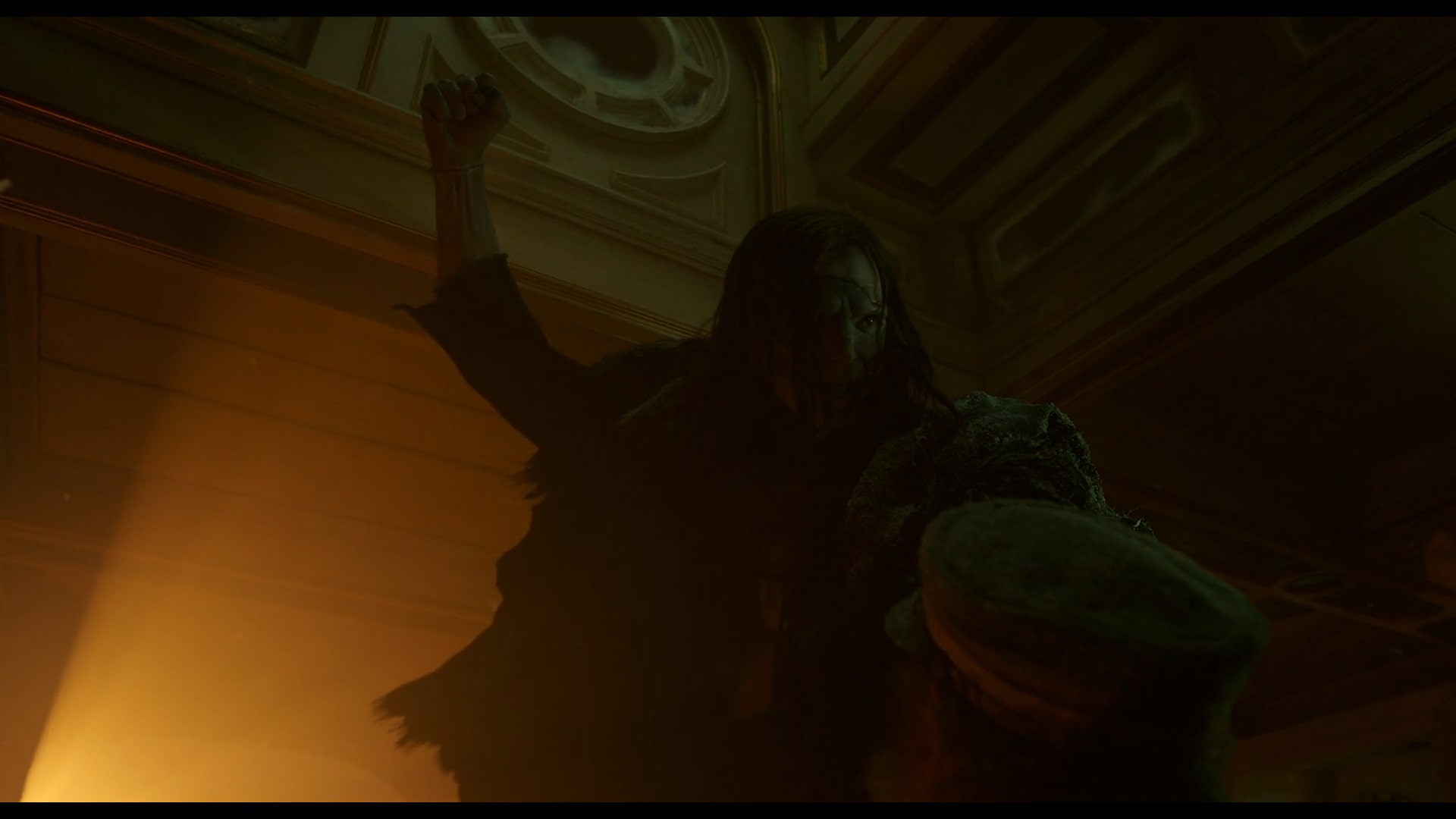
Update, 11/23/2025: Added my review of del Toro's film. I watched it a couple weeks ago, but was so underwhelmed I didn't get around to adding my review until today (really just my notes taken while watching the movie with Victoria, but that's all del Toro's getting). The best Frankenstein movie is still Young Frankenstein (1974).
Disclaimers/Concerning Censored Nudity and Its Educational Purpose
This essay is part of my Sex Positivity book series, which continues after its June 2025 finale in small-form content; e.g., essays on and interviews with other sex workers, all of whom I credit on my Acknowledgments pages and Sex Work page.

(artist, left: Bay Ryan; right: Persephone van der Waard)
Disclaimer Regarding Essay Contents: All opinions are my own; i.e., as part of my research, conducted alongside my book series, Gothic Communism (2023). The material within is written/speaks about public figures and popular media for purposes of (sex) education, satire, transformation and critique, hence falls under Fair Use regarding copyright and free speech regarding defamation/obscenity laws (the Miller Test; source: Justice.gov). Click here for my entire series disclaimer. Lastly many of the links on this page lead to my age-gated 18+ website where my entire work on Gothic Communism is stored and exhibited.
CW: fascism, genocide, police violence, queerphobia, xenophobia (Cartesian violence, ethnocentrism, settler colonialism, etc); discussions of rape*, BDSM, and sex work; various Gothic explorations of taboo material (e.g., necrophilia), censored nudity
*Meaning (from my definition) "to disempower someone or somewhere—a person, culture, or place—in order to harm them," generally through fetishizing and alienizing acts or circumstances/socio-material conditions that target the mind, body and/or spirit) […] Rape can be of the mind, spirit, body and/or culture—the land or things tied to it during genocide, etc; it can be individual and/or on a mass scale" (source: "Psychosexual Martyrdom," 2024).
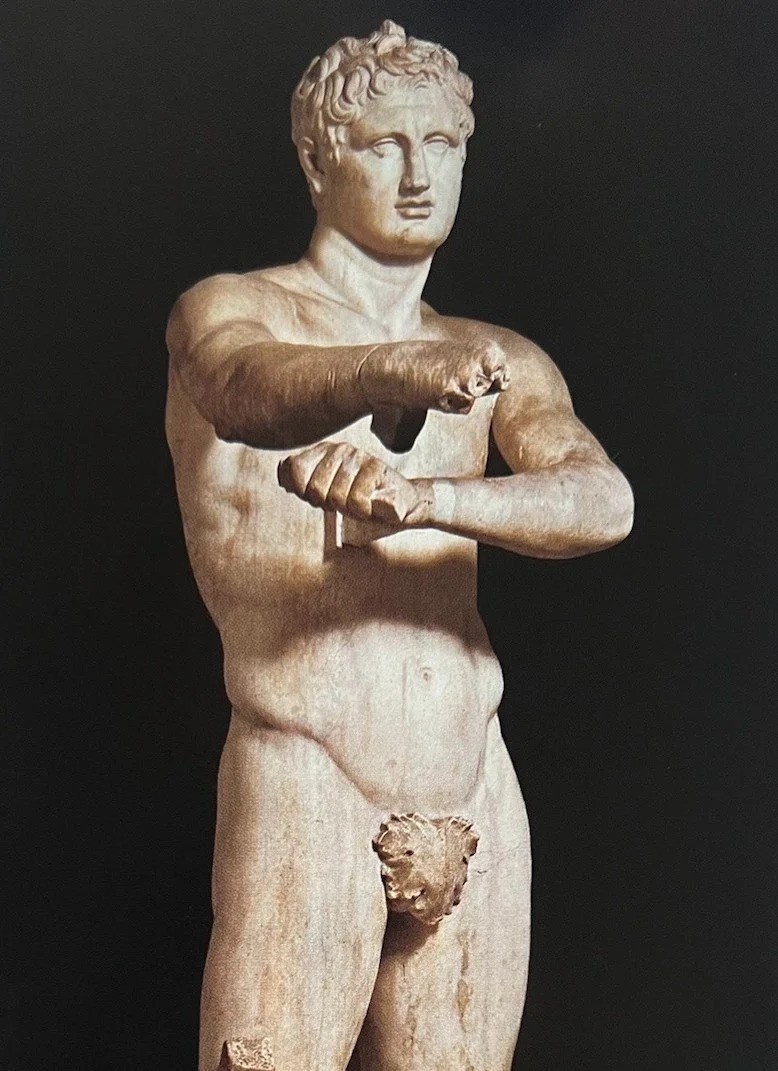
(artist: Lysippos; cited: Michael McClellan's "Professor Butter Beard and 'It's All About the Fig (Leaf)'")
Concerning This Pages' Censored Educational, Fig-Leaf-Style Nudity: This pages features censored, fig-leaf-style nudity* for purposes of sex and artistic education operating under the Miller Test/protected speech under American law (source: Justice.gov). For further info on my approach to censorship and sex education, kindly refer to exhibit -1 from "Raising Awareness" (which also discusses the hate campaign censors are currently waging against me and my friends' sex-ed work). All censored material is used elsewhere in my book series; i.e., as part of said series, and with permission from the models therein (re: my book series disclaimer). All models are over 18 and were when said material was produced.
*Meaning no bare genitals, just bare butt cheeks, curves and sexual context (and lots and lots of pubic hair, below); i.e., within a sex-educational, art-meets-porn framework that follows the Miller Test—one performed by sex workers and their content being voluntarily part of a larger project I continuously invigilate; e.g., Cuwu and I:

(artists: Cuwu and Persephone van der Waard)
Table of Contents
With del Toro being more faithful than, say, Kenneth Branagh's 1994 version calling itself "Mary Shelley's" (source skeet, vanderWaardart: October 26th, 2025), I'm encouraged to watch it; indeed, even to review it alongside the wide variety of stories and academia Shelley herself inspired. This includes me and my own colossal body of work, of which my review (when I get around to it) will add to:
- Monster Mom: Mary Shelley's Endless Legacy (and Effect on Me)
- "Foreword on Mary Shelley"; or, the Introduction to My Book Chapter on Frankenstein (re: "Making Demons")
- "I Demand a Single Grace from You": My Review of del Toro's Suitably Ghoulish Adaptation
Monster Mom: Mary Shelley's Endless Legacy (and Effect on Me)

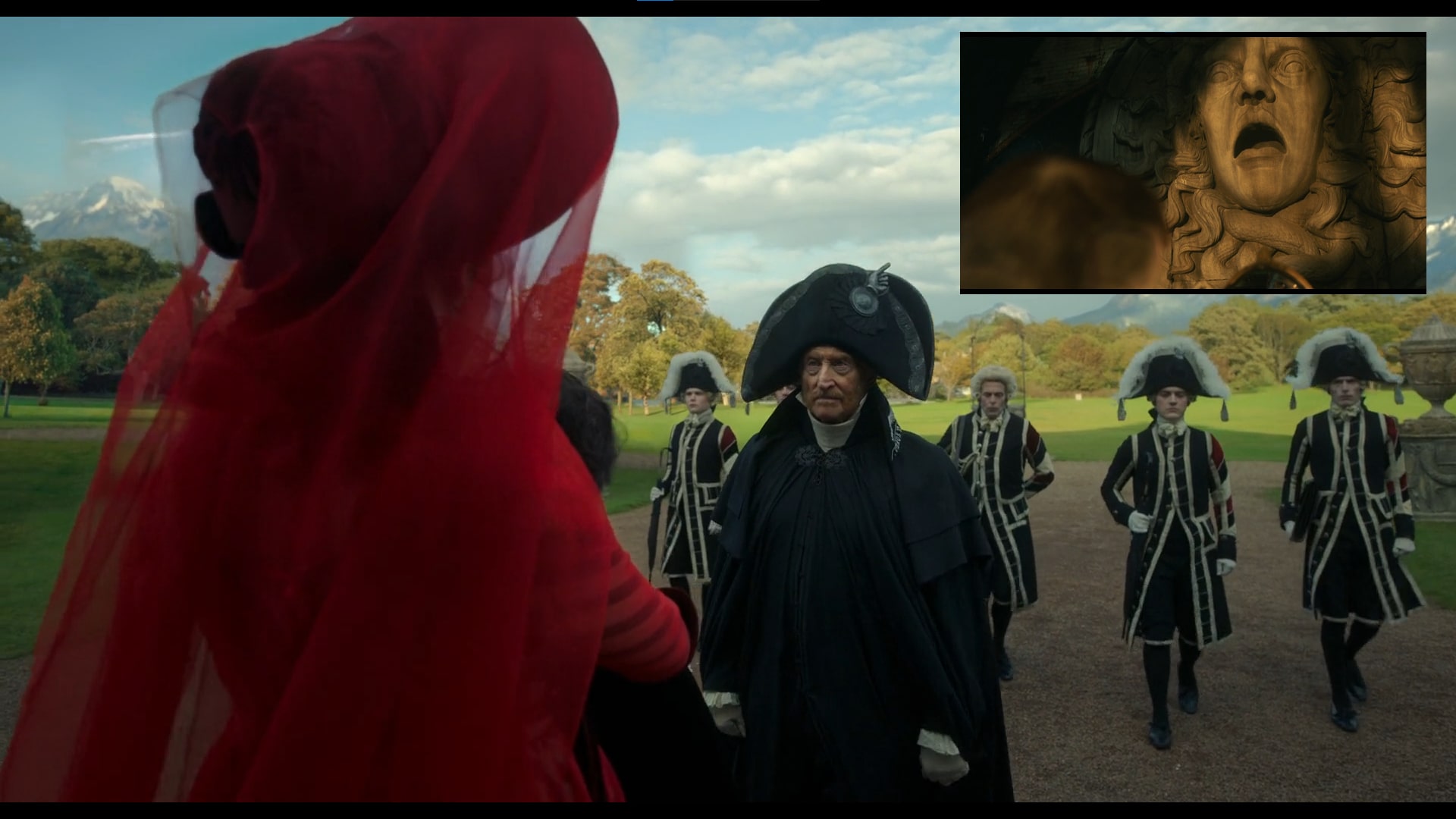
Before I review del Toro's film, I'll want to list the many ways Mary Shelley inspired me. Shelley herself was not formally educated, but had access to a wide variety of dark materials with which to write arguably the greatest novel of all time; i.e., as a 19-year-old radical (of relative wealth and privilege) who ran away from home, wrecked another wife's home (and married that woman's husband after she committed suicide), and did Marx before Marx (the Red Lady speaking through mood and power in ways del Toro enjoys equipping his own starlets with, above). From Mary to Marx to me, all my work is based on her famous novel: the Terminator's CPU to my Miles Dyson, the enterprising creator standing on the shoulders of a fearsome singular giant made by seemingly greater minds—a golem, Satan, or robata (slave) of sorts, capable of great violence versus profit to anisotropically reverse terrorist/counterterrorist, ego the process of abjection (re: the whore's revenge, cited below)!

"Better to rule in Hell than serve in Heaven," no? From Dante to Milton, Shelley took the poetic language of men and put a distinctly monstrous-feminine slant on it—a rebel the likes of which her male imitators would pay homage to (or purpose or not) for centuries afterward: the founders of Gothic were gay men and women, a teenage girl authoring the very first science fiction novel out from the Gothic mode that paved the way into Hell! Bitches love monsters, and Shelley was a size queen forever chasing the Numinous to critique mad science!
Note: Shelley inspired my entire Sex Positivity book series (six modules/four volumes, each with its own promotion), as well as the essays written before and after said series concluded, on June 1st, 2025. To see just how much Shelley inspired me beyond what's offered here, refer to those compilations/celebrations, but also my "Hailing Hellions" interview series with sex workers and my different bodies of research; re: Metroidvania, Tolkien, Amazons, and ludo-Gothic BDSM. —Perse
First, I cite Shelley's as if not the most important novel ever written (though a case could be made for that, below)
Such resourcefulness is the mark of any good revolutionary (who always fights from the shadows), which Mary most certainly was (and did). She fought for her cause, and Percy his, their needs not always aligning. Mine side with Mary's lot, because hers speak to the whores of the world that Percy gave little thought to (a sperm donor who, while he gave Mary "a room of one's own," wasn't the one writing inside it; she was). His work is a cul-du-sac (excluding "Ozymandias," to be fair); Mary's yawns without end, though is largely housed in Frankenstein as her magnus opus—i.e., as the greatest novel ever written (there, I said it): for its importance and wide-reaching effects long afterwards! To compare the two as "equals" (as Mercer does) is a grave error. Mary was obviously the superior author—not because she outlived him, but because her novel outshined (with its darkness visible) anything Percy ever wrote while alive! Girls rule, boys drool! (source: "Forbidden Sight, part two: Making Demons (Prometheus and Frankenstein)," 2025).
then certainly the most important Gothic novel ever conceived; i.e., spawning science fiction as a Cartesian critique that bashed men of science
Frankenstein is not "just" a story about child abuse/a failed experiment, then, but one about composite bodies and robata rising up; i.e., in counterterrorist reinvention, refusing to submit despite state abuse: from older computers/data storage into new forms (the Gothic novel sitting between Ancient Romance and scientific discoveries haunted by settler-colonial genocide). Shelley is a "programmer" reprogramming canon by corrupting it (sort of a precursor to Chelsea Manning blowing the whistle). She's doing so through composite bodies and Cartesian thought as a vector and pathogen—a wild teenager's juvenilia camping adult dumbasses through dark rebirth (re: Shelley was nineteen when she wrote Frankenstein—quite a feat considering it's arguably the most famous/studied/productive/germane Gothic novel of all time); i.e., a dark mommy who inspired my own body of work by writing something hideously exceptional, herself; re (from Volume Zero):
[cited further down]
In Shelley's own words, "I have not considered myself as merely weaving a series of supernatural terrors. The event on which the interest of the story depends is exempt from the disadvantages of a mere tale of spectres or enchantment. [...] I have thus endeavoured to preserve the truth of the elementary principles of human nature." A titan of literature, she suitably worked with cheap things (dead babies and the stuff they're made of, but also whores) to liberate workers through iconoclastic art. There is no being for whom I more strongly identify/believe in, and Gothic Communism as a concept would not exist without Mary Shelley's original dark mirror camping Enlightenment thought. If she didn't outright turn me into anything unnatural, she—at the very least—infused me with the same dark creative spirit (of Medusa and her Aegis) that men like Percy wouldn't fuck with (ibid.).
Mary Shelley inspired Marx (who loved monsters)
Shelley wrote Frankenstein when Marx was born, and by the time Shelley had put the story behind her in pursuit of others, Marx himself was envisioning the very spectre that Shelley's Creature embodied: "a spectre is haunting Europe." A whore is a whore, and Shelley's demon nurses a grudge but also a desire to be free. It's a factory worker and robota, but also a cyborg and composite of dead slaves/dead whores having the Jewish revenge against capitalist automation: "And if you wrong us, shall we not revenge?" Victor was a scab against labor action.
One precocious and unusual girl surrounded by a host of self-important men, Shelley wrote a novel that eclipsed them all. It inspired Poe, Lovecraft, Matteson, Giger and Nintendo, among countless others—was the zombie novel before Romero ripped Matteson off, in 1968; the slasher before Carpenter's Myers came home or the xenomorph raised Kain, in 1978/79; the rogue creation of mad science before Mother Brain kettled Samus, in 1986 (the castle is the ultimate dom); the man of reason before Happ had Trace tilting at Athetos' ruins, in 2014 (echoes of "Ozymandias"). To it, the British Romantics were all men except for Mary Shelley, who in my completely biased opinion, is the best of the bunch. No Frankenstein, no Metroidvania, no critique of capital through its hellish, queer-coded, thoroughly an-Com spheres (Gothic Communism). Nothing beats Frankenstein! (ibid.).
but also me and my own myriad conclusions using Shelley as a starting point;

(artist: Richard Rothwell)
Pregnancies are seldom planned. This book, Sex Positivity versus Sex Coercion, or Gothic Communism, isn't just a big-ass porn catalog full of cool, "thirsty" art, nor is it just my little trans demon baby and pure, loving brainchild made with those who passively or actively contributed to its pages; it's me, a trans woman, consciously reverse-engineering my own creative process as having been ongoing for years (thus why I have so many exhibits from my own work—I had already drawn them years ago). For the better part of fifteen months, this complex reification's trial and error has happened in starts and stops after long nights at the desk, sleeping on my increasingly regular musings and waking afresh with new queer epiphanies—to keep things straight in my own head, much like Sarah Connor kept journals for herself while figuratively and literally giving birth to rebellion (and doing my best to avoid coming off as a white savior). Just as an expected child is fueled and shaped by its mother's diet, my book was inspired by the process of older poetics/poiesis (meaning "to make," specifically a production of that which has never existed; i.e., the simulacrum, or imitation fashioned through mimesis). The idea of Gothic (gay-anarcho) Communism wasn't just subversion, but reclamation of what was lost to fight back against capital as Einstein's fish might: to learn not what made me feel stupid for being unable to climb a tree as my prescribed "betters" could, but swim in water as I was always meant to through a cultivated emotional/Gothic intelligence linked to my inherent neurodivergence and queerness as useless to capital (outside of moral panics) (source: "Author's Foreword: 'On Giving Birth,' the Wisdom of the Ancients, and Afterbirth," 2023).
i.e., onto bigger and better things built on her Modern Prometheus and its Promethean Quest; e.g., Metroidvania
Astronoetics are what Michael Uhall calls a celestial, intelligible presence ("Astronoetic Cinema," 2019). Reframed by me slightly, it is the colonial gaze of Planet Earth in any imaginary scenario, which the Metroidvania commonly portrays as nature vs civilization. [...] The fact remains that men like Weyland rape nature all the time, but only double their efforts when they—like the system they personify—reliably starts to die (false power). In turn, the state and its men of reason will do anything to preserve themselves, weaponizing their own bloodline against nature, the latter having evolved to resist dominion (thus rape) through counterterrorism and asymmetrical warfare. [...] That's what the Promethean Quest effectively encapsulates and discourages, Medusa fucking back to reverse the flow of power and information the monomyth normally supplies in outright parental language, but also monomythic media exposed to middle-class children at a young age (source: "'She Fucks Back'; or, Revisiting The Modern Prometheus through Astronoetics: the Man of Reason and Cartesian Hubris versus the Womb of Nature in Metroidvania," 2024).
Amazons and anal sex (terror weapons)
First, what is anal? Anal speaks as much to rape and vulnerability as it does to proximity with unequal power and forbidden pleasure: exposed dumpers. While the state loves to threaten damsels with impregnation, it also deems them "worthy" of it. While sodomizing maidens isn't unheard of, doing so goes against the profit motive/patrilineal descent. Damsels are maidens, first and foremost—sodomy something of an afterthought/sinful prophylactic reserved for victims worthy of that treatment: whores, thus sex demons (a stigma, let it be said, that is often assigned to older married women; i.e., those who have already borne children/marry up and are resentful towards the status quo, but who canonically punch down: the wicked stepmother a kind of witch-y impostor/devil-in-disguise).
Amazons, by comparison, are whores from the offset, hence sodomized to better stress their demonic status and token value (and deny the victim any chance at generational revenge: to train their children to avenge state devastation). Even so, the state also views, thus treats Amazons "like men": as capable of revenge beyond gossip and poison; re: phallic women, or bitches, threatening lesser men ("little bitches") with castration, captivity and ignominious penetration! Forced anal, then, speaks to the capture of Amazons "tamed" and tokenized by humiliating and painful taboo sex ranked as "worst" by the rapist; i.e., vae victus in receiving state revenge, said revenge (the cop) aping the colonized in bad faith: to fuck, thus dominate like the animals Cartesian rule prescribes (a process less about biological accuracy [animals can't rape/sodomize each other] and more to dehumanize those "of nature" slated for social-psychosexual punishment by police forces: abusing chattel slaves/property who can't consent). And yet, colonial abuse ties historically-materially to bodily sites of psychosexual harm, which rebellious recipients might subvert; i.e., to submit in ways they—like any oppressed people part of the land—can reclaim through theatrical distress/rape revenge; re: rape play extending to "playing dead," meaning to camp one's rape by subverting colonizer vaudeville inside itself: mid-witch-hunt, witches policing witches, sex policing sex (source: "Our Sweet Revenge; or, Being Ourselves While Reclaiming Anal Rape, mid-Amazonomachia," 2025).
and sex work with a Cartesian critique
Capital (and science under Capitalism) can only extract value from nature, killing nature; i.e., in ways that don't even preserve the elite for whom capital serves [...] Meanwhile, the colonized long to give the colonizer a taste of their own medicine—of generational trauma killing not just the man, but his entire legacy (the murder of children signifying poetic justice alongside natural selection; e.g., Peter Pan [1904], Alien: Earth [2025], The Beautiful Darkness [2014], and Lord of the Flies [1954], etc, all leading back to Shelley's dysfunctional family unit, her furious planet): the transference of power when power decays, during the Promethean Quest Shelley crystallized. Per the Gothic, it's both cautionary[1] and delicious, but also ghoulish and infuriatingly unfair [...]! (source: "Persephone's Silksong Symposium," 2025).
Mary Shelley outlined problems to solve
Rape isn't unique to Capitalism, then, but Capitalism exploits rape for profit, which always leaves a bloody footprint for us to double […] In turn, its ubiquity is something to challenge through ludo-Gothic BDSM liberating worker minds during calculated risk […] More to the point, "rape" is an acquired taste; victims of rape (whatever the form) experience medieval-coded, regressive fantasies of "rape" they ideally want to camp during ludo-Gothic BDSM to avoid actual rape (and overall harm) in the future. In turn, praxial catharsis occurs through iconoclasm while healing from rape in xenophilic ways that involve nature as monstrous-feminine in fetishized, cliché sites of death, damage, decay and rebirth (source: "A Cruel Angel's (Modular) Thesis," 2024).
gave me praxial focus
The paradox is simple: demons are maidens and maidens are demons, but both are virgins and whores, and each finds power (and knowledge) according to how the state forbids access, yet access happens anyways; i.e., (de)valued, mid-exchange, thus used to humanize or dehumanize the demonized through performance and play. Per Marx and myself, Capitalism alienates and sexualizes everything. Nature is monstrous-feminine as such, "empowerment" applying to any aspect of our life, bodies, violence and terror the state wishes to monopolize/control, and any trope, convention, cliché or fetish that might be used to degrade, humiliate, rape or otherwise demonize/dominate beings "of nature" per capital's qualities (re: settler-colonial, heteronormative and Cartesian); i.e., that we can reclaim during ludo-Gothic BDSM, hence through unequal power letting us "get a leg up," topping from a position of normal disadvantage to have our revenge: perceived disempowerment becoming a paradoxical, interchangeable means of escape, regarding universal worker liberation onstage and off (versus equality of convenience inside the text).
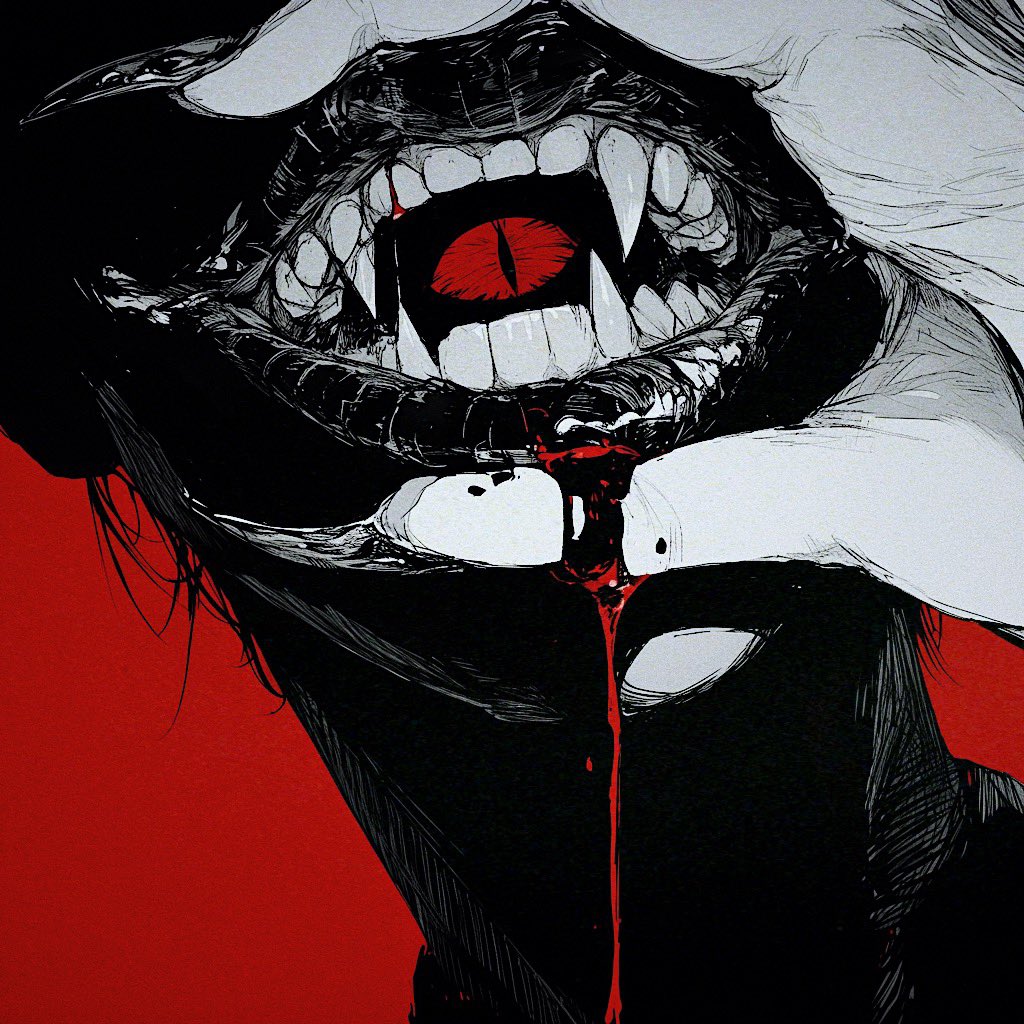
(artist: ALT3R4TI0N)
To do so is to break capital's hold on all things demons, darkness and nature they stole and monopolized, in turn smashing their own abjection against them and breaking Capitalist Realism with our Aegis—to deny capital's dead labor and language feeding on living labor and language according to what power and knowledge we exchange to and fro. The whore's revenge is to break the profit motive by making a world for which it (and rape) are no longer possible using these methods; i.e., by using the same demonic and slutty language capital does, but at cross purposes: to hug the alien—not demonize it to receive state violence—thereby (ex)changing how the world is seen to begin with. We aggregate power differently than state forms, outlasting and outperforming them to dismantle their harvesting mechanisms, social and material, foreign and domestic.
Nature, then, is always a whore who punches up against state pimps to end profit as an endless structure of genocide. History more broadly could be described as whores vs pimps, hence workers vs the state; i.e., something the seemingly cannot die, but whose aforementioned whores are as imperishable as Medusa despite being beheaded (source: "Rape Reprise," 2024).
and inspired various academic jargon and slogans tied to said praxis; e.g., ludo-Gothic BDSM and "When the Man comes around, show him your Aegis!"
The idea essentially boils down to "pick your poison, go to work," which brings us to camping the canon. There are many kinds of canon; I specifically chose monsters—specifically the monstrous-feminine Amazons and Gorgons—and BDSM to develop ludo-Gothic BDSM (re: "Concerning Rape Play: a 2025 Note on My Development of Ludo-Gothic BDSM"); i.e., as attached to Metroidvania and my PhD (re: "The Quest for Power," 2023). Its full definition, as I coined it, reads (from "Paratextual (Gothic) Documents"):
ludo-gothic BDSM (rape play)
My 2023 combining of an older academic term, "ludic-Gothic" (Gothic videogames), with sex-positive BDSM theatrics as a potent means of camp—specifically rape play by placing "rape" in quotes, mid-Gothic (where rape [and playing with it] is ubiquitous). The emphasis is less about "how can videogames be Gothic" and more how the playfulness in videogames is commonly used to allow players to camp canon in and out of videogames as a form of negotiated power exchange established in playful, game-like forms (theatre and rules). Commonly gleaned through Metroidvania as I envision it, but frankly performed with any kind of Gothic poetics, ludo-Gothic BDSM playfully attains what I call "the palliative Numinous," or the Gothic quest for self-destructive power as something to camp (the Numinous, per Rudolph Otto, being a divine force or numen tied less to the natural world [the Sublime] and more to civilization as derelict, dead and alien; re: the mysterium tremendum): a Communist Numinous/the Medusa per Barbara Creed, but not tokenized (re: the Amazon) while dancing with Hogle's ghost of the counterfeit to reverse abjection (thus profit) and shrink the state!
For further information specifically on ludo-Gothic BDSM, refer to my new webpage cataloging the subject and its history as coined and synthesized by me. —Perse
The difference between rape (which capital does by design) and "rape" is context, mutual consent needing dialectical-material context through play that establishes consent during calculated risk (thus harm reduction); i.e., one capable of raising emotional/Gothic intelligence and class, culture and race awareness in intersectional solidarity during tactical unity's pedagogy of the oppressed; re: "When the Man comes around, show him your Aegis!" (source: "Persephone's Silksong Symposium").
motiving me to take my work and expand it alongside my friends taking part:
This can mean so many things—the damsel in the dungeon, or the open-secret avenger h(a)unting the same surfaces, ready to explode in violence (which reversing abjection requires, be that words and/or actions): something polite/rude, thus able to exist mid-cryptonymy in ways the state can't monopolize "on the Aegis" (the virgin and the whore a paradox trapped on the veils of Gothic censure and exposure; re: Eve Sedgwick's "Imagery of the Surface" [1981] married, by me, to Creed's monstrous-feminine ["her terrifying powers"]: "I now pronounce you newlyweds—Amazon and Gorgon, virgin and warrior-whore!").

(artist: Nyx)
Invented as anti-feminist devices by Athenian men (who feared Spartan women, the latter having more rights than their second-class Athenian counterparts), Amazons are virgin/whores of a warrior sort, Gothic femme fatales classically tasked with slaying Gorgons (emerging in the Neo-Gothic from the 1800s onwards, but especially the neoliberal period, onwards; re: Metroidvania and similar "shooter" videogames capitalizing on James Cameron's Aliens [1986], next section). Real or not, Amazons are historically presented as guerillas, therefore shadow warriors/terror weapons symbolic of rape with a seemingly "primitive" aesthetic (the barbarian/noble savage); i.e., as something to reclaim from state power like all dehumanizing language, reversing abjection mid-abjection and cryptonymy (re: "Our Sweet Revenge," 2025). Land back, monsters back, sex back; that's the Gothic Communist way! Become the Gorgon to set nature (as monstrous-feminine) free:
Why deny life you dream about? Why deny your dream?
[...] A generation gets left behind
Degenerate
I break away for my soul to keep (Fear Factory's "Recode," 2021).

(model and artist: Nyx and Persephone van der Waard)
Per the Amazon/Gothic refrain, nudity is rebellion as seductively alien, mid-abjection; or, as Fear Factory says: "Humanity depends on us. Do not let our enemy prevail. If you are listening to this, you are the resistance" (ibid.). Whores are classically framed as "corrupt," except the corruption is the data; take what we leave behind and use it to wake the fuck up and slay capital dead, mid-cryptonymy! This wardrobe of the warrior empress' new clothes features various masks and costumes common to Amazons and Gorgons, onstage and off; e.g., Nyx, above, "armored" in ways that Radcliffe's virtuous, virginal heroines would classically swoon at (fearing exposure) [...] The fact remains, you don't kill home rule with kindness—the whore a homewrecker bringing the house down; i.e., naked, mid-concealment, for those aims (the booty a concealed weapon "carried" while sitting between exposure and open disguise, fucking to metal but also embodying it as "slain" while refusing to die; re: Nyx, a force of nature in her own right, above, but also myself working with other sex workers, robots fucking robots mid-posthuman-breeding-kink, below)! Sex work is work, ergo part of the struggle it paradoxically seeks to liberate from, while inside; i.e., subversion—cryptonymically reversing abjection—as much an act of fucking the alien as hugging its killer golemesque, mid-dialectic: "Use me like a doll, motherfucker!" Graveyard sex, castle sex—swapping the little death for something bigger and badder! (ibid.).
The idea is a passing of the torch, the stolen fire of the gods (the Numinous) handed continuously from one trailblazer to the next—from Shelley to me (and younger me to older me), but also from her to del Toro working synchronistically alongside myself and my cabal of naughty thieves stealing what was stolen from us by state powers. Time is a circle, the Communist Numinous wrestling Caesar (and the state) in duality until the end of time, mise-en-abyme (on and offstage). Developing Gothic Communism, then, is a holistic enterprise—revisiting older things to keep the Wisdom of the Ancients not just in our hearts and minds, but reflective of a proletarian mindset seeking universal liberation per monstrous language meant to humanize those pimped by state power into alien-fetish positions of abuse (re: the dialectic of the alien, as I call it). We must hug the alien, fucking it in ways conducive to walking away from Omelas. And wouldn't you know it, Mary Shelley inspired all of that, too! There's always another castle; let's introduce hers, yeah?
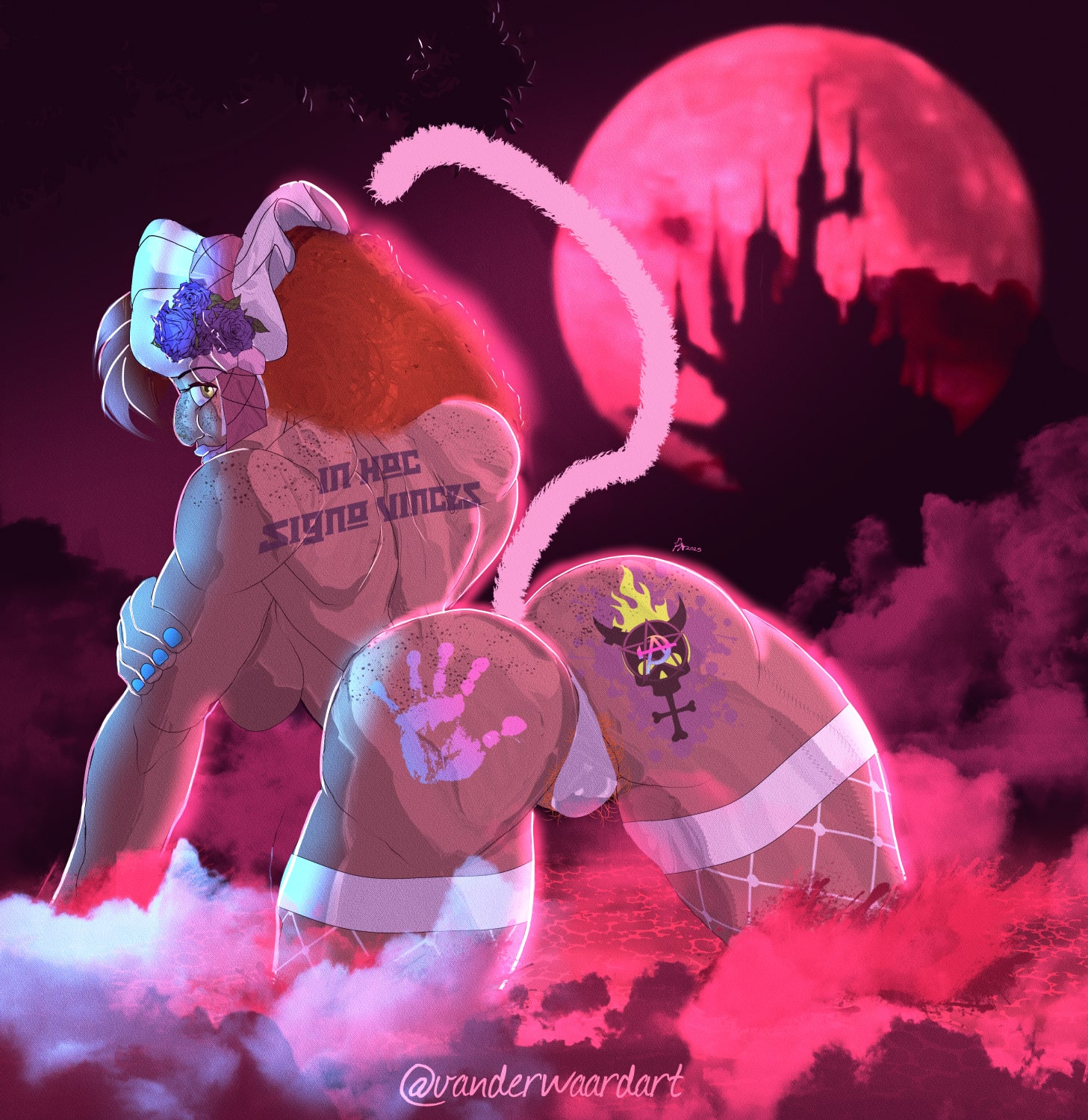
(artist: Persephone van der Waard)
"Foreword on Mary Shelley"; or, the Introduction to My Book Chapter on Frankenstein (re: "Making Demons")
[W]hat does the overabundant presence of "birth trauma" in the novel signify? I believe the answer lies in the complex relationship between Victor and the Creature, in which there are copious parallels. The Creature's mate is also its sister and is made from Victor who is the Creature's mother. Victor is Elizabeth's mate and her brother. Victor destroys the mate and the Creature destroys Elizabeth. Still, once Elizabeth is dead, the Creature keeps Victor alive to experience the world as the monster sees it, in order to feel its pain. It wants him to understand his own failures as a parent, and to see that the Creature is human and feels the same pain and wants that Victor feels (source).
—Persephone van der Waard, "Frankenstein essay—Born to Fall? Birth Trauma, the Soul, and Der Maschinenmensch" (2014)
…And right off the bat, here I am breaking my own rule! I got about ten pages into "Making Demons" and—having just compiled my 2025 Metroidvania Corpus—suddenly realized how influential Mary Shelley was on my own work. I didn't read Frankenstein until college, but nonetheless was haunted by its shadow vis-à-vis Metroidvania (which I played tons of, and which informed my work well into the present; i.e., I watched Alien when I was nine and played Super Metroid when I was eight, both introduced to me—as well as British Romantic poetry—by my mother[2]). Monsters and mothers are part-in-parcel, along a Great Chain of Dark Creation. Without Shelley and her Gothic masterpiece, there would be no At the Mountains of Madness, thus no Alien, Metroid, or Metroidvania, thus no Persephone van der Waard or Gothic Communism! Perish the thought!

(artist: Yasya)
I wanted to bookend that, starting with this foreword (and an afterword, after "Making Demons"). Simply put, Shelley was a whore who gave birth to demons, and the world as we know it (myself included) would not exist without those demons. She is our dark mother—a ghoulish succubus camping the canon to outshine her overrated husband and so many others, one-upping Milton's camp in the process. In doing so, she profaned an entire sacred order (the secularized Christendom of the Enlightenment) to camp the canon; i.e., in ways that lived on, long after she died!
But what exactly lived on, and where did it start from? Beginning suitably en medias res (re: Milton), Shelley's moral about the indiscretions of nature and technology manipulating nature isn't how technology is intrinsically "bad." Technology is a powerful device, and in all its forms and fusions, help us do incredible things; e.g., neonatal medicine keeping my ass alive when I was born premature (after a cesarean, which, as the name would suggest, dates back to Caesar), but also computers (with me struggling to imagine how I could have written and published over two million words, thousands of images, and hundreds of exhibits—and all of these featuring thousands of artists, including dozens of models and muses—without technology helping me do the otherwise impossible).
Instead, Shelley's takeaway was that technology can be abused, and needs to be de-automated away from profit; i.e., from modernity to postmodernity towards post-scarcity using hauntological pre-capitalist language: stolen back from the gods of the state by the gods they're abusing! This includes sex, drugs and rock 'n roll, borrowed from Ovid, Dante, Shakespeare, and Milton, which Shelley turned into a unique combination: a common thread of women in a man's world being, at best, underappreciated and ignored, and at worst, treated as unwelcome outsiders and thieves to fetishize; i.e., when they try to show that a woman—little more than a piece of ass, in status-quo men's eyes—can both fuck, have a brain, and go on to comment dialectically on the towering midden of all our yesterdays (the Apollo missions being little more than Space-Race rocket-riding by the United States looking to colonize space: "We choose to go to the moon because we can")! Stacked in more ways than one!

(source: Maia Weinstock's "Margaret Hamilton's Apollo Code," 2016)
In canonical circles, such things are often buried, then trotted out like show ponies/witches[3] for state aims fetishizing and demonizing female scientists (a STEM tradition that extends to anything monstrous-feminine, not just white cis women, but one begot out of nuns and female detectives). So was Shelley—in writing the first science fiction novel—breaking new ground her usual jailors would immediately try to reign in.
Oddly enough, the idea of theft wasn't even new in Shelley's novel, but its application was; i.e., "The Modern Prometheus" concerning state parties stealing from nature to rape it while valorizing themselves, and state victims challenging them in duality while standing in/playing with the same messy goop: possessing the state armor to cockblock its maker's continuation (something of a dark desire); i.e., a voice of the victims of the Capitalocene, versus Hamlet's fathers ghost or Prospero's spirit, Ariel, enslaved to do his bidding/seek his revenge). Shelley showed us how power is just something to exchange back and forth over time, only ever becoming a question of "theft" when privatized.
At its most basic, capital reduces "creation" to people who give birth (of any sort), which it then tries to pimp for profit; i.e., hauntologized and binarized per the West and its Amazonomachia/ancient canonical codes (re: Creed and Foucault). But per my work, the monstrous-feminine had extended to a wider group of workers the state was tokenizing through a Venn diagram of persecution networks and language; e.g., of women from Shelley's mother's generation, like Ann Radcliffe. So Shelley expanded her arguments to speak to a theft of reclamation back for all workers by castrating their most famous maxims and turning them into death on two legs: by doubling them, mid-liminal expression. Creed argues how Medusa is the Archaic Mother castrating men, and I'd be hard-pressed not to agree that Frankenstein's monster is—at its most basic—a black mirror/Aegis showing "clones of Napoleon" (the original who weaponized science for his own gain) the Numinous error of his ways: "Before it, my genius is rebuked!" he cries, then melts down/throws a tantrum (of sorts, below). Girls have cooties; let us disabuse you of that notion!

These are frankly difficult practices to conceptualize if you've never done them before ("nothing ventured, nothing gained"); e.g., I'm trans, but was in the closet for much of my life, yet creating while inside said egg to eventually hatch from it. Shelley, on the other hand, had already given birth and eloped with a womanizing atheist with big ideas; but she took those ideas—and wedded to her personal tragedies and grief—revived the miscarriage of past attempts into a holistic statement of creation useful to all critics of capital, past and present! Making babies became monsters inside/outside her womb—androgynous like Medusa, but commenting on Zeus and Metis, as well (and many other mythic elements; re: Prometheus, Milton, etc).
Like sex in general, it was a combination of "right place, right time," animate/inanimate, and playing-with-fire/lightning-in-a-bottle trial and error to camp/reclaim what was already becoming canonized anew under a Protestant ethic. Hindsight 20/20; whereas Weber debated Marx's ghost with the Spirit of Capitalism and Shelley debated Milton's with Frankenstein to haunt Marx' dreams (and his own love for ghosts), my work in Sex Positivity has camped all of them to realize, at this pivotal moment, just how precocious and advanced Shelley's ideas were! Not bad for a sixteen-year-old runaway who whored her way into vaults of knowledge normally denied to women (she took more than her share, versus submitting obediently to men of authority—with someone like Altaira, left only being allowed to pick who she gets to fuck[4])! Props, girl!

(source)
To this, Frankenstein was indisputably conceived out wedlock. Following the Cartesian Revolution, the bourgeoisie were already gestating in Europe and America. Being a rebel and a woman, Shelley understood that you have to combine things and messily in order to create radical change. Taking the risks that she actually took, Shelley gave birth to ideas of universal liberation by stealing from the past; i.e., beating the father of Communism to the punch by conceiving of a proto-Marxist ideal before Marx was even born, then giving birth to her novel the same year he entered the world: as a mockery of Napoleon and other great men of history while warning about the privatization of technology as a matter of theatre and theft the state will try to monopolize. "All the traditions of dead generations," specifically men, Shelley applied to manmade monsters subject to her critique through creation: her own sexy beast oddly enough made by a woman, and which everyone—Marx included—promptly forgot about and tried to eclipse in favor of themselves.
So they did, after Shelley came and went, but remained an indelible palimpsest on the minds of men; e.g., men like Poe, Conrad, Lovecraft, Freud, Kafka, Scott and Cameron—but also the bastardized, killed-over-time metaphors of glass wombs, the "franken" prefix, golems and machine people, paradox and oxymoron, ambiguous sex toys and psychosexual, martyred hyphenations of sex and force (thus indiscretions of adult/child, the organic and inorganic[5] and artificial[6] intelligence).
In turn, our straight male (usually white) matchmakers wedded this hellish, blinding jumble of oddities to all-around body horror/decay and mad science, insect politics, star-crossed monster love, radical transformation (from Ovid to Kafka to Giger to Cronenberg), ethnocentric knife-dick/BBC, wandering womb (ancient psychology and medicine haunting modern equivalents; e.g., hysteria and bicycle face) and monster mothers[7]: what they used for profit, first and foremost; i.e., requiring those concerned with poetry and revolution to play with such things as Shelley did again, hence re-liberate them (from state torture) using the same throbbing pulpy mass ("the new flesh," in Cronenberg's words)! If Shelley's book composed and made popular that unique set of mutations, women like Beauvoir, Kristeva and Creed built on it, followed by little-ol' me camping the lot of them. Out of all of them, Shelley holds up the best as an interesting and good-hearted person (though Kristeva and Creed's ideas remain incredibly useful, and frankly I don't much know [or care] if they were sluts or not).
Power and death seriously and unalterably change you; and this can be into things we no longer recognize in ourselves or others (and though I'll critique Percy in the pages ahead, I honestly think Mary loved Percy—not for his flaws or genius alone, but as two sides of the same coin, and which with any pairing sometimes put them and us at risk while forgetting who they are: the insect who dreamt he was a man who loved it, and saying to his mate, "I'll hurt you if you stay!" Percy reached for greatness, and that rubbed off onto Mary as we shall see).
So, too, is nature wholly abject; we can reverse that but rock its signature aesthetic of power and death—doing so to help ourselves reverse what otherwise never can be: by trusting the insect (the queer insect generally being seen as a Communist metaphor before, during and after the arrival of AIDS). Take it from me, it's never too late to find someone who will love you to the ends of the Earth and beyond—someone who challenges you and you them! Such has been my Promethean Quest, and one upon repeated reflection, I now gladly pass along to you! We're becoming Brundle-fly! Won't you join us?

To it, Frankenstein's deluge of copycats and admirers often take the original author and her unparalleled genius for granted: immediately recognizable in any story that imitates it, each variation feels somehow special and unique, yet part of a larger whole (except for maybe Kenneth Branagh's dubious remake). While I could easily shower Frankenstein with repeatedly bombastic and gushing effusions—e.g., "Shelley's novel is the greatest work of the English language (which it arguably is)" or some such unquantifiable claim—the proof, here, is in the pudding. And this pudding is easy enough to appreciate in the person who made it—only a woman, but "great God!" what a woman she was! She puts the "semen" in seminal, the pussy on the chainwax! What I wouldn't do to pick her brain (and poke her hole)!
This dedication is written to Shelley being someone I instantly identified with, upon discovering. I found her documents in my own dark forest, originally writing "Born to Fall " (from the epigram) as my first serious attempt back at school (my "first love" while returning from a seven-year hiatus). I eventually set aside Otto Rank and Freud to focus on Barbara Creed through a dialectical-material lens instead of a psychoanalytical one, but the idea of "birth trauma" is still there. It lives on through Shelley as my role model above all others; i.e., camping Cartesian thought (synonymous with heteronormativity and settler colonialism) in ways only someone so profoundly anomalous as Mary Shelley could have.
When you look at Gothic stories, you're staring into a past moment reaching towards future greatness, inspiring you to do the same! In turn, game recognizes game, and weird attracts weird; all the people I've fucked and learned from, oddly enough, stem from Shelley's inextricable hold on my young woman's slutty soul: breaking the glass ceiling that women can't fuck, do science, or fuck and do science outside of strictly non-fictional spheres (women are queens of multitasking because the state and its burden of care forces them to be). "Yeah, nerd! Flux my capacitor! Make it squirt!"
Gothic Communism is biomechanical/obsessed with bio-power (re: Foucault's five-dollar word for teamwork and mass exploitation, but also labor value); i.e., electrified and operatic, it ain't over 'til the fat lady sings, but whose Song of Infinity challenges the state ever and always: taking her peachy cake and pie back from bourgeois knives! "Let me cut your cake with my knife!" (AC/DC's "Let Me Put My Love into You," 1980). In turn, naked desire and bold exploration are vital to new exciting growth—least of all because they threaten pain and things that do not last, by themselves, but when boldly combined can yield fresh synthesis that passes vital information onwards: life takes many forms, including technology and social-sexual relations playing a vital role!

(artist: Cuwu and Persephone van der Waard)
Nothing is sacred save universal liberation; Shelley took her trauma/arguable mistakes and turned them into a weapon ripe for class war—one whose endlessly productive, mimetic and lubricative counterterror the state, no matter how hard it tries, could never fully pimp; i.e., while raping nature as monstrous-feminine, nature fucks back. This, unto itself, was slutty and cool, which is all you really need when imitating something (re: everyone loves the whore/monsters, especially smart sexy monsters). It didn't hurt, though, that Shelley was a complete-and-total badass, on top of it all…
Out of respect, then, I have added some footnotes in "Making Demons" that shine a light on Shelley's adventuresome life. Far from discouraging others to do the same, she inspired me (though I didn't realize it at the time); i.e., to go out and have my own Promethean Quest (for the palliative Numinous), well after I had thought myself forever "stuck." I read Frankenstein in 2014, only to have my first relationship in 2015; by 2017, I was on my way to England to have my own adventures overseas! My whoring became a globetrotting affair, "wet docking[8]" in any port that fancied me (re: Cuwu, above).
The rest, as they say, is history. That's what we're sailing into—mine and Shelley's bound at the hip. Any port in a storm! Full mast, ye hearties! We sail into the unknown, seeking dark, unequal, and forbidden exchange (of power and knowledge) during the dialectic of shelter and the alien; i.e., while facing Capitalism's dead past staring us in the face ("Tell me your secrets, dark one! What? You're my next-door neighbor?")! What's that, up on Mount Blanc? Medusa? Rogue technology like a shoggoth, xenomorph or terminator? An angry teenager than soaks up information like a sponge, good or bad? Paradise Lost? Maybe all of them? Whatever it is and however it imbricates per mutation playing with dead things, it's alive!

(artist: Bernie Wrightson[9]; source: "Wrightson's Frankenstein at 40," 2023)
"I Demand a Single Grace from You": My Review of del Toro's Suitably Ghoulish Adaptation
I won't go as in-depth with analyzing del Toro as I did Shelley's novel, but I will give it 3000-5000 words*, probably (my whole Frankenstein book chapter is, by comparison, ~43,200 words). For now, all I can say for certain is I love how the Creature can not only talk†, but he's eloquent—a Satanic revolutionary on par with Mary Shelley's Miltonic revival (and camp), one capable of deeply theatrical (and kayfabe-style) dialogs with his presumptuous, genocidal maker.
*Sike! It gets 900 words for being all style, no substance.
†The silent monster being an issue from James Whale onto Ridley Scott into the present space and time (re: "A Vampire History Primer" and "Exploring the Derelict Past," 2024 and 2025).
Positive first impressions (of the trailer/promo materials) include:

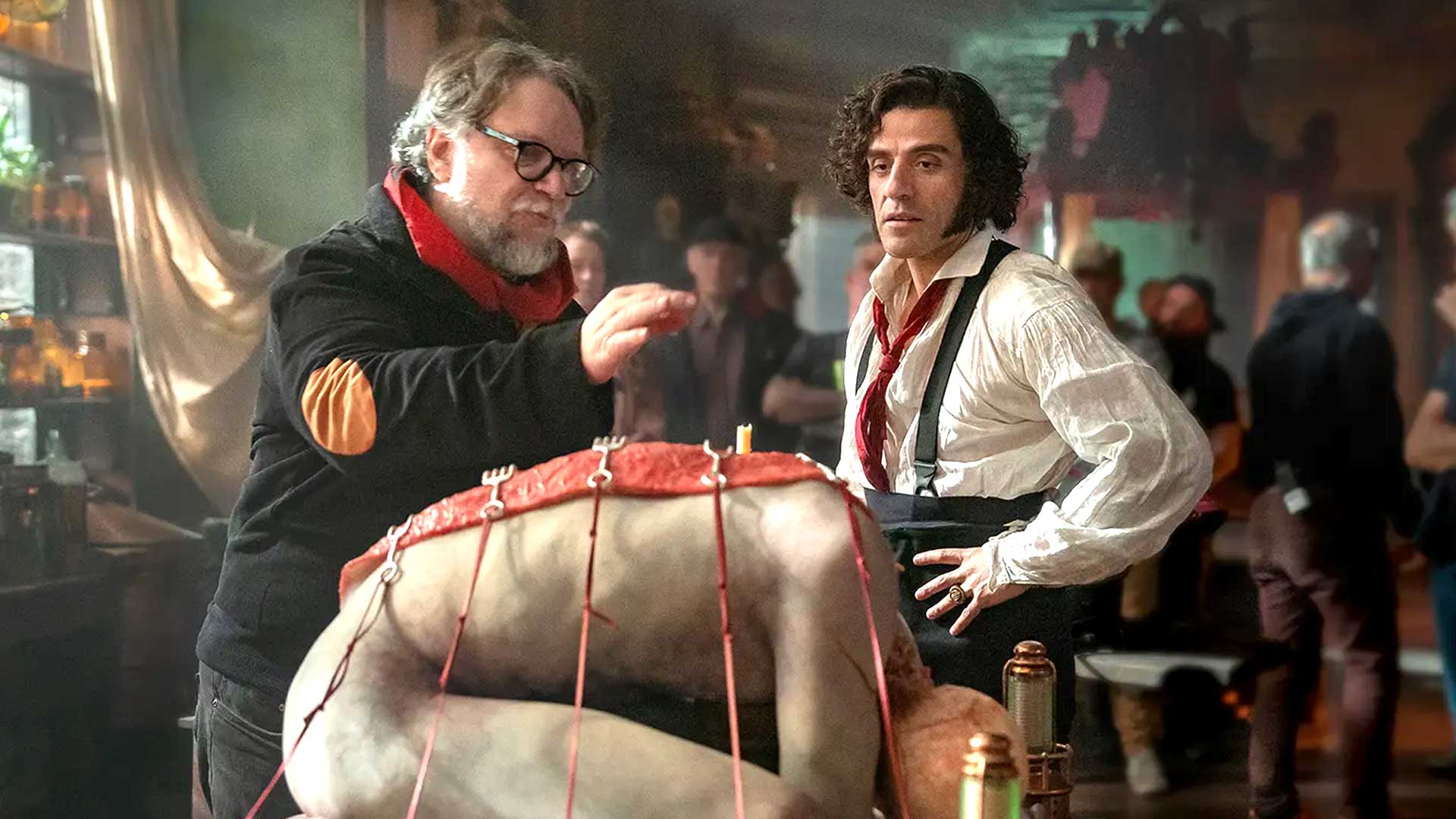
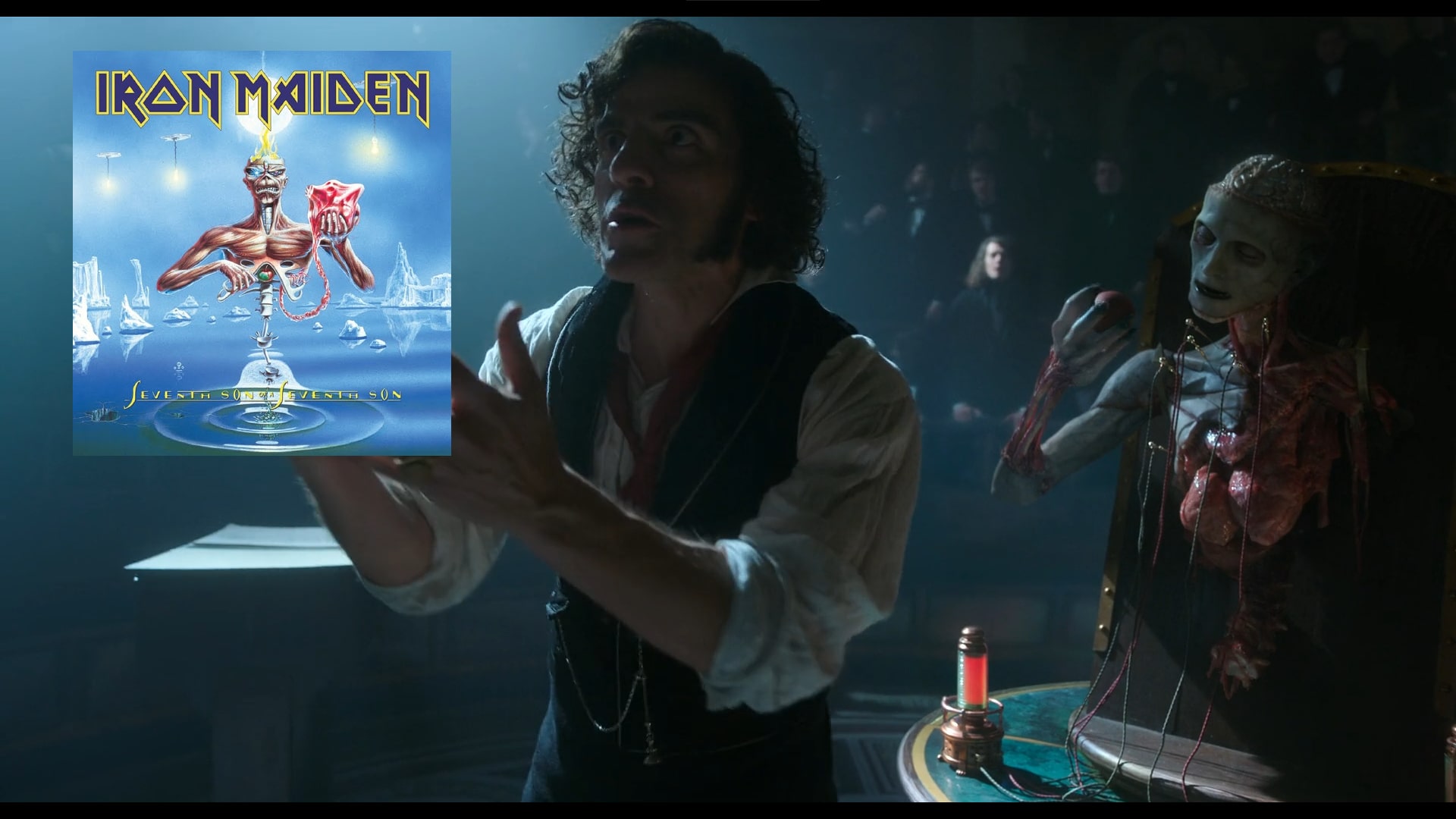
- Oscar Isaac (above), the reliable "man of feeling" whose hubris is always laid low in these kinds of stories (e.g., Annihilation and Dune, 2017 and 2022)
- del Toro rejecting generative AI, saying he'd rather die than use it (fucking oath)
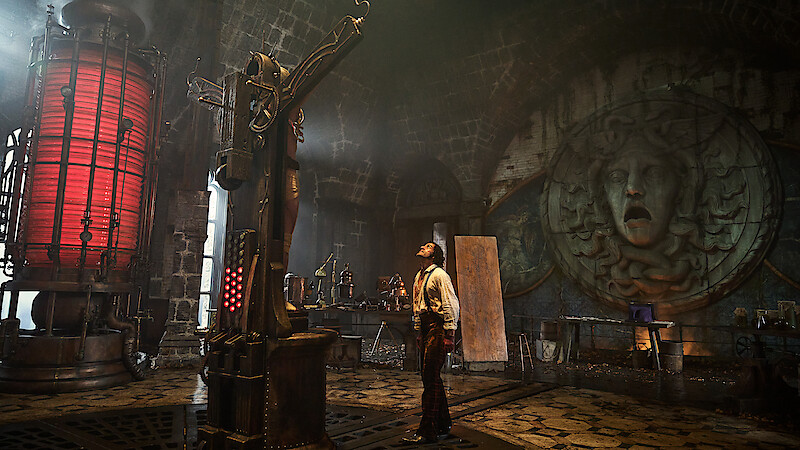
- the elements of a demon in bondage (re: Satan, unchained to the bottom of the burning lake):
- Athena's Aegis literally being in the background, Medusa's head watching our man of the hour try to take her power for himself:
Reviewing Frankenstein (2025); or, "Rock Me, Sexy Jesus!" Netflix Pulls a Hot Topic
While del Toro claims to hate AI, this script goes nowhere—as rote as the pale imitators of Ann Radcliffe or Mary Shelley but also Toro, himself. Closer to Crimson Peak (2015) than Pan's Labyrinth (2006), the movie goes through the motions, hitting all the beats but largely not saying much: "Dayman, fighter of the Nightman!"
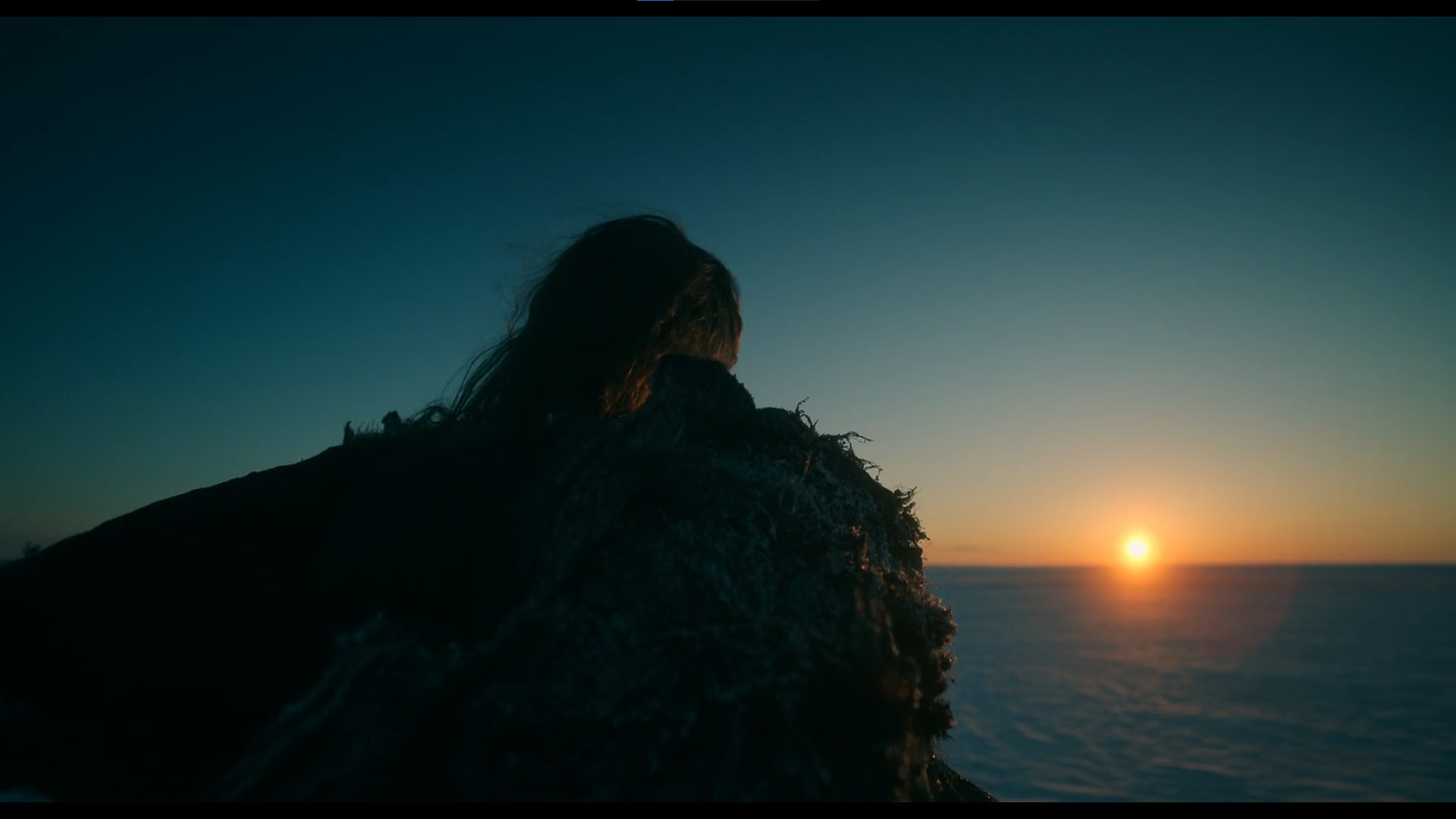
More's the pity. Frankenstein isn't just a debate between man and monster, master/slave through words coming out of their mouths, but a holistic, kayfabe-style dialog that includes the actions of the performers: standing dualistically and anisotropically in for various ideas, onstage and off. Here, the debate is largely absent and reduced to a love story (a love square). It's a very Catholic telling of the story (miracles, asking for grace, the sexy endless martyr, salvation/the rising sun = rebirth of Christ, above): the material critique is erased, centered around a (white gentrified female) sex object.
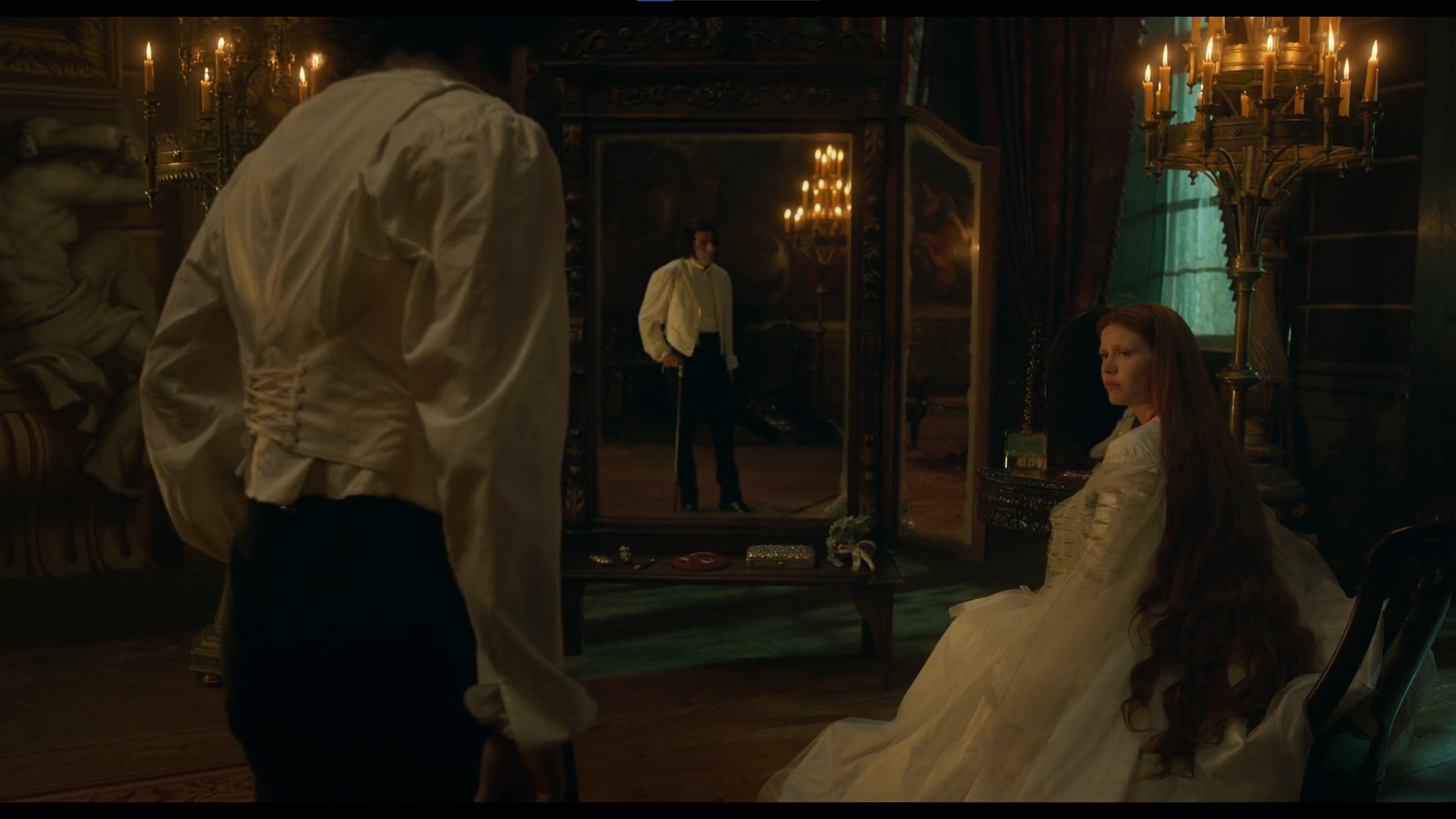
It felt lengthy but abbreviated, and dumbed-down. The castle was Addams-Family hauntology. More Biblical than Miltonian (e.g., the wolves attacking the old man/the Pastoral a la The Grey [2011] or any Disney movie, ever) + del Toro's prior (and frankly more impactful) fixations on childhood trauma (e.g., Devil's Backbone [2001] and Pan's Labyrinth) vs the clunky girl/monster foil this movie chooses (taken from Hellboy and Shape of Water, 2004 and 2017):
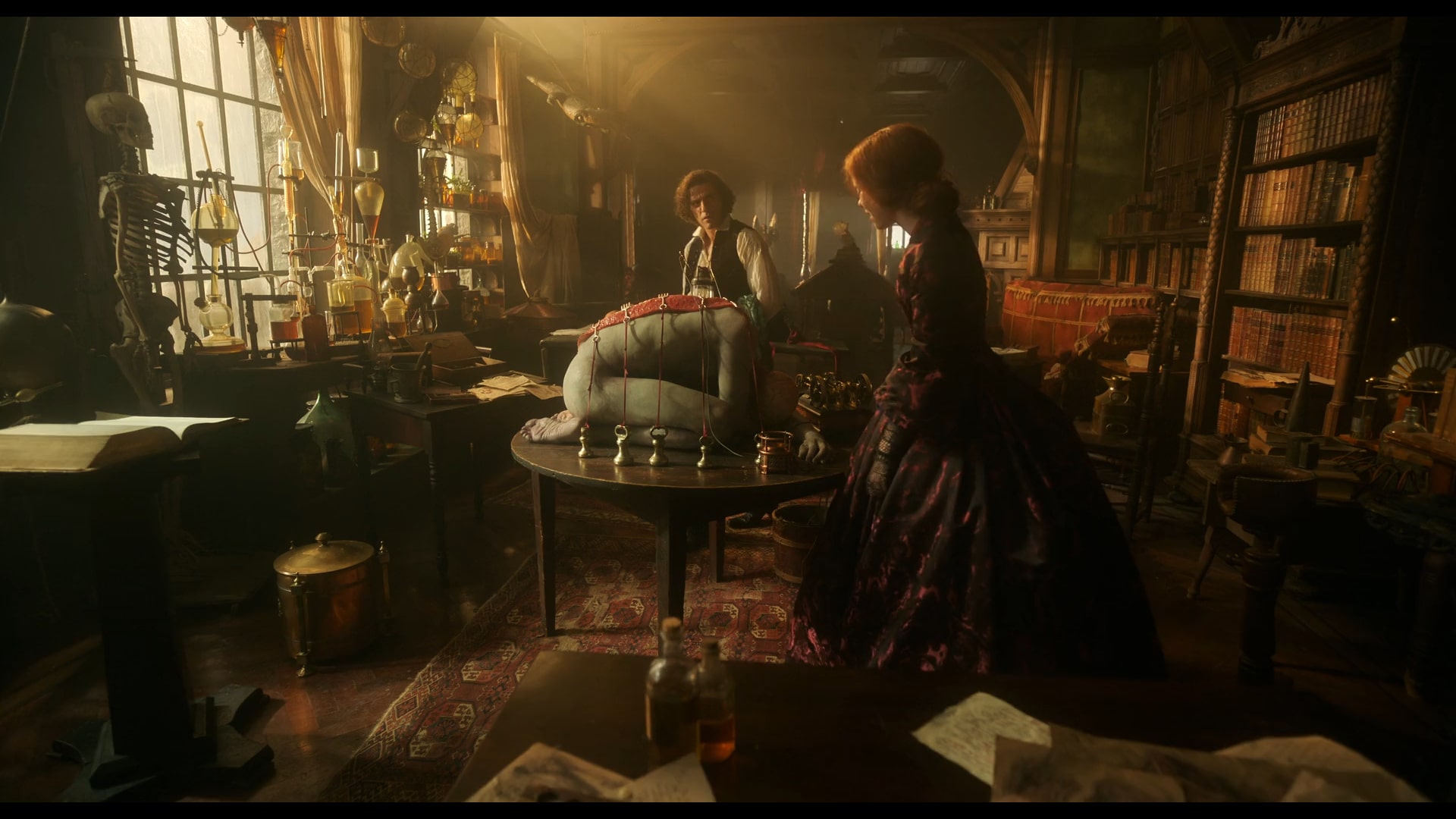
Aesthetically del Toro's movie is very pretty but a bit insubstantial/a regression towards classic Neo-Gothic pastiche (e.g., Walpole, Radcliffe); i.e., a Frankensteinian mishmash without the capitalist critique (or Austenian smirk), the two angry bros kissing and making up after the female effigy is laid to waste and rest (virgin/whore syndrome). It felt very throwaway—a movie where the most exciting moments occur in the trailer and the rest of the story a Cliffnotes, by-the-numbers retread that really doesn't hold up: watered-down and unable to hold water.
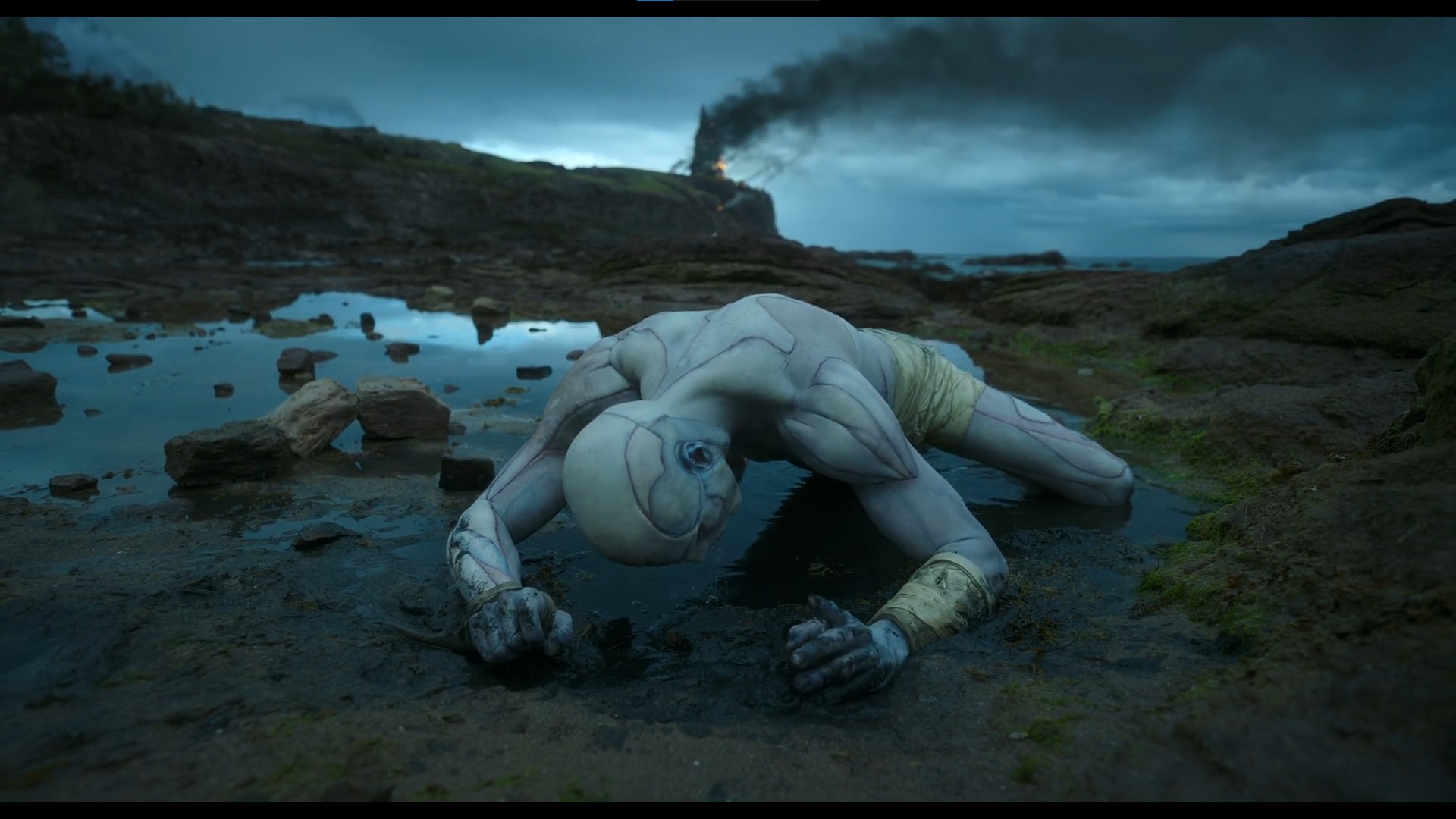
It's very easy-on-the-eyes, though, but even this feels comic book and gentrified—that "corporate garbage veneer shoved into a silk dress" look, minus the camp and leaning into lazy wish fulfillment. The actors work with what they've given, but it's so pared down they have the posturing without the gravitas. Mia Goth—the actress playing Elizabeth Lavenza (swapped to Victor's brother's(?) wife to encourage the final bromance)—is a standout, as is Jacob Elord as the Creature (above). Both are quite sympathetic, with her hot and charming and him oddly intense and sweet (sexy Jesus, remember): bury the whore for loving the wretch. Waltz is a total throwaway and Isaac does his usual "I'm the white straight guy stealing all the oxygen" schtick (with nods to Iron Maiden's Seventh Son of a Seventh Son, 1987—below):
The whole thing felt very forced, having latter-day Tim Burton syndrome, del Toro walking in the earlier auteur's doomed footsteps. The story wants to reach the usual Gothic Mount-Blanc highs and lows, but it feels oddly abridged—both too long and too short. A series of scenes chopped-and-screwed together that clumsily allude to the ghost of Shelley's greatness, the end result is a pale imitation. There's fine build-up, but the film falls flat in payoff: shift blame on to Victor's evil dad, feckless brother and magnetic temptress, Elizabeth—anyone but him, while he fumbles his way through operatic blue balls and sub drop in the presence of the Numinous Ken Doll: a love square with an oddly-absent Henry Clerval (that role filled by Victor's brother, William, who the Creature strangles in the original story). It's like that really bad Dragonball movie (Evolution, 2009), Goku without Krillin.

(artist: Bernie Wrightson)
Here, Victor doesn't knee-jerk reject the Creature, but he still abuses it in a more pedestrian (and frankly racist manner) that lacks the violent intensity of the original Byronic parody. Milton is largely absent (swapped for a single "Ozymandias" quote). The Creature, meanwhile, doesn't kill or save anyone; the trial scene with Justine Moritz is completely gone (above) and the Creature and his dad—rather than killing each other through bitter revenge without resolution—squash the beef and however briefly feel that "one grace" the movie repeatedly asks for but doesn't earn. The maximum impact from the book's more important scenes are swapped out for fairly pedestrian operatics (and Capitalist Realism—the crew of the ship hilariously sailing home to the Crown, who will doubtlessly hang them all for their mutiny).
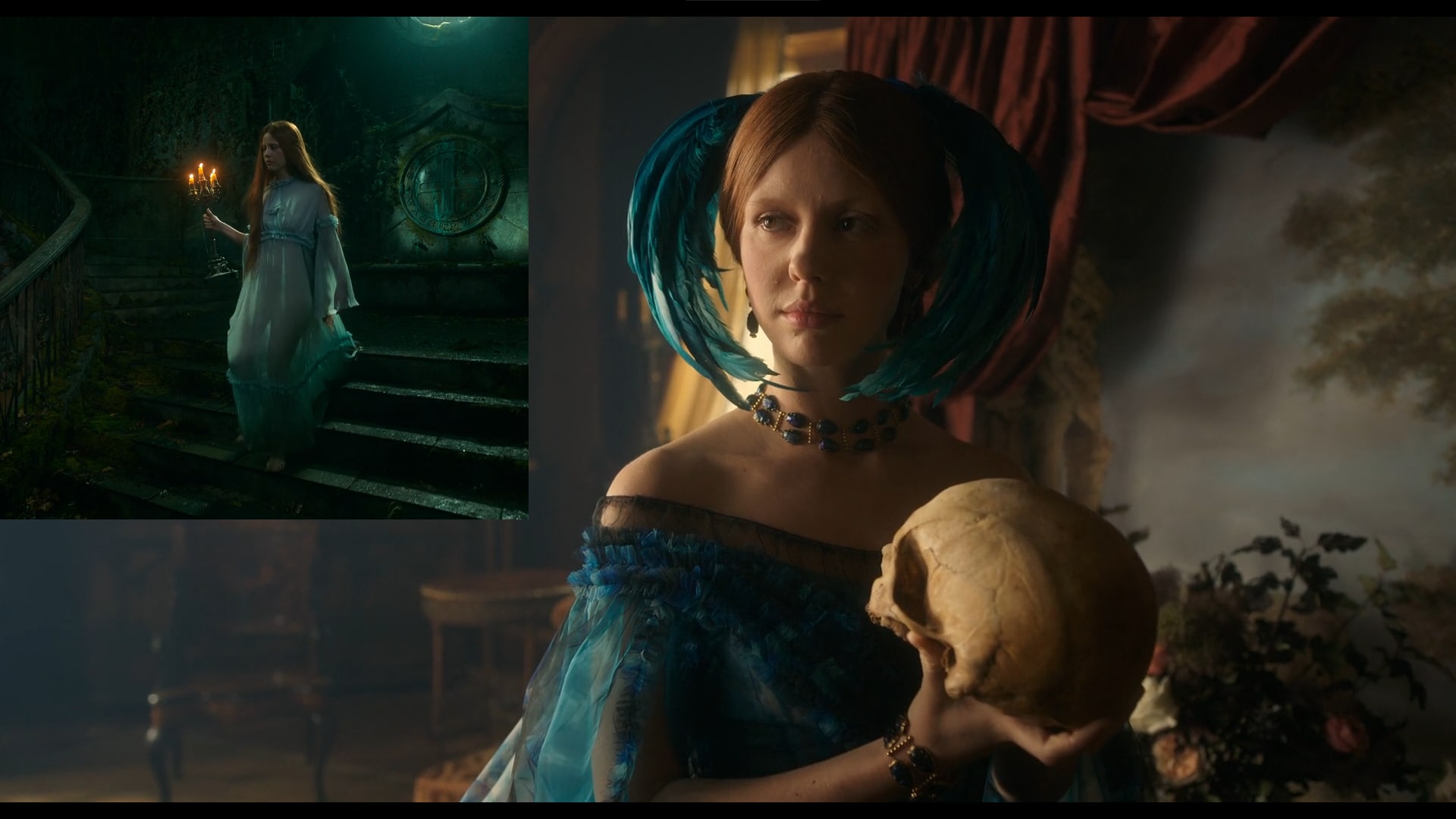
I could probably say more but that's the gist. There's no complexity here, but I enjoyed Goth in her see-thru dress, surrounded by darkness and holding skulls (true to her namesake, above); Elord and his tall intense physique, suitably "Hulk smash!" intensity and swing-for-the-fences approach; and Charles Dance being his usual dickishly fun self (in a blink-and-you'll-miss-him cameo; nods to Napoleon with that big hat of his, below). Hot Topic called; they want their Medusa effigy back.
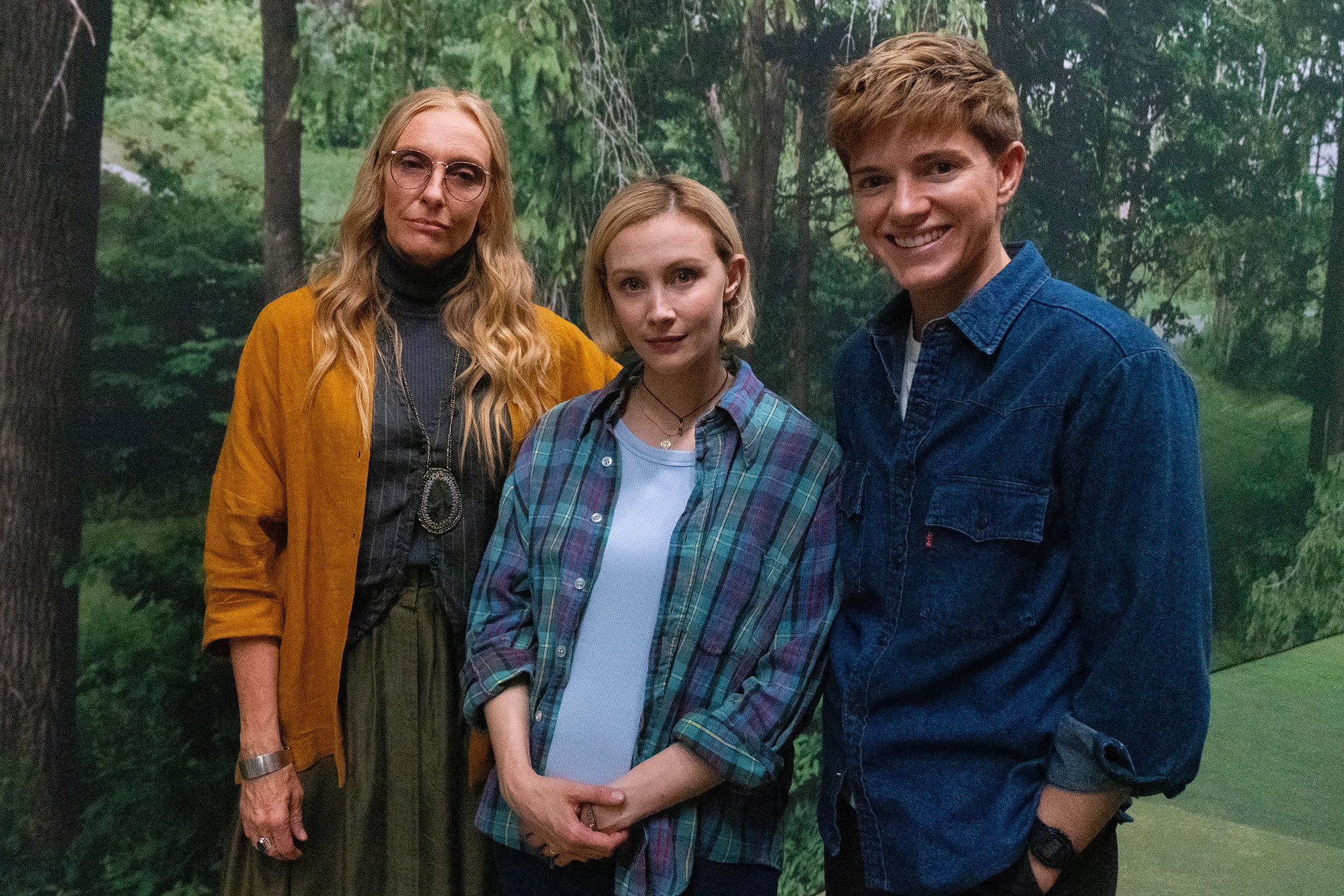
Conclusion: No Frankenstein adaptation is ever perfect, but for all the chattiness of the Creature this time around, go and see the James Whale movies or Alien (1979); i.e., if you want a creature feature with actual pathos and panache, sans dialog. If you want to laugh, watch Young Frankenstein ("That good, huh?"). And if you want some solid monster-making media centered around bad parents and evil kids also on Netflix, go watch Mae Martin's Wayward (2025):
Footnotes
[1] I.e., against eco-fascism deciding "humans are the virus," leading to genocide all over again: the weighing of human life—natural or artificial—and the usual suspects found wanting by the usual cops (and the elite) playing God. This has an extraordinary class, culture and race character to it, its application after Shelley's magnum opus virtually limitless. The state doesn't discriminate; neither does the Gorgon, her Aegis sending state predation—colossal and hypocritical—back onto itself: the proverbial memento mori abyss gazing back, fiercely critical of the usual quacks seemingly impervious to any comeuppance. Frankenstein isn't just the big angry monster (though that's certainly part of it), but the relationship between those who have power and those who don't; i.e., the "peach" of nature (and those of nature) to grow and devour by the state, treating the oppressed like food to farm, staving off death for themselves. However gargantuan our "melons" are, we are not food. So fuck around, find out!

(artist: Angel Witch)
To it (and to wax poetic on Shelley and Frankenstein a bit more), reactionaries complaining about "competency" from the expendable, pimp-like scientist(s) generally miss the point (re: expendable scientists). The point of the Promethean Quest isn't anti-intellectualism; it's to hold state powers (and their scientists) accountable: by showing the realities of power when push comes to shove; e.g., anti-predation, self-preservation, and so on, but also self-sabotage and hubris. Stupidity isn't to advance the plot, it is the plot; i.e., immortality is a myth, those who seek it little more than "Roman fools." So while performed outrage upholds the status quo, the Gorgon upends capital's Cartesian (therefore settler-colonial, heteronormative) model: give death a hug! Death is alien, the Gorgon a death god (therefore Numinous) between life and death, and one to seek out during the Promethean Quest. Discomfort is the point, a lack of comfort depicting abjection playing out (forwards or backwards) from the uncomfortable; e.g., pain, frustration, and disgust, but also a desire to change, kill or capture something relative to oneself as normal; i.e., the normalization of an immortal hubris to uphold—meaning by Cartesian benefactors scared of nature, therefore death, as alien, abject, fearsome.
If there's any transcendental signified, it's death (often linked to the undeniable struggles [and horror] of class war); i.e., the death of the state, and the perceived rebellion of those treated like machines—like slaves (robata, golems, etc)—suddenly refusing, like Milton's Satan, to obey or embrace their lot as expendable in the dogmatic order of existence: Metis showing the Zeus (the perceived creator) both their own conqueror mindset, dead future, and revenge out of a past, come back to haunt them. Death, for capital, is a problem they can never solve; unable to solve it, they punch it, mid-abjection (what Professor Jiang Xueqin calls "the tyranny of the dying" as something for the slave to overthrow); i.e., fearful of extended beings attacking thinking beings, mid-ethnocentrism; re: their doing so incentivizing reprisals, their DARVO (a state necessity to hold onto power) "fertilizing revolt on the corpse of empire" (source: "Straight Dog Water").
[...] "Remember that you, too, must die." Milton's Satan was already seditious enough—doubly so for 19-year-old Mary Shelley playing God from a female anarchistic perspective: the Wisdom of the Ancients regained, albeit through various "growing pains." Death hurts, the magic of Shelley's story being how game it is to fuck with the powers that be. With one novel, she single-handedly birthed sci-fi out of Gothic as the castrating implement of nature versus Cartesian hubris; i.e., of rebellious women (or the monstrous-feminine at larger, below) versus Great Men, the likes of which white straight authors having been trying to copy or contain for centuries: the skeleton come out of the closet, its "tales from the crypt" shaming the pimp from the whore's castle-sized perspective! Success is speech that "gets through," the perpetuation of testimony our best revenge (a data to cryptomimetically replicate and past cryptonymically on [...]
A slave revolt, one where golems make golems (or Gorgons make Gorgons)? From a transhuman to a posthuman degree, one whose murmurings of the technological singularity (re: Roden) denotes Mother Nature's revenge against Humanism, the Enlightenment and capital? God forbid! Conversely, "Capitalism has no use for people who see each other as human; it wants us dehumanizing ourselves so capital can function as normal, moving money through nature at the cost of human life" (source: "Remember the Fallen: An Ode to Nex Benedict," 2024). Frankenstein (and similar stories) interrogate that reality by giving birth to rebellion: "Pregnancies are seldom planned," I write in my foreword to Volume Zero (source: "'On Giving Birth,' the Wisdom of the Ancients, and Afterbirth," 2023). I learned it from Shelley! So does the peach impeach the hypocrite that Shelley and I speak out against. To that, Hornet (and similar Amazons) offer a modern continuation of the same rebellious trend—one borrowed from Milton and Milton from Antiquity (thus dating back to the Promethean story that Shelley modernized under capital; re: the Gorgon actually being that proverbial "spectre haunting Europe" Marx wrote about; i.e., decades following Shelley's breakout story).
Human life—nature, itself, harvested by the state—is the fire of the gods (the power to create) stolen by Shelley's Prometheus being dualistic: a story about fighting fire with fire as anisotropic, unable to be monopolized. Chaos is a ladder, encapsulating the function of power as something to climb (and camp) while power decays; i.e., the refrain of theft (of nature's labor value)—of natural/unnatural life, dehumanized constantly owner/worker through Gothic dialogs and comparable to the ur-sci-fi sort Shelley devised: happening between Victor having lost his humanity and the Creature struggling to reclaim its own, mid-alienation. Its existence is fallen, but demanded by the usual abusers having created the world harming it, and which it ultimately seeks revenge against:

(source: "Psychosexual Martyrdom" [2024]; artist: Bernie Wrightson)
[2] Undoubtedly as Mary Shelley's parents and superiors introduced her to different works—namely her father at first (since her mother died eleven days after Shelley [then Wollstonecraft] was born), but later by Percy Shelley and Thomas Hogg passing Paradise Lost along to her as my mother once showed me Black Sabbath: "Like, check this out, man! It's totally rad!"
[3] Venkman's snide "No human would stack books like this" comment leaping to mind when seeing Hamilton's photo (with "Margaret Hamilton" also being the name of the actress who played the wicked witch in The Wizard of Oz, 1939). So often, intelligent women are celebrated and feared as aberrations to cage and kettle by male pimps with virgin/whore syndrome. And, in both Hamilton's cases, they so often tokenize!
[4] Wow, so lucky! Let's face it, Altaira probably fucked around with Robby the Robot a bit (the young horny teenager riding the bed post or the cucumber in the fridge).
[5] Bubble's "meat hair" from The Powerpuff Girls 1995 pilot:

(source)
[6] "Computers are dumb; they only know what you tell them." People are a lot closer to computers than many care to amid; they're certainly not immune to childhood indoctrination's fear and dogma!
[7] The xenomorph combining of all of these things to take on fresh life.
[8] Scott's matelotage from Alien borrowed, first, from Frankenstein—with Cuwu and I making love not completely dissimilar to Percy and Shelley, over two centuries prior! Some people bloom early, others late. Better late than never!
[9] If Gustav Dore were a comic book artist.


